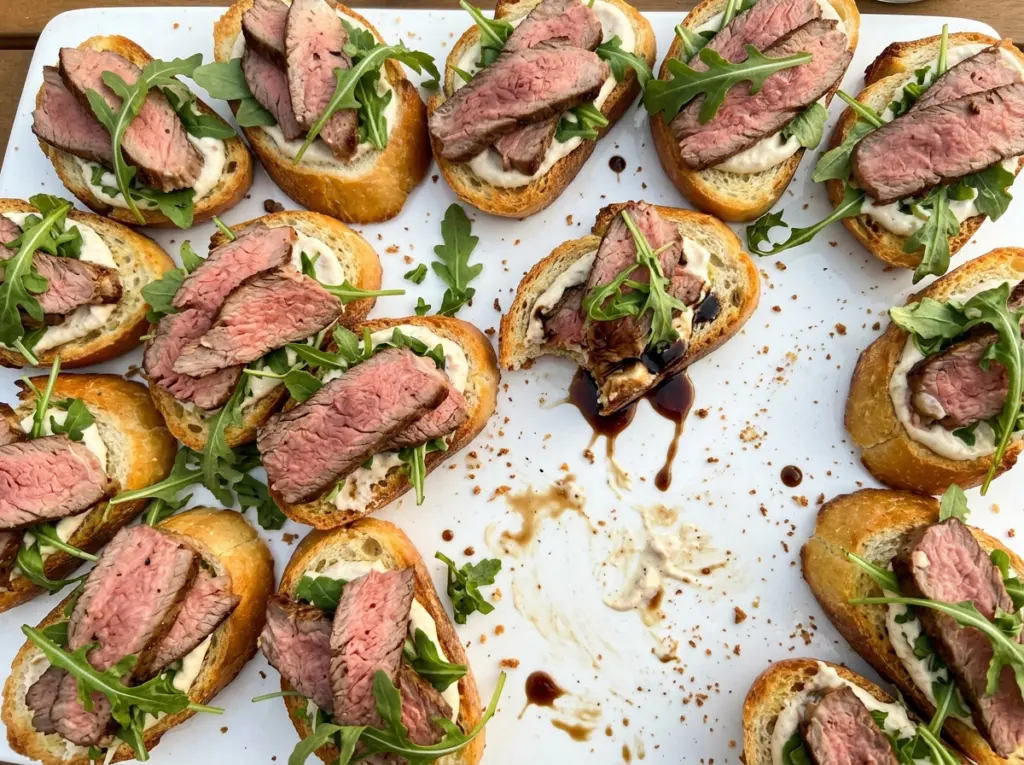
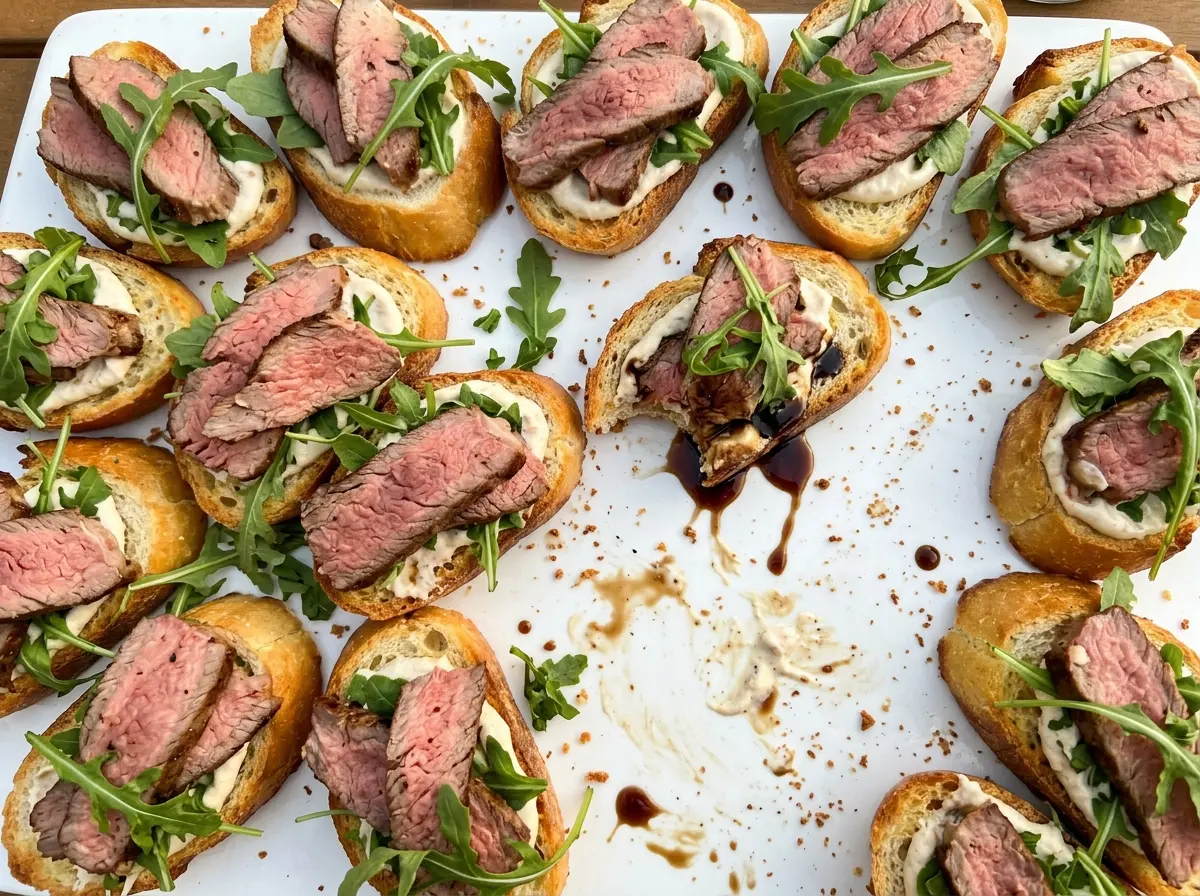
The baguette edges turn golden before the centers dry out, and that little bit of crunch matters once cool horseradish cream meets warm steak. I make Steak Crostini when I want an appetizer that feels substantial without turning into a full plate of food. The contrast keeps each bite interesting: crisp toast underneath, thin slices of sirloin in the middle, and a cool, sharp cream on top.
I stir the cream together first and let it chill while the oven and skillet do their jobs. That small bit of planning gives me a clean order of operations: the bread can toast on its sheet pan while I get the steak ready, and the finished bites come together after the steak has rested. Sliced thinly across the grain, the sirloin sits neatly on a baguette round instead of pulling away in one chewy bite. Fresh chives finish each crostini with a mild onion note.
Kitchen Note
I mix the horseradish cream first and tuck it into the refrigerator while I prepare the toast and steak. It’s an easy bit of advance work, and the cool, tangy cream is ready when the warm steak comes off the board.
Save these steak crostini for a party spread: crisp baguette, tender sirloin, and cool horseradish cream make each bite feel complete.
Why Soft Bread Turns Steak Crostini Into a Mess
The toast has to do more than hold the steak. Once sour cream, lemon, and horseradish hit the surface, a baguette slice that’s only been warmed can turn soft quickly. Baking the slices until their edges are golden gives them a drier, sturdier texture that holds the topping while still being easy to bite through.
There’s a useful balance in the size of each bite, too. A thin slice of sirloin lets the toast stay in charge instead of making each crostini feel like a steak sandwich. The horseradish cream should spread across the bread in a light layer, not sit in a thick mound; that way its sharpness complements the beef without swamping it. I assemble each piece once the components are ready, so the baguette keeps its crunch beneath the cool cream and warm steak.
What the Sirloin, Baguette, and Horseradish Cream Each Bring
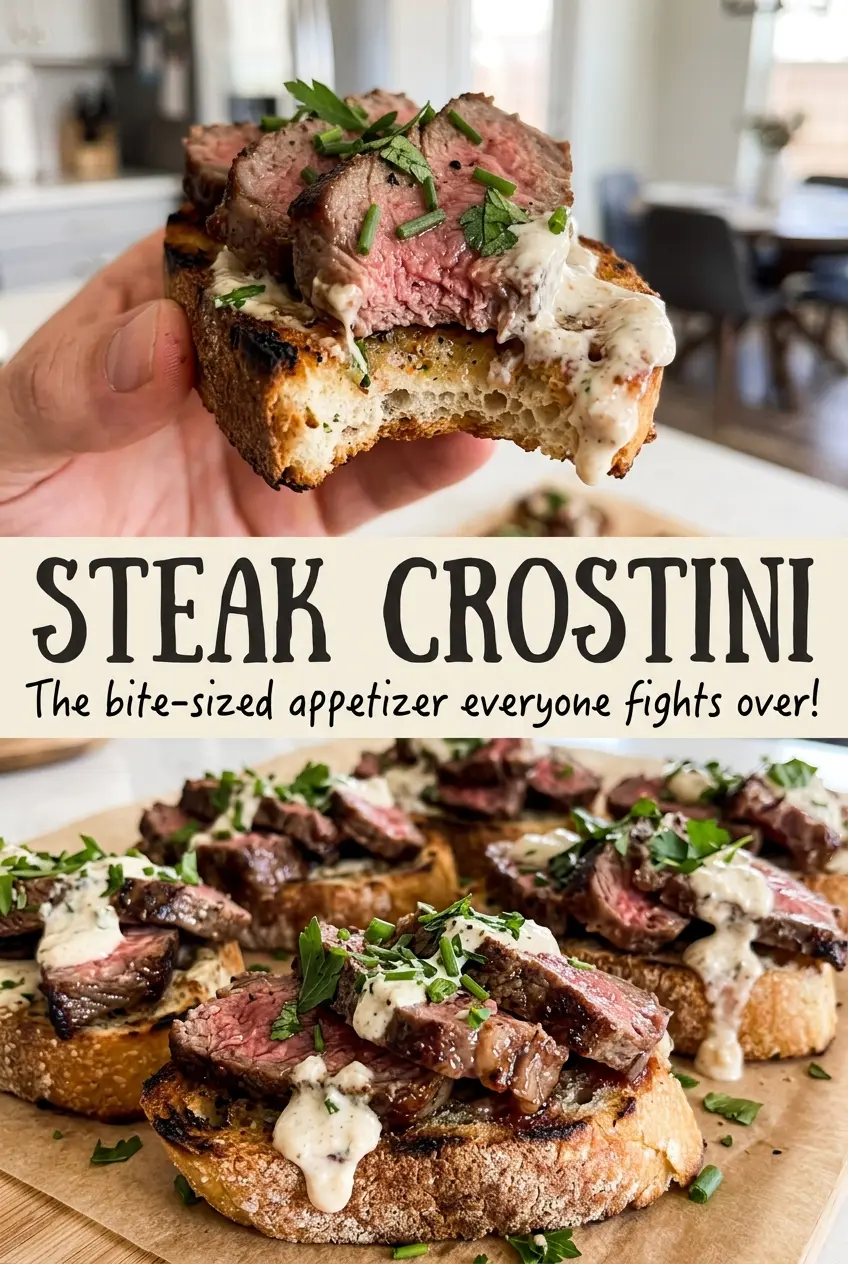
- Top sirloin — Its beefy flavor and firm texture make it easy to slice into neat pieces for toast. Choose a steak close to the listed thickness so the skillet timing stays useful; a much thinner steak will cook through faster.
- Baguette — A baguette gives you small, sturdy slices with plenty of crust. Slice it evenly so the pieces toast at the same pace. A fresh baguette is nice, but there’s no need to seek out an expensive one for this appetizer.
- Sour cream, prepared horseradish, Dijon, and lemon — Sour cream gives the topping body, while prepared horseradish supplies its distinctive heat. Dijon and lemon keep the mixture bright. Plain Greek yogurt can replace the sour cream in the same amount; expect a tangier, somewhat thicker cream.
- Olive oil — The divided oil coats the bread and then helps the steak brown in the skillet. A standard olive oil works well here; save a more expensive finishing oil for a dish where its flavor stays uncooked.
- Fresh chives — Their mild onion flavor gives the rich beef and cream a fresh finish. Freshly chopped chives look and taste livelier than dried ones, so if you don’t have fresh chives, leaving them off is better than expecting dried chives to do the same job.
How to Time the Toast, Sear, and Assembly Without Rushing
Mix and chill the horseradish cream
Stir the sour cream, prepared horseradish, Dijon mustard, and lemon juice together in a small bowl. Mix until the ingredients are evenly combined, then refrigerate the bowl while you prepare the other components. The cream should be smooth enough to spread over the toast. Chilling it now also keeps this part of assembly out of the way later.
Toast the baguette slices until their edges turn golden
Heat the oven to 400°F and arrange the baguette slices in one layer on a sheet pan. Brush them with 1 tablespoon of olive oil, spreading it over the tops rather than leaving oily patches. Bake for 8 to 10 minutes, until the edges are golden. Keep an eye on the last few minutes; the thinner slices can color before thicker ones.
Sear the sirloin in a hot skillet
Pat the steak dry and season both sides with kosher salt and black pepper. Heat the remaining tablespoon of olive oil in a 12-inch skillet over medium-high heat. Cook the steak for 4 to 6 minutes per side, checking the thickest part with a thermometer until it reads 145°F. If the pan isn’t hot enough, the steak can cook without getting the browned exterior you want.
Rest, slice, and build each bite
Transfer the steak to a cutting board and let it rest for at least 3 minutes before slicing. Cut thinly across the grain, which shortens the muscle fibers and makes each piece easier to bite through. Spread horseradish cream on each toast, add steak, and finish with chopped chives. Keep the topping balanced so the crostini are easy to pick up.
Easy Changes for Gluten-Free and Bolder Steak Crostini
Use a gluten-free baguette
Swap in a gluten-free baguette and slice it the same way. Brush with olive oil and bake until the edges are golden; gluten-free bread can dry out or brown at a different pace, so watch the color rather than relying only on the clock. The bites may be a little more delicate, but the steak and cream still pair well with the toast.
Make the cream dairy-free
Replace the sour cream with plain, unsweetened dairy-free sour cream and mix it with the horseradish, Dijon, and lemon as usual. The topping will be less rich, and some dairy-free brands are looser than traditional sour cream, so spread it lightly over the toast.
Turn up the horseradish
For a sharper bite, stir a little extra prepared horseradish into the cream and taste as you go. The stronger heat stands up to the sirloin, though it makes the topping less mellow. Add it gradually so the lemon and Dijon still come through.
Storage and Reheating
- Refrigerator: Store the steak and horseradish cream separately in airtight containers for 3 to 4 days. Keep the crostini dry and airtight at room temperature for up to 2 days.
- Freezer: Freeze the sliced steak in an airtight freezer-safe container for up to 2 to 3 months and thaw it in the refrigerator. The cream may separate after freezing, and the toast loses its crunch, so make those fresh.
- Reheating: Reheat the steak by itself in a skillet over low heat until it reaches 165°F, then assemble. Don’t reheat the topped crostini; the toast softens under the cream.
Questions That Come Up While Making Steak Crostini
Steak Crostini
Ingredients
Equipment
Method
- Stir together the sour cream, horseradish, Dijon mustard, and lemon juice in a small bowl.
- Refrigerate the horseradish cream while preparing the steak and crostini.
- Heat the oven to 400°F.
- Arrange the baguette slices in a single layer on a sheet pan.
- Brush the slices with 1 tablespoon of the olive oil.
- Bake for 8 to 10 minutes, until golden around the edges.
- Pat the steak dry.
- Season both sides with the salt and pepper.
- Heat the remaining 1 tablespoon olive oil in a 12-inch skillet over medium-high heat.
- Cook the steak for 4 to 6 minutes per side, until a thermometer inserted into the thickest part reads 145°F.
- Transfer the steak to a cutting board.
- Rest the steak for at least 3 minutes.
- Slice the steak thinly across the grain.
- Spread horseradish cream on each toast.
- Top each toast with steak and chives.