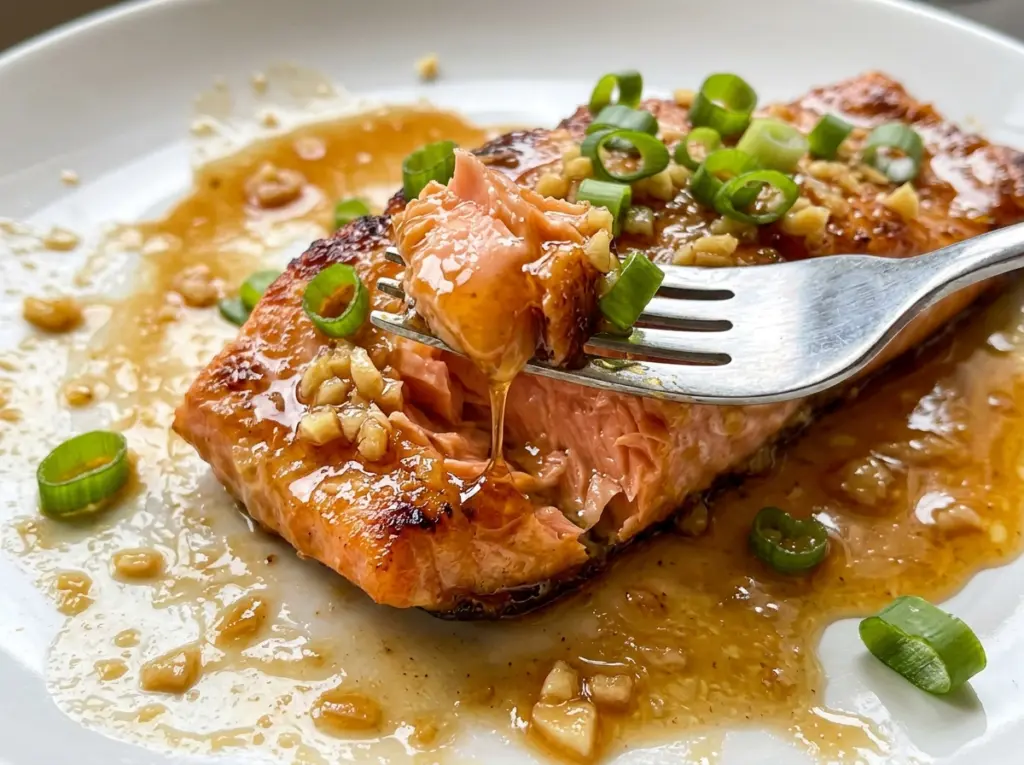
The first thing I watch for is the salmon skin: it should sizzle steadily, then release from the skillet without a tug when it’s crisp. If a fillet resists when I try to turn it, I give it another moment instead of pulling and tearing the skin. That small pause makes a noticeable difference in Honey Garlic Salmon, where crisp skin and a glossy sauce have to share the same pan.
Patting the fillets dry before they hit the oil helps the skin brown instead of steam. I also keep the fish skin-side down for the first stretch of cooking, so the skin has time to crisp before I flip the salmon. Once the fillets are cooked, the butter, garlic, honey, soy sauce, and lemon juice come together quickly in the skillet for a sweet-savory sauce with a bright finish.
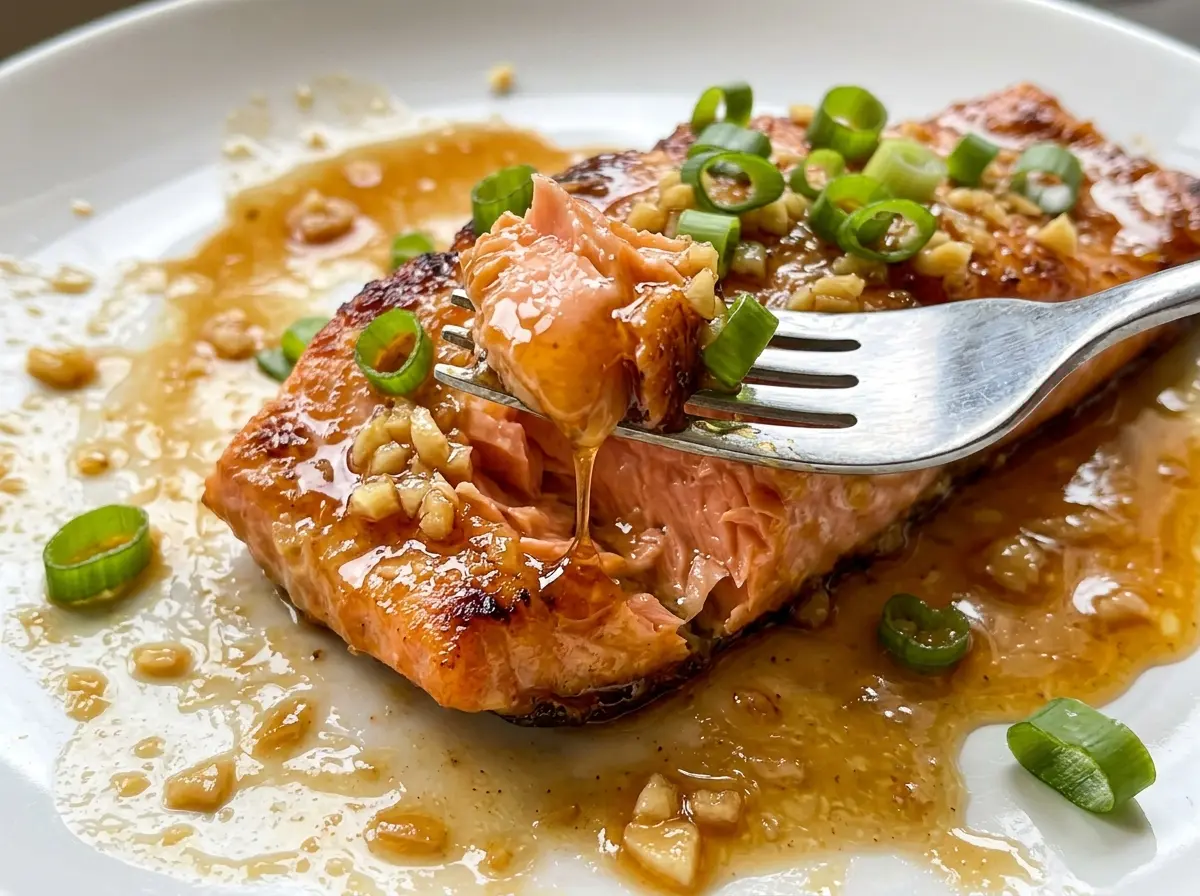
Kitchen Note
I measure the honey, soy sauce, and lemon juice before the butter goes into the skillet. Once the garlic is fragrant, those 30 seconds pass quickly, and having everything ready keeps it from sitting in hot butter while I search for the next ingredient.
Save this Honey Garlic Salmon for crisp-skinned fillets and a quick honey, garlic, and lemon pan sauce.
Why the Honey Goes Into the Pan After the Salmon
Honey makes a lovely glaze, but it doesn’t belong in the skillet during the salmon’s high-heat sear. It can scorch before the fish is ready, leaving a bitter edge where you want a clean, sweet-savory finish. Cooking the fillets first gives the skin time to crisp without the sauce competing for space or catching on the hot pan.
Making the sauce after the salmon is out of the skillet also lets you lower the heat before the honey goes in. Butter carries the garlic through the sauce, soy brings a savory backbone, and lemon juice cuts the sweetness so the glaze doesn’t taste flat. The sauce needs only a brief simmer to come together; reducing it for too long can make it sticky and overly concentrated. Keep the salmon on its plate while you stir the sauce, then spoon the warm glaze over the fillets just before serving.
What Each Ingredient Does in This Honey Garlic Sauce

- Skin-on salmon — The skin gives the fillets a crisp surface and helps them hold together as you turn them. Evenly thick pieces cook more consistently; having the pin bones removed means each fillet is ready for the skillet without extra trimming.
- Olive oil — A light coating helps the skin make contact with the hot nonstick skillet. A standard olive oil is fine here; there’s no need to use a special finishing oil.
- Unsalted butter — Butter gives the sauce a rounded, silky quality that oil alone won’t quite reproduce. Unsalted butter also leaves the soy sauce in charge of the sauce’s saltiness.
- Garlic — Freshly minced cloves bring a sharper, more fragrant taste than jarred garlic. Mince it before heating the butter so it’s ready to go into the pan promptly.
- Honey — Honey thickens the sauce into a light glaze and balances the savory soy. A mild, everyday honey works well; a strongly flavored honey will be more noticeable in the finished sauce.
- Low-sodium soy sauce — It adds savory depth without making the reduced sauce too salty. Regular soy sauce can work, but it will make the finished glaze saltier.
- Fresh lemon juice — Lemon brightens the honey and butter and keeps the sauce from tasting too sweet. Fresh juice gives the cleanest flavor; bottled juice is less lively, so fresh is worth using when you have it.
How to Sear the Salmon Before Building the Glaze
Dry and Season the Fillets
Blot both sides of the salmon with paper towels, then season both sides with kosher salt and black pepper. Dry skin is more likely to crisp than damp skin, so take a moment to press the towel gently over the surface. Set the seasoned fillets near the stove while you heat the oil in a 12-inch nonstick skillet over medium-high heat.
Let the Skin Crisp and Release
Place the salmon in the skillet skin-side down and cook for 5–6 minutes. The skin should turn crisp, and the fillets should release easily when you slide a spatula underneath. If one still grips the pan, give it a little longer rather than forcing it; pulling too soon can leave the skin behind. A nonstick skillet helps, but the fish still needs time to form that crisp surface.
Finish the Thickest Part
Flip the fillets and cook the second side for 2–4 minutes. Check the thickest part of a fillet with an instant-read thermometer and take the salmon off the heat when it reaches 145°F. Fillets vary in thickness, so use that temperature as your doneness check instead of relying on the clock alone. Transfer the salmon to a plate while you make the sauce.
Stir the Honey Garlic Sauce Together
Reduce the skillet heat to medium-low and melt the butter. Add the minced garlic and stir for 30 seconds, just until fragrant. Stir in the honey, low-sodium soy sauce, and lemon juice, then simmer for 1–2 minutes while stirring until the sauce is slightly thickened. Spoon it over the salmon to serve.
Three Ways to Adapt Honey Garlic Salmon
Make It Gluten-Free With Tamari
Replace the low-sodium soy sauce with an equal amount of gluten-free tamari. The sauce keeps its savory depth, though tamari brands vary in saltiness, so expect a slightly different balance from the original.
Cook a Half Batch
Halve every ingredient and cook two fillets for a smaller meal. Keep the same sequence and doneness check; the timing can vary with the thickness of the fish, so look for crisp skin and check the thickest part rather than assuming a smaller batch cooks faster.
Serve It Flaked Instead of Whole
For a different serving format, break the cooked salmon into large flakes on the plate and spoon the sauce over them. The pieces pick up more glaze, while the crisp skin won’t stay as intact as it does on a whole fillet.
Storage and Reheating
- Refrigerator: Refrigerate leftovers within 2 hours and keep them in an airtight container for 3–4 days at 40°F or below. The skin softens as it sits in the sauce.
- Freezer: Cooked salmon freezes well for up to 2–3 months when wrapped tightly or stored in a freezer-safe airtight container. Thaw it in the refrigerator before reheating; the texture will be softer than freshly cooked salmon.
- Reheating: Warm portions gently in short microwave intervals or in a covered dish in a low oven until the center reaches 165°F. High heat can dry the salmon before the sauce warms through.
Questions That Come Up When Cooking Honey Garlic Salmon
Honey Garlic Salmon
Ingredients
Equipment
Method
- Pat the salmon dry with paper towels and season both sides with the kosher salt and black pepper.
- Heat the olive oil in a 12-inch nonstick skillet over medium-high heat. Add the salmon skin-side down and cook for 5–6 minutes, until the skin is crisp and the fillets release easily.
- Flip the salmon and cook for 2–4 minutes, until the thickest part reaches 145°F; transfer to a plate.
- Reduce the heat to medium-low and melt the butter in the skillet. Add the garlic and cook for 30 seconds, stirring, until fragrant.
- Stir in the honey, soy sauce, and lemon juice. Simmer for 1–2 minutes, stirring, until the sauce is slightly thickened.
- Spoon the sauce over the salmon and serve.