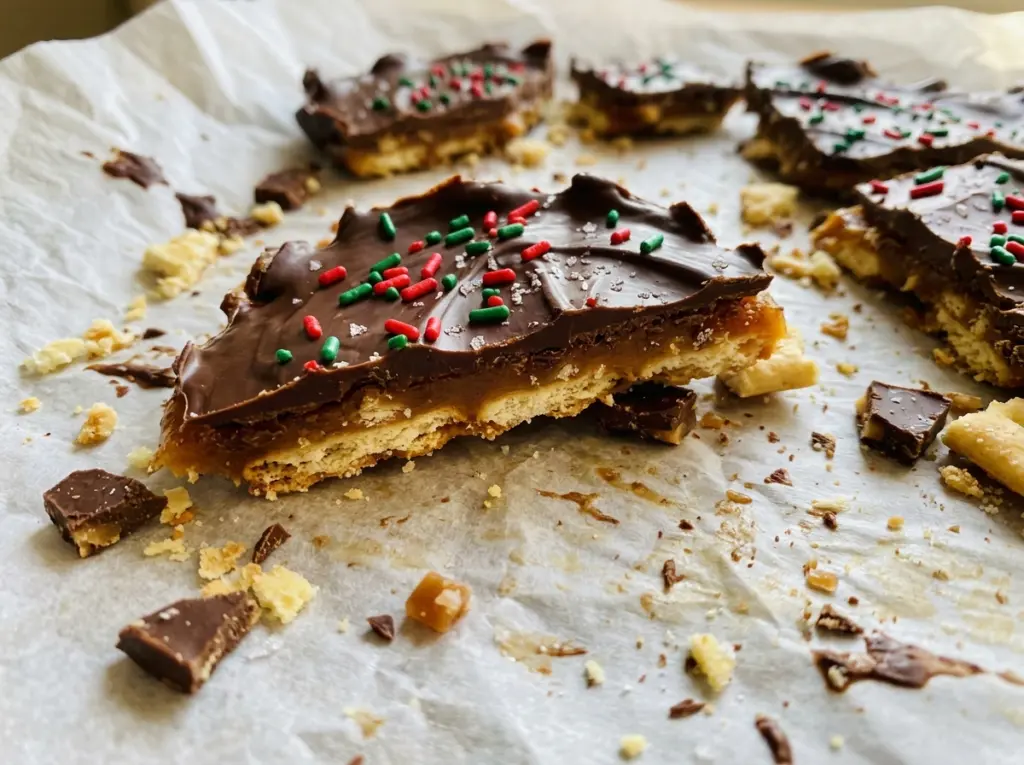
The butter and brown sugar turn into a glossy toffee in just a few minutes, and the whole pan starts bubbling once it goes into the oven. That bubbling is the cue I watch for with Christmas Crack: it tells me the hot toffee has spread across the crackers instead of leaving dry patches between them. The saltines stay crisp underneath, while the chocolate sets into a smooth top that snaps when you break it.
I arrange the crackers snugly on the parchment before I start the toffee, because once the sugar mixture is ready there’s no time to rearrange the base. Then I pour it over in an even sweep and let the oven finish the job. This is a simple candy-style treat, but the order matters: bubbling toffee first, chocolate softened on top, then enough chilling for clean, firm pieces. Each bite has that salty-crisp base under buttery toffee and semisweet chocolate.
Kitchen Note
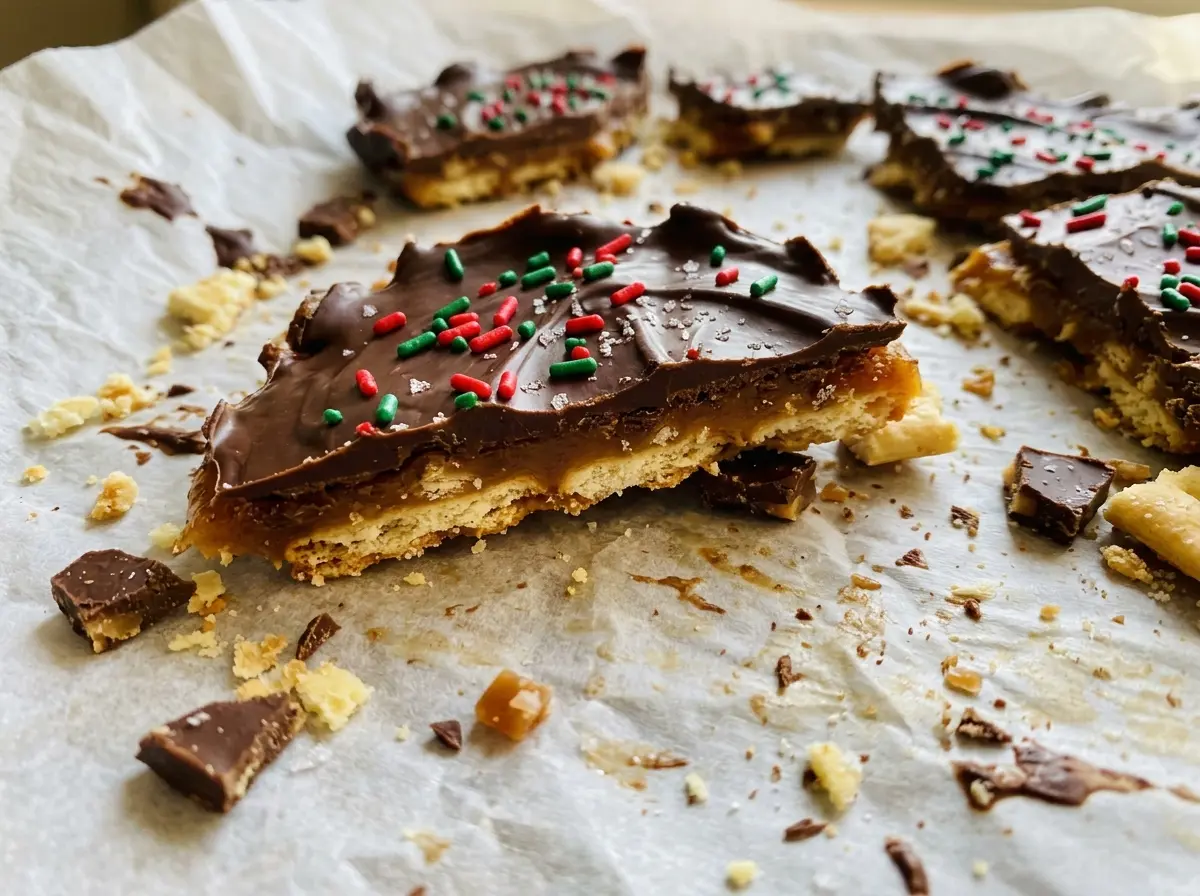
After you scatter the chocolate chips over the hot toffee, leave them alone for the full five minutes. They soften from the heat underneath, and then they spread into a smoother layer without needing extra heat.
Save this Christmas Crack for its crisp saltine base, buttery toffee, and chocolate top that breaks into easy-to-share pieces.
Why the Toffee Has to Bubble Across the Whole Pan
The crackers make a thin, crisp base, so the toffee needs to reach the edges and bubble across the entire baking sheet. If only a few spots are bubbling, the middle or corners may not have the same coat of hot toffee yet. Use the visual cue rather than pulling the pan out as soon as the edges start to bubble.
Fitting the saltines snugly is part of that coverage, not just a way to get all 40 onto the pan. A single layer with the crackers close together gives the toffee a continuous surface to cover. Pour the hot mixture evenly over the top, then let the oven heat it until bubbles show across the pan. That combination helps the finished pieces hold together while keeping the cracker layer crisp instead of patchy.
The 13×18-inch rimmed baking sheet gives the crackers room to sit in one layer and keeps the hot toffee contained. Smaller pans change how the crackers fit and how thickly the topping gathers, so use the specified pan for the most even result.
Why Saltines Are the Right Base for This Toffee
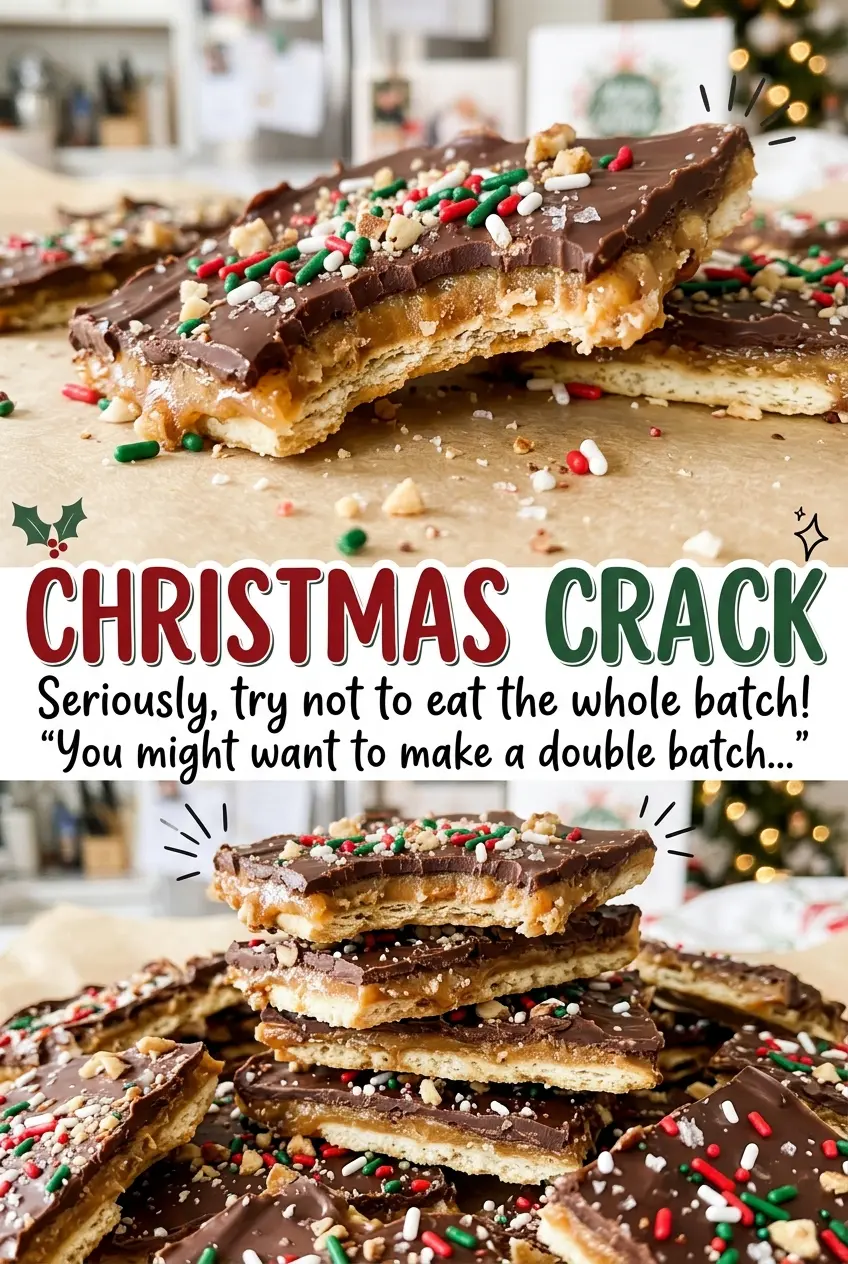
- Saltine crackers — Their thin, crisp texture gives the rich toffee a sturdy base, and their salty bite keeps the sweet topping from tasting one-note. Arrange them in a close single layer; there’s no need to break them unless a small gap needs filling.
- Unsalted butter — Butter gives the toffee its smooth, rich character. A standard unsalted butter works well here; the recipe doesn’t need a specialty brand. If you use salted butter instead, expect a saltier finish alongside the already-salty crackers.
- Packed light brown sugar — Light brown sugar brings the molasses note and sweetness that become the toffee. Pack it into the measuring cup so the amount is consistent; dark brown sugar can work, but it gives the toffee a deeper molasses taste.
- Semisweet chocolate chips — Semisweet balances the buttery-sweet base without making the topping overly sweet. Ordinary baking chips are fine; choose chips you like eating, since their flavor is front and center. Milk chocolate works as a swap if you prefer a sweeter top.
Where the Three-Minute Boil and Oven Bake Each Matter
Fit the crackers on the lined pan
Heat the oven to 350°F and line a 13×18-inch rimmed baking sheet with parchment paper. Arrange the 40 saltines in a single layer, fitting them snugly together. A few small spaces are fine, but avoid overlapping crackers because that makes the toffee layer uneven. Get this base ready before you start cooking the sugar mixture.
Boil the butter and brown sugar
Melt the butter in a medium saucepan over medium heat, then stir in the packed brown sugar. Bring the mixture to a boil and keep stirring constantly for 3 minutes. Don’t start counting until it has reached a boil; this full boil is what turns the butter and sugar into the toffee layer. Keep the pan on medium heat so the mixture cooks steadily rather than scorching.
Bake until the bubbles reach across the pan
Pour the hot toffee evenly over the crackers, then transfer the baking sheet to the oven. Bake for 5 to 7 minutes, watching for bubbling across the pan. The edges may bubble first, so give the center and corners a look before deciding it’s ready. The toffee should be actively bubbling over the cracker layer when you take it out.
Let the chips soften before spreading
Remove the pan from the oven and sprinkle the semisweet chocolate chips evenly over the hot toffee. Leave them in place for 5 minutes, then spread the melted chocolate into an even layer. If you stir or spread too soon, the chips may still be firm and harder to smooth out. Work gently so you don’t shift the crackers beneath the topping.
Chill until the slab is firm
Cool the pan at room temperature for 20 to 30 minutes, then refrigerate it for about 1 hour, until completely firm. The chocolate and toffee should feel set rather than soft when you press lightly near an edge. Once chilled, break the slab into pieces. If it bends instead of snapping, give it more time in the refrigerator.
Swaps That Keep Christmas Crack Crisp
Make a gluten-free batch
Replace the saltines with thin, crisp gluten-free crackers that are close to the same size, and arrange them snugly in a single layer. The exact cracker shape can change how neatly the base fits, and a more delicate cracker may break more easily under the toffee. Keep the remaining ingredients and method the same.
Choose a darker chocolate top
Swap the semisweet chips for the same amount of dark chocolate chips for a less-sweet, more cocoa-forward finish. The toffee stays the same, so the contrast with the salty crackers becomes more pronounced.
Storage and Reheating
- Refrigerator: Keep the pieces in an airtight container for up to 2 weeks. They stay firm and crisp when kept covered.
- Freezer: Freeze in an airtight container with parchment between layers for up to 2 months. Thaw the pieces in the refrigerator while still covered to limit condensation on the chocolate.
- Reheating: No reheating is needed. Serve chilled; microwaving softens the chocolate and toffee instead of restoring their snap.
Answers to Christmas Crack’s Most Common Kitchen Questions
Christmas Crack
Ingredients
Equipment
Method
- Heat the oven to 350°F.
- Line a 13x18-inch rimmed baking sheet with parchment paper.
- Arrange the saltines in a single layer on the lined baking sheet, fitting them snugly.
- Melt the butter in a medium saucepan over medium heat.
- Stir in the brown sugar and bring to a boil.
- Boil for 3 minutes, stirring constantly.
- Pour the hot toffee evenly over the crackers.
- Bake for 5 to 7 minutes, until the toffee is bubbling across the pan.
- Remove the pan from the oven.
- Sprinkle the chocolate chips evenly over the hot toffee.
- Let stand for 5 minutes.
- Spread the melted chocolate into an even layer.
- Cool at room temperature for 20 to 30 minutes.
- Refrigerate for about 1 hour, until completely firm.
- Break into pieces.