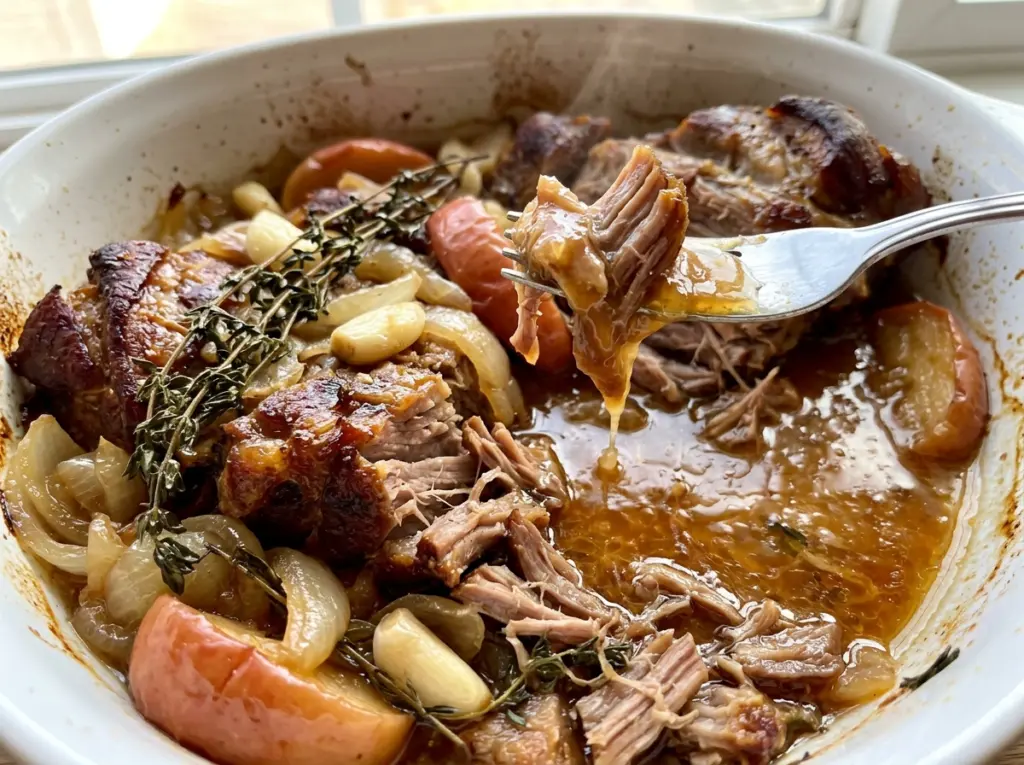
When the pork first hits the hot Dutch oven, it should sizzle and begin building a deep brown crust. Rushing that part leaves pale meat and a less savory braising liquid, so I let the roast brown on every side before anything wet goes into the pot. That first stretch of cooking is what gives Apple Cider Braised Pork Shoulder its rich base.
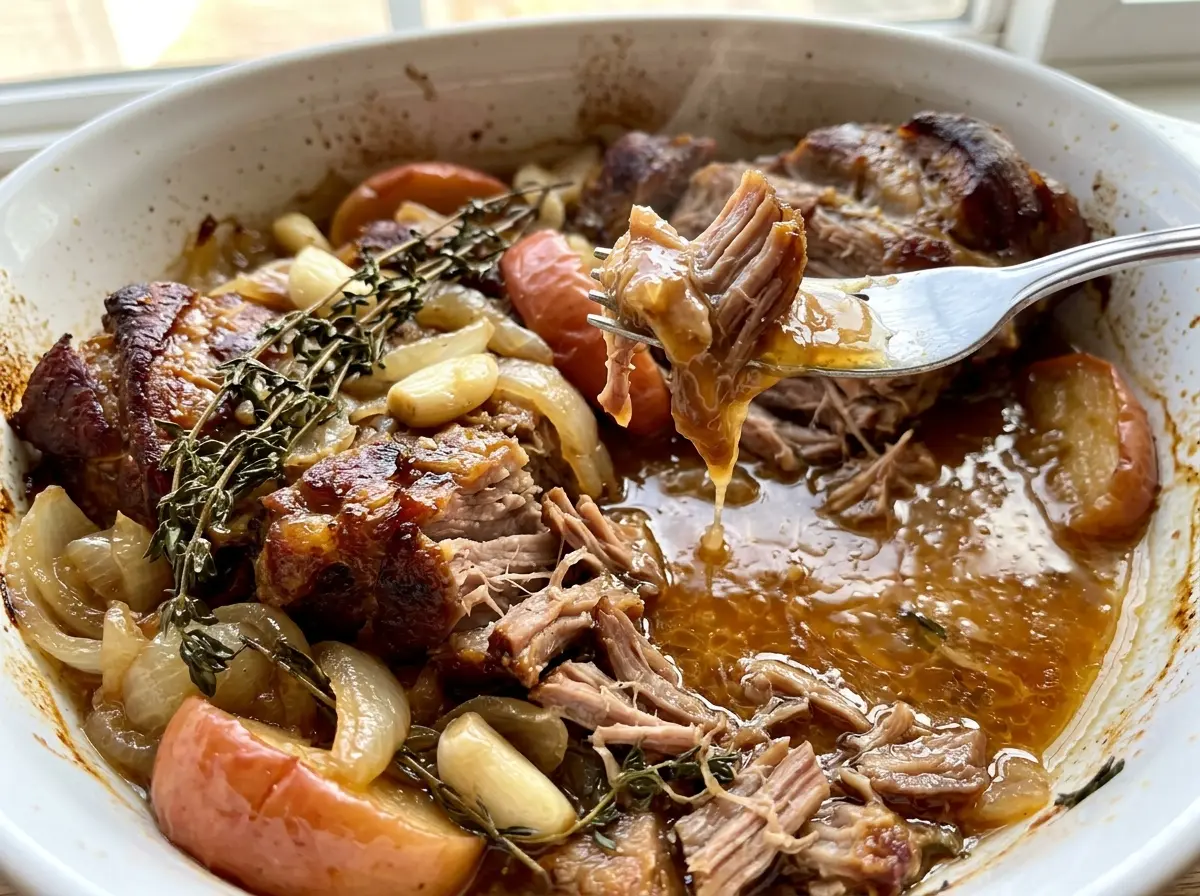
Apple cider brings gentle sweetness, while chicken broth and Dijon keep the liquid savory rather than tasting like warm apple juice. Once the pork is covered and tucked into a low oven, the long braise does the work: the shoulder turns fork-tender, and the cider becomes a spoonable pan liquid. I serve the meat with that liquid instead of trying to turn it into a thick gravy.
Kitchen Note
Give the pork the full 15-minute rest on the cutting board before serving. The meat stays easier to handle, and you won’t lose its juices the moment you cut into it.
Save Apple Cider Braised Pork Shoulder for a slow, hands-off dinner with tender pork and a savory cider pan liquid.
Why the Cider Braising Liquid Isn’t Meant to Become Gravy
This pot makes a braising liquid, not a thick gravy. There isn’t flour or another thickener in it, and the pork cooks covered, so the liquid doesn’t reduce into a spoon-coating sauce. That’s intentional: it stays loose enough to serve over the pork and carries the onion, garlic, thyme, and browned bits along with it.
If you expect a gravy-like finish, the liquid may look too thin when you lift the lid. Don’t try to fix that by boiling it down with the pork still in the pot; the meat has already had a long braise, and extra cooking can take it past tender. Lift out the roast, skim the excess fat from the liquid, and serve the two together. A little of that fragrant cooking liquid on each portion is the point, not a thick coating.
The cider also isn’t being used on its own. Chicken broth and Dijon bring a savory edge that balances its fruitiness, while the aromatics make the liquid taste like part of the meal rather than a sweet cooking liquid. Keeping that balance is why this version finishes simply, with the pork and its own pan juices.
What the Cider, Broth, and Mustard Each Bring to the Pot

- Boneless pork shoulder — This cut has enough connective tissue and fat to stay succulent through a long braise and become fork-tender. Pork loin is much leaner and won’t give you the same soft, pull-apart texture. Choose a piece with even thickness so it cooks at a more consistent pace.
- Apple cider — Use the kind sold as fresh, cloudy cider, not apple cider vinegar. It brings a fuller apple flavor than clear apple juice. If juice is what you have, replace the cider volume for volume; the finished liquid will taste sweeter and less rounded.
- Chicken broth — Broth gives the cider a savory backbone. A low-sodium version is a useful choice if you want more control over the final salt level; the braising liquid will still have plenty of flavor from the browned pork and aromatics.
- Dijon mustard — Dijon adds a gentle tang that keeps the liquid from reading as sweet. Whole-grain mustard works in the same amount, though it leaves little mustard seeds in the finished liquid and gives it a more textured look.
- Onion, garlic, thyme, and bay — These aromatics build the pot’s savory depth without competing with the cider. Fresh thyme sprigs are easy to lift out after cooking, and the bay leaf should also be discarded before serving.
Building the Braise in Four Stages
Season and Brown the Shoulder
Heat the oven to 325°F, then pat the pork dry and season it all over with kosher salt and black pepper. Warm the vegetable oil in a 5- to 6-quart Dutch oven over medium-high heat. Brown the pork on every side, about 10 to 12 minutes total, then move it to a plate. Drying the surface first helps the meat brown instead of steaming against the hot pot.
Soften the Onion Before Adding Garlic
Add the thinly sliced onion to the same pot and cook, stirring occasionally, until softened, about 5 to 7 minutes. The onion will pick up some of the browned flavor left behind by the pork. Stir in the minced garlic and cook for 30 seconds; garlic needs only a brief turn in the hot pot, since it can scorch if left there too long.
Pour in the Cider and Lift the Fond
Add the apple cider and chicken broth, then stir in the Dijon, thyme sprigs, and bay leaf. Scrape the bottom of the pot as you stir so the browned bits loosen into the liquid rather than staying stuck to the Dutch oven. Bring the mixture to a simmer before returning the pork. That simmer gets the covered pot started evenly once it goes into the oven.
Braise Until Fork-Tender, Then Rest
Return the pork to the pot, cover it, and braise in the oven for 3 to 3 1/2 hours. Check the thickest part for 195°F to 205°F and confirm that a fork slides into the meat easily; tenderness matters along with the number. Transfer the pork to a cutting board and let it rest for 15 minutes. Discard the thyme stems and bay leaf, skim excess fat from the braising liquid, and serve the pork with the liquid.
Three Ways to Adjust the Cider Braise
Use Pear Cider for a Softer Fruit Note
Swap pear cider for the apple cider in the same volume. The braise keeps its gentle fruitiness but tastes a little less distinctly apple-forward, while the broth and Dijon still give the liquid a savory balance.
Make a Lower-Sodium Pot
Use low-sodium chicken broth and reduce the kosher salt to 1 teaspoon. The pork will taste less salty, and the cider, browned bits, and mustard will still give the braising liquid plenty of character.
Give It a Seeded Mustard Finish
Replace the Dijon with the same amount of whole-grain mustard for a more pronounced mustard texture in the pan liquid. The flavor stays tangy and savory, but you’ll see the mustard seeds throughout the sauce.
Storage and Reheating
- Refrigerator: Refrigerate the pork and braising liquid within 2 hours, stored together in a covered container, for 3 to 4 days. The fat will firm up as it chills and is easy to remove before reheating.
- Freezer: Freeze portions with some braising liquid in airtight, freezer-safe containers for up to 2 to 3 months. Thaw overnight in the refrigerator for more even reheating.
- Reheating: Warm the pork gently in a covered saucepan with its liquid over low heat until it reaches 165°F. Avoid high heat, which can dry out the meat before the middle warms through.
Questions That Come Up With This Pork Shoulder
Apple Cider Braised Pork Shoulder
Ingredients
Equipment
Method
- Heat the oven to 325°F.
- Pat the pork dry and season all over with the salt and pepper.
- Heat the oil in a 5- to 6-quart Dutch oven over medium-high heat.
- Brown the pork on all sides, about 10 to 12 minutes total.
- Transfer the pork to a plate.
- Add the onion to the pot and cook, stirring occasionally, until softened, 5 to 7 minutes.
- Add the garlic and cook for 30 seconds.
- Pour in the apple cider and chicken broth, then stir in the Dijon mustard, thyme, and bay leaf, scraping up any browned bits from the pot.
- Bring the liquid to a simmer.
- Return the pork to the pot and cover.
- Braise in the oven for 3 to 3 1/2 hours, until fork-tender and 195°F to 205°F in the thickest part.
- Transfer the pork to a cutting board and rest for 15 minutes.
- Discard the thyme stems and bay leaf.
- Skim excess fat from the braising liquid.
- Serve the pork with the liquid.