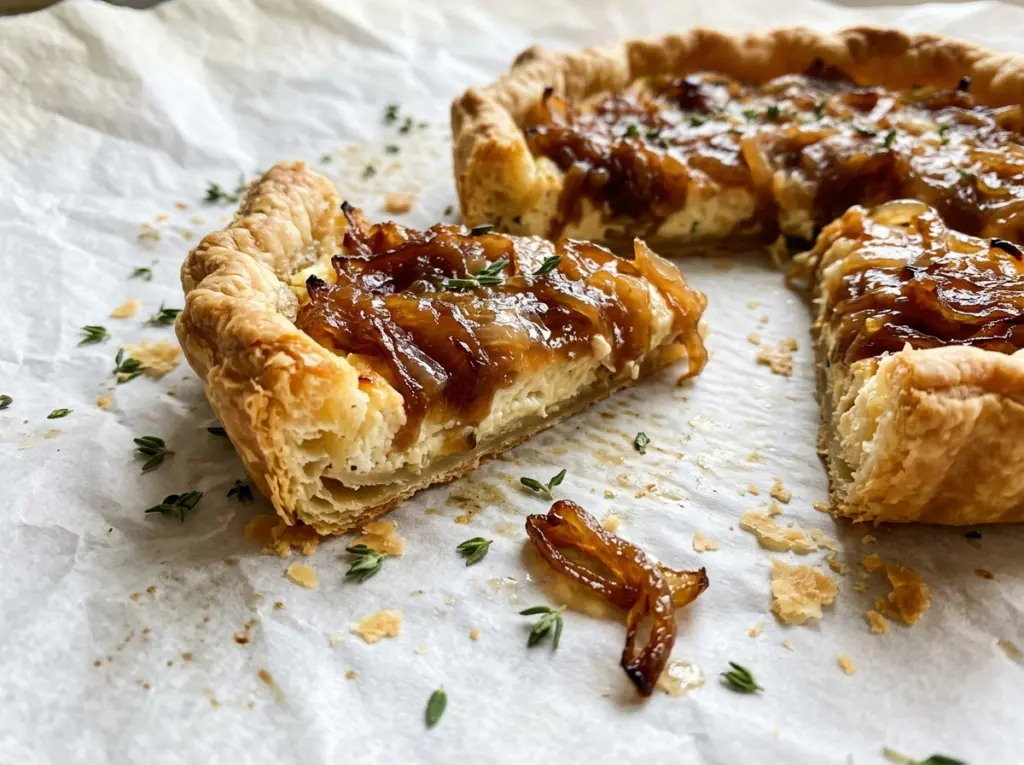
The onions start out taking over the skillet, then slowly soften and shrink until they’re deeply golden and sweet. That transformation takes longer than a quick sauté, but it’s what gives these caramelized onion and goat cheese tarts their rich, savory filling without needing a long ingredient list.
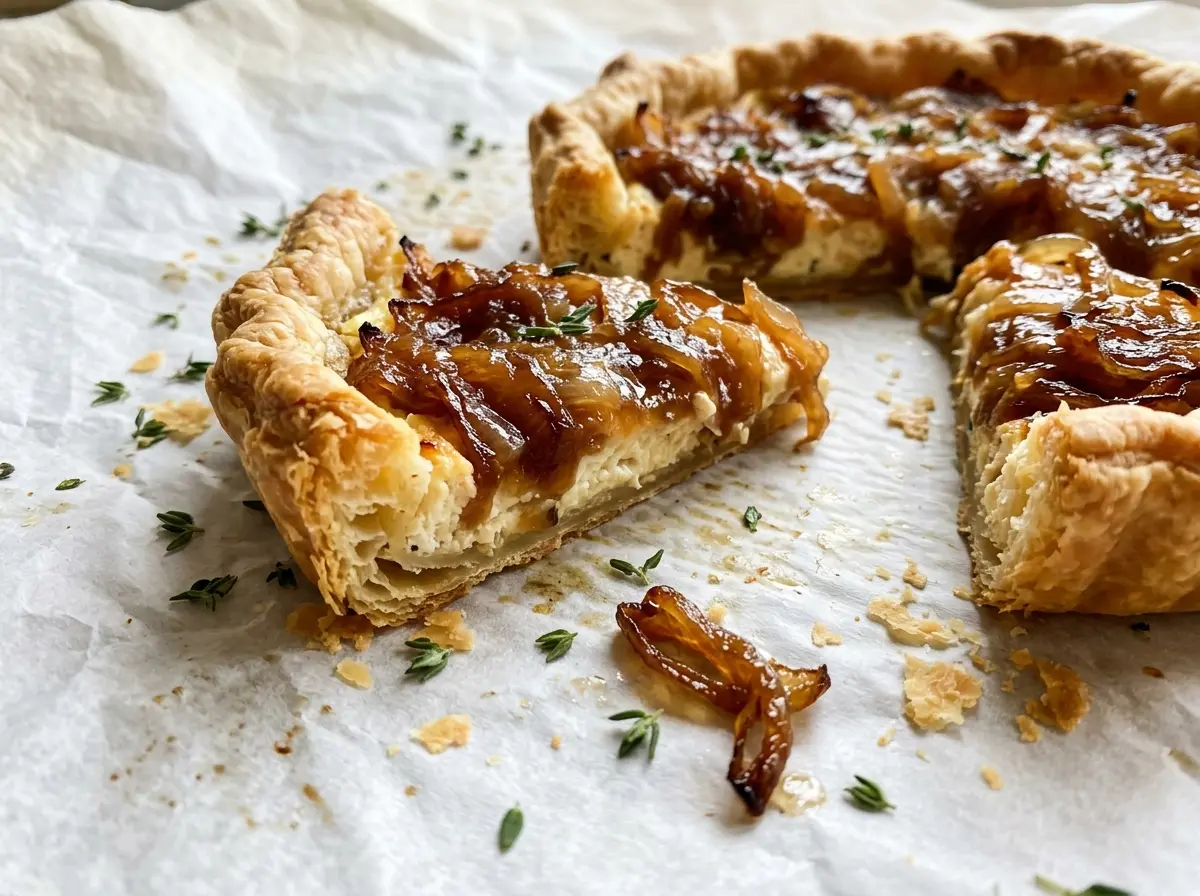
I like the balance here: tangy goat cheese under a generous layer of mellow onions, all tucked inside buttery puff pastry. The onions cook gently while the oven heats and the pastry is cut, so the filling is ready without rushing. A little fresh thyme goes in at the end, where it stays fragrant instead of cooking away. Each square comes out with a crisp, puffed edge and a creamy center that’s easy to serve as a small lunch or a party bite.
Kitchen Note
Keep the thawed pastry cold while you work with it. If it turns soft and floppy, the squares are harder to handle neatly, so work with one sheet at a time and return the other to the refrigerator.
Save these caramelized onion and goat cheese tarts for a gathering when you want crisp pastry, creamy cheese, and slow-cooked onions in every bite.
Why the Onions Need Time Before They Turn Golden
A skillet full of sliced onions can look like it’s barely changing for the first part of the cook. They soften and release moisture before their sugars begin to brown, so the deep color comes gradually rather than all at once. Keeping the heat at medium-low gives the slices time to cook evenly; pushing the heat higher to speed things up can leave you with browned edges and onions that are still firm in the middle.
That slow change is what makes the topping taste rounded and sweet instead of sharp. Stirring often moves the onions around the pan so more of them have contact with the butter and olive oil, and it helps prevent any one spot from scorching. The goal isn’t a dark, sticky layer on the bottom of the skillet. Look for tender onions with an even deep-golden color, then add the thyme at the finish so its aroma stays fresh.
There’s no need to add sugar to coax them along. The onions bring their own sweetness as they cook; the extra time is what lets that sweetness develop without burning the pan.
What Gives These Tarts Their Creamy, Savory Balance
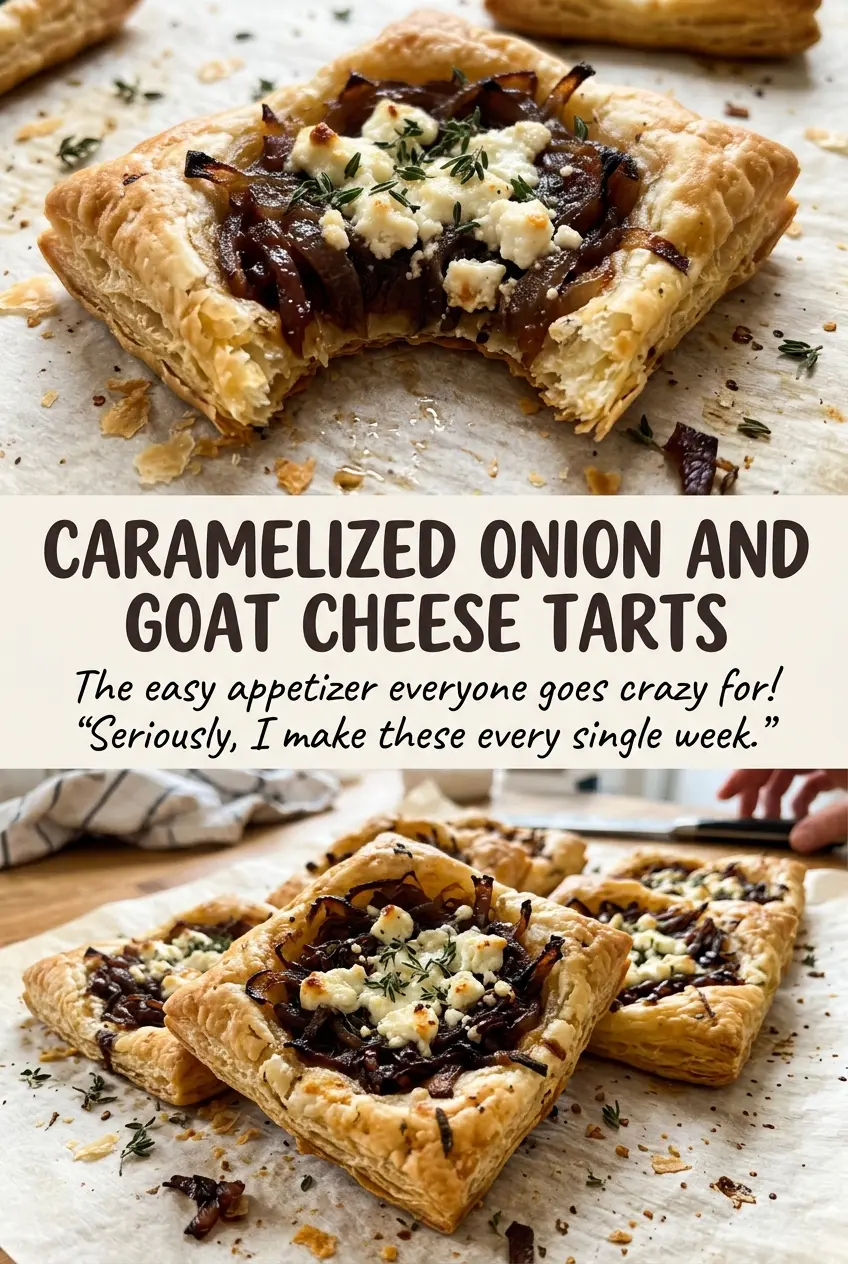
- Yellow onions — Their familiar savory sweetness suits a long, gentle cook. Choose firm onions without soft spots; there’s no need to seek out a specialty variety. Slice them thinly and evenly so they soften at about the same pace.
- Butter and olive oil — Butter contributes a rounded, rich taste, while olive oil helps keep the butter from being the only fat in the pan. Use a butter you enjoy eating, but an everyday olive oil is perfectly suitable here.
- Fresh thyme — Fresh leaves bring a clean herbal note that cuts through the richness of the cheese and pastry. Strip the leaves from the stems before measuring, and keep them ready to stir in near the end of the onion cook.
- Goat cheese and heavy cream — Goat cheese supplies the tart, tangy note; heavy cream loosens it into a spreadable mixture. Let the cheese soften before stirring so the filling becomes smooth rather than lumpy. A plain, everyday goat cheese works well.
- Frozen puff pastry — The pastry’s layers create the crisp frame around the soft filling. Thaw it while keeping it cold, and unfold it gently so the seams don’t crack. The egg and water wash gives the exposed border its deep golden finish.
How to Shape and Bake the Tarts Without Losing the Puff
Cook the Onions Until Deeply Golden
Melt the butter with the olive oil in a 12-inch skillet over medium heat, then add the sliced onions, kosher salt, and black pepper. Reduce the heat to medium-low and cook, stirring often, for 35–45 minutes. The onions should become very tender and deeply golden, not just translucent or lightly browned. Stir in the thyme during the last minute, then transfer the onions to a bowl to cool while you prepare the pastry.
Mark the Borders and Dock the Centers
Heat the oven to 400°F and line two 13×18-inch rimmed baking sheets with parchment paper. Unfold the two thawed, cold pastry sheets and cut each into four squares, placing four squares on each baking sheet. Score a 1/2-inch border on each square without cutting all the way through the pastry. Prick the centers several times with a fork; this gives the filling a place to sit inside the border.
Spread the Cheese Inside Each Border
Stir the softened goat cheese and heavy cream together until smooth. Divide the mixture among the pastry squares and spread it inside the scored borders, leaving the outside edges clear. Spoon the cooled onions over the cheese, sharing them evenly across the eight tarts. Whisk the egg with the water and brush it over the pastry borders for an even finish.
Bake Until the Edges Are Deep Golden
Bake for 18–22 minutes, switching the sheets’ rack positions halfway through. The pastry should be puffed and deep golden brown when it comes out of the oven; pale edges need more time. Let the tarts rest on the baking sheets for 5 minutes before serving. That brief rest makes them easier to lift without disturbing the tender centers.
Three Easy Ways to Adapt the Tarts
A Milder Cream-Cheese Filling
Replace the goat cheese with the same amount of softened cream cheese and stir it with the heavy cream until smooth. The filling will be less tangy and a little richer, while still making a creamy base for the onions.
A Gluten-Free Pastry Version
Use gluten-free puff pastry in place of the regular puff pastry, choosing sheets that can be baked at 400°F. Keep them cold and use the same square, border, and filling method. The rise and browning can vary by brand, so use the visual cue of puffed, deep-golden pastry within the 18–22-minute bake.
A Rosemary-Scented Onion Topping
Swap the thyme for 1/2 teaspoon of finely chopped fresh rosemary, stirring it into the onions during the last minute. Rosemary is more assertive and piney than thyme, so this gives the tarts a bolder herbal edge without changing the creamy, savory filling.
Storage and Reheating
- Refrigerator: Store leftover baked tarts in an airtight container for up to 3 days. The pastry will soften as it sits.
- Freezer: Freeze fully cooled tarts in a single layer, then transfer them to an airtight container for up to 1 month. Thaw overnight in the refrigerator for the best texture.
- Reheating: Warm them in a 400°F oven until heated through and crisp again. Skip the microwave, which softens the pastry instead of restoring its flaky edges.
Questions That Come Up When Making These Tarts
Caramelized Onion and Goat Cheese Tarts
Ingredients
Equipment
Method
- Melt the butter with the olive oil in a 12-inch skillet over medium heat.
- Add the onions, salt, and pepper.
- Reduce the heat to medium-low and cook, stirring often, for 35–45 minutes, until the onions are very tender and deeply golden.
- Stir in the thyme during the last minute.
- Transfer the onions to a bowl and let them cool while you prepare the tarts.
- Heat the oven to 400°F.
- Line two 13x18-inch rimmed baking sheets with parchment paper.
- Unfold the pastry sheets and cut each into 4 squares.
- Place 4 squares on each baking sheet.
- Score a 1/2-inch border on each square without cutting through.
- Prick the centers several times with a fork.
- Stir the goat cheese and heavy cream together until smooth.
- Divide the cheese mixture among the pastry squares and spread it inside the scored borders.
- Divide the onions over the cheese.
- Whisk the egg with the water and brush it over the pastry borders.
- Bake for 18–22 minutes, switching the sheets’ rack positions halfway through, until the pastry is puffed and deep golden brown.
- Let the tarts rest on the baking sheets for 5 minutes before serving.