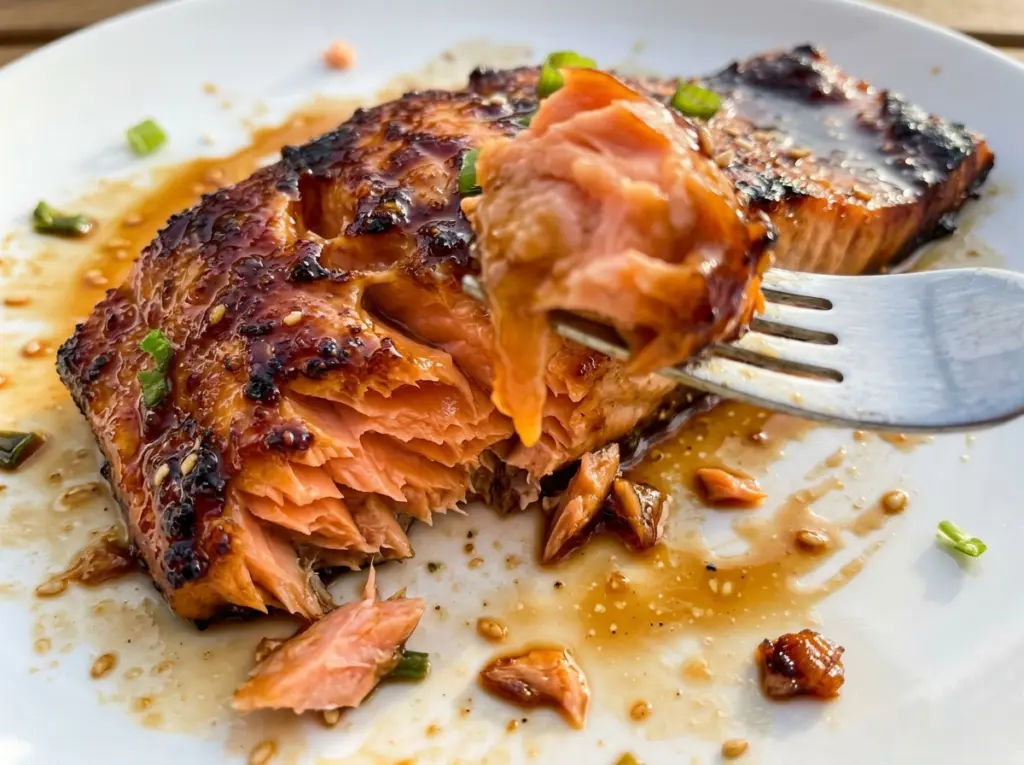
The glaze starts out thin and dark, then turns just syrupy enough to cling to a spoon after a few minutes over the heat. That’s the point where I stop simmering it, because it’ll thicken a little more as it cools. For Brown Sugar Soy Sauce Salmon, that glossy mix of soy sauce, brown sugar, garlic, and ginger gives the fish a sweet-savory coating without burying the salmon underneath it.
I brush the glaze on partway through baking instead of coating the fillets from the start. The salmon gets a few minutes in the oven first, so the brown sugar spends less time exposed to high heat and the fish has a head start cooking through. A little rice vinegar keeps the glaze from tasting flat, and dividing it between two clean bowls means there’s a fresh portion ready to serve alongside the finished salmon.
Kitchen Note
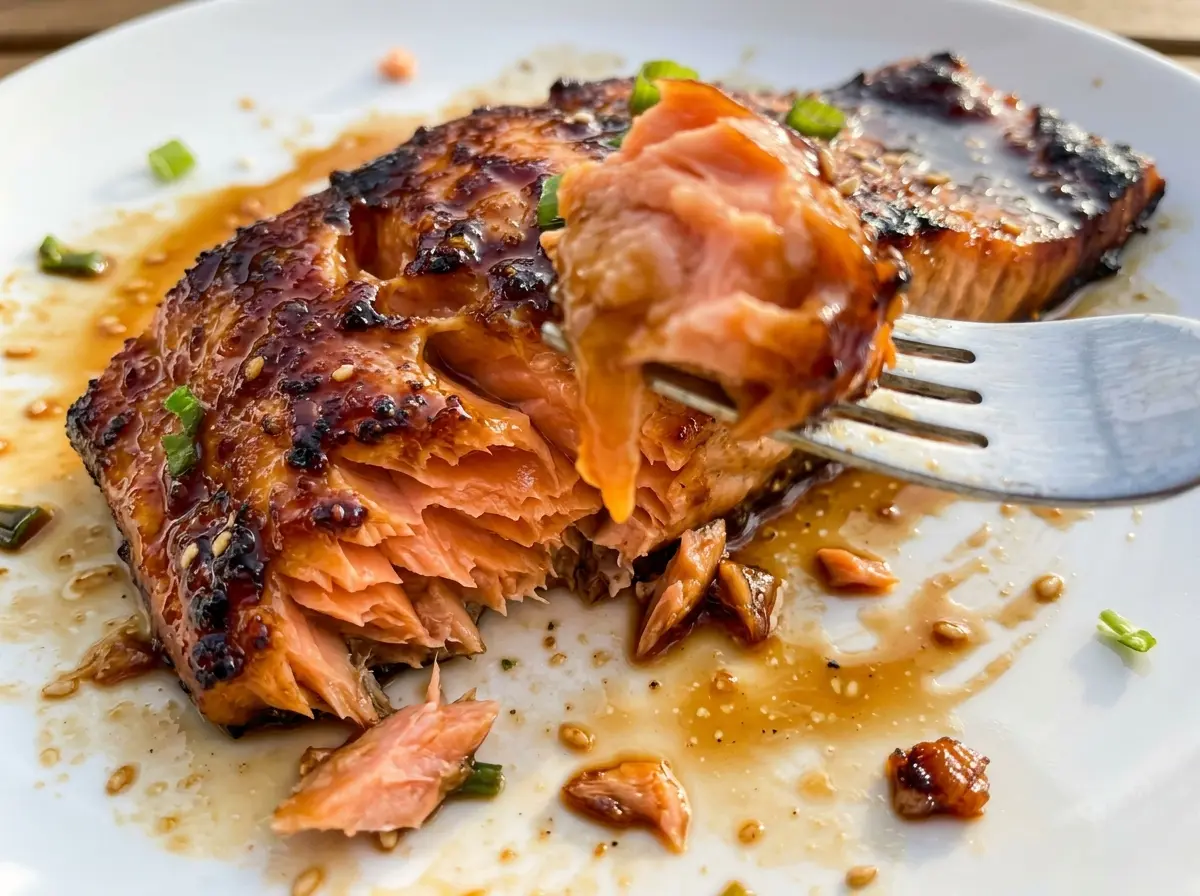
Stop simmering when the glaze looks slightly syrupy, not thick like candy. It tightens as it cools, and a glaze that’s still easy to brush spreads over the salmon without dragging at the surface.
Save this Brown Sugar Soy Sauce Salmon for a glossy, ginger-garlic glaze and tender fillets with a savory-sweet finish.
Why the Salmon Gets a Head Start Before the Brown Sugar Glaze
Brown sugar makes a lovely glossy coating, but sugar can darken quickly in a hot oven. If the raw fillets went in already coated, the glaze would spend the whole bake heating while the center of the fish was still cooking. Giving the salmon its first seven minutes without glaze lets it begin to cook before the sweet coating goes on.
That short head start also gives the glaze a better chance to cling instead of sliding off a cold, wet surface. Brush it over the top after those first minutes, then return the dish to the oven to finish. The glaze gets just enough time to set and turn shiny while the salmon reaches its doneness. Keep the extra portion in its own clean bowl; it’s meant for serving, not for brushing onto the fish.
This timing matters most with fillets close to the thickness in this recipe. A thicker piece takes longer to heat through, while a thin tail portion cooks faster, so use the thickest part of each fillet to judge doneness rather than relying on color alone.
What the Salmon, Soy, and Brown Sugar Each Bring to the Glaze

- Skin-on salmon — The skin helps hold each fillet together as you lift it from the baking dish, and the one-inch thickness gives the oven time to cook the center without rushing the glaze. Look for pieces with an even thickness so they finish at about the same time. Freshness matters more here than choosing a premium label; the fish should smell clean, not strongly fishy.
- Low-sodium soy sauce — It supplies the glaze’s savory backbone without making the reduction overly salty. If you need a gluten-free swap, use an equal volume of low-sodium tamari; the result stays savory, though its exact saltiness varies by brand. Low-sodium matters because simmering concentrates the sauce.
- Light brown sugar — It sweetens and gives the glaze its sheen as it cooks. Packed sugar measures consistently, and the light variety keeps the molasses note in the background so the ginger and garlic still come through.
- Rice vinegar — Its mild acidity balances the sweetness and salty soy. It’s worth using if you have it; a sharper vinegar changes the balance, though apple cider vinegar works as a practical one-for-one replacement.
- Fresh garlic and ginger — Minced garlic and finely grated fresh ginger disperse through the glaze and give it a lively, aromatic finish. Fresh ginger’s bright bite is the part ground ginger won’t quite reproduce, so use a fresh knob with firm skin when you can.
- Olive oil and black pepper — The oil coats the top of the fish before baking, while pepper adds a dry, gentle bite against the sweet glaze. No specialty oil is needed; a regular olive oil works well here.
How to Bake the Fillets Without Overcooking the Centers
Simmer the Glaze Until It Just Turns Syrupy
Combine the soy sauce, brown sugar, rice vinegar, minced garlic, and grated ginger in a small saucepan. Bring the mixture to a simmer over medium heat, stirring often, and cook for five to seven minutes. You’re looking for a slight syrupiness, not a thick reduction; it should still brush on easily. Divide it evenly between two clean bowls before it comes near the fish.
Set Up the Salmon in the Baking Dish
Heat the oven to 400°F and lightly grease a 9×13-inch baking dish. Set the fillets in the dish skin-side down, then brush them with olive oil and sprinkle with black pepper. Arrange them with a little room between pieces so the tops are easy to reach with a pastry brush. Keeping the skin against the dish also makes the cooked fillets easier to lift out intact.
Brush on the Glaze Partway Through Baking
Bake the salmon for seven minutes before brushing the tops with glaze from one bowl. Return the dish to the oven for another five to eight minutes. Check the thickest part of a fillet: it should be opaque and register 145°F. Fillet thickness varies, so start checking at the earlier end of that finishing window instead of letting the surface color make the decision for you.
Rest Briefly and Serve with the Clean Glaze
Take the dish from the oven and let the salmon rest for three minutes. The short rest gives the fillets a moment to settle before you lift them, so handle them gently at the skin. Serve with the untouched glaze from the second bowl. That fresh portion gives each serving an extra spoonful without reusing the glaze that touched the fish.
Three Simple Swaps for a Different Take on These Salmon Fillets
Make the glaze soy-free with coconut aminos
Replace the soy sauce with the same volume of coconut aminos. They’re typically sweeter and less savory, so the finished glaze will taste gentler and more sugar-forward; keep the brown sugar in place for the same glossy finish.
Use dark brown sugar for a deeper glaze
Swap packed dark brown sugar for the light brown sugar in the same amount. The extra molasses flavor makes the glaze taste rounder and more caramel-like, with a darker color; the texture remains suitable for brushing.
Trade rice vinegar for apple cider vinegar
Use the same volume of apple cider vinegar in the glaze if rice vinegar isn’t on hand. It brings a slightly fruitier, sharper edge, so the sweet-and-savory balance will be a touch more pronounced without changing the cooking method.
Storage and Reheating
- Refrigerator: Store leftover salmon in an airtight container and refrigerate within two hours. It keeps for three to four days; the glaze will firm up and the fish may be less moist after chilling.
- Freezer: Freeze cooked salmon in an airtight, freezer-safe container for up to two to three months. Freeze any clean leftover serving glaze separately for easier portioning; thaw both in the refrigerator.
- Reheating: Cover the salmon and warm it gently in a 300°F oven until it reaches 165°F in the center. Avoid high heat or repeated reheating, which can dry the fish and make the glaze sticky.
Questions That Come Up When Making Brown Sugar Soy Sauce Salmon
Brown Sugar Soy Sauce Salmon
Ingredients
Equipment
Method
- Combine the soy sauce, brown sugar, rice vinegar, garlic, and ginger in a small saucepan.
- Bring the mixture to a simmer over medium heat and cook for 5–7 minutes, stirring often, until slightly syrupy.
- Divide the glaze evenly between two clean bowls.
- Heat the oven to 400°F.
- Lightly grease a 9x13-inch baking dish.
- Place the salmon skin-side down in the dish.
- Brush the salmon with olive oil.
- Sprinkle the salmon with black pepper.
- Bake for 7 minutes.
- Brush the salmon with the glaze from one bowl.
- Bake for 5–8 minutes more, until opaque and 145°F at the thickest part.
- Rest the salmon for 3 minutes.
- Serve with the untouched glaze from the second bowl.


