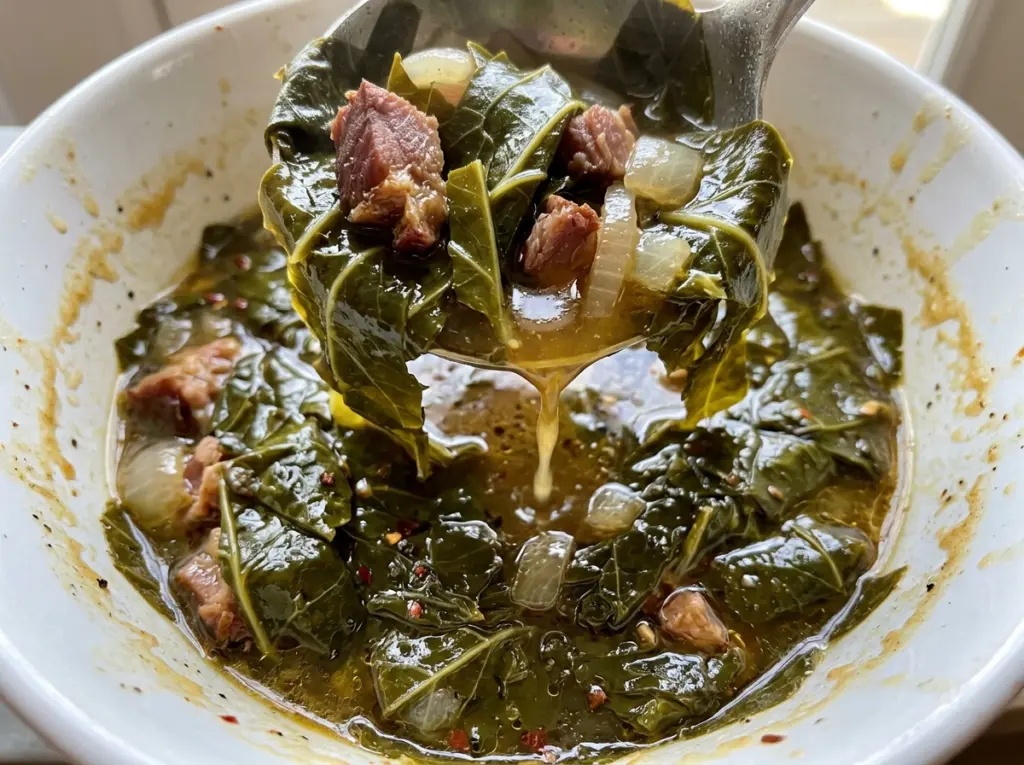
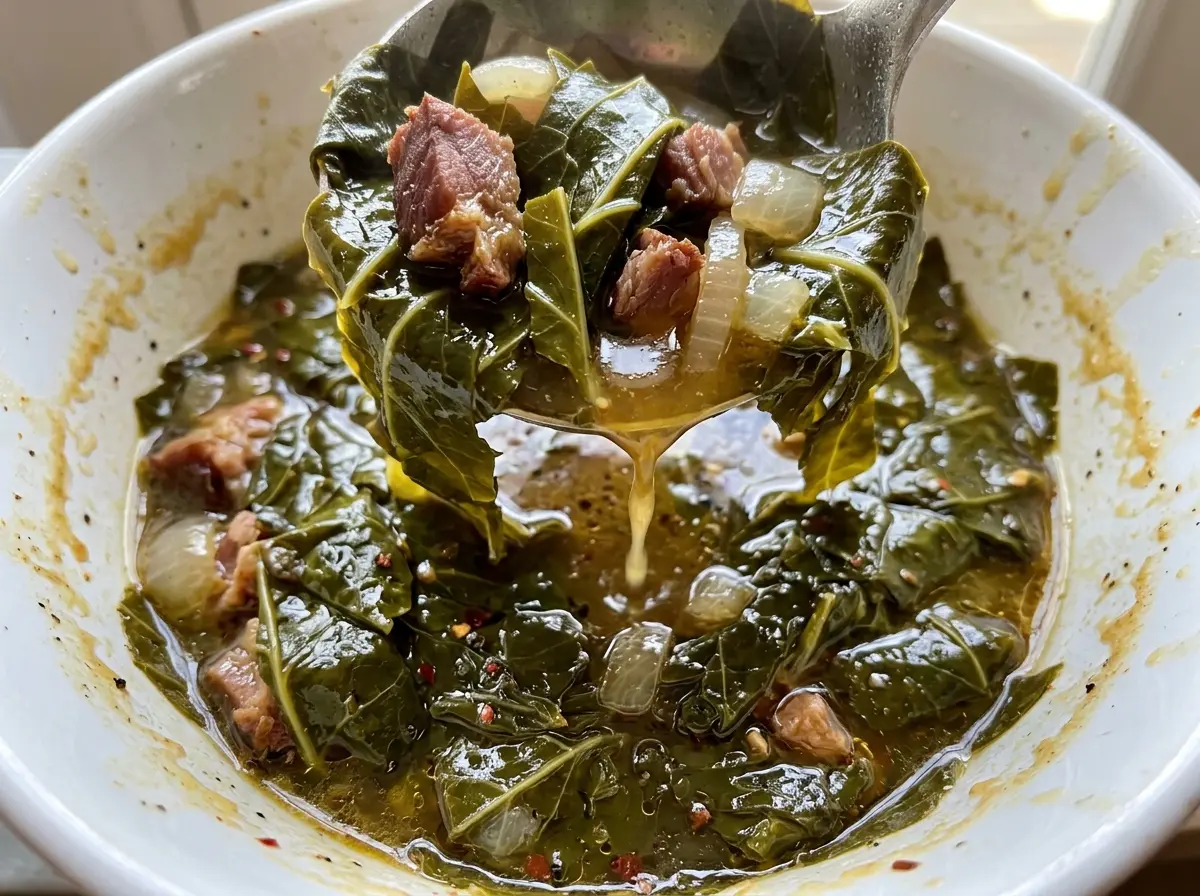
Two pounds of chopped collards make a tall, stubborn pile, and it can look like there’s no way they’ll fit in the pot. They soften as they cook, though, and the broth turns into the kind of savory pot liquor you’ll want to spoon over every bite. That’s the comfort of Southern Collard Greens: tender leaves, smoky ham, and just enough heat from the red pepper flakes.
I like finishing the greens with apple cider vinegar rather than trying to make the broth taste bright from the start. Added at the end, it cuts through the richness of the ham hock and chicken broth without taking over. The leaves should be tender, not falling apart, and the meat should pull easily from the bone.
Kitchen Note
Wait until the greens are tender before adding the vinegar. Acid can slow softening, and there’s no advantage to adding it early.
Save these Southern Collard Greens for a slow-simmered side with tender leaves, smoky ham, and a bright finish of cider vinegar.
Why the Ham Hock Gets a 45-Minute Head Start
The ham hock needs time to give the broth its smoky depth and begin loosening from the bone. It goes into the pot with the chicken broth after the onion, garlic, and red pepper flakes have had their brief turn in the oil. Once the broth boils, lower the heat and let the covered pot simmer gently for 45 minutes before the collards go in.
That staggered timing matters because the greens need their own long stretch to become tender. If they went in at the beginning, they’d spend an extra 45 minutes cooking while the ham hock worked in the broth. Instead, the hock gets its head start, then the collards simmer until both are ready: soft leaves and meat that pulls away from the bone. Keep the heat gentle during both stretches. A lively boil isn’t needed to get the job done.
The broth also gives you a way to season the greens from the inside out. They cook directly in it, picking up the savory flavor as they soften, rather than being cooked separately and dressed afterward. You’ll still want to taste before adding the final salt, since the smoked ham hock contributes its own seasoning.
What the Collards, Ham Hock, and Broth Each Bring
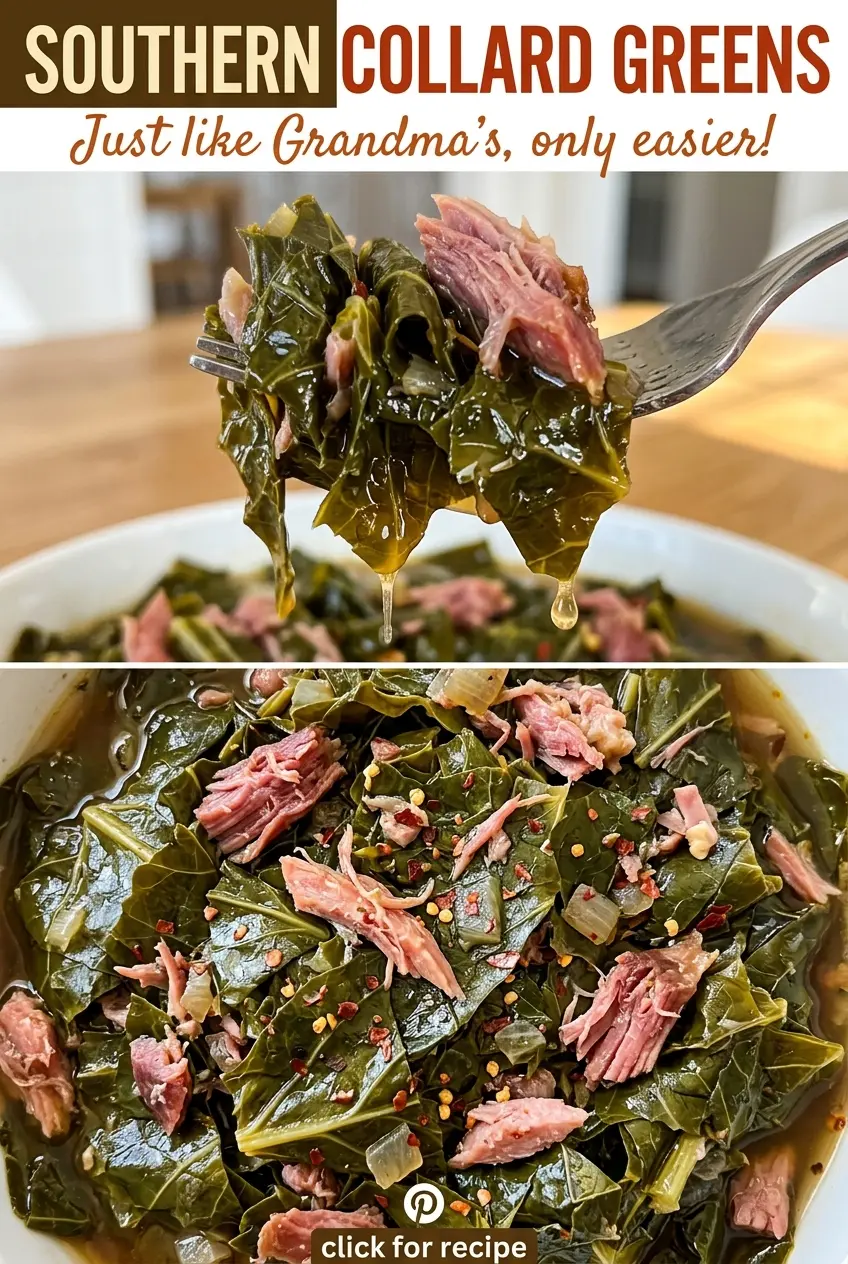
- Collard greens — Their sturdy leaves can stand up to a long simmer without disappearing into the broth. Remove the tough stems and chop the leaves so they’re easier to stir and eat. Fresh leaves should look full and crisp rather than limp. Mustard greens are a possible swap, but they taste sharper and soften differently, so the finished pot won’t have the same texture.
- Smoked ham hock — This adds both smoky flavor and meat to the finished greens. Let it simmer in the broth before adding the leaves, then pull the meat from the bone once it’s cool enough to handle. Leaving it out makes a less smoky, lighter pot; using chicken broth still means that version isn’t vegetarian.
- Low-sodium chicken broth — It supplies the cooking liquid while leaving room to season the pot at the end. A low-sodium broth is useful here because the smoked hock also brings salt. For a meat-free adaptation, use vegetable broth and leave out the ham hock; the result won’t have the same smoky, meaty depth.
- Apple cider vinegar — Its tang balances the rich broth and ham. It’s a finishing ingredient, not part of the long simmer. The onion, garlic, and crushed red pepper flakes round out the base; cook the garlic and flakes only briefly so the garlic doesn’t scorch.
Build the Broth Before the Collards Go In
Wash and Chop the Leaves
Wash the collards thoroughly in several changes of cold water, then drain and chop the leaves. Grit can cling to leafy greens, so don’t rush straight from one rinse to the cutting board. Remove the tough stems before chopping, as they won’t soften at the same pace as the leaves. Keep the chopped greens nearby while you build the broth.
Soften the Onion, Then Bloom the Garlic
Heat the vegetable oil in an 8-quart pot over medium heat and add the chopped onion. Cook for 5 to 7 minutes, stirring occasionally, until the onion has softened; it should look translucent and smell sweet, not browned. Stir in the minced garlic and crushed red pepper flakes for 30 seconds. Garlic cooks quickly, so move straight to the next step rather than letting it darken.
Give the Ham Hock Its First Simmer
Add the ham hock and chicken broth, then bring the pot to a boil. Reduce the heat until the broth holds a gentle simmer, cover the pot, and cook for 45 minutes. Look for small, steady bubbles rather than a hard, rolling boil. Keeping the pot covered helps the broth stay in the pot while the hock simmers.
Wilt the Greens and Finish the Pot
Add the collards in batches, stirring as each batch wilts enough to make room for the next. Cover and simmer for 60 to 90 minutes, stirring occasionally, until the leaves are tender and the ham is pulling away from the bone. Transfer the hock to a cutting board and let it cool until easy to handle, about 10 minutes; pull off the meat, discard the bone and skin, and return the meat to the pot. Stir in the vinegar, kosher salt, and black pepper, then taste and adjust the salt.
Three Ways to Adjust the Pot to Your Table
Keep the Heat Gentle
For a milder pot, leave out the crushed red pepper flakes. The onion, garlic, smoked ham, and broth still give the greens plenty of savory character, but you won’t get the chile warmth at the back of each bite.
Make a Meat-Free Pot
Leave out the ham hock and replace the chicken broth with vegetable broth. After cooking the onion, garlic, and pepper flakes, add the broth and collards, then simmer covered until the greens are tender. You’ll lose the smoky meat and the ham to pull from the bone, but the greens still cook down in a flavorful broth.
Turn Up the Pepper
Use 1/2 teaspoon of crushed red pepper flakes instead of 1/4 teaspoon for a more noticeable kick. The heat will build in the broth as the greens simmer, so keep in mind that the finished pot will taste spicier than it does at the beginning.
Storage and Reheating
- Refrigerator: Refrigerate leftovers within 2 hours and keep them in a covered container for 3 to 4 days. The greens soften a little more as they sit.
- Freezer: Freeze in airtight containers for up to 3 months. The greens may be softer after thawing, but the broth and ham freeze well.
- Reheating: Warm gently in a covered saucepan, stirring now and then, until the leftovers reach 165°F. Avoid a hard boil, which can break down the greens further.
Questions That Come Up While the Greens Simmer
Southern Collard Greens
Ingredients
Equipment
Method
- Wash the collards thoroughly in several changes of cold water, then drain and chop the leaves.
- Heat the oil in an 8-quart pot over medium heat, add the onion, and cook for 5 to 7 minutes, stirring occasionally, until softened.
- Stir in the garlic and red pepper flakes and cook for 30 seconds.
- Add the ham hock and chicken broth and bring to a boil.
- Reduce the heat to maintain a gentle simmer, cover, and cook for 45 minutes.
- Add the collards in batches, stirring as they wilt.
- Cover and simmer for 60 to 90 minutes, stirring occasionally, until the greens are tender and the ham is pulling away from the bone.
- Transfer the ham hock to a cutting board and let it cool until easy to handle, about 10 minutes.
- Pull the meat from the bone, discard the bone and skin, and return the meat to the pot.
- Stir in the vinegar, salt, and black pepper.
- Taste and adjust the salt as needed.


