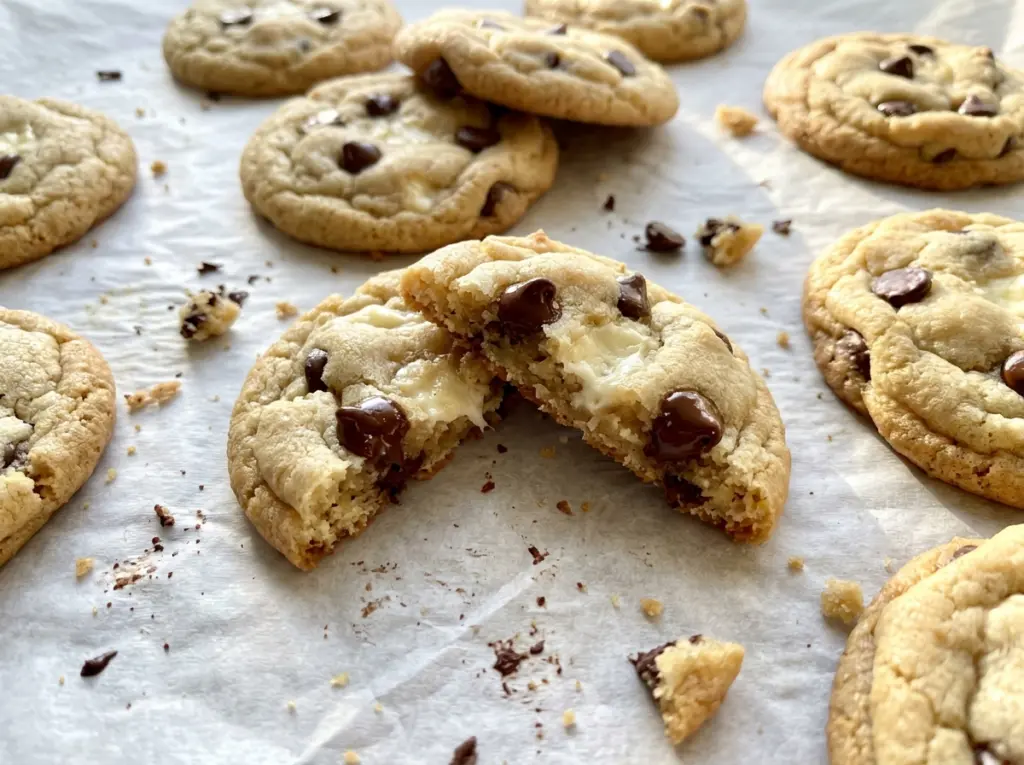
When the mixer stops, the butter and cream cheese should look smooth and creamy, with no obvious streaks clinging to the bowl. That soft base is what makes these softbatch cream cheese chocolate chip cookies different from a standard chocolate chip cookie: the centers stay tender while the edges set lightly golden. I get 24 cookies from the batch, and the dough is soft enough that chilling is part of the plan, not an optional pause.
I fold in semisweet chocolate chips, cover the bowl, and give the dough at least an hour in the refrigerator before scooping. The cornstarch also helps keep the texture delicate, while the mix of brown and granulated sugar brings enough sweetness without covering up the chocolate. Pull the cookies when the edges are set but the centers still look a little underdone, and you’ll have soft, chocolate-filled cookies with just enough golden edge.
Kitchen Note
The baking sheet needs to cool completely before the next round goes in. A warm sheet starts softening the dough before it reaches the oven, and the cookies won’t bake as evenly.
Save these softbatch cream cheese chocolate chip cookies for a bake day when tender centers and lightly golden edges are exactly what you want.
Why Cream Cheese Cookie Dough Needs a Full Hour in the Fridge
Cream cheese makes the dough softer than a typical chocolate chip cookie dough, and that softness is part of the payoff: the baked centers have a tender, almost plush bite. It also means the dough needs time to firm up before it hits the oven. Chilling gives the butter and cream cheese a chance to become less soft, so the cookies hold their shape better as the edges begin to set.
That hour also makes the dough easier to portion cleanly. If you try to scoop it while it’s still warm from mixing, it can cling to the scoop and feel messy to handle. Cover the bowl before refrigerating so the surface doesn’t dry out. The dough should be cold when you portion it, but don’t mistake a firm scoop for a problem; it softens as it bakes, leaving the centers tender instead of dense.
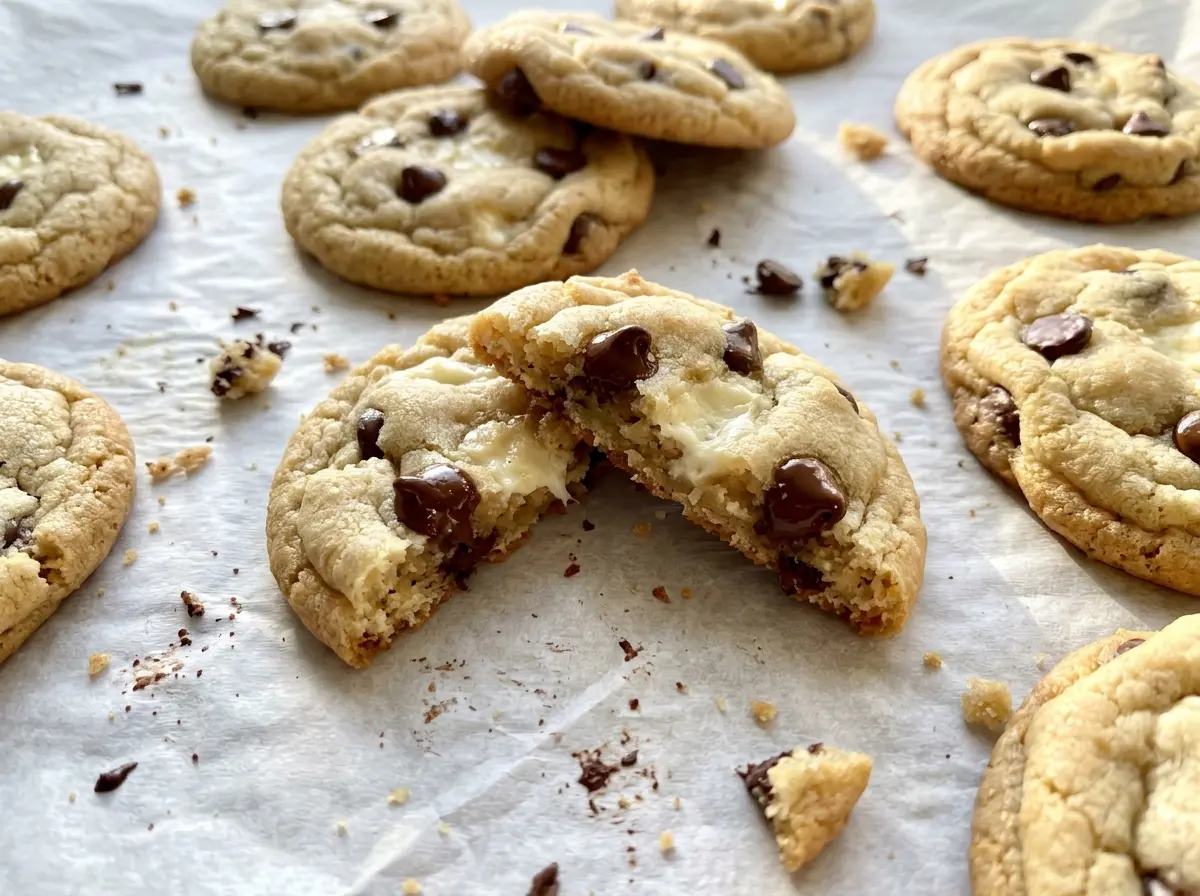
The goal isn’t to bake these until they look fully finished in the middle. The edges should be set and lightly golden, while the centers still look slightly underdone. Carryover heat from the baking sheet finishes them as they cool, which protects the soft texture this dough is meant to give you.
What the Cream Cheese, Cornstarch, and Two Sugars Do in These Cookies

- Butter and cream cheese — Both need to be softened so they beat smoothly with the sugars. The butter gives the cookies their familiar rich base; cream cheese adds a gentle tang and helps make the centers tender. Use plain cream cheese rather than a whipped spread, which has a different airy texture. There isn’t a direct swap that keeps the same result, so I wouldn’t replace it with extra butter.
- Light brown and granulated sugar — Brown sugar brings moisture and a mild molasses note, while granulated sugar balances the dough and helps the edges set. If dark brown sugar is what you have, use the same packed measure in place of the light brown; the cookies will have a deeper molasses flavor. The light brown version keeps the chocolate and cream cheese notes more delicate.
- All-purpose flour and cornstarch — Spoon the flour into the measuring cup and level it rather than packing it down; too much flour can make the cookies dry and heavy. The cornstarch contributes to the soft texture, so don’t leave it out or replace it with more flour if you want the same tender bite. A standard, inexpensive all-purpose flour works well here.
- Egg and vanilla — A room-temperature egg blends more smoothly into the softened butter and cream cheese mixture. Vanilla rounds out the dough without competing with the chocolate; either pure or imitation vanilla works, though pure vanilla tends to taste a little more fragrant.
- Semisweet chocolate chips — Semisweet chocolate keeps the cookies from tasting overly sweet. For a more irregular chocolate distribution, use chopped semisweet chocolate in place of the chips; it melts into softer pockets, while chips keep their shape more distinctly.
Mixing and Baking the Dough for Tender Centers
Beat the Butter, Cream Cheese, and Sugars Until Creamy
In a large bowl, beat the softened butter, cream cheese, packed light brown sugar, and granulated sugar with an electric mixer on medium speed for about 2 minutes. The mixture should look smooth and creamy rather than lumpy. Beat in the room-temperature egg and vanilla until combined, scraping down the sides of the bowl as needed. Scraping matters here because a streak of cream cheese or sugar left on the bowl can carry into the finished dough.
Mix in the Dry Ingredients Without Overworking the Dough
In a separate bowl, whisk together the flour, cornstarch, baking soda, and fine salt so the small amount of leavener is distributed through the flour. Add the dry mixture to the butter mixture and mix on low speed just until no dry streaks remain. Stop as soon as the flour disappears; a long mix after that point can make the cookies tougher. Fold in the chocolate chips so they’re spread through the dough without continuing to beat it.
Chill the Covered Dough
Cover the bowl and refrigerate the dough for at least 1 hour. Don’t skip the cover, which keeps the exposed dough from drying out while it chills. After chilling, the dough should be firm enough to portion without slumping immediately. If the refrigerator has made it particularly firm, scoop steadily rather than trying to beat or stir it loose.
Scoop, Bake, and Let the Cookies Set
Heat the oven to 350°F and line a baking sheet with parchment paper. Scoop the dough into 3-tablespoon portions, spacing them about 2 inches apart, and bake one sheet at a time for 12 to 14 minutes. Look for edges that are set and lightly golden; the centers should still look slightly underdone, not wet and shiny. Cool the cookies on the baking sheet for 5 minutes, then move them to a wire rack, and let the sheet cool completely before baking the remaining dough.
Simple Swaps for a Different Batch
Use Chopped Semisweet Chocolate
Replace the chocolate chips with the same volume of chopped semisweet chocolate. The smaller shards melt into more uneven pockets, so you’ll get some streaks of chocolate alongside the larger pieces.
Give the Cookies a Deeper Molasses Note
Use packed dark brown sugar in place of the light brown sugar, keeping the same measure. The stronger molasses flavor makes the cookies taste a little deeper and richer, while the rest of the dough stays the same.
Make a Gluten-Free Batch
Replace the all-purpose flour with the same volume of a cup-for-cup gluten-free baking flour blend made to substitute for wheat flour. The cookies may have a slightly more delicate crumb, so let them rest on the baking sheet for the full 5 minutes before moving them.
Storage and Reheating
- Refrigerator: Store fully cooled cookies in an airtight container for up to 5 days. They’ll feel firmer straight from the fridge; let one sit at room temperature before eating if you prefer a softer bite.
- Freezer: Freeze fully cooled cookies in an airtight freezer-safe container for up to 2 months, with parchment between layers to prevent sticking. Thaw at room temperature before serving.
- Reheating: Microwave one cookie in short bursts, stopping when it feels just warm and the chocolate begins to soften. Heating until the chips liquefy makes the cookie messy to handle.
Questions I Get Asked About These Cream Cheese Cookies
Softbatch Cream Cheese Chocolate Chip Cookies
Ingredients
Equipment
Method
- Beat the butter, cream cheese, brown sugar, and granulated sugar with an electric mixer on medium speed until smooth and creamy, about 2 minutes.
- Beat in the egg and vanilla until combined, scraping down the bowl as needed.
- Whisk together the flour, cornstarch, baking soda, and salt in a separate bowl.
- Mix the dry ingredients into the butter mixture on low speed just until no dry streaks remain.
- Fold in the chocolate chips.
- Cover the bowl and refrigerate the dough for at least 1 hour.
- Heat the oven to 350°F.
- Line a baking sheet with parchment paper.
- Scoop the dough into 3-tablespoon portions and arrange them about 2 inches apart on the baking sheet.
- Bake one sheet at a time for 12 to 14 minutes, until the edges are set and lightly golden while the centers still look slightly underdone.
- Let the cookies cool on the baking sheet for 5 minutes, then transfer them to a wire rack.
- Cool the baking sheet completely before baking the remaining dough.


