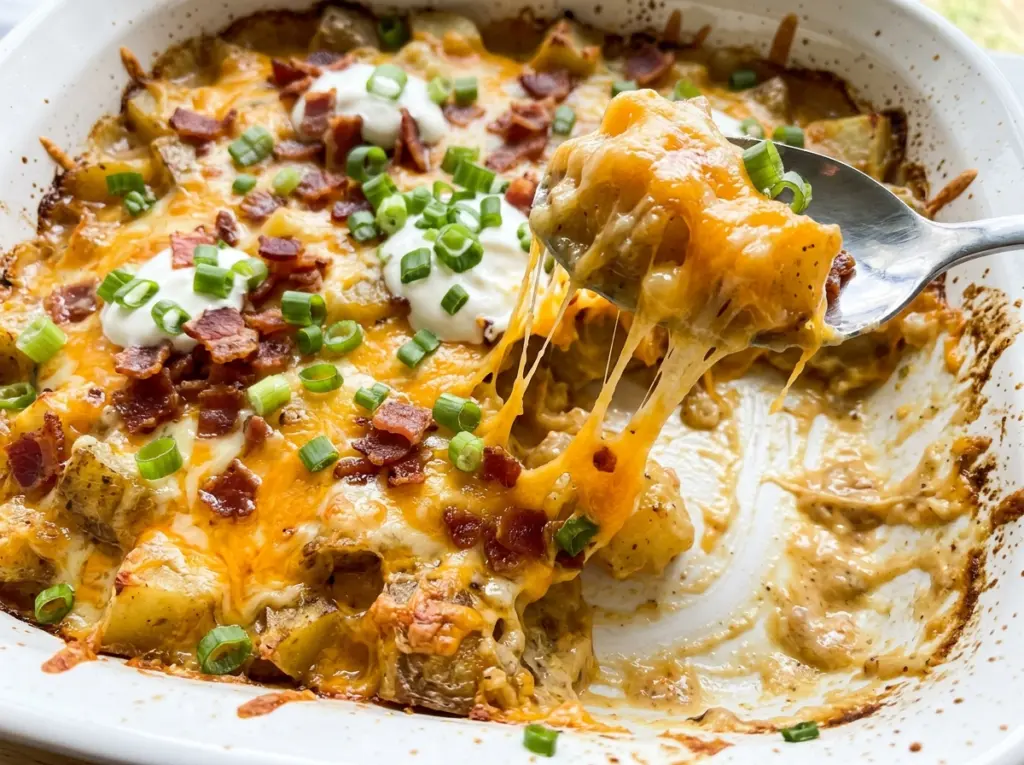
The potatoes are ready when a fork slips through the center without catching, but there’s another moment that matters just as much: draining them well before you mash. Any water left behind can leave the casserole looser than you want. I keep the pieces close to the same size so they soften together, then mash them while they’re hot with butter, sour cream, and warm milk. That gives this loaded baked potato casserole a creamy middle without turning it into a thin, soupy layer.
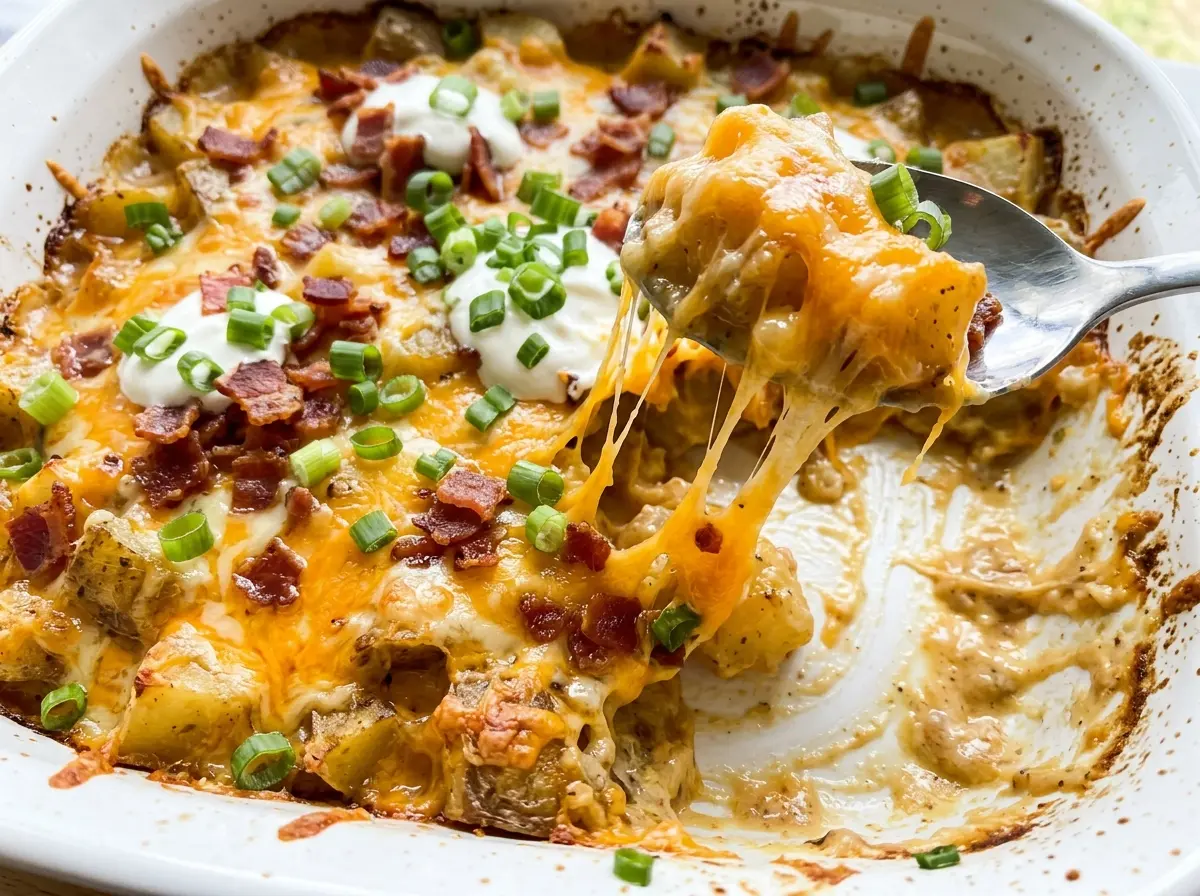
The topping goes on after the potatoes are spread in the dish, so the cheddar melts across the surface while the bacon keeps its place on top. Sharp cheddar brings enough flavor to stand up to the rich potato mixture, and green onions go on after baking for a fresh finish. Let the casserole rest before serving; it’s easier to scoop, and each serving gets that contrast of soft potatoes, melted cheese, and crisp-edged bacon.
Kitchen Note
Warm the milk before adding it to the potatoes. Cold milk cools the mash as you work, while warm milk blends in smoothly and helps the potatoes stay soft and creamy.
Save this loaded baked potato casserole for a cozy table: creamy mashed potatoes under melted sharp cheddar and bacon.
Why the Topping Belongs on Top, Not Mixed Into the Potatoes
It’s easy to think of a loaded potato casserole as mashed potatoes with all the toppings stirred through. Keeping the bacon and cheddar on the surface gives you a better contrast. The potatoes stay soft and creamy underneath, while the cheese melts into a distinct layer and the bacon remains visible instead of disappearing into the mash.
That separation also helps with serving. When you scoop from the dish, each portion picks up some of the topping without needing to distribute bacon evenly through a heavy bowl of potatoes. Spread the mash into an even layer before adding the cheddar and bacon; a level surface helps the cheese melt across the casserole rather than collecting in a few thick patches. The goal isn’t a browned, firm crust. Bake until the casserole is heated through and the cheese has melted, then let the layers settle before you scoop.
Sharp cheddar is a good fit here because its stronger, tangier taste doesn’t vanish against the rich potato base. Bacon adds a salty, savory bite, so the topping has plenty going on without extra mix-ins. Keeping those parts separate lets you taste each one in the finished casserole.
What Russets, Sour Cream, and Sharp Cheddar Each Bring

- Russet potatoes — Their starchy texture makes a fluffy, familiar mash and gives the casserole a soft center. Peel them and cut the pieces evenly so they cook at the same pace. Yukon Gold potatoes work as a swap if you prefer a creamier, denser mash, though the result won’t be as fluffy.
- Sour cream — It adds tang and a creamy richness that balances the potatoes. Full-fat sour cream gives the smoothest, fullest texture; plain full-fat Greek yogurt can stand in at the same amount, with a slightly tangier result.
- Unsalted butter and whole milk — Butter brings richness, and whole milk loosens the mash without making it taste thin. Warming the milk before mixing it in helps it blend into the hot potatoes. Unsalted butter also lets you control the seasoning rather than adding salt you can’t take back.
- Sharp cheddar — Its pronounced flavor holds up against the potatoes, bacon, and sour cream. Pre-shredded cheddar is convenient and works, though freshly shredded cheese usually melts more smoothly because it doesn’t have the same coating that keeps packaged shreds separate.
- Bacon and green onions — Crisp bacon adds savory crunch, while the green onions bring a fresher, mild onion note at the end. Cook the bacon until crisp before topping the casserole; soft bacon won’t give you the same contrast. Slice the green onions thinly so they scatter over the surface instead of landing in large pieces.
From Crisp Bacon to a Creamy, Evenly Baked Center
Cook the Bacon Until It’s Crisp
Cut the bacon into 1/2-inch pieces and cook it in a 12-inch skillet over medium heat, stirring occasionally. It takes 8 to 10 minutes to turn crisp, and the pieces should look browned rather than merely softened. Transfer them to a paper towel-lined plate so excess grease drains away. Keep an eye on the skillet near the end; small pieces can go from crisp to overdone quickly.
Simmer the Potatoes Until Fork-Tender
Put the peeled, 1 1/2-inch potato pieces in a 6-quart pot and cover them with cold water by 1 inch. Bring the water to a boil, then lower the heat and simmer for 15 to 20 minutes. Check a larger piece with a fork: it should slide through easily, without a firm center. Drain the potatoes well before returning them to the pot.
Mash While the Potatoes Are Hot
Return the drained potatoes to the pot and mash them with the butter, sour cream, warm milk, kosher salt, and black pepper. Stop when the mixture is mostly smooth; it should still look like mashed potatoes, not a whipped puree. Check the bottom and sides of the pot for any larger pieces that need mashing. The finished mixture should be soft enough to spread but thick enough to hold an even layer in the baking dish.
Melt the Cheddar, Then Finish Fresh
Heat the oven to 350°F and grease a 9×13-inch baking dish. Spread the potato mixture evenly in the dish, then top it with the cheddar and cooked bacon. Bake for 20 to 25 minutes, until the center is heated through and the cheese has melted; if the middle still feels cool, give it more time rather than relying on the cheese alone. Rest the casserole for 10 minutes, then sprinkle on the sliced green onions before serving.
Three Smart Swaps for a Different Take on Loaded Potatoes
Use Yukon Golds for a Denser Mash
Replace the russets with the same weight of Yukon Gold potatoes, peeled and cut into the same size pieces. They make a creamier, more buttery-tasting mash, but the finished casserole will be less fluffy and a little denser. Keep the rest of the ingredients and method the same.
Trade Sharp Cheddar for Monterey Jack
Use shredded Monterey Jack in place of the sharp cheddar for a milder, softer cheese layer. It melts smoothly, but you’ll lose some of the tang that gives sharp cheddar its bite. This is a good choice when you want the bacon and green onion to stand out more.
Make a Dairy-Free Version
Replace the butter with vegan butter, the sour cream with dairy-free sour cream, the whole milk with unsweetened plant milk, and the cheddar with dairy-free cheddar-style shreds. Choose unsweetened milk so the potatoes don’t pick up a sweet note. The mash will be less rich, and dairy-free cheese may melt less smoothly than cheddar.
Storage and Reheating
- Refrigerator: Refrigerate leftovers within 2 hours and keep them covered for 3 to 4 days. The potatoes will firm up as they chill.
- Freezer: Freezing isn’t my first choice for this casserole. The potato mixture can turn grainy or release moisture after thawing, so the texture won’t be as creamy.
- Reheating: Warm leftovers in a 350°F oven, covered loosely with foil, until the center reaches 165°F. Uncover near the end if you want the cheese on top to dry out a little; reheating uncovered the whole time can dry the edges before the middle is hot.
Questions That Come Up When Making This Potato Casserole
Loaded Baked Potato Casserole
Ingredients
Equipment
Method
- Cook the bacon in a 12-inch skillet over medium heat, stirring occasionally, for 8 to 10 minutes until crisp.
- Transfer the bacon to a paper towel-lined plate.
- Heat the oven to 350°F.
- Grease a 9x13-inch baking dish.
- Put the potatoes in a 6-quart pot and cover with cold water by 1 inch.
- Bring the potatoes to a boil, then reduce the heat and simmer for 15 to 20 minutes until fork-tender.
- Drain the potatoes well.
- Return the potatoes to the pot.
- Mash the potatoes with the butter, sour cream, warm milk, salt, and pepper until mostly smooth.
- Spread the potato mixture in the prepared dish.
- Top evenly with the cheddar and bacon.
- Bake for 20 to 25 minutes until heated through and the cheese is melted.
- Let the casserole rest for 10 minutes.
- Sprinkle with the green onions before serving.


