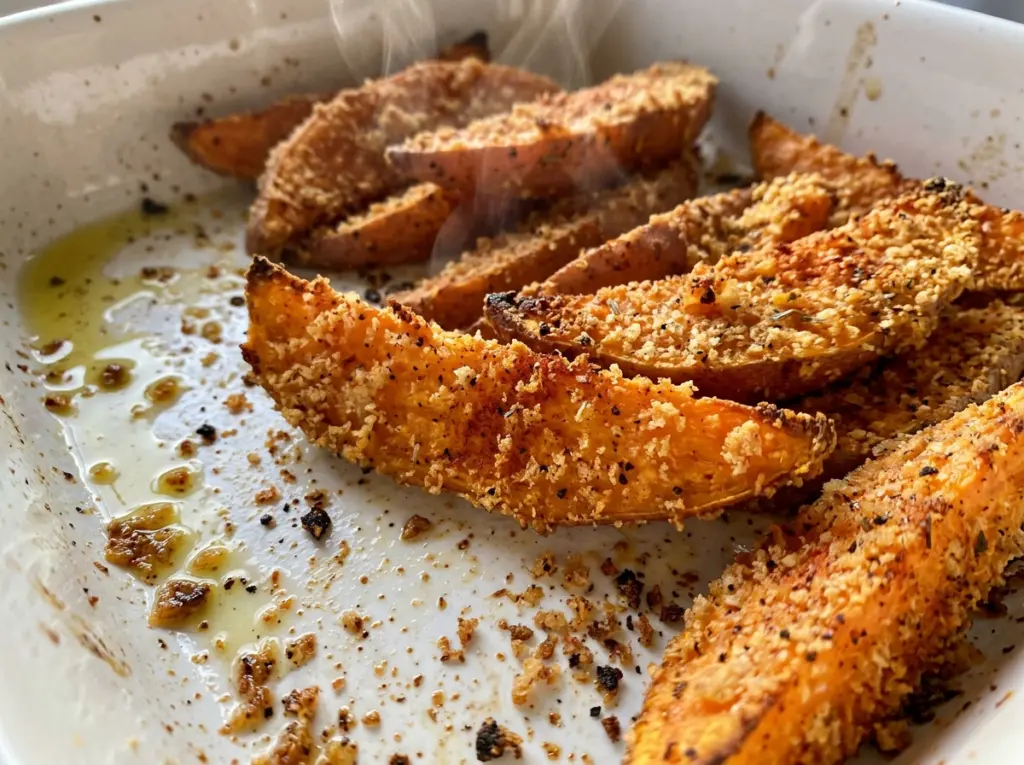
The sound of the sealed bag thumping against the counter is my favorite part of making these wedges: a few shakes, and the oil and seasonings reach all those cut surfaces without dirtying a bowl. That quick coating step is what makes Shake and Bake Sweet Potatoes such a useful side when I want something hands-off once the pan goes in the oven. The wedges come out tender, with browned edges and paprika scattered across the surface.
I cut the potatoes into even half-inch wedges so they cook at about the same pace. Then I give them enough room on the baking sheet to roast rather than sit crowded together. Turn them once halfway through, and keep an eye on the edges near the end of the baking window; the sweet spot is tender wedges with browned tips, not pale, firm centers. The olive oil helps the seasonings cling, while garlic powder and paprika give each bite a savory, gently smoky edge.
Kitchen Note
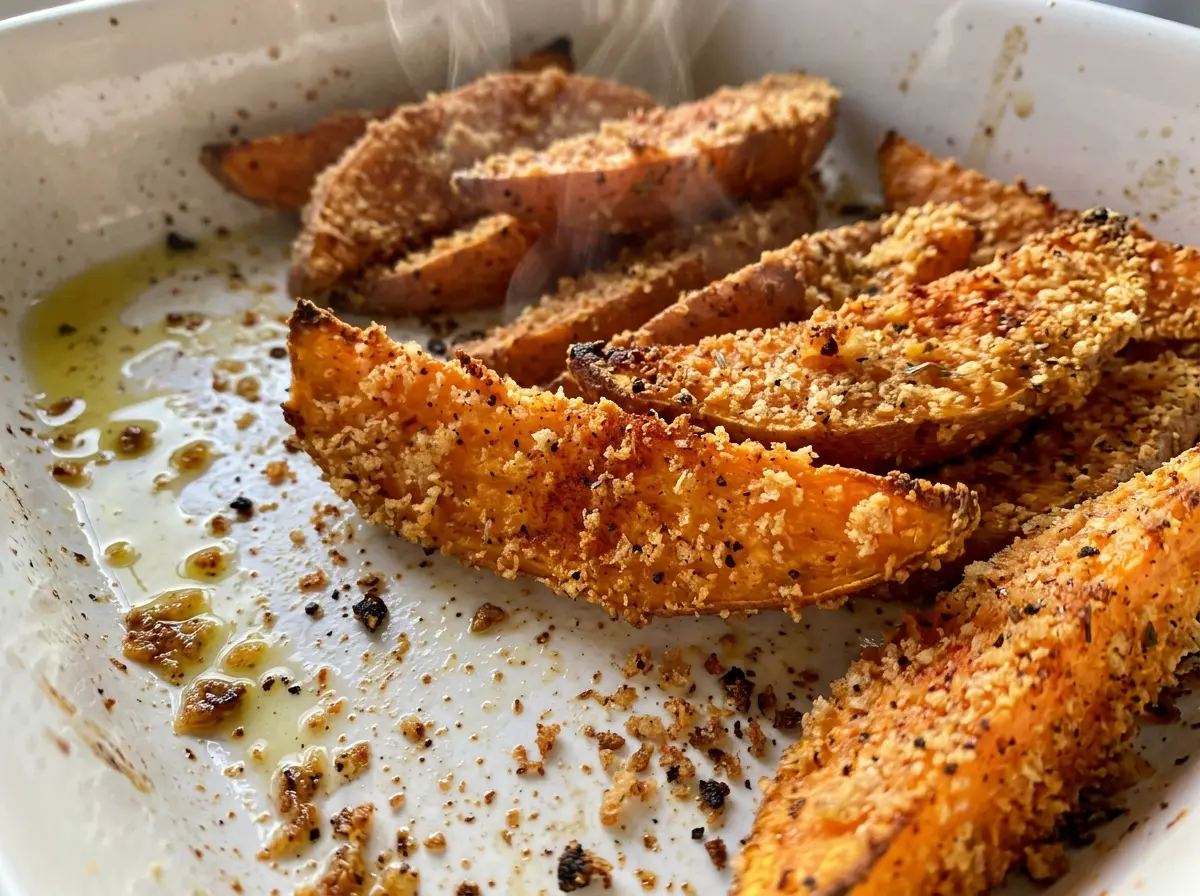
Leave visible breathing room between the wedges on the sheet. When I crowd them together, the sides stay pale; a single layer gives the hot oven space to brown the edges.
Save these Shake and Bake Sweet Potatoes for a simple side with tender centers and paprika-browned edges.
Why Half-Inch Wedges Roast More Evenly
Sweet potatoes aren’t perfectly uniform, and a wedge cut from the narrow end will naturally be smaller than one cut from the thick middle. Keeping each piece about half an inch thick gives the batch a fair chance to finish together: the thinner pieces don’t race too far ahead while the larger ones are still firm inside. It’s a small detail, but it matters more here than adding extra oil or seasoning.
Cut with the potato’s shape in mind. Slice it lengthwise into manageable sections, then make wedges that have roughly similar thickness from edge to edge. If a few pieces are noticeably larger, they may need more time to become tender, so use the tenderness cue rather than pulling every wedge the moment the first browned edges appear. The 25-to-35-minute range leaves room for natural differences in the potatoes and ovens.
There’s no need to chase deep color across every inch of the surface. Look for browned edges and a tender center. The cut size and the turn halfway through help the wedges cook evenly without asking the outside to darken before the middle is ready.
What the Sweet Potatoes and Seasonings Each Bring

- Sweet potatoes — Choose firm potatoes without soft spots, then scrub them well before cutting. The recipe keeps the skin on, which means there’s no peeling step and the wedges hold their shape as you handle them. Similar-sized potatoes are easier to cut into consistently thick wedges.
- Olive oil — The oil helps the paprika, garlic powder, salt, and pepper cling to the potato surfaces and encourages browning. A fresh, everyday olive oil is a good fit; there’s no need to use a special finishing oil because it’s being baked with the wedges.
- Paprika — Paprika supplies the warm color and mild pepper flavor that define the seasoning here. Use a fresh jar if yours has been sitting open for a long time, since older paprika can taste muted. The recipe’s seasoning balance is built around paprika, so I wouldn’t swap in a different spice and expect the same result.
- Garlic powder — Powder spreads through the oil more evenly than chopped fresh garlic would, coating the wedges without adding pieces that could darken in the hot oven. Keep it dry and free-flowing so it shakes out and mixes easily.
- Fine salt and black pepper — Fine salt disperses readily through the coating, while black pepper adds a little bite. For the most even seasoning, add both to the bag with the oil and spices rather than sprinkling them over the pan after the wedges are already arranged.
From Sealed Bag to Browned Edges
Heat the oven and ready the pan
Set the oven to 425°F and line an 18×13-inch rimmed baking sheet with parchment paper. Getting the oven hot before the wedges go in gives the potatoes a consistent start. The rim helps keep the wedges on the pan when you turn them. Cut the potatoes into half-inch-thick wedges while the oven heats.
Shake on an even coating
Put the wedges in a gallon-size resealable bag, then add the olive oil, paprika, garlic powder, fine salt, and black pepper. Seal the bag securely before shaking; a loose seal can send oil and seasoning onto the counter. Shake until the surfaces look evenly coated, checking that wedges at the bottom haven’t been left bare. The bag does the mixing without pressing or breaking up the pieces.
Arrange the wedges in one layer
Tip the coated wedges onto the prepared baking sheet and spread them out so they aren’t touching or stacked. Turn each wedge so it rests securely on the pan rather than balancing on a narrow edge. Leave open spaces around the pieces; a packed pan makes it harder for the edges to brown. If the wedges don’t fit with room around them, avoid piling them up.
Turn once and roast until tender
Bake for 25 to 35 minutes, turning the wedges halfway through. Use a spatula to turn them gently so the coating stays on and the pieces keep their shape. Near the end, check for browned edges and a tender center; the exact timing depends on the size of the wedges and your oven. If the thickest pieces are still firm, continue baking until they’re tender rather than relying on color alone.
Simple Adaptations Without Changing the Seasoning
For a gluten-free table
The listed ingredients don’t include wheat or a breading, so the wedges fit naturally into a gluten-free meal without replacing anything. Keep the simple paprika-and-garlic coating intact for the same savory taste and browned edges.
For a dairy-free or plant-based meal
Olive oil provides the coating, and there’s no butter, cheese, or other animal-based ingredient in the listed mixture. The wedges are already dairy-free and plant-based as prepared, so you can serve them without changing the seasoning or method.
Storage and Reheating
- Refrigerator: Store cooled leftovers in a covered container for 3 to 4 days. The wedges soften as they sit, so the edges won’t stay as browned as they were fresh from the oven.
- Freezer: They can be frozen, though the texture will be softer after thawing. Cool completely, freeze in a single layer until firm, then transfer to a sealed freezer-safe container for up to 2 months.
- Reheating: Spread the wedges on a baking sheet and warm them in a 400°F oven until heated through. Avoid stacking them or using the microwave if you want to bring back some browning; microwaving warms them but leaves the surfaces soft.
Questions That Come Up While Making These Wedges
Shake and Bake Sweet Potatoes
Ingredients
Equipment
Method
- Heat the oven to 425°F.
- Line an 18x13-inch rimmed baking sheet with parchment paper.
- Put the sweet potato wedges in a gallon-size resealable bag, add the olive oil, paprika, garlic powder, salt, and black pepper, seal the bag, and shake until evenly coated.
- Arrange the wedges in a single layer on the prepared baking sheet, leaving space between them.
- Bake for 25 to 35 minutes, turning the wedges halfway through, until tender and browned at the edges.


