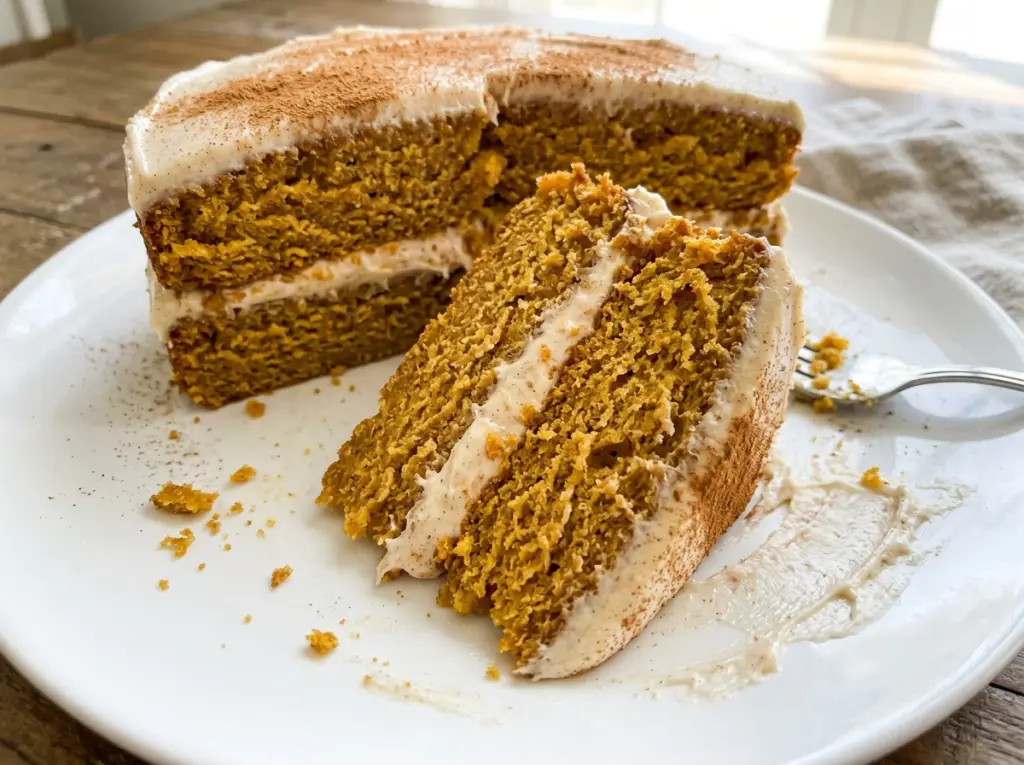
The first thing I noticed when I mixed the wet ingredients was that this cake doesn’t start like a butter cake. There’s no creaming butter and sugar until pale and fluffy; the batter begins with oil, pumpkin, and eggs whisked together. That keeps the crumb moist and gives these pumpkin layers a soft, close texture that holds up under a generous sweep of brown sugar cinnamon cream cheese frosting.
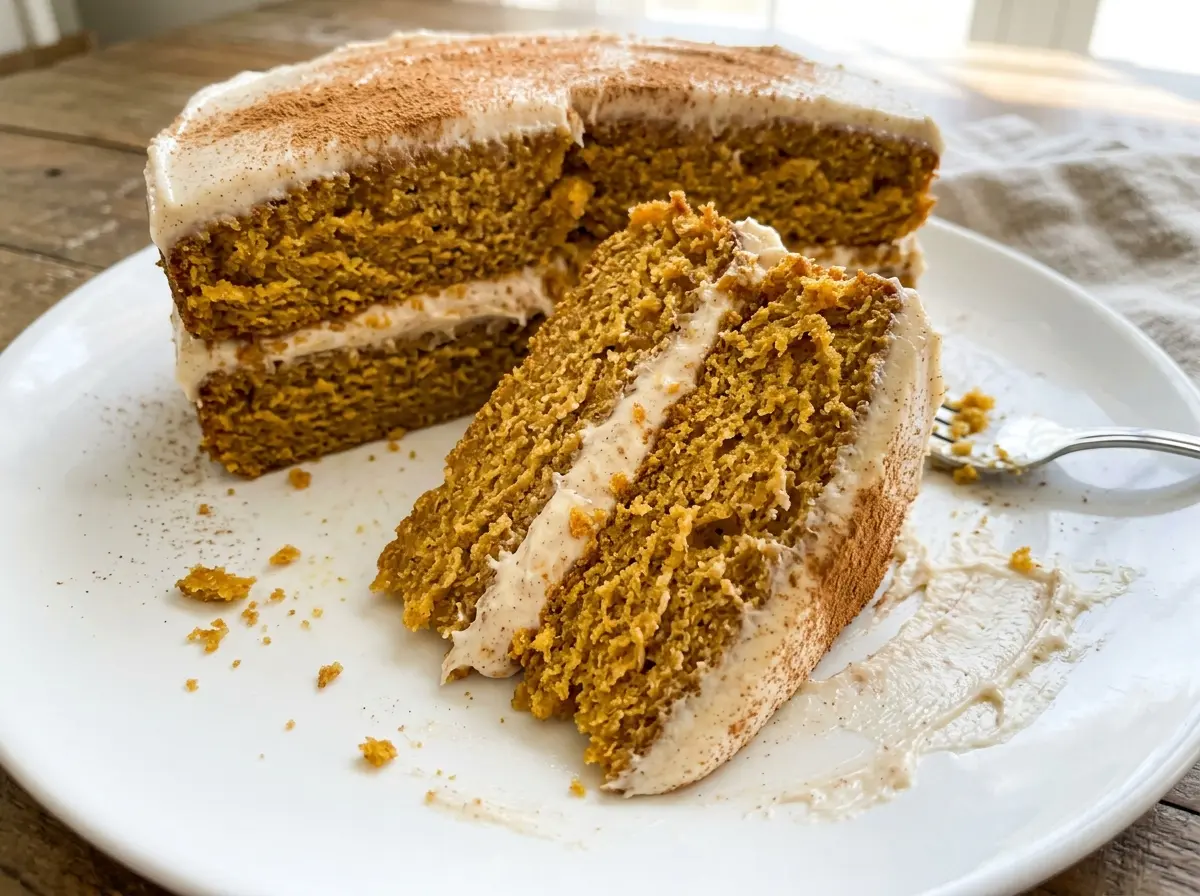
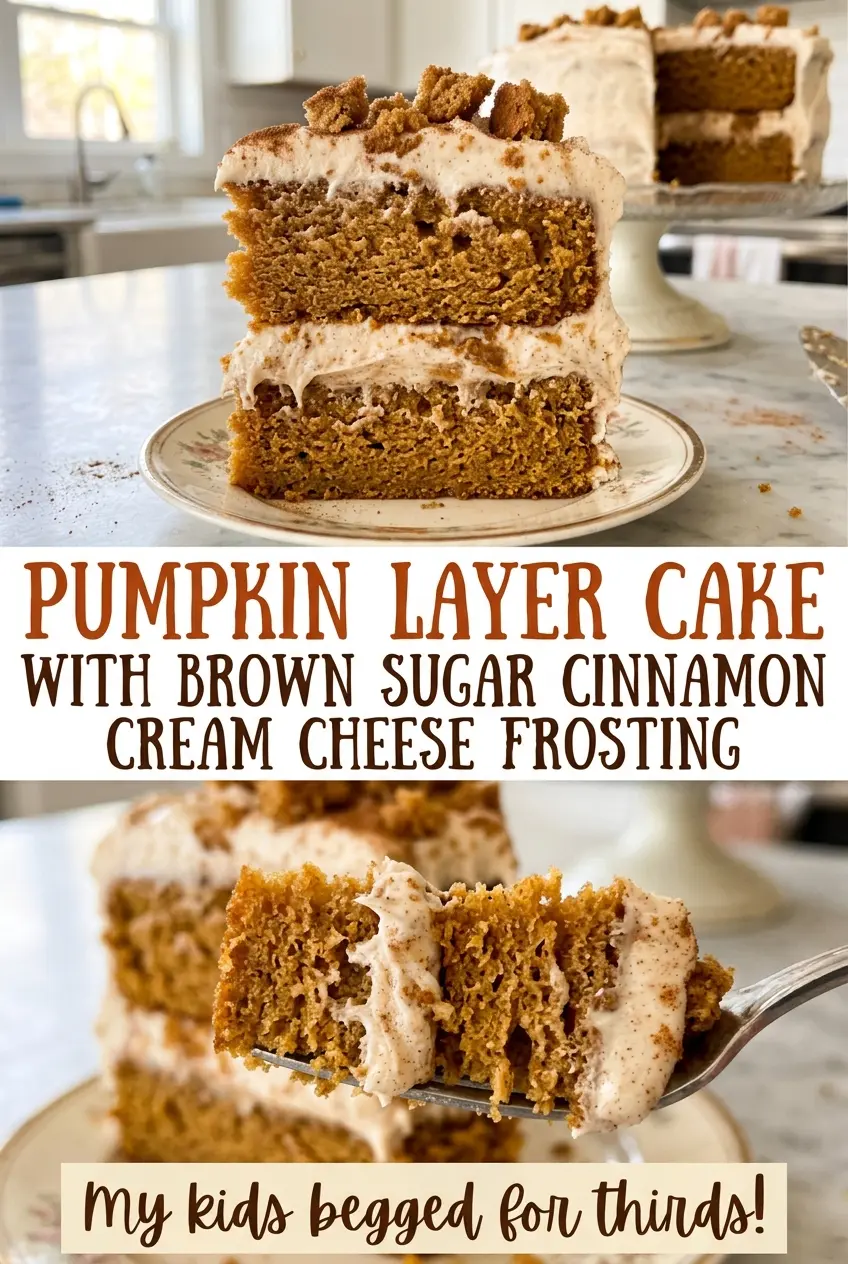
I use two 9-inch pans so the layers bake evenly and are easy to stack. The spices warm up the pumpkin without taking over, while the frosting brings a little tang and a mellow brown-sugar note. It’s a full-size layer cake that serves 12, and the finished slices show off those orange layers against the cinnamon-flecked frosting.
One small detail makes the frosting easier to handle: the brown sugar and cream mixture needs to cool completely before it goes into the butter and cream cheese. Once everything is assembled, the cake is tender, gently spiced, and ready for a proper slice.
Kitchen Note
I wait until the brown sugar and cream mixture has cooled all the way through before beating it into the frosting. If it’s still warm, it softens the butter and cream cheese and the frosting won’t hold its shape as well.
Save this pumpkin layer cake for its soft spiced crumb and brown sugar cinnamon cream cheese frosting.
Why This Pumpkin Cake Doesn’t Need a Butter-Creaming Step
It’s natural to expect cake batter to begin with softened butter beaten with sugar, but this one takes a different route. Vegetable oil and granulated sugar are whisked together, then the eggs, pumpkin, and vanilla go in. The mixture won’t become pale and fluffy like creamed butter, and that’s not a sign that anything has gone wrong.
The cake’s tender texture comes from the oil and pumpkin, while baking powder and baking soda help the layers rise in the oven. That approach also keeps the mixing straightforward: once the flour and spices join the wet ingredients, the batter only needs enough stirring to bring everything together. Treating it like a butter cake and trying to beat extra air into it isn’t necessary. It’s meant to bake into a moist, sturdy layer that can support frosting without turning dry or crumbly.
This difference matters most when you’re mixing. A smooth wet mixture is the goal; you don’t need to chase a fluffy appearance before adding the dry ingredients. Let the leaveners do their work in the oven, and keep the mixing gentle once the flour is in.
What the Pumpkin, Oil, and Cream Cheese Each Bring
- All-purpose flour — It gives the layers enough structure to stack while keeping the crumb soft. A regular all-purpose flour is the right choice here; there’s no need for specialty or high-protein flour.
- Pure pumpkin puree — Pumpkin contributes moisture and a distinct earthy sweetness, not just color. Choose plain puree rather than a seasoned or sweetened product; the spice balance in the batter is built separately.
- Vegetable oil and eggs — Neutral-tasting oil keeps the cake tender, and the eggs help hold the layers together. Room-temperature eggs blend more smoothly into the wet mixture than cold ones straight from the refrigerator.
- The spices — Cinnamon leads, with ginger, nutmeg, and cloves adding depth behind it. Fresh, aromatic spices make a noticeable difference in a cake where the pumpkin is mild; if your spice jars have been open for years, the cake will taste flatter.
- Block cream cheese and butter — Their combination makes the frosting creamy but still sturdy enough to cover a layer cake. Use softened ingredients so they beat together smoothly; whipped or spreadable cream cheese has a different texture and can leave the frosting too loose.
- Light brown sugar and heavy cream — Heating them together gives the frosting its caramel-like note without leaving crunchy sugar grains. Heavy cream is rich enough to make a smooth mixture as the sugar dissolves.
Mixing and Baking Two Even Pumpkin Layers
Whisk the Spices Into the Flour
Start by heating the oven to 350°F and coating two 9-inch round cake pans with nonstick cooking spray. Whisk the flour, baking powder, baking soda, salt, cinnamon, ginger, nutmeg, and cloves in a medium bowl so the leaveners and spices are distributed throughout. In a separate large bowl, whisk the granulated sugar with the oil, then whisk in the eggs, pumpkin puree, and vanilla until smooth. Add the flour mixture and stir just until no dry streaks remain; stopping there helps keep the crumb tender.
Divide and Bake Until the Centers Give a Cue
Divide the batter evenly between the prepared pans and smooth it out so the layers start at a similar depth. Bake for 30 to 36 minutes, checking the centers with a toothpick. A few moist crumbs clinging to the toothpick are the cue to pull the cakes; waiting for it to come out completely clean can leave the layers drier. If the toothpick comes out with wet batter, give the cakes more time and check again.
Cool Before Turning Out
Let the cakes rest in their pans for 15 minutes after baking, then turn them out onto wire racks. The short rest gives the layers a chance to firm up before you handle them, which helps prevent a warm cake from breaking as it releases. Leave them on the racks until they’re completely cool. Frosting a warm layer makes the frosting soften and slide instead of staying in an even layer.
Make the Brown Sugar Frosting
Combine the brown sugar and heavy cream in a small saucepan over low heat, stirring for 2 to 3 minutes until the mixture is smooth and the sugar has dissolved. Transfer it to a bowl and let it cool completely. Beat the softened butter and cream cheese until smooth, then beat in the cooled brown sugar mixture, vanilla, cinnamon, and salt. Add the powdered sugar one cup at a time, beating until the frosting is smooth and spreadable.
Stack and Cover the Cake
Set one fully cooled layer on a serving plate and spread frosting across its top. Place the second layer on top, then cover the top and sides with the remaining frosting. Spread gently rather than pressing hard on the soft cake, especially as you work around the sides. If you won’t serve the cake within 2 hours, cover and refrigerate it; let it stand at room temperature for 20 to 30 minutes before serving.
Three Easy Ways to Change the Cake’s Flavor or Flour
Use Dark Brown Sugar in the Frosting
Swap the light brown sugar for the same amount of dark brown sugar. The frosting will have a deeper molasses taste and a slightly darker color, while the cream cheese keeps it from becoming overly rich.
Make It Gluten-Free
Replace the all-purpose flour with the same amount of a cup-for-cup gluten-free baking flour blend made for cakes. The finished layers may be a little more delicate, so let them cool completely before stacking and frosting.
Keep the Cake, Change the Oil
Canola oil works in place of vegetable oil in the same amount. It stays neutral in flavor, so the pumpkin and spices still come through clearly.
Storage and Serving
- Refrigerator: Cover and refrigerate the frosted cake if you won’t serve it within 2 hours. The frosting firms up when cold, so let the cake stand at room temperature for 20 to 30 minutes before serving.
- Freezer: The unfrosted layers freeze well. Once completely cool, wrap each layer tightly and freeze; thaw while still wrapped before frosting.
- Serving: This cake is best served slightly softened rather than straight from the refrigerator. Give it the full room-temperature rest so the cake and frosting aren’t overly firm.
Questions That Come Up When Baking This Pumpkin Cake
Pumpkin Layer Cake with Brown Sugar Cinnamon Cream Cheese Frosting
Ingredients
Equipment
Method
- Heat the oven to 350°F.
- Coat two 9-inch round cake pans with nonstick cooking spray.
- Whisk the flour, baking powder, baking soda, salt, cinnamon, ginger, nutmeg, and cloves in a medium bowl.
- Whisk the granulated sugar and oil in a large bowl.
- Whisk in the eggs, pumpkin puree, and vanilla until smooth.
- Add the flour mixture to the pumpkin mixture and stir just until no dry streaks remain.
- Divide the batter evenly between the pans.
- Bake for 30 to 36 minutes, until a toothpick inserted in the centers comes out with a few moist crumbs.
- Cool the cakes in the pans for 15 minutes.
- Turn the cakes out onto wire racks and cool completely.
- Combine the brown sugar and heavy cream in a small saucepan over low heat, stirring for 2 to 3 minutes until the sugar dissolves and the mixture is smooth.
- Transfer the brown sugar mixture to a bowl and cool completely.
- Beat the butter and cream cheese in a large bowl until smooth.
- Beat in the cooled brown sugar mixture, vanilla, cinnamon, and salt.
- Beat in the powdered sugar a cup at a time until the frosting is smooth and spreadable.
- Place one cake layer on a serving plate and spread frosting over the top.
- Set the second layer on top and cover the top and sides with the remaining frosting.
- If not serving within 2 hours, cover and refrigerate the cake.
- Let the cake stand at room temperature for 20 to 30 minutes before serving.


