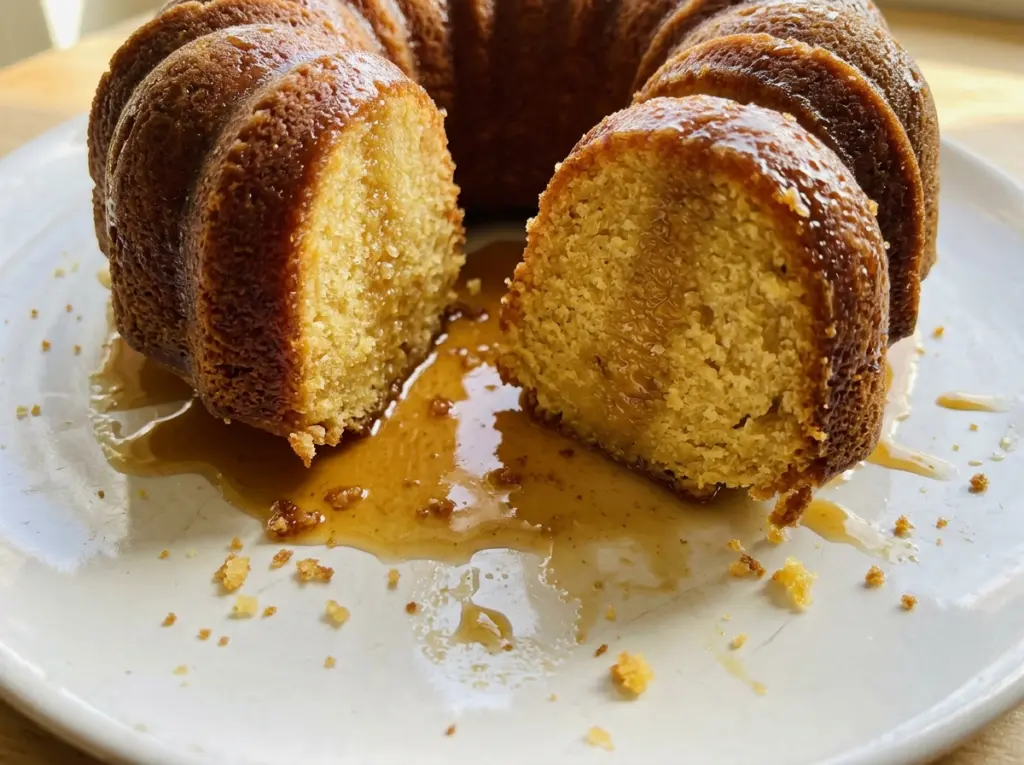
A just-baked Bundt is still sitting in its pan when the rum glaze goes on, and that’s when this cake starts turning into something different. The syrup sinks through the little holes in the base, carrying dark rum into the crumb instead of leaving all that flavor on the surface. This Rum Cake has a tender, close-textured interior and a glossy finish that tastes unmistakably of rum.
I keep the mixing gentle once the flour goes in. The batter comes together with a whisk, and alternating the milk mixture with the dry ingredients helps it stay smooth without asking you to beat it into submission. Then the glaze gets its own moment: butter and sugar simmer into a syrup, and the rum goes in after the pan comes off the heat. Each slice is soft, buttery, and deeply fragrant.
Kitchen Note
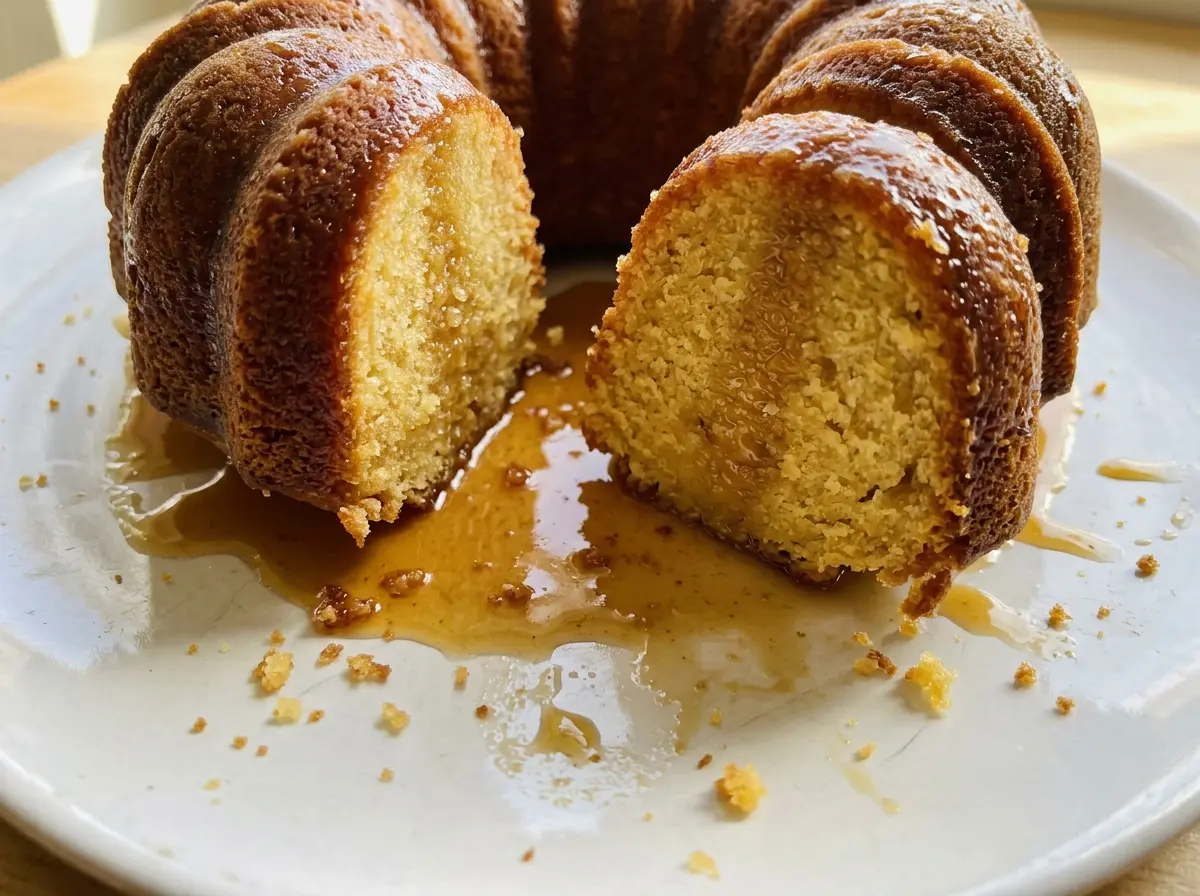
Use a long skewer to make real holes through the cake, not just tiny marks on the surface. Those deeper openings give the glaze a path into the crumb.
Save this Rum Cake for its buttery crumb and deep dark-rum glaze, soaked in while the cake is still warm.
The Two Rum Additions Give This Bundt Cake Two Different Jobs
Dividing the rum between the batter and glaze gives you flavor in two places, and they don’t taste exactly alike. The portion mixed into the cake becomes part of the crumb’s background: you notice its warmth throughout, but it doesn’t overwhelm the vanilla or the buttery sweetness. The larger share goes into the glaze after the butter-and-sugar syrup has simmered, so the finished cake keeps a more distinct rum aroma at the surface.
That balance is what makes the soaking step worth doing patiently. The glaze isn’t just a shiny coating to brush over the outside; it’s a thin syrup meant to travel into the cake. Poking the exposed base creates entry points, and spooning the glaze on in several passes gives the crumb time to take it in. A fast pour can leave more syrup sitting in the pan than in the cake. With the rum split between batter and glaze, each bite has both a mellow interior and a more pronounced finish.
Why Dark Rum, Oil, and Room-Temperature Eggs Matter in This Crumb
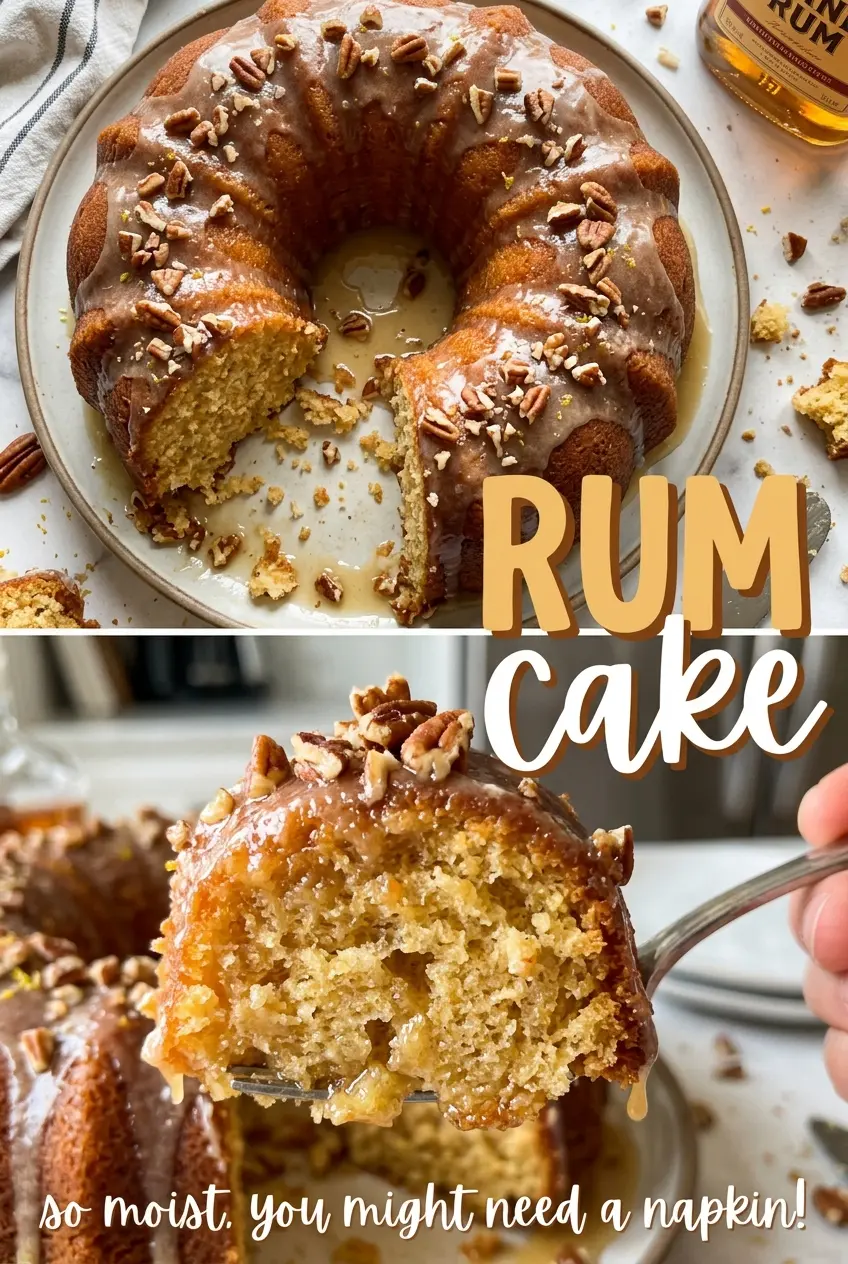
- Dark rum — It brings the defining molasses-like warmth to both the cake and the glaze. A reasonably priced bottle works well here; there’s no need to reach for a sipping rum, but choose one whose aroma you enjoy because it remains noticeable in the finished cake.
- Vegetable oil — Oil keeps the crumb moist and soft after the cake cools. Canola oil is a straightforward neutral substitute; strongly flavored olive oil would change the taste rather than disappear into the batter.
- Room-temperature eggs — They whisk into the sugar-and-oil mixture more smoothly than cold eggs, helping the batter come together evenly. Set them out before mixing so they aren’t refrigerator-cold when they go into the bowl.
- All-purpose flour and baking powder — Together they give the Bundt enough structure and lift to hold the glaze without turning heavy. Whisking them with the salt before they meet the wet mixture spreads the baking powder through the flour.
- Unsalted butter — It gives the glaze its rounded, buttery taste, while unsalted butter keeps the salt level predictable. Standard supermarket butter is fine; the rum and sugar are the more noticeable flavors in the syrup.
Mixing, Baking, and Glazing Without a Dense or Patchy Cake
Coat the Bundt pan before the batter goes in
Heat the oven to 350°F and coat a 10-inch Bundt pan with baking spray. The spray should reach the center tube and the grooves, where cake is most likely to catch during release. Whisk the flour, baking powder, and salt together in a medium bowl so the dry mixture is ready before you start the batter.
Bring the batter together in alternating additions
In a large bowl, whisk the cake portion of the sugar with the oil, then whisk in the eggs one at a time until smooth. In a separate bowl or measuring vessel, whisk together the milk, cake portion of the rum, and vanilla. Add that liquid mixture alternately with the flour mixture, beginning and ending with flour; stop mixing as soon as the batter is combined, since extra mixing after the flour goes in can make the crumb tougher.
Bake until the center tests clean
Pour the batter into the prepared pan and bake for 50 to 60 minutes. Check the center with a toothpick; it should come out clean rather than carrying wet batter. If it still looks wet, give the cake more time and test again instead of relying on a browned exterior alone. Once baked, cool the cake in the pan on a rack for 10 minutes.
Simmer the glaze, then let the cake absorb it
Combine the butter, remaining sugar, and water in a small saucepan and bring the mixture to a simmer over medium heat, stirring until the sugar dissolves. Simmer for 2 minutes, then take the pan off the heat and stir in the remaining rum. Poke holes all over the exposed bottom of the cake and slowly spoon the warm glaze over it in several passes, allowing it to soak in. Let the cake stand in the pan for 15 minutes, invert it onto a serving plate, and cool completely before slicing.
Three Practical Ways to Change the Rum Cake
Use bourbon for a deeper, oakier finish
Replace the dark rum with bourbon in both parts of the recipe, keeping the same divided quantities. The cake will still have a warm spirit flavor, with more oak and vanilla notes and less of rum’s molasses character.
Choose light rum for a milder rum note
Use light rum in place of dark rum in both the batter and glaze, keeping the same divided amounts. The result is less rich and molasses-forward, but the cake still gets rum flavor in every layer.
Make it gluten-free with a baking blend
Swap the all-purpose flour for a cup-for-cup gluten-free flour blend made for baking, ideally one that includes xanthan gum. The crumb may be a little more delicate, so let the cake cool completely before slicing and handle it gently when unmolding.
Storage and Reheating
- Refrigerator: Keep the cake covered in an airtight container for up to 5 days. The chilled crumb will feel firmer, so let slices lose their refrigerator chill before serving.
- Freezer: Freeze fully cooled slices, wrapped individually and placed in a freezer-safe bag, for up to 2 months. Thaw in the refrigerator or at room temperature.
- Reheating: This cake is best served at room temperature and doesn’t need reheating. Avoid microwaving a whole cake, which can warm unevenly and make the glaze sticky.
Questions That Come Up When Baking Rum Cake
Rum Cake
Ingredients
Equipment
Method
- Heat the oven to 350°F.
- Coat a 10-inch Bundt pan with baking spray.
- In a medium bowl, whisk together the flour, baking powder, and salt.
- In a large bowl, whisk 1 1/2 cups of the sugar with the oil.
- Whisk in the eggs one at a time until smooth.
- Whisk together the milk, 1/4 cup of the rum, and vanilla.
- Add the milk mixture to the egg mixture alternately with the flour mixture, beginning and ending with the flour mixture, and mix just until combined.
- Pour the batter into the pan.
- Bake for 50–60 minutes, until a toothpick inserted in the center comes out clean.
- Cool in the pan on a rack for 10 minutes.
- In a small saucepan, combine the butter, remaining 1 cup sugar, and water.
- Bring to a simmer over medium heat, stirring until the sugar dissolves, then simmer for 2 minutes.
- Remove the saucepan from the heat and stir in the remaining 1/2 cup rum.
- Poke holes all over the exposed bottom of the cake with a long skewer.
- Slowly spoon the warm glaze over the cake in several passes, allowing it to soak in.
- Let the cake stand in the pan for 15 minutes.
- Invert the cake onto a serving plate and cool completely before slicing.


