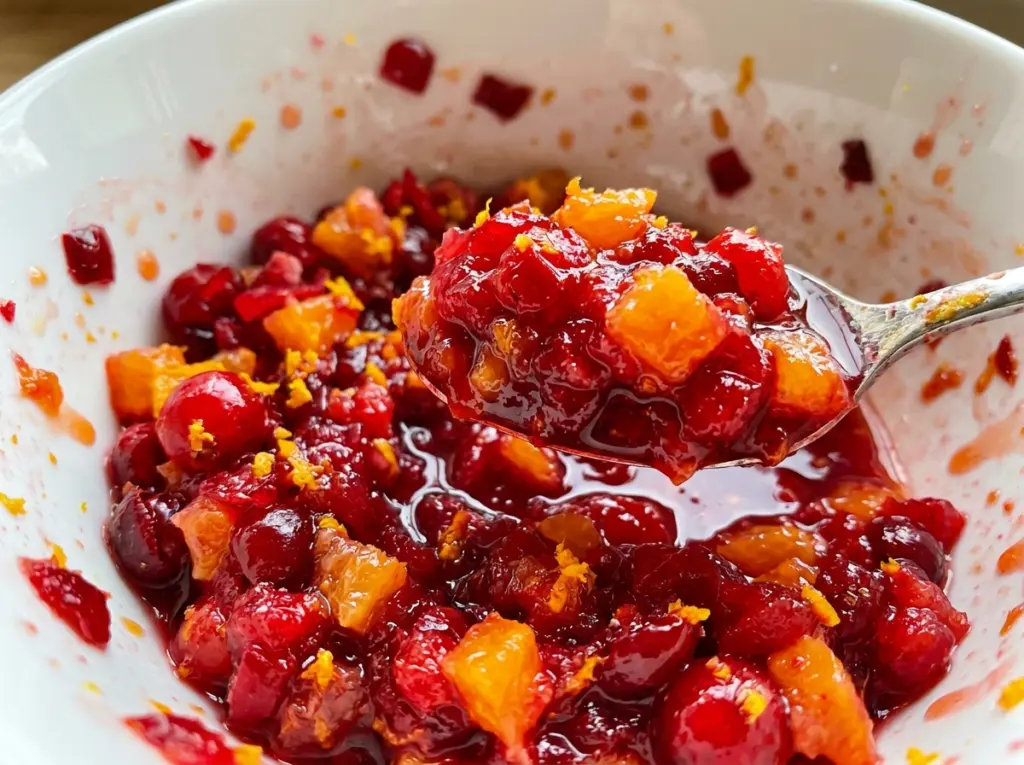
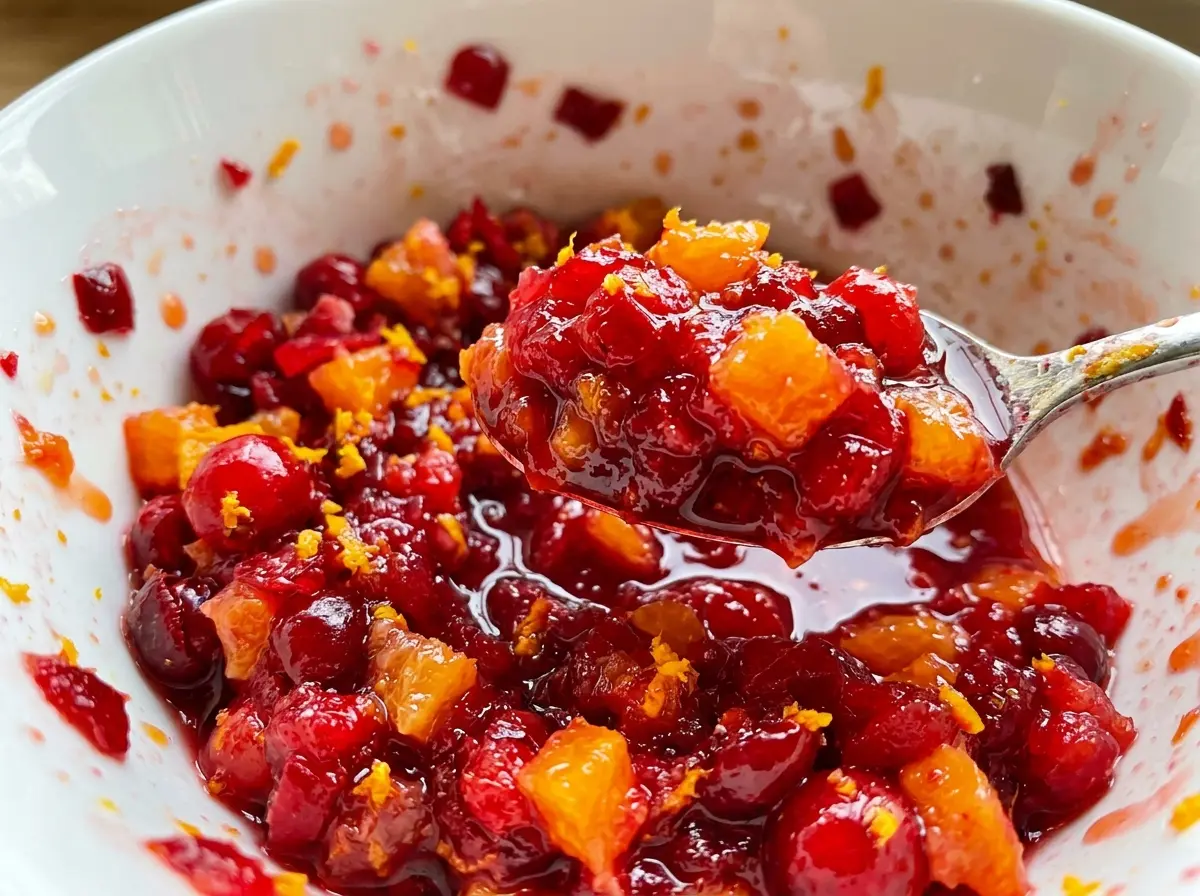
The first few pulses turn the cranberries into a bright, ruby-speckled chop, and then the orange perfume hits as soon as you lift the processor lid. This relish stays fresh and tart instead of cooking down into a sauce, so each bite has little pieces of fruit and a lively citrus edge. One 12-ounce bag of cranberries and a medium orange make eight servings, which is just right when you want a cool, make-ahead side without putting another pot on the stove.
I use the whole orange, with its seeds and ends removed, so the peel brings its fragrant oils into the mix along with the juice. Sugar goes in after the fruit is chopped, then the covered bowl rests in the refrigerator. That wait gives the sugar time to dissolve and takes the raw edge off the cranberries; the finished relish is bright, spoonable, and still unmistakably fresh.
Kitchen Note
Stop to scrape down the processor bowl when fruit sticks to the sides. Otherwise, you can end up with a few big orange pieces while the cranberries at the bottom are already finely chopped.
Save this Cranberry Orange Relish for a fresh, citrusy side that can be made ahead and served cold.
Why This Relish Needs a Rest Before It Tastes Balanced
Right after mixing, the cranberries can taste sharply tart and the sugar may still feel noticeable. That first impression changes as the relish sits: the sugar dissolves into the fruit juices, while the flavors mingle instead of landing in separate bursts. Chilling isn’t just about serving the relish cold; it gives the raw fruit time to settle into a more even sweet-tart balance.
The mixture won’t turn into a smooth sauce during that rest. It remains finely chopped, with the fruit’s fresh texture intact, but the sugar becomes less distinct and the juices gather around the pieces. Taste it after the chilling time rather than judging it the second it leaves the processor. This short wait is what makes a three-ingredient relish taste composed instead of like chopped fruit with sugar stirred over it.
What the Cranberries, Orange, and Sugar Each Bring

- Fresh cranberries — Their firm texture gives the relish its little tart pieces rather than the soft consistency of cooked cranberry sauce. Choose berries that look plump and fresh, and rinse and drain them before processing. This combination is naturally vegan and gluten-free, with no special replacement needed for either diet.
- Navel orange — The orange goes in as fruit and peel, so the peel contributes a fragrant citrus note while the flesh brings juice. Scrub it well, trim off both ends, quarter it, and remove the seeds; leaving seeds behind can add an unpleasant bitter note. A sweet, fresh orange matters more here than an expensive one, since the fruit is chopped into the relish.
- Granulated sugar — It balances the cranberries’ sharpness and dissolves into the juice while the relish chills. Regular granulated sugar is the dependable choice because it blends cleanly into the fruit. The relish depends on that sweet-tart contrast, so a different sweetener would change both the flavor and how the finished mixture comes together.
From Whole Fruit to a Chilled, Spoonable Relish
Prep the Fruit Without Leaving Seeds Behind
Rinse and drain the cranberries, then scrub the orange before trimming its ends. Quarter the orange and remove the seeds; the peel stays on. Keep the fruit pieces ready to go into the processor together, rather than trying to process the orange separately. Removing the seeds is worth the small pause, since a stray one can leave a bitter bite in an otherwise bright relish.
Pulse Until the Pieces Are Even
Add the cranberries and orange to the food processor and pulse until finely chopped. Check the texture as you go: you want small, distinct pieces, not a wet puree. Stop and scrape down the sides when fruit clings to the bowl, then continue pulsing until the larger bits are incorporated. If the mixture starts looking smooth, stop; another long run won’t improve the texture.
Stir in Sugar and Let the Flavors Settle
Transfer the chopped fruit to a bowl and stir in the granulated sugar until it’s distributed throughout. Cover the bowl and refrigerate the relish for at least two hours before serving. The fruit will release some juice as it rests, and the sugar will dissolve into it. Give the mixture a stir before serving so the juicy part and the chopped fruit are evenly combined.
Two Simple Ways to Change the Texture or Citrus Note
Keep the Relish a Little Chunkier
For a more rustic texture, stop pulsing while the cranberry and orange pieces are still a bit larger than the finely chopped version. The relish will feel more substantial on a spoon, though the pieces won’t blend together as evenly. Keep an eye on the processor bowl so you don’t leave one large pocket of orange while the rest is already chopped small.
Trade the Navel Orange for a Cara Cara
Use one medium Cara Cara orange in place of the navel orange, keeping the same preparation and removing its seeds. The relish takes on a softer, sweeter citrus character and a pinker hue. The cranberry still leads, but the orange note is less classic and a little more delicate.
Make-Ahead and Storage
- Refrigerator: Keep the relish covered and use it within 3 to 4 days. It may release more juice and soften slightly as it sits.
- Freezer: Freeze it in an airtight freezer-safe container for up to 1 month. Thaw it in the refrigerator; the fruit will be softer afterward, so the texture won’t be quite as crisp.
- Serving: Serve it cold, and stir it to redistribute any juice that has collected. This is a fresh relish, so there’s no reheating step.
Questions That Come Up When Making Cranberry Orange Relish
Cranberry Orange Relish
Ingredients
Equipment
Method
- Add the cranberries and orange to a food processor and pulse until finely chopped, stopping to scrape down the sides as needed.
- Transfer the mixture to a bowl.
- Stir in the sugar.
- Cover and refrigerate for at least 2 hours before serving.