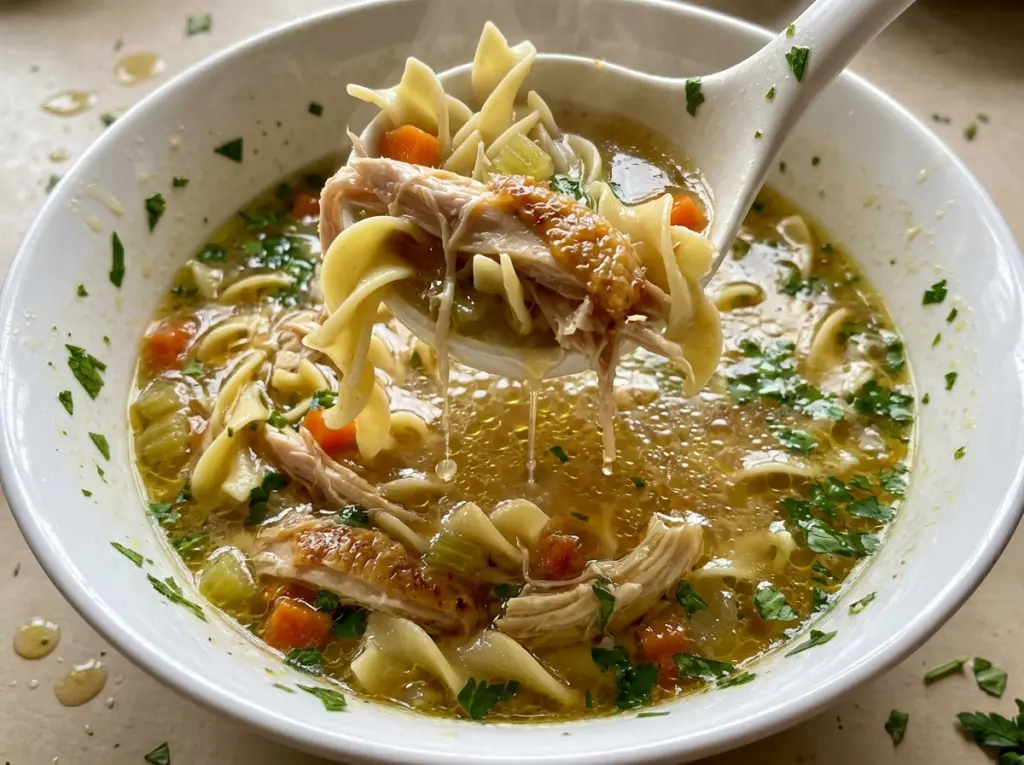
The noodles keep drinking up broth as soon as they hit the pot, which is why the order of things matters in this soup. I let the carrots and celery get tender first, then cook the wide egg noodles right in the savory broth and stir in the rotisserie chicken at the end. That’s how I make Rotisserie Chicken Noodle Soup taste slow-simmered without asking the chicken to cook all afternoon.
Using rotisserie chicken means the meat is already cooked, so it only needs a few minutes in the hot soup. Add it after the noodles are tender, and the chicken warms through while keeping its texture instead of simmering through every stage. Low-sodium broth gives the vegetables, thyme, and chicken room to come through without making the bowl taste overly salty.
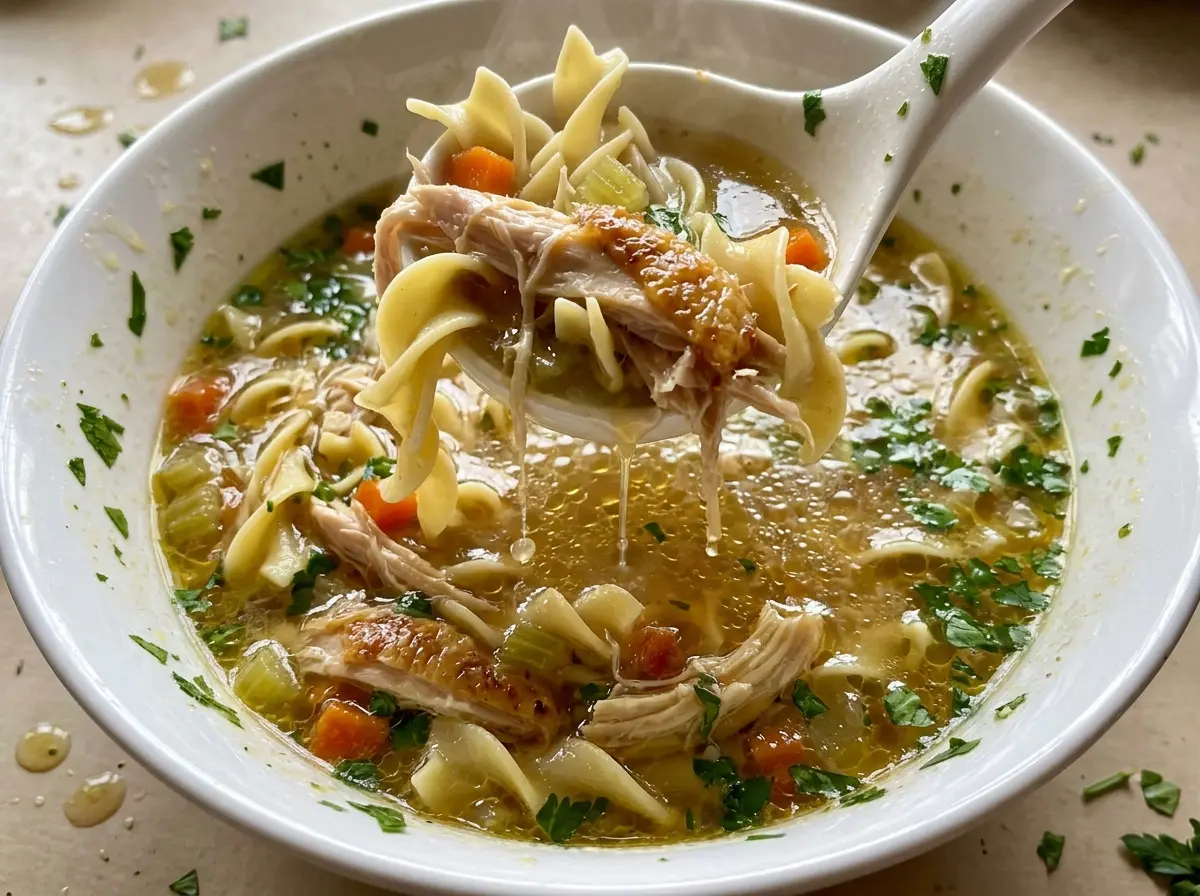
Each spoonful has soft noodles, tender vegetables, and warm shreds of chicken in a clear, herby broth. It’s the kind of straightforward soup I want when the kitchen needs to feel calm and dinner needs to come together in one pot.
Kitchen Note
Garlic needs only 30 seconds in the pot, just until it smells fragrant. Keep it moving during that short minute; browned garlic can turn bitter before the broth goes in.
Save this Rotisserie Chicken Noodle Soup for a cozy one-pot dinner with tender vegetables and wide egg noodles.
Why the Noodles Wait Until the Vegetables Are Tender
Egg noodles cook quickly, but the carrots and celery need more time in the broth. If the noodles go in while the vegetables are still firm, they can be ready before the vegetables soften. The soup then sits on the heat longer, and the noodles keep absorbing liquid and lose their pleasant bite.
Instead, let the vegetables finish simmering before adding the noodles. They’ll cook in the seasoned broth, so every strand picks up the flavor of the onion, garlic, thyme, and chicken broth. Follow the noodle package timing and check for tenderness near the end; brands and shapes can vary a little.
The chicken belongs after the noodles, not at the beginning. Rotisserie meat is already cooked, and a brief warm-through is all it needs. This sequence gives you tender vegetables, noodles that still hold their shape, and chicken that tastes moist rather than stewed.
What Wide Egg Noodles, Low-Sodium Broth, and Rotisserie Chicken Bring to the Pot

- Wide egg noodles — Their broad shape gives the soup a soft, substantial bite and catches broth in each spoonful. Choose a package with a clear cooking time; an inexpensive brand works well here. Keep the noodles dry until the broth is simmering, then cook them according to the package directions.
- Low-sodium chicken broth — It forms the whole base of the soup, so choose a broth whose flavor you like, but an everyday store brand is fine. The low-sodium version keeps the finished pot from becoming too salty once the kosher salt and rotisserie chicken are added. A regular broth is possible, but the seasoning balance will change.
- Rotisserie chicken — The already-cooked meat gives the broth a roasted chicken flavor without a long cooking time. A grocery-store chicken works perfectly; shred the meat into pieces that are easy to catch on a spoon. The amount in the pot is measured as shredded meat, not as the weight of the whole bird.
- Onion, carrots, and celery — This trio builds the savory, gently sweet base before the broth goes in. Fresh, firm carrots are worth choosing because limp ones can cook unevenly; standard yellow onions and celery are just right. Dice the onion and slice the carrots and celery so the pieces soften at a similar pace.
- Garlic, thyme, and bay leaf — These season the broth in the background rather than making it taste like a heavy spice blend. Dried thyme is the right choice here, and there’s no need for an expensive brand. Keep the bay leaf whole so it’s easy to spot and remove before serving.
- Fresh parsley — Chopped parsley brings a fresh, green finish after the soup has simmered. Use the leaves and tender stems, chopped finely; if you don’t have fresh parsley, you can leave it out, though the soup will lose that bright finish.
Build the Broth First, Then Cook the Noodles in It
Soften the onion, carrots, and celery
Heat the olive oil in a 6-quart pot over medium heat, then add the diced onion, sliced carrots, and sliced celery. Cook for 6 to 8 minutes, stirring occasionally, until the vegetables begin to soften. They don’t need to be fully tender yet; the broth simmer finishes that job. If the onion starts to brown quickly, lower the heat so the vegetables soften without scorching.
Give the garlic a brief turn in the pot
Add the minced garlic and stir for 30 seconds, just until fragrant. It should smell savory and mellow, not toasted or sharp. Pour in the chicken broth, then stir in the bay leaf, dried thyme, kosher salt, and black pepper. Bring the broth to a boil before reducing the heat.
Simmer until the vegetables are tender
Let the broth simmer for 10 to 15 minutes, until the carrots and celery are tender when pierced. Keep the simmer steady rather than letting the pot boil hard; a gentler bubble gives the vegetables time to soften in the broth. If they’re still firm at the end of the range, keep simmering until tender before moving on to the noodles.
Cook the noodles, then warm the chicken
Add the wide egg noodles and cook them according to the package directions, usually 6 to 8 minutes, until tender. Stir in the shredded rotisserie chicken and chopped parsley, then cook for 3 to 5 minutes, until the chicken is heated through. Lift out and discard the bay leaf before ladling the soup into bowls. Don’t leave the pot simmering after the noodles are tender; they’ll continue to soften in the hot broth.
Easy Ways to Adapt This Chicken Noodle Soup
Make It Gluten-Free
Replace the egg noodles with 8 ounces of wide gluten-free noodles and cook them according to their package directions. The texture may be less springy than traditional egg noodles, so check them as they approach the package’s suggested finish time.
Choose a Milder or Deeper Chicken Flavor
Keep the total at 3 cups of shredded meat from the rotisserie chicken, but choose mostly breast meat for a milder bowl or include more dark meat for a richer, more pronounced chicken flavor. Either way, stir it in at the same point so it warms through without a long simmer.
Storage and Reheating
- Refrigerator: Refrigerate leftovers in a covered container for 3 to 4 days. The noodles will absorb some broth and soften as the soup sits.
- Freezer: Freeze in airtight freezer-safe containers for up to 2 to 3 months. The soup freezes safely, but the noodles will be softer after thawing.
- Reheating: Warm gently on the stovetop, stirring, until the soup reaches 165°F. Avoid a long boil; it can make the noodles mushy.
Questions That Come Up With Rotisserie Chicken Noodle Soup
Rotisserie Chicken Noodle Soup
Ingredients
Method
- Heat the olive oil in a 6-quart pot over medium heat.
- Add the onion, carrots, and celery and cook for 6 to 8 minutes, stirring occasionally, until the vegetables begin to soften.
- Add the garlic and cook for 30 seconds, stirring, until fragrant.
- Stir in the chicken broth, bay leaf, thyme, salt, and pepper.
- Bring the soup to a boil.
- Reduce the heat and simmer for 10 to 15 minutes, until the vegetables are tender.
- Add the egg noodles and cook according to the package directions, usually 6 to 8 minutes, until tender.
- Stir in the shredded chicken and parsley and cook for 3 to 5 minutes, until the chicken is heated through.
- Remove and discard the bay leaf before serving.


