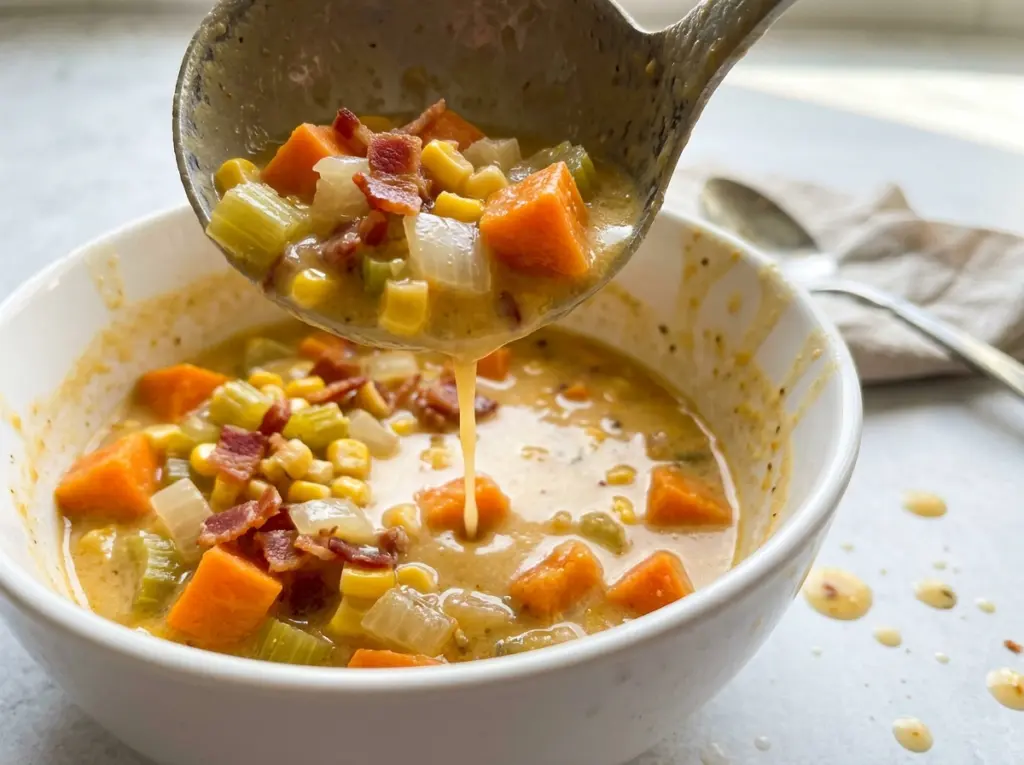
The bacon is the first clue this chowder is going in the right direction: it crackles in the Dutch oven, then leaves behind drippings that smell smoky and savory. Once the onion and celery soften in that same pot, the broth gets a head start on flavor before the sweet potatoes even go in. I like this Sweet Potato Chowder because it turns familiar pantry ingredients into a hearty bowl without asking you to make a separate sauce.
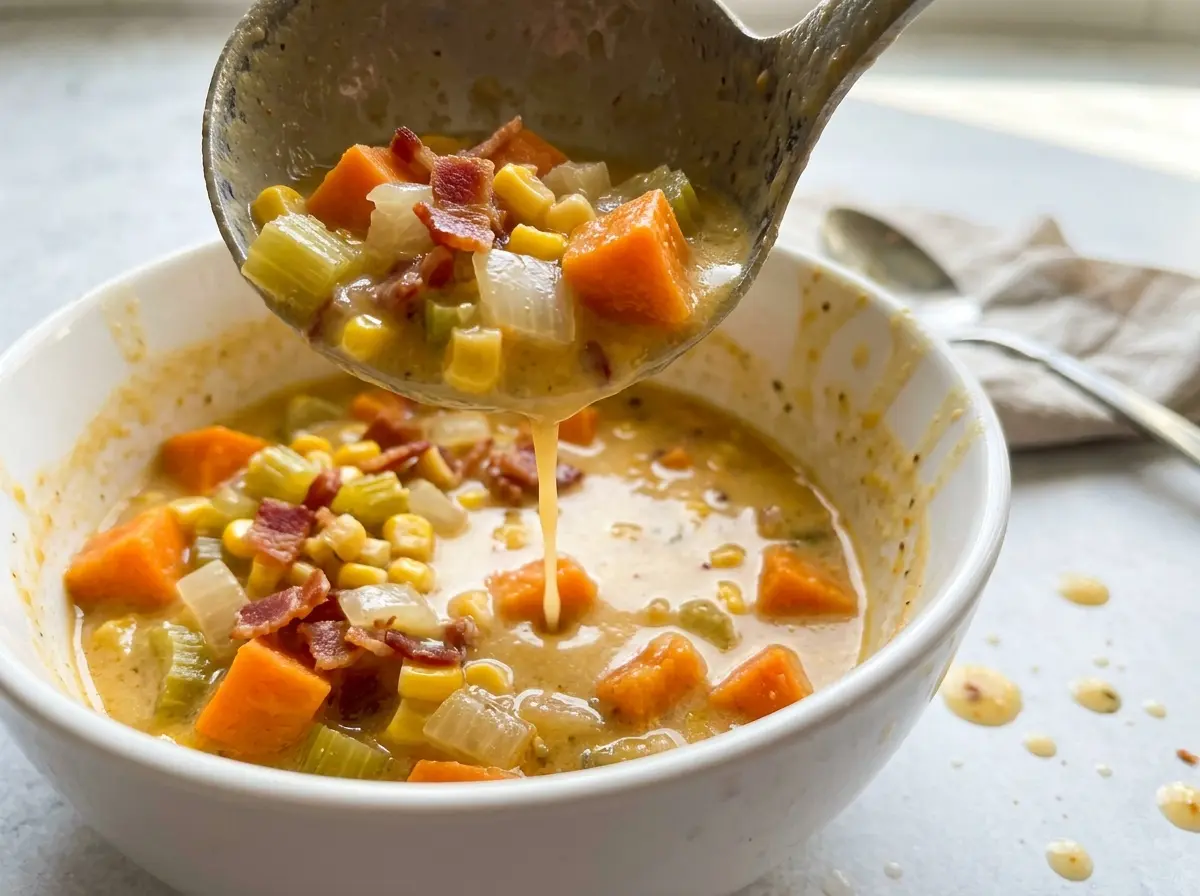
Cutting the sweet potatoes into even cubes helps them cook at the same pace, and the flour-coated vegetables give the broth enough body to feel like chowder instead of soup. Frozen corn goes in near the end, so it stays sweet and distinct rather than disappearing into the pot. A gentle finish with half-and-half keeps the broth creamy, while crumbled bacon on top adds a crisp contrast to the tender potatoes.
Kitchen Note
Low-sodium broth matters here because the bacon seasons the pot as it cooks and again when it goes back in. Starting with a less salty broth lets the finished chowder taste savory without getting heavy-handed.
Save this Sweet Potato Chowder for a cozy bowl with tender potatoes, sweet corn, and crisp bacon on top.
Why the Flour Goes In Before the Broth
Chowder can turn thin and brothy when its thickener is added as an afterthought. Here, the flour gets stirred into the softened onion and celery before any liquid goes in. That gives it a chance to coat the vegetables and mingle with the bacon drippings and butter, which helps it disperse instead of forming little floury lumps in the finished soup.
Adding the broth gradually is just as useful. Whisk as you pour, and the flour loosens into a smooth base; rushing in all the liquid at once makes lumps harder to work out. The mixture won’t look thick like gravy at this stage, and that’s fine. The sweet potatoes release some starch as they simmer, so the broth gains body while they cook. This gives the chowder a creamy consistency without blending the potatoes or relying on a heavy cream base.
What Gives This Sweet Potato Chowder Its Body and Balance

- Sweet potatoes — Choose firm potatoes with smooth skins; they should cut cleanly into cubes and cook to a tender, creamy texture. Fresh potatoes give the chowder its substantial body. Peel them and keep the pieces close to the same size so they soften evenly.
- Bacon — Regular sliced bacon gives the base its smoky depth and leaves flavorful drippings for the vegetables. There’s no need to buy specialty bacon, but crisping it fully matters because the reserved crumbles bring crunch to the top of each bowl.
- All-purpose flour — This thickens the broth without turning it into a paste. For a gluten-free version, use cornstarch instead; the variation below explains how to change the mixing method so it dissolves smoothly.
- Low-sodium chicken broth — A boxed broth is fine; choose one you enjoy sipping, since it makes up most of the chowder’s liquid. The low-sodium kind leaves room for the bacon and kosher salt to season the pot without making it too salty.
- Half-and-half — It gives the broth a soft creaminess without making it as rich as heavy cream. Whole milk works if that’s what you have, though the result will be a little thinner; avoid using a very lean milk if you want the chowder to feel full-bodied.
- Frozen corn and aromatics — Frozen corn is convenient and keeps its shape in the short final simmer. Yellow onion, celery, garlic, thyme, black pepper, and smoked paprika build a savory base around the sweet potatoes; use fresh garlic and onion, but dried thyme and pantry spices are perfectly suited here.
Building the Chowder in One Dutch Oven
Render the Bacon Until Crisp
Cook the bacon in a 5-quart Dutch oven over medium heat for 6 to 8 minutes, turning it as needed. Look for evenly browned, crisp slices rather than pale, bendy bacon. Move the slices to a paper towel-lined plate and crumble them once cool. Leave the drippings in the pot for the vegetables.
Soften the Vegetables and Coat Them in Flour
Add the butter, diced onion, and celery to the pot and cook over medium heat, stirring occasionally, for about 5 minutes. The onion should look softened and the celery should lose its raw, rigid feel without taking on much color. Stir in the minced garlic and cook for 30 seconds, just until fragrant. Add the flour and stir until the vegetables are coated; don’t let the garlic darken while you do this.
Simmer the Sweet Potatoes Until Fork-Tender
Gradually whisk in the chicken broth, working out any flour clumps as the liquid goes in. Add the sweet potatoes, kosher salt, thyme, black pepper, and smoked paprika, then bring the pot to a boil. Reduce the heat and simmer uncovered for 15 to 20 minutes. The potatoes are ready when a fork slips into a cube easily, but they should still hold their shape.
Finish Gently with Corn and Half-and-Half
Stir in the frozen corn and half-and-half, then simmer gently for 3 to 5 minutes until heated through. Keep the surface calm rather than letting the chowder boil; boiling can make the dairy separate. Stir in three-quarters of the crumbled bacon, then serve each bowl with the rest scattered on top. That last handful keeps its crisp texture instead of softening in the pot.
Three Practical Ways to Adapt the Pot
Make It Vegetarian
Leave out the bacon and use vegetable broth in place of chicken broth. Cook the onion and celery in the butter, then continue with the garlic and flour. The chowder will lose the bacon’s smoky richness, but the smoked paprika and sweet potatoes still make a savory, satisfying bowl.
Make It Gluten-Free
Replace the all-purpose flour with 1 tablespoon cornstarch. Instead of stirring it into the vegetables, whisk it into a little cold chicken broth until smooth, then gradually whisk in the remaining broth and proceed with the potatoes. The chowder thickens without the flour, though the base has a slightly glossier finish.
Make It Dairy-Free
Use olive oil instead of butter and unsweetened, unflavored oat creamer instead of half-and-half. Add the oat creamer at the same point and keep the simmer gentle. The broth will be a little less rich, but the sweet potatoes still give it a hearty texture.
Storage and Reheating
- Refrigerator: Refrigerate leftovers within 2 hours and keep them in an airtight container for 3 to 4 days. The potatoes soften a little more as they sit.
- Freezer: Freeze cooled chowder in airtight containers for up to 2 months. The half-and-half may separate slightly after thawing, so expect a less silky texture even after stirring.
- Reheating: Warm it slowly in a saucepan over low heat, stirring often, or heat individual portions in the microwave in short intervals. Bring leftovers to 165°F, and don’t let the chowder boil; high heat can make the dairy separate.
Questions That Come Up While Making Sweet Potato Chowder
Sweet Potato Chowder
Ingredients
Equipment
Method
- Cook the bacon in a 5-quart Dutch oven over medium heat until crisp, 6 to 8 minutes, turning as needed.
- Transfer it to a paper towel-lined plate and crumble when cool, leaving the drippings in the pot.
- Add the butter, onion, and celery to the pot and cook over medium heat, stirring occasionally, until softened, about 5 minutes.
- Stir in the garlic and cook for 30 seconds.
- Stir in the flour until the vegetables are coated.
- Gradually whisk in the chicken broth until smooth.
- Add the sweet potatoes, salt, thyme, black pepper, and smoked paprika.
- Bring to a boil, reduce the heat, and simmer uncovered until the sweet potatoes are fork-tender, 15 to 20 minutes.
- Stir in the corn and half-and-half.
- Simmer gently until heated through, 3 to 5 minutes; do not boil.
- Stir in three-quarters of the crumbled bacon.
- Serve the chowder topped with the remaining bacon.


