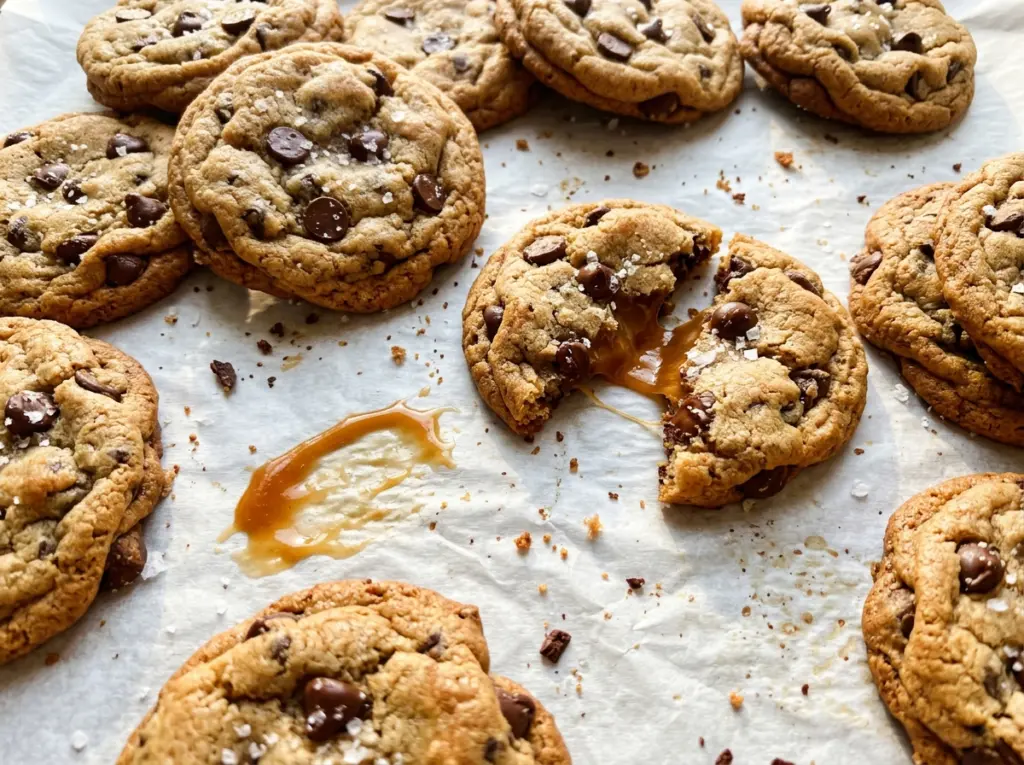
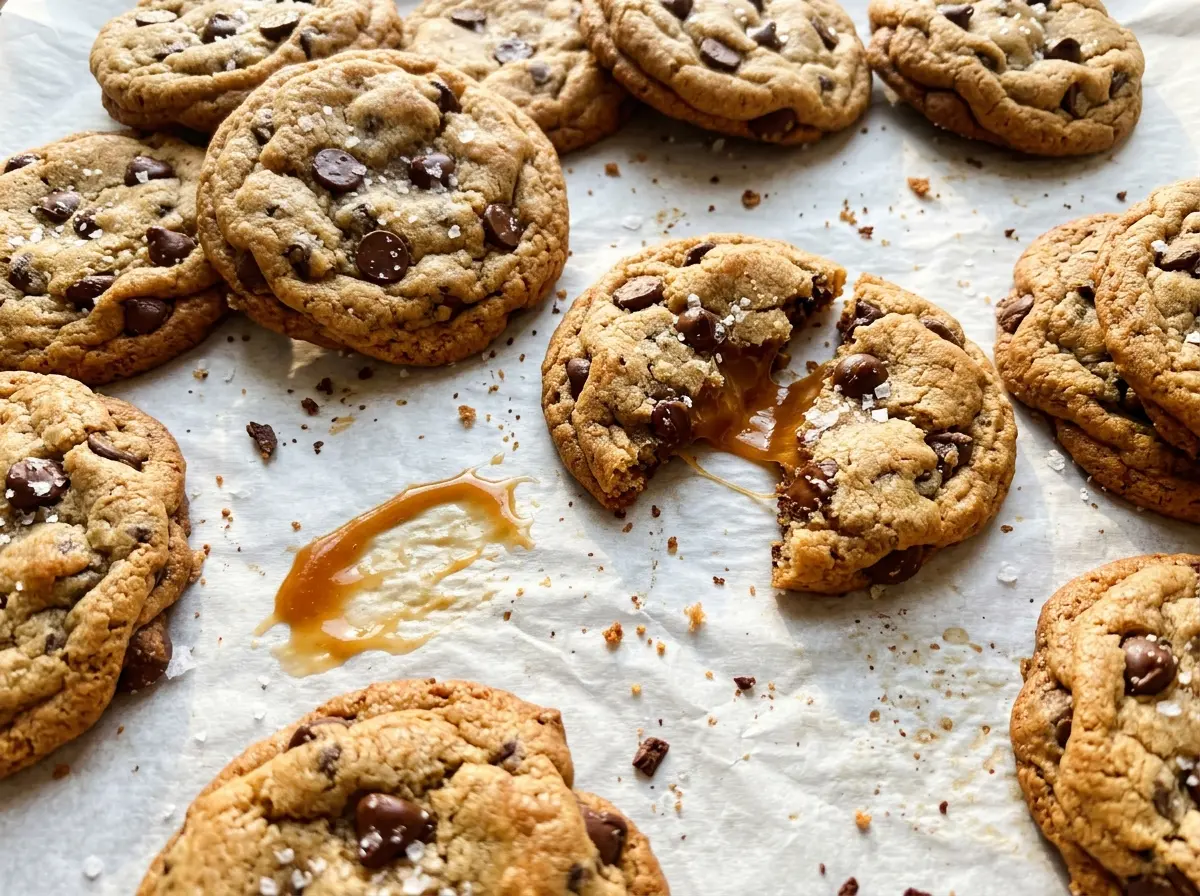
When the edges turn golden, the centers still look a little soft—and the caramel inside is waiting to spill out with the first bite. That’s the moment I watch for with these salted caramel chocolate chip cookies. The trickiest part isn’t the dough; it’s getting a soft caramel completely tucked inside so it stays a gooey surprise instead of escaping onto the baking sheet.
I keep the cookie dough familiar: butter, two kinds of sugar, vanilla, and plenty of semisweet chocolate chips. A short chill makes it easier to shape around each caramel, while flaky salt on top gives the sweet center a clean, savory finish. This batch makes 30 cookies, so there’s room to bake a couple of sheets at once and still have plenty of warm cookies to cool on the rack.
Kitchen Note
Set a timer for the halfway point so you remember to switch the baking sheets between the upper and lower racks. It’s an easy detail to miss when you’re watching for those golden edges, and the swap helps both sheets bake evenly.
Save these salted caramel chocolate chip cookies for a bake when you want soft centers, chocolate in every bite, and a gooey caramel middle finished with flaky salt.
Why Brown Sugar and White Sugar Both Matter in a Caramel-Stuffed Cookie
With a caramel center already bringing plenty of sweetness, it might seem sensible to cut back on one of the sugars. They each do a different job, though. Packed light brown sugar brings moisture and a chewy bite that suits the soft filling. Granulated sugar helps the cookies spread and gives the edges a little more structure as they bake.
Using both also helps the dough hold up around the caramel. A cookie that spreads too quickly can leave its center exposed; a dough that stays thick and soft gives you a better cushion around the candy. The balance here keeps the outside recognizable as a chocolate chip cookie instead of turning into a thin, overly sweet shell. That contrast matters: you get golden edges, a tender middle, and a caramel center that stays distinct from the chocolate.
Butter temperature plays into that texture, too. Softened butter should give slightly when pressed, but it shouldn’t look shiny or melted. Creaming it with the sugars until they look creamy, rather than stopping as soon as they’re mixed, gives the dough a smooth base that’s easier to portion and wrap around the filling.
The Ingredients That Keep the Caramel Center Soft and the Edges Structured
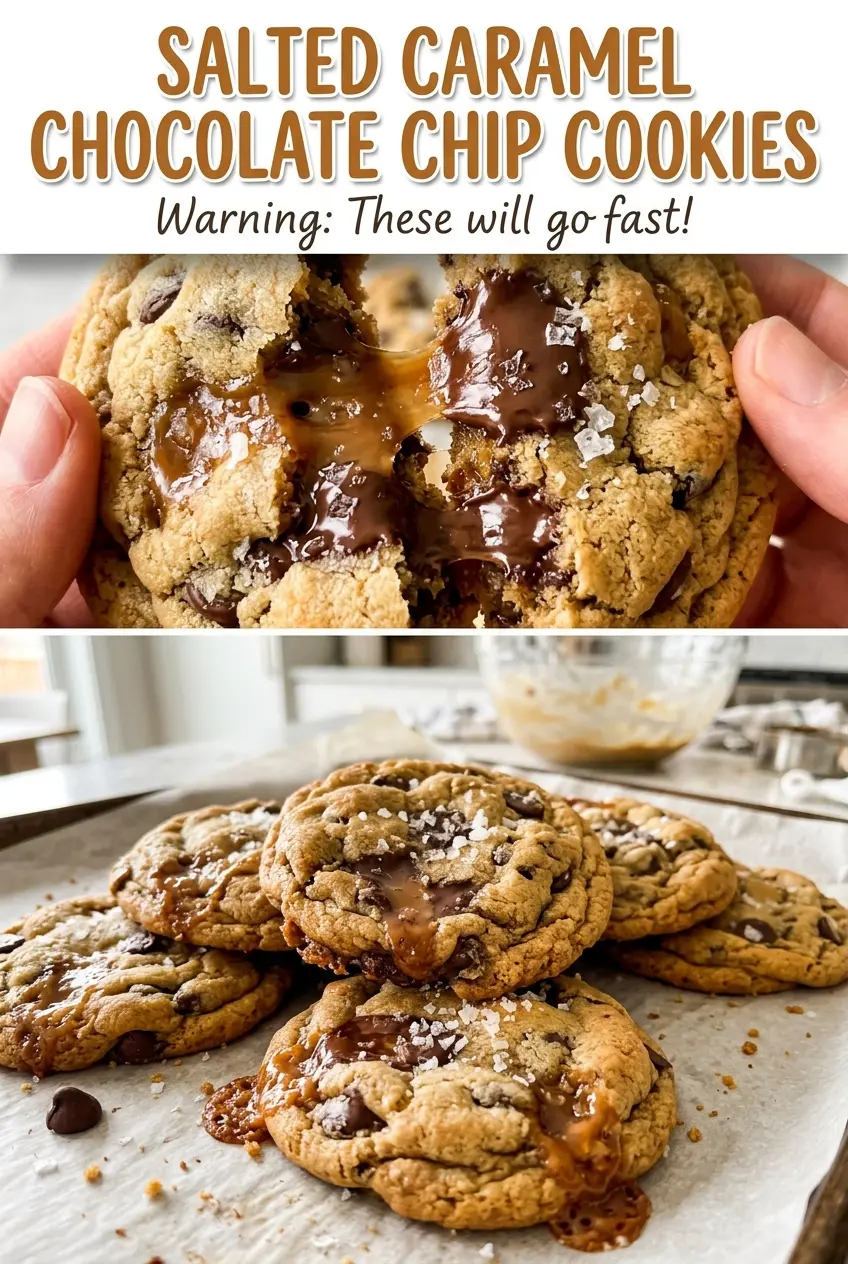
- Soft caramel candies — Choose soft, individually wrapped caramels, not hard candies or caramel sauce. They hold their shape while you wrap the dough around them, then soften as the cookies bake. If you can’t find soft caramels, there isn’t a direct swap that gives the same contained, gooey center.
- All-purpose flour and baking soda — All-purpose flour gives the dough enough body to surround the filling, and baking soda helps the cookies spread and brown. A one-to-one gluten-free baking flour blend is the most practical flour swap; use a blend meant for baking, preferably one that includes xanthan gum. The texture may be a little different, but the cookies still hold together.
- Unsalted butter — A basic grocery-store butter works well here; there’s no need to buy a specialty brand. Unsalted butter lets the kosher salt in the dough and the flaky salt on top do their separate jobs. Oil isn’t a good stand-in because it won’t cream with the sugars the way softened butter does.
- Large eggs — Eggs bind the dough and help it stay tender around the caramel. Stick with large eggs for the intended dough texture; smaller eggs can leave it drier, while an egg substitute can make the dough harder to seal around the candy.
- Semisweet chocolate chips — Semisweet chips keep the cookie from becoming too sweet alongside the caramel. Bittersweet chips work as a swap if you prefer a less-sweet, more cocoa-forward bite. Standard chips are fine; the caramel center is the star here.
- Kosher salt and flaky sea salt — The kosher salt seasons the dough evenly, while flaky sea salt gives the tops a light crunch. They aren’t interchangeable by volume: fine table salt tastes saltier in the same spoonful. If you don’t have flaky salt, leave off the topping rather than using an equal amount of fine salt.
Chill, Stuff, and Bake: The Stages That Keep Caramel Inside
Mix the Dough Without Overworking It
Heat the oven to 350°F and line two large baking sheets with parchment paper. Whisk the flour, baking soda, and kosher salt together in a medium bowl. In a large bowl, beat the softened butter with both sugars on medium speed until creamy, about 2 minutes, then beat in the eggs one at a time and mix in the vanilla. Add the flour mixture gradually on low speed, stopping as soon as it’s combined, and stir in the chocolate chips.
Give the Dough Its Short Chill
Cover the bowl and chill the dough for 30 minutes. That rest firms the butter enough to make the portions easier to handle. If the dough feels sticky as you scoop, keep it chilled rather than working extra flour into it; extra flour changes the cookie’s texture. While the dough chills, unwrap the caramels so they’re ready to fill.
Seal a Caramel in Every Portion
Scoop the dough into 30 portions, about 2 tablespoons each. Press one caramel into the center of each portion, then bring the dough up and around it until the candy is fully enclosed. Pinch any thin spots closed; exposed caramel can leak out as it softens in the oven. Arrange the filled portions at least 2 inches apart on the prepared sheets.
Bake Until the Edges Turn Golden
Bake the sheets on the upper and lower oven racks for 11–13 minutes, switching their positions halfway through. Look for golden edges and centers that still appear soft; the cookies firm as they cool, so waiting for the centers to look fully baked can leave them dry. Sprinkle the warm cookies with flaky sea salt. Let them cool on the baking sheets for 5 minutes, then transfer them to a wire rack to cool.
Easy Swaps That Change These Cookies Without Losing the Center
Use Bittersweet Chips for a Less-Sweet Cookie
Replace the semisweet chocolate chips with the same amount of bittersweet chips. Their deeper cocoa flavor offsets the caramel’s sweetness, though the finished cookie tastes a little less like a classic chocolate chip cookie.
Make a Gluten-Free Batch
Use a one-to-one gluten-free baking flour blend in place of the all-purpose flour. A blend with xanthan gum helps the cookies hold together around the caramel. The edges may bake up a bit more tender or crumbly, so let the cookies cool on the baking sheets before moving them.
Storage and Reheating
- Refrigerator: Store cooled cookies in an airtight container for up to 5 days. The caramel firms as it chills, so the centers won’t feel as soft straight from the fridge.
- Freezer: Freeze cooled cookies in an airtight container for up to 2 months. Let them thaw at room temperature; the caramel softens again as the cookies come back to room temperature.
- Reheating: Warm one cookie in the microwave for 5–8 seconds, then let it sit briefly before eating. The caramel can get hotter than the cookie, so don’t take a bite straight from the microwave.
Questions About the Caramel, Dough, and Bake
Salted Caramel Chocolate Chip Cookies
Ingredients
Equipment
Method
- Preheat the oven to 350°F.
- Line two large baking sheets with parchment paper.
- In a medium bowl, whisk together the flour, baking soda, and kosher salt.
- In a large bowl, beat the butter, brown sugar, and granulated sugar with a hand mixer on medium speed until creamy, about 2 minutes.
- Beat in the eggs one at a time.
- Mix in the vanilla.
- Gradually mix in the flour mixture on low speed just until combined.
- Stir in the chocolate chips.
- Cover and chill the dough for 30 minutes.
- Scoop the dough into 30 portions, about 2 tablespoons each.
- Press one caramel into the center of each portion and seal the dough completely around it.
- Arrange the cookies at least 2 inches apart on the baking sheets.
- Bake on the upper and lower oven racks for 11–13 minutes, switching the sheets’ positions halfway through, until the edges are golden and the centers still look soft.
- Sprinkle the warm cookies with flaky sea salt.
- Let them cool on the baking sheets for 5 minutes.
- Transfer to a wire rack to cool.


