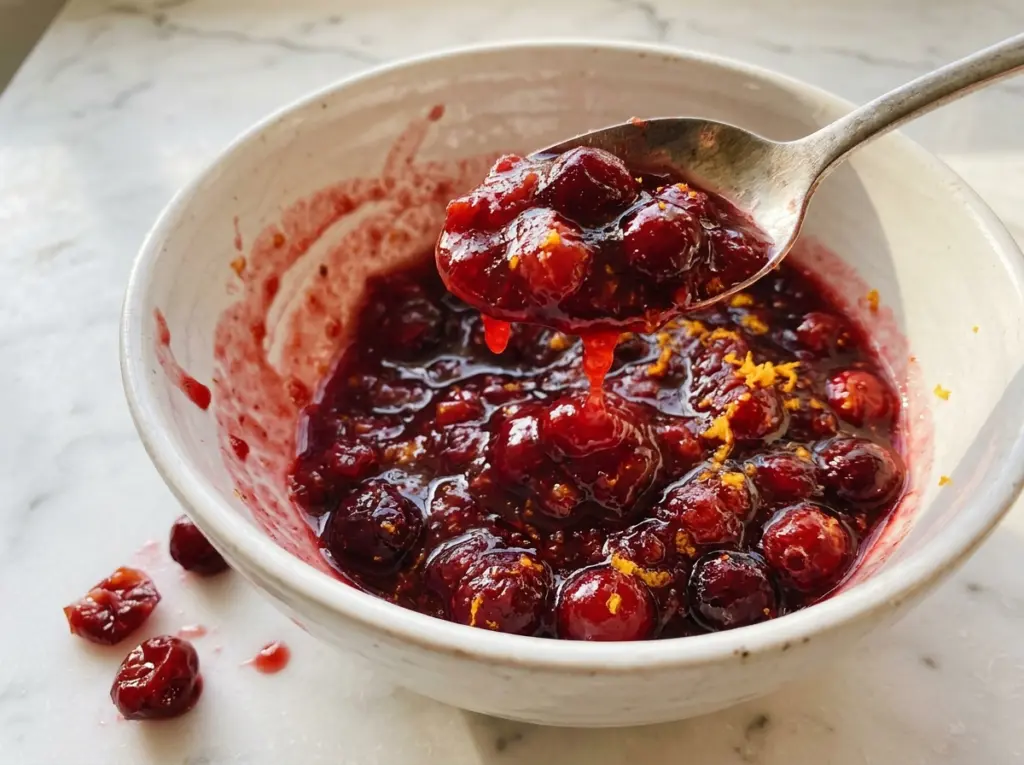
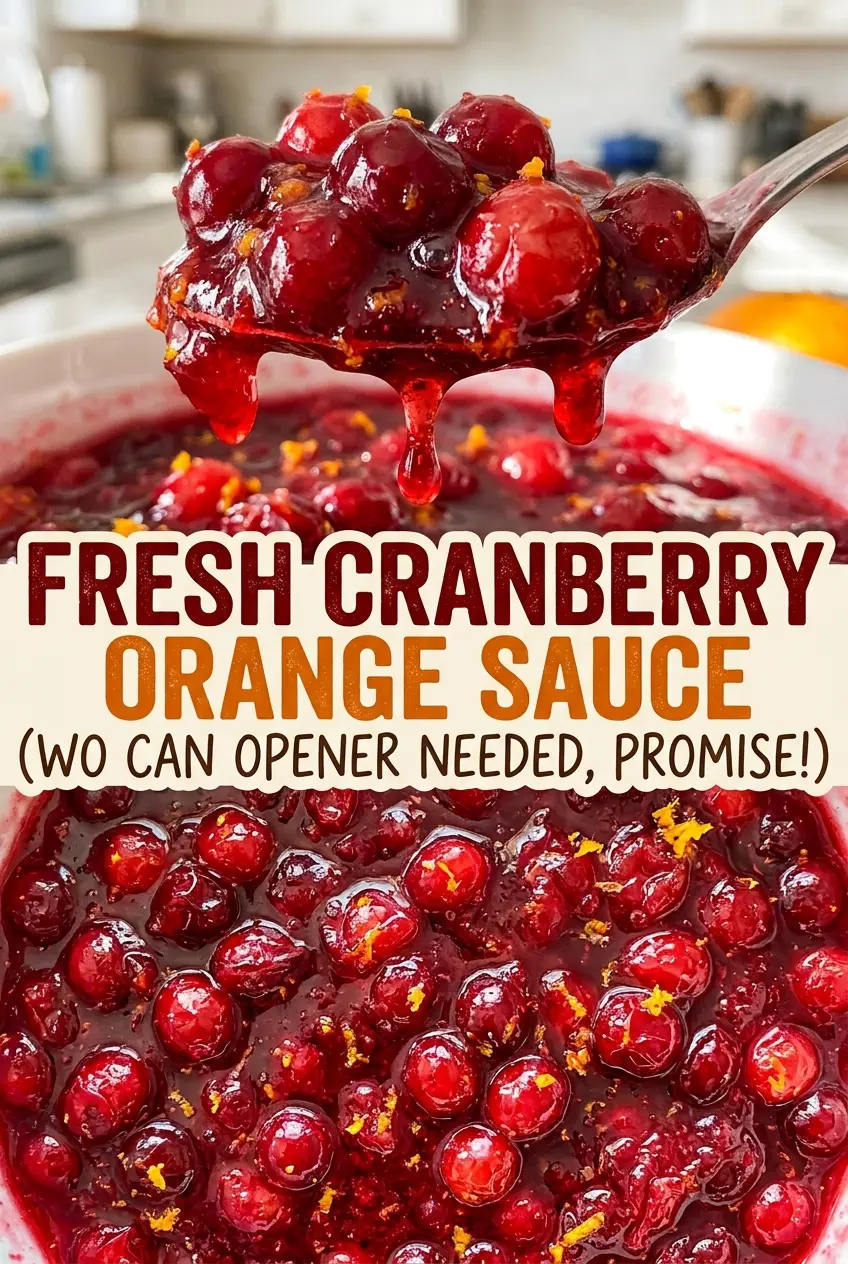
The first cranberries pop against the side of the saucepan, and the liquid turns a deep ruby red before the fruit has all softened. That’s when I start watching the texture rather than expecting every berry to disappear. Fresh Cranberry Orange Sauce should have a little body and plenty of bright orange aroma, with whole berries here and there. This batch serves eight, and it takes only a handful of ingredients to get that balance of tart fruit and sweetness.
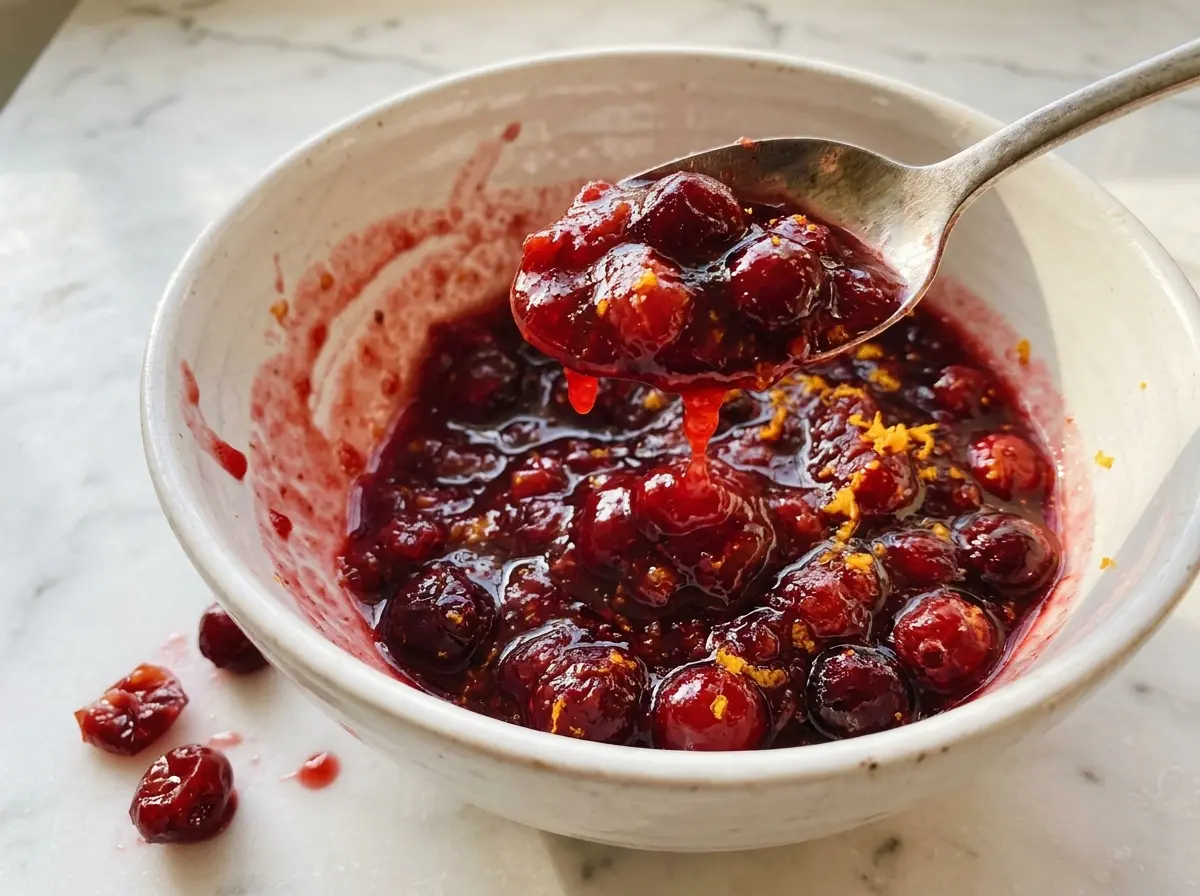
I use both orange juice and finely grated zest because they do different jobs: the juice joins the cooking liquid, while the zest brings a fragrant citrus note without adding more liquid. Once the berries have burst and the sauce has simmered for 10 to 12 minutes, it may still look looser than you expect. Let it cool before judging the final texture; it thickens as it rests, and the finished sauce is glossy, tangy, and spoonable.
Kitchen Note
Pick through the cranberries before they go in the pan and pull out any soft or shriveled ones. Firm berries cook more evenly and give the sauce a better mix of tender fruit and intact pieces.
Save this Fresh Cranberry Orange Sauce for a bright, tart side with just enough sweetness and a clear hit of citrus.
Why Cranberry Sauce Keeps Thickening After the Burner Is Off
A saucepan of cranberries can look surprisingly loose when the simmer is finished. That doesn’t mean it needs flour, cornstarch, or a longer, harder boil. Cranberries release their natural pectin as they cook, and the sauce continues to set as it cools. The sugar and fruit juices also concentrate during the uncovered simmer, so the texture changes in two stages rather than all at once.
That timing matters because cooking until the hot sauce looks as thick as you want it on the plate can leave you with a dense, sticky result once it’s cooled. Aim for most of the berries to have burst and for the liquid to look slightly syrupy around them. There should still be a little movement when you stir. The cooled sauce will be thicker, but it won’t turn into a firm jelly; it stays soft enough to spoon. A few intact cranberries are welcome, too. They keep the texture lively instead of making every bite exactly the same.
How the Cranberries, Orange, and Sugar Shape the Sauce
- Fresh cranberries — Choose berries that feel firm, not soft or wrinkled. Rinse and pick them over before cooking. Fresh is the choice for this version; frozen berries also work, though they can need a little more time to reach the same burst-and-thicken cues.
- Granulated sugar — It softens the cranberries’ sharp tartness and dissolves cleanly into the cooking liquid. The amount gives the sauce a sweet-tart balance rather than making it candy-sweet. If you want a deeper note, light brown sugar can stand in for the granulated sugar; the sauce will taste a little more caramel-like.
- Orange juice — Juice contributes citrus flavor and liquid for the cranberries to cook in. Freshly squeezed juice has a lively aroma, while ordinary bottled orange juice works well in the same amount. Avoid a sweetened orange drink, which can push the sauce sweeter without giving it the same straightforward orange character.
- Finely grated orange zest — The zest brings fragrant orange oils that juice alone won’t supply. Grate only the colored outer peel; the white pith underneath tastes bitter. A fine grater distributes the zest evenly, so you don’t end up with large chewy strips in the finished sauce.
- Water — Water keeps the mixture from starting out too concentrated while the berries heat and begin releasing their juices. It has a neutral taste, so orange juice can replace it if you want a more citrus-forward batch; the sauce will have a stronger orange note.
From a Gentle Boil to a Spoonable Finish
Bring the Fruit and Citrus to a Boil
Combine the cranberries, sugar, water, orange juice, and orange zest in a 2-quart saucepan. Set the pan over medium-high heat and bring the mixture to a boil, stirring as the sugar dissolves. The berries will start to look glossy as they warm, and the liquid will turn red. Keep an eye on the pan as it reaches a boil so it doesn’t bubble over.
Simmer Until Most Berries Burst
Reduce the heat to medium-low and simmer uncovered for 10 to 12 minutes, stirring occasionally. The cranberries will pop as their skins split, and the liquid will gradually look thicker around the fruit. The goal is for most of the berries to burst, not every last one. If the sauce still looks very watery at the end of the simmer, use the fruit and liquid cues rather than forcing every berry to collapse.
Let the Sauce Set as It Cools
Remove the saucepan from the heat and leave the sauce to cool for at least 20 minutes. Don’t rush to serve it straight from the burner; the texture is still changing while it rests. The sauce should be easier to spoon once it has cooled, with soft berries held in a glossy, thickened base. Transfer it to a serving dish when it’s ready for the table.
Three Easy Ways to Shift the Orange-Cranberry Balance
Make It Less Sweet and More Tart
Reduce the granulated sugar to 1/2 cup and keep the other ingredients the same. The cranberries’ tart edge will come through more clearly, so this version suits anyone who prefers a sharper sauce. It will still thicken as it cools.
Use Brown Sugar for a Toastier Note
Replace the granulated sugar with 3/4 cup packed light brown sugar. Its molasses note rounds out the tart fruit and gives the sauce a warmer, less clean-edged sweetness. The orange remains present, but the overall taste feels deeper.
Turn Up the Orange
Replace the 1/2 cup of water with another 1/2 cup of orange juice, keeping the original orange juice as well. The total liquid stays the same, but the sauce tastes more citrus-forward and a little fruitier. Use finely grated zest as usual for the aroma.
Storage and Reheating
- Refrigerator: Refrigerate in a covered container within 2 hours of cooking and use within 7 days. The sauce firms up as it gets cold.
- Freezer: Freeze in an airtight container for up to 2 months. Thaw overnight in the refrigerator; if a little liquid separates, stir it back in.
- Reheating: This sauce is good chilled, but you can warm it gently in a small saucepan over low heat, stirring until it loosens. Avoid high heat, which can make the sugary sauce catch on the bottom.
Questions That Come Up While Making Cranberry Orange Sauce
Fresh Cranberry Orange Sauce
Ingredients
Equipment
Method
- Combine the cranberries, sugar, water, orange juice, and orange zest in a 2-quart saucepan.
- Bring to a boil over medium-high heat.
- Reduce the heat to medium-low.
- Simmer uncovered for 10 to 12 minutes, stirring occasionally, until most of the cranberries have burst and the sauce has thickened.
- Remove the saucepan from the heat.
- Let the sauce cool for at least 20 minutes; it will thicken more as it cools.


