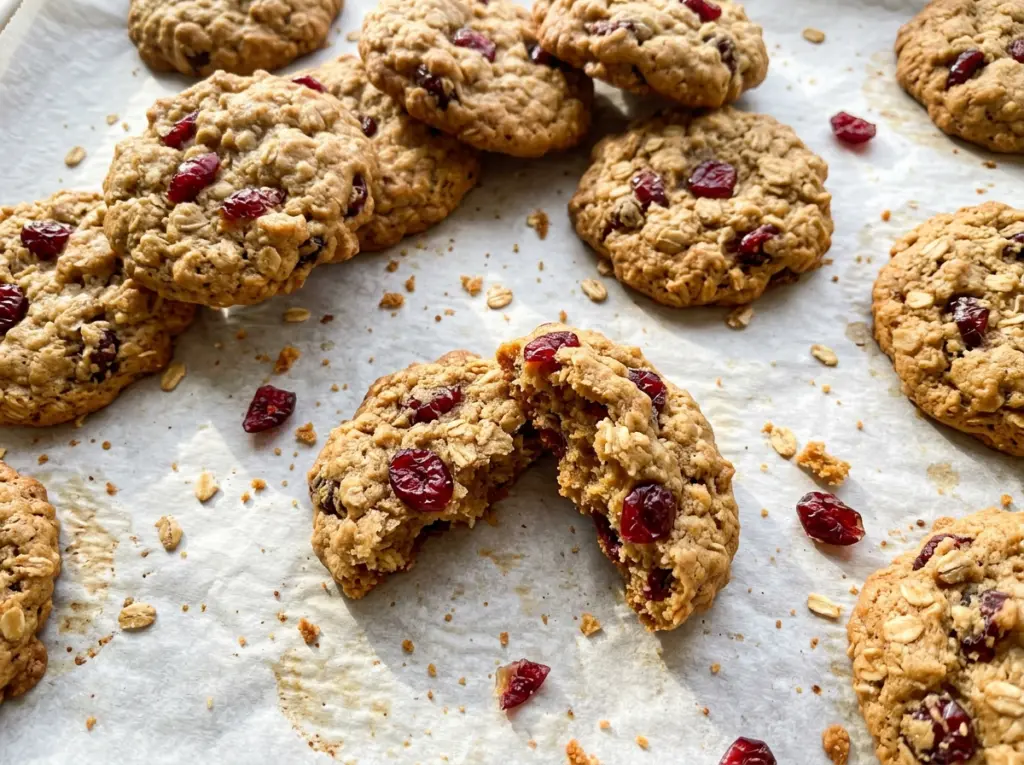
The edges turn golden before the centers look fully baked, and that’s exactly the moment to pull these cookies from the oven. They’ll finish setting on the hot baking sheet, which keeps the middle chewy instead of dry. I learned not to wait for the tops to look firm; by then, the oats have had time to turn a soft cookie into a crisp one.
These chewy cranberry oatmeal cookies get their texture from old-fashioned oats, brown sugar, and a short rest in the refrigerator before baking. The dough is sturdy enough to hold plenty of dried cranberries, while cinnamon brings a gentle warmth without taking over. I portion the dough with a tablespoon measure so the cookies bake at the same pace, then let them sit on the pan for five minutes before moving them. That brief pause matters: the edges settle, the centers stay tender, and the cranberries make little tart, chewy pockets in every bite.
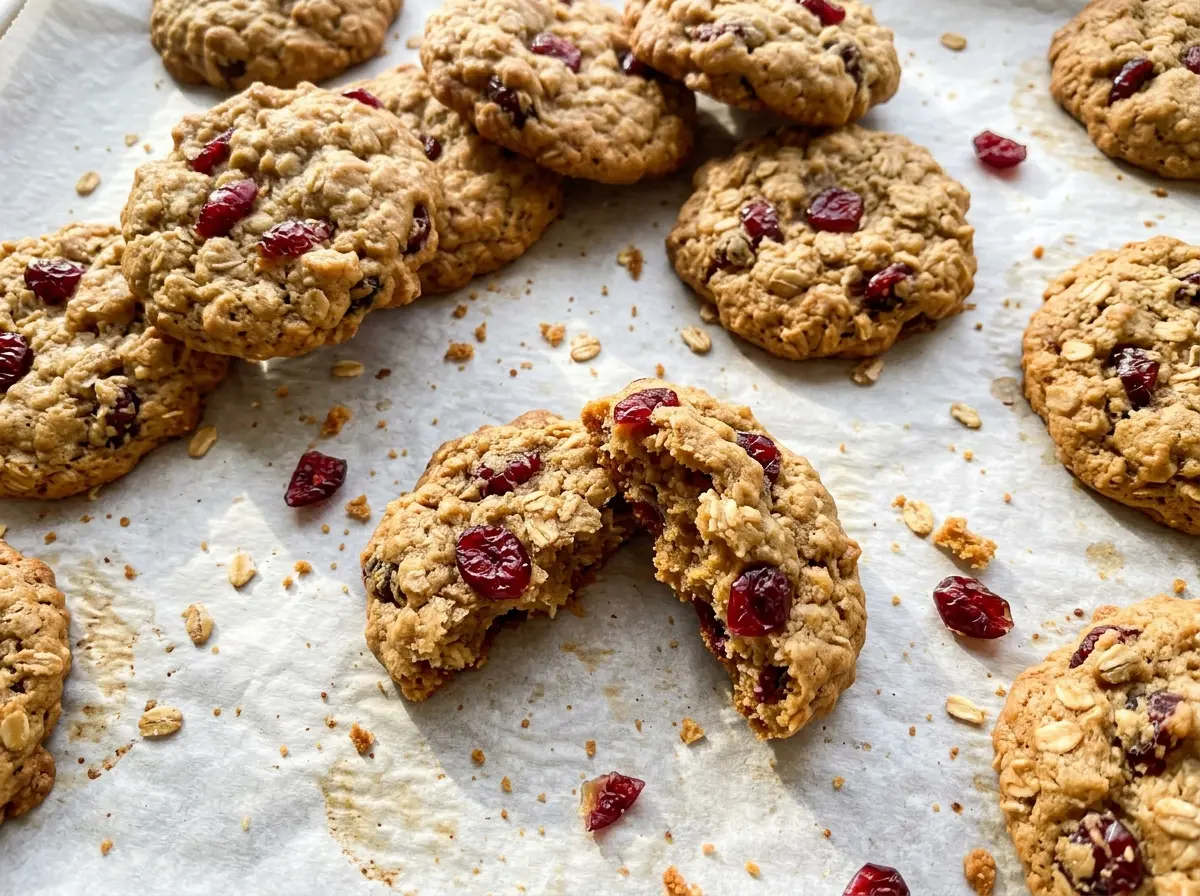
Kitchen Note
Take the cookies out when the edges are golden and the centers still look a little soft. Leave them on the baking sheets for five minutes; they’ll firm up enough to move without losing that tender middle.
Save these chewy cranberry oatmeal cookies for a bake day when you want golden edges, soft centers, and tart bites of dried cranberry.
Why the 30-Minute Chill Matters in Oatmeal Cookies
Oatmeal cookie dough can look thick in the bowl and still spread more than you expect in the oven. The butter has been softened enough to cream easily, and mixing it with sugar warms and loosens it further. A half-hour in the refrigerator gives the dough time to firm back up before it meets the heat. That small pause helps the cookies spread at a steadier pace instead of racing outward into thin, lacy edges.
The oats benefit from the rest, too. They take up some of the moisture in the dough, so the mixture feels more cohesive when you scoop it. You’ll still see the oats and cranberries throughout; the dough shouldn’t turn into a stiff ball. If it’s difficult to portion because it’s warm or sticky, give it the full chill rather than working extra flour into it. Extra flour changes the balance and can leave the baked cookies dense.
Keep the baking sheets lined and ready before you start mixing, then cover the bowl while the dough chills. That way the 30 minutes do useful work: the butter firms, the oats settle into the dough, and the portions are easier to handle.
What Gives These Cookies Their Chew (and Which Swaps Change It)

- Old-fashioned rolled oats — These give the cookies their distinct, substantial chew and visible oat texture. Quick oats soften more and make the centers less textured, so old-fashioned oats are the better choice when you want the cookies as written.
- Light brown sugar — Its moisture helps keep the centers tender, while granulated sugar balances the dough and supports browning. Packed brown sugar gives a consistent result; dark brown sugar works in a pinch, but brings a deeper molasses note.
- Unsalted butter — Softened butter creams smoothly with the sugars and lets you control the salt separately. Use real butter for the intended flavor and texture; a baking spread with a different water content can change how much the cookies spread.
- Dried cranberries — Their concentrated tart-sweet flavor and chewy texture hold up well in the dough. Dried cherries make a straightforward swap in the same amount; chop larger pieces so they distribute evenly.
- All-purpose flour and baking soda — Together, they give the cookies enough structure to hold the oats and fruit while still spreading. A cup-for-cup gluten-free baking flour can work, but use a blend meant to replace wheat flour rather than a single starch or nut flour.
- Cinnamon and vanilla — Cinnamon gives the dough a warm background note, and vanilla rounds out the brown sugar. Fresh, aromatic cinnamon makes a noticeable difference; there’s no need for an expensive vanilla if you have a good everyday extract.
Mixing and Baking for Chewy Centers
Whisk the Dry Ingredients Evenly
Heat the oven to 350°F and line two 18×13-inch baking sheets with parchment paper. In a medium bowl, whisk the flour, baking soda, cinnamon, and salt until the cinnamon is evenly dispersed and no clumps of baking soda remain. Whisking here prevents a concentrated bite of leavener later. Set the bowl aside while you cream the butter and sugars.
Cream the Butter, Then Add the Eggs
In a large bowl, beat the softened butter with both sugars using an electric mixer on medium speed for 2 to 3 minutes, until the mixture looks creamy. If the butter is cold and lumpy, it won’t blend evenly; it should give slightly when pressed but not look melted or greasy. Beat in the eggs one at a time, then mix in the vanilla. Scrape down the bowl if butter or sugar is clinging to the sides before adding the dry mixture.
Bring the Oats and Cranberries Into the Dough
Add the flour mixture and mix on low just until it’s combined; stop when the last dry streaks disappear. Stir in the oats and cranberries so they’re distributed through the dough without overworking it. Cover the bowl and refrigerate the dough for 30 minutes. It should feel cooler and more scoopable afterward, not hard all the way through.
Scoop, Bake, and Let the Cookies Set
Scoop the dough into 1 1/2-tablespoon portions and arrange them about 2 inches apart on the prepared sheets. Bake for 10 to 12 minutes, rotating the sheets halfway through, until the edges are golden and the centers still look slightly soft. The cookies continue to set as they cool, so don’t wait for the centers to look firm in the oven. Let them rest on the baking sheets for five minutes, then transfer them to a wire rack to cool completely.
Three Simple Ways to Change the Cranberry Oatmeal Cookies
Swap in dried cherries
Replace the dried cranberries with the same amount of dried cherries, chopping any especially large ones. The cookies keep their chewy fruit pockets, with a softer, less tart flavor.
Add orange and white chocolate
Use one teaspoon of finely grated orange zest and replace half a cup of the cranberries with white chocolate chips. You’ll get a brighter citrus note and creamy sweet pockets, while the remaining cranberries keep the cookies pleasantly tart.
Make them gluten-free
Replace the all-purpose flour with the same amount of a cup-for-cup gluten-free baking flour, and choose certified gluten-free oats. The cookies may be a little more delicate, so let them cool fully on the baking sheet before transferring them.
Storage and Reheating
- Refrigerator: These cookies don’t need refrigeration. Keep them in an airtight container at room temperature for up to 5 days; refrigeration makes them firmer.
- Freezer: Freeze completely cooled cookies in an airtight freezer-safe container for up to 3 months. Thaw them at room temperature before serving.
- Reheating: For a warm cookie, microwave one for about 5 to 8 seconds. Longer heating can make the edges tough, so use short bursts rather than reheating a whole batch.
Questions That Come Up While Baking These Cookies
Chewy Cranberry Oatmeal Cookies
Ingredients
Equipment
Method
- Heat the oven to 350°F and line two 18x13-inch baking sheets with parchment paper.
- Whisk together the flour, baking soda, cinnamon, and salt.
- Beat the butter, brown sugar, and granulated sugar with an electric mixer on medium speed for 2 to 3 minutes, until creamy.
- Beat in the eggs one at a time, then mix in the vanilla.
- Add the flour mixture and mix on low just until combined.
- Stir in the oats and cranberries.
- Cover and refrigerate the dough for 30 minutes.
- Scoop the dough into 1 1/2-tablespoon portions and arrange them about 2 inches apart on the prepared baking sheets.
- Bake for 10 to 12 minutes, rotating the sheets halfway through, until the edges are golden and the centers still look slightly soft.
- Let the cookies cool on the baking sheets for 5 minutes.
- Transfer the cookies to a wire rack to cool completely.


