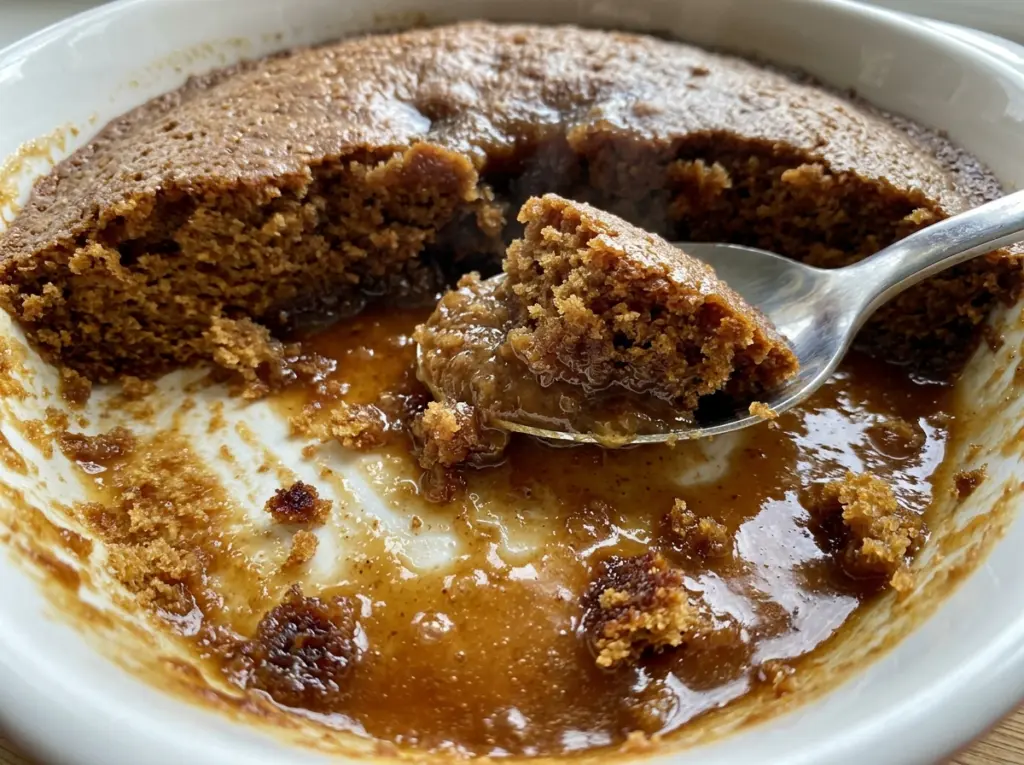
The batter looks ordinary going into the oven, but the boiling water poured over its sugared top is what turns this into pudding cake. It feels a little backwards the first time: you don’t stir the water in, and you don’t need to. As the Gingerbread Pudding Cake bakes, the top sets into a tender, warmly spiced cake while a brown-sugar sauce forms underneath.
I keep the mixing gentle once the flour goes in. Adding it in stages and alternating with hot water helps the batter come together without being worked more than it needs to be. Then the brown sugar and cornstarch go right on top, followed by the boiling water. Serve it warm, while the cake is soft and the sauce is spoonable.
Kitchen Note
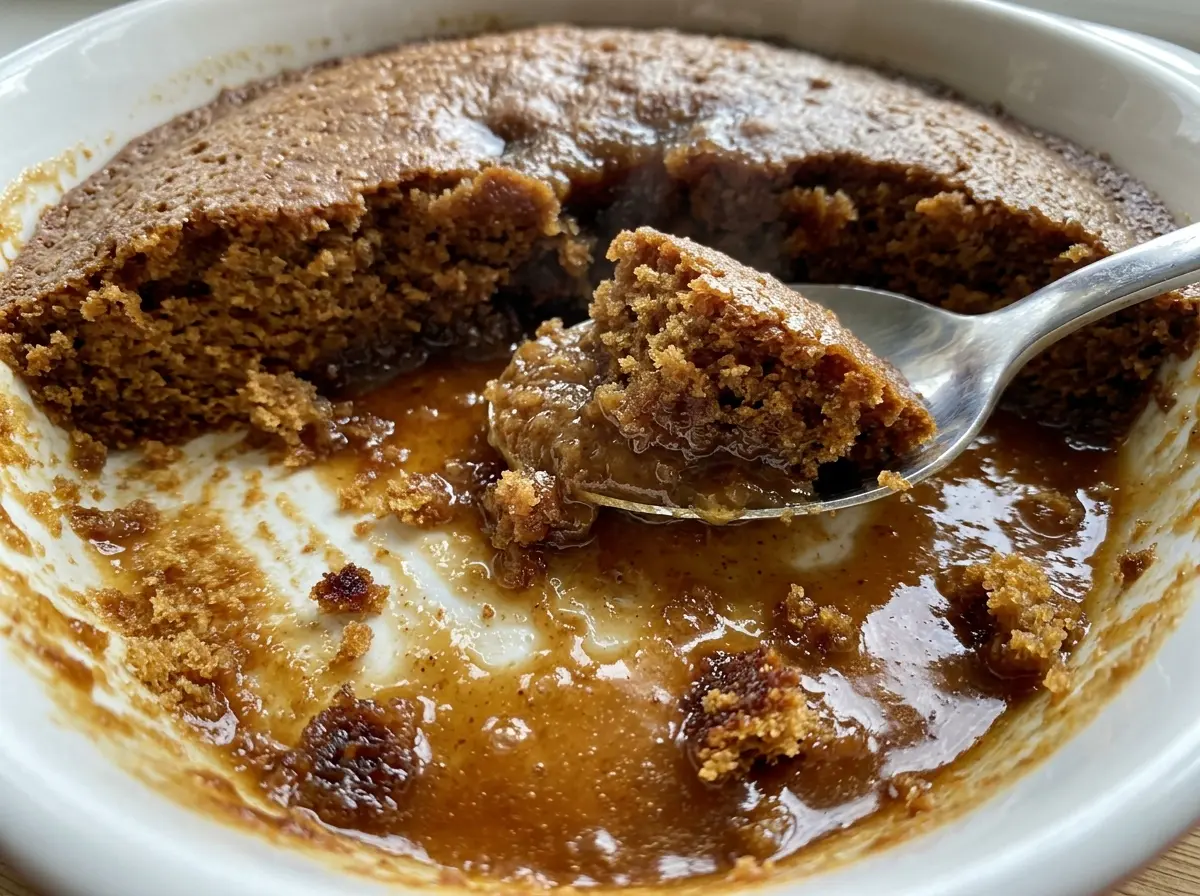
Give the cake its full 10-minute rest before serving. It’s still warm at that point, and the brief pause makes it easier to spoon out a portion with both cake and sauce.
Save this Gingerbread Pudding Cake for a cozy bake: tender ginger-spiced cake with a warm brown-sugar sauce underneath.
Why the Boiling Water Goes on Top Instead of Into the Batter
In an ordinary cake, liquid is mixed into the batter and stays there. This one works differently. The brown sugar and cornstarch are sprinkled over the batter, then boiling water is poured across the surface without stirring. During baking, that topping becomes the sauce beneath the cake, while the batter rises and sets above it.
Stirring after the water goes on would blend the layers together before the oven has a chance to do its work. Pour slowly and evenly instead, covering the sugared surface without trying to smooth or mix anything. The batter may look flooded and the topping may seem loose; that’s expected. The cake’s surface is the cue to watch near the end: it should look puffed and set, even though the dessert underneath is meant to stay moist and saucy. That contrast is the whole point of pudding cake, not a sign that it needs to bake until dry.
Molasses, Spice, and the Ingredients That Shape the Cake

- Unsulphured molasses — It gives the cake its deep, rounded gingerbread taste and contributes moisture. Use unsulphured molasses for the intended flavor; blackstrap is much more bitter and intense, so it won’t give the same result. A standard grocery-store brand is fine.
- Ground ginger and cinnamon — Ginger brings the defining warmth, while cinnamon rounds it out. Fresh, fragrant spices make a difference here; if the jars have been open for years, the cake will taste muted. For a sharper ginger note, shift the balance toward ginger and away from cinnamon.
- All-purpose flour and baking soda — Flour gives the cake enough structure to rise over the sauce, and baking soda helps it puff. For a gluten-free version, replace the flour with a cup-for-cup gluten-free baking blend that includes xanthan gum; the crumb may be a little less tender, but the sauce still works.
- Unsalted butter, sugar, and egg — Creaming softened butter with granulated sugar builds the cake’s base, and the egg helps hold it together. If you need a dairy-free swap, use stick-style plant butter in place of the butter; soft tub spreads can bring extra moisture. Room-temperature egg blends in more evenly than a cold one.
- Light brown sugar and cornstarch — Together they create the topping that turns into sauce. Dark brown sugar can replace light brown sugar for a deeper, more molasses-forward sauce. Keep the cornstarch with the sugar so it’s distributed before the boiling water goes on.
Build the Batter, Then Let the Oven Make the Sauce
Whisk the Dry Ingredients Evenly
Heat the oven to 350°F and grease an 8-inch square baking dish. Whisk the flour, baking soda, ground ginger, cinnamon, and fine salt in a medium bowl until the spices and leavener are evenly dispersed. This prevents a concentrated pocket of baking soda or spice in the finished cake. Set the bowl aside while you cream the butter and sugar.
Cream the Butter, Sugar, Egg, and Molasses
Beat the softened butter and granulated sugar in a large bowl until creamy, about 2 minutes. Beat in the room-temperature egg until it’s combined, then mix in the molasses. Scrape the bowl if streaks of butter remain around the sides; an uneven base can leave the finished batter patchy. The molasses will darken the mixture, so look for an even blend rather than judging it by color.
Alternate the Flour Mixture and Hot Water
Add the flour mixture in three additions, alternating with the hot water in two additions. Mix just until each addition disappears before adding the next; stop once the batter is combined rather than beating it smooth for a long time. Overmixing after the flour goes in can make the cake tougher. Spread the batter evenly in the prepared dish so it bakes at a consistent depth.
Layer the Topping and Bake Until Set
Stir the packed light brown sugar and cornstarch together in a small bowl, then sprinkle that mixture evenly over the batter. Slowly pour the boiling water over the top, and don’t stir it in. Bake for 35 to 40 minutes, until the cake is puffed and set on top; the sauce underneath is meant to stay soft. Let it rest for 10 minutes, then serve warm.
Easy Ways to Change the Spice or Fit a Dietary Need
Make the Ginger More Forward
Use a little more ground ginger and less cinnamon in the cake. The result is sharper and more peppery, with less of cinnamon’s rounded warmth; keep the total dry-spice amount close to the original so the batter stays balanced.
Use Dark Brown Sugar for a Deeper Sauce
Swap dark brown sugar for the light brown sugar in the topping, keeping the amount the same. Its stronger molasses note makes the sauce taste deeper and less delicate without changing the layering method.
Make It Dairy-Free
Replace the unsalted butter with an equal amount of stick-style dairy-free butter. The gingerbread flavor stays much the same, though the cake may have a slightly less buttery finish; choose a baking butter rather than a soft spread.
Storage and Reheating
- Refrigerator: Cover and refrigerate leftovers for up to 4 days. The cake firms as it chills, while the sauce stays moist.
- Freezer: Freeze individual portions in airtight containers for up to 2 months. Thaw overnight in the refrigerator; the sauce may loosen slightly after thawing.
- Reheating: Warm a portion in the microwave in short bursts until heated through. Long, high-power heating can dry the cake before the sauce warms evenly.
Questions That Come Up When Baking Gingerbread Pudding Cake
Gingerbread Pudding Cake
Ingredients
Equipment
Method
- Heat the oven to 350°F and grease an 8-inch square baking dish.
- Whisk the flour, baking soda, ginger, cinnamon, and salt together in a medium bowl.
- Beat the butter and granulated sugar in a large bowl until creamy, about 2 minutes.
- Beat in the egg until combined, then mix in the molasses.
- Add the flour mixture in three additions, alternating with the hot water in two additions, mixing just until combined.
- Spread the batter evenly in the prepared baking dish.
- Stir the brown sugar and cornstarch together in a small bowl, then sprinkle the mixture evenly over the batter.
- Slowly pour the boiling water over the batter without stirring.
- Bake for 35 to 40 minutes, until the cake is puffed and set on top.
- Let the cake rest for 10 minutes before serving warm.


