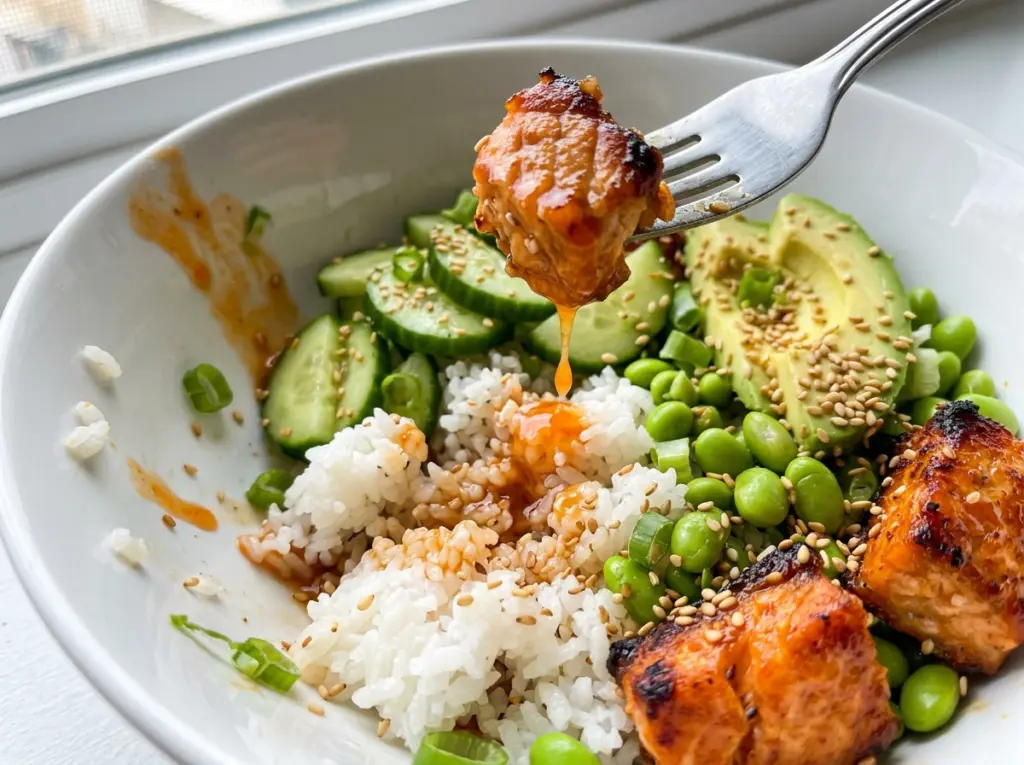
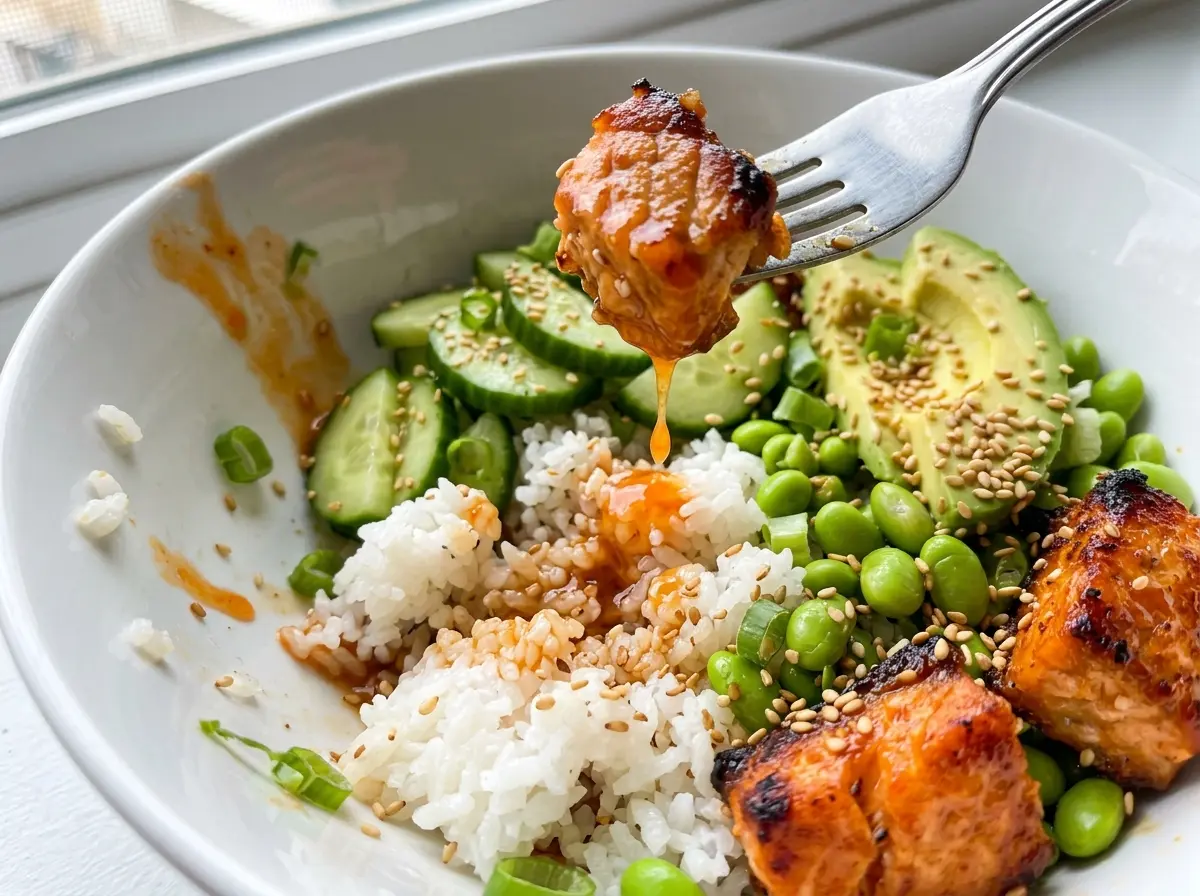
When the salmon cubes hit the hot skillet, their cornstarch coating turns crisp while the orange glaze simmers just long enough to cling. I like building these Crispy Orange Salmon Bowls around that contrast: warm rice and glossy salmon alongside cool cucumber, shredded carrots, and scallions.
The rice gets its own covered rest, and the glaze comes together in the same skillet used for the salmon. That keeps the cooking focused and gives the sauce the browned bits left behind by the fish. Set out the fresh toppings before you start cooking the salmon, and dinner comes together in a bowl with a bright, sweet-savory finish.
Kitchen Note
Don’t lift the lid while the rice rests off the heat. That trapped steam finishes the grains gently, so they fluff up instead of breaking down when you run a fork through them.
Save these Crispy Orange Salmon Bowls for a weeknight dinner with crisp salmon, bright orange glaze, and cool crunchy toppings.
The Crunchy Toppings Keep Orange-Glazed Salmon From Feeling Heavy
The salmon and rice are both tender, and the glaze brings sweetness and richness. That makes the raw toppings more than decoration. Cucumber adds a cool, juicy bite; carrots give the bowl a firmer crunch; and scallions cut through the sweet orange with a fresh, savory edge.
Keep those toppings separate from the hot skillet until serving. If they warm in the glaze, the cucumber loses its refreshing snap and the carrots soften. I arrange them on a platter before cooking the fish, then let everyone build a bowl with a little of each alongside the salmon and rice. The mix of warm and cool textures is what makes each bite feel balanced rather than all soft and saucy.
Sesame seeds finish the bowls with a light toasted note. Sprinkle them over the assembled portions so they stay visible instead of disappearing into the rice.
Why Jasmine Rice, Cornstarch, and Orange Zest Matter Here

- Jasmine rice — Its gentle fragrance suits the orange glaze without competing with it. Rinsing removes loose surface starch, which helps the cooked grains stay distinct. Long-grain white rice is the closest stand-in and can use the same water and cooking schedule, though it won’t have jasmine’s aroma.
- Skinless salmon — Salmon has enough richness to stand up to the tangy-sweet glaze, and cutting it into evenly sized cubes helps the pieces cook at a similar pace. If you buy frozen salmon, thaw it fully and pat it dry before seasoning. Firm trout can work in the same-size cubes, but its softer texture needs a gentler hand when tossing.
- Cornstarch — The coating helps the salmon develop a light crisp exterior, while the small amount in the glaze thickens the orange sauce. Flour won’t give the fish the same delicate shell, so I wouldn’t swap it in directly.
- Orange juice and zest — Juice forms the base of the glaze, while finely grated zest adds a concentrated orange aroma that juice alone doesn’t provide. Choose an orange that feels firm and zest only the bright outer peel; the white pith underneath tastes bitter. If you don’t have zest, leave it out rather than replacing it with lemon zest, which shifts the sauce away from its orange character.
- Soy sauce, honey, and rice vinegar — Soy sauce brings savory depth, honey rounds the citrus with sweetness, and rice vinegar keeps the glaze from tasting flat. Reduced-sodium soy sauce works in the same amount if you prefer a less salty finish; the sauce will taste a little gentler.
- Garlic and fresh ginger — Minced garlic and finely grated ginger distribute through the sauce quickly and give it a fresh, aromatic backbone. Fresh ginger has a livelier bite than dried ginger, so use fresh here if you can.
- Cucumber, carrots, scallions, and sesame seeds — These toppings supply the cool crunch and finishing accents. A bag of pre-shredded carrots is convenient and works well; slice the cucumber and scallions just before arranging them so their edges stay fresh.
Cook the Rice, Crisp the Salmon, Then Glaze It Fast
Let the Jasmine Rice Steam and Rest
Rinse the rice under cold water until the water runs nearly clear, then drain it well. Combine it with the water and half the salt in a 3-quart saucepan, bring it to a boil over medium-high heat, then cover and lower the heat to low. Simmer for 15 minutes, remove the pan from the heat, and leave it covered for 10 minutes before fluffing with a fork. If you uncover it early, steam escapes and the top grains can cook unevenly.
Set Out the Cool Toppings
Thinly slice the cucumber and scallions, then arrange them with the shredded carrots on a serving platter or in separate bowls. This is a quick stage, but doing it before the fish cooks means the toppings are ready when the glaze is finished. Keep the pieces separate rather than mixing them together, so the cucumber doesn’t soften against the carrots. The toppings stay fresh and crisp beside the hot salmon.
Brown the Salmon in Two Batches
Pat the salmon dry, season it with the remaining salt and the black pepper, then toss the cubes with cornstarch until evenly coated. Heat half the oil in a 12-inch skillet over medium-high heat and cook half the salmon, turning the pieces to brown several sides. It takes 4 to 6 minutes, and the outside should look crisp while the thickest pieces reach 145°F. Transfer that batch to a plate, then repeat with the remaining oil and salmon; crowding the skillet makes it harder for the cubes to brown.
Thicken the Orange Glaze and Coat the Fish
Set aside a tablespoon of orange juice. Whisk the rest with the soy sauce, honey, rice vinegar, garlic, ginger, and orange zest; in a separate small bowl, whisk the reserved juice with the cornstarch until smooth. Pour the orange mixture into the skillet and bring it to a simmer over medium heat, then stir in the cornstarch mixture. Cook for 30 to 60 seconds, stirring, until the glaze thickens; add the salmon back and gently toss to coat. Serve it over the rice with the cucumber, carrots, and scallions, then sprinkle with sesame seeds.
Three Small Changes That Still Let the Orange Glaze Shine
Make the Bowls Gluten-Free
Replace the soy sauce one-for-one with gluten-free tamari. It keeps the glaze savory and close in character, with a slightly deeper, rounder taste.
Dial Back the Sweetness
Use half the honey for a sharper, more savory orange glaze. The cornstarch still thickens the sauce, but the finish will be less sweet and less sticky.
Give the Ginger More Presence
Increase the finely grated fresh ginger by half for a warmer, more pronounced bite. It works especially well if you like the citrus to have a little extra spice behind it.
Storage and Reheating
- Refrigerator: Store the salmon and rice in airtight containers for 3 to 4 days. Keep the cucumber and other toppings separate; cucumber softens and releases moisture as it sits.
- Freezer: The cooked salmon and rice freeze well for up to 2 months in airtight, freezer-safe containers. Freeze the toppings separately only if you don’t mind them losing their fresh crunch; they’re best made fresh.
- Reheating: Warm the salmon and rice separately, covered, in the microwave until each reaches 165°F. Keep the toppings cold and add them after reheating; microwaving them with the salmon makes the cucumber limp.
Questions I Get Asked About These Orange Salmon Bowls
Crispy Orange Salmon Bowls
Ingredients
Equipment
Method
- Rinse the rice under cold water until the water runs nearly clear, then drain.
- Combine the rice, water, and 1/2 teaspoon of the salt in a 3-quart saucepan.
- Bring to a boil over medium-high heat.
- Cover and reduce the heat to low.
- Simmer for 15 minutes.
- Remove from the heat and let stand, covered, for 10 minutes.
- Fluff with a fork.
- Arrange the cucumber, carrots, and scallions on a serving platter or in separate bowls.
- Pat the salmon dry.
- Season with the remaining 1/2 teaspoon salt and the pepper, then toss with the cornstarch until evenly coated.
- Heat 1 tablespoon oil in a 12-inch skillet over medium-high heat.
- Cook half the salmon, turning to brown several sides, for 4 to 6 minutes, until crisp outside and the thickest pieces reach 145°F; transfer to a plate and repeat with the remaining oil and salmon.
- Set aside 1 tablespoon of the orange juice.
- Whisk the remaining orange juice with the soy sauce, honey, rice vinegar, garlic, ginger, and orange zest in a small bowl.
- In a separate small bowl, whisk the reserved juice with the cornstarch until smooth.
- Pour the orange juice mixture into the skillet and bring to a simmer over medium heat.
- Stir in the cornstarch mixture and cook for 30 to 60 seconds, stirring, until the glaze thickens.
- Return the salmon to the skillet and gently toss to coat.
- Serve over the rice with the cucumber, carrots, and scallions, and sprinkle with sesame seeds.


