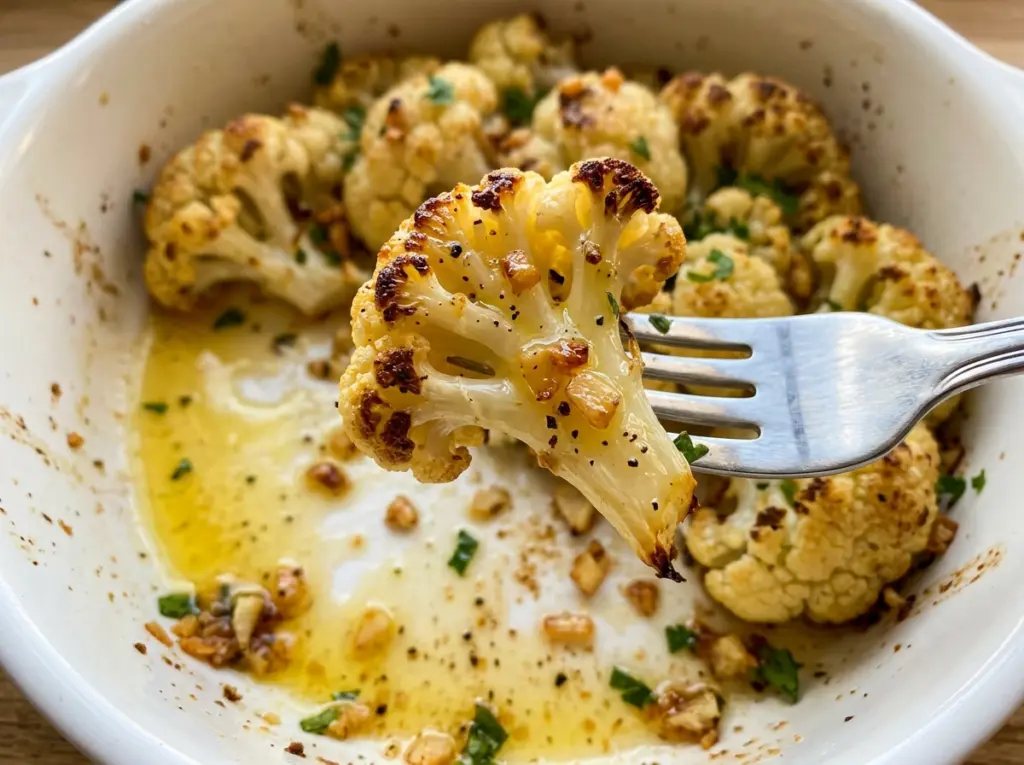
At the 20-minute mark, the cauliflower should have started picking up color, but it won’t have that garlicky, buttery finish yet. I used to put the garlic on from the beginning, and the tiny pieces went bitter before the florets were tender. Now I roast the cauliflower first, then toss it with garlic butter for a short final stretch in the oven. That’s what gives this garlic butter roasted cauliflower browned edges without burnt garlic.
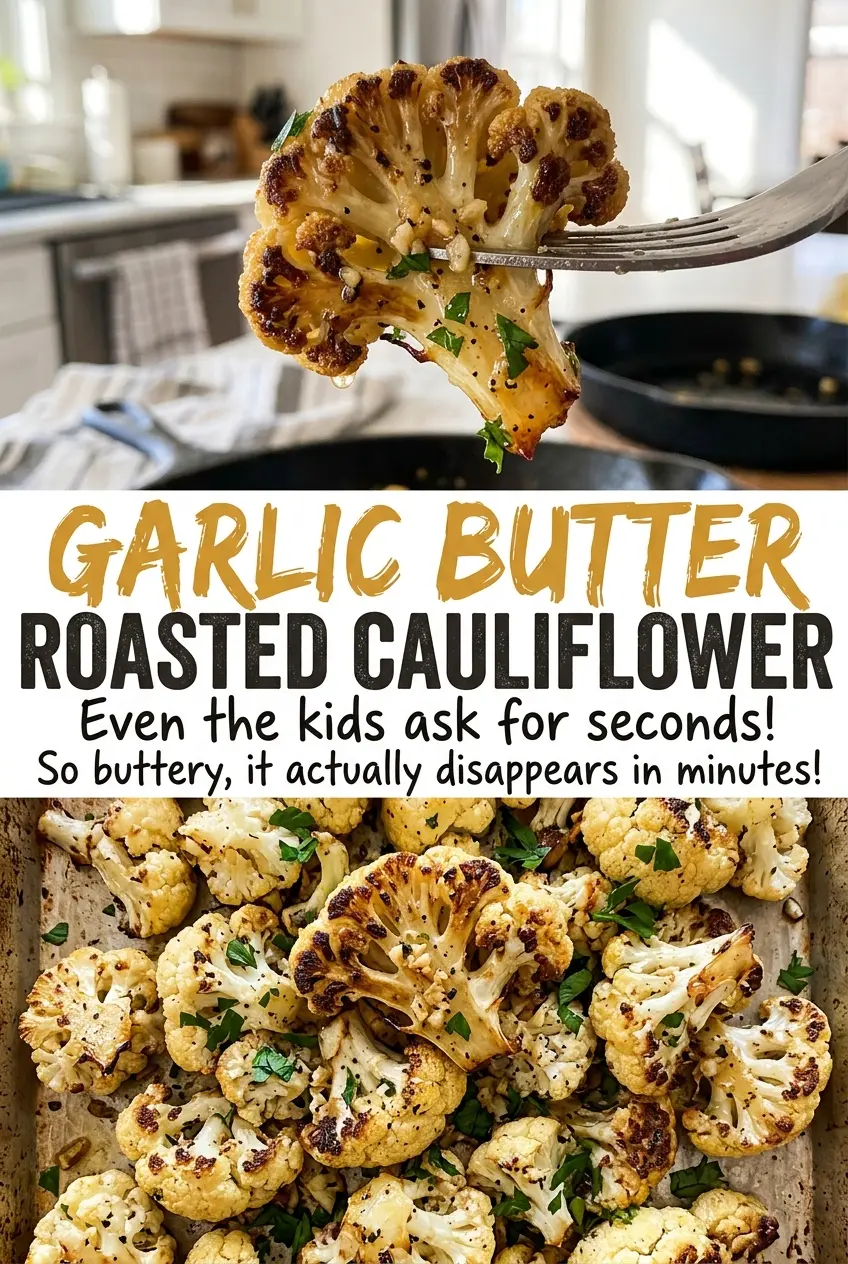
The florets need room on the pan, too. A crowded layer holds on to steam instead of letting the edges roast, so I spread them across a rimmed 18×13-inch baking sheet before they go into the oven. Once they’re fork-tender, the butter and garlic cling to all those craggy little edges, and the pan comes out fragrant and golden.
Kitchen Note
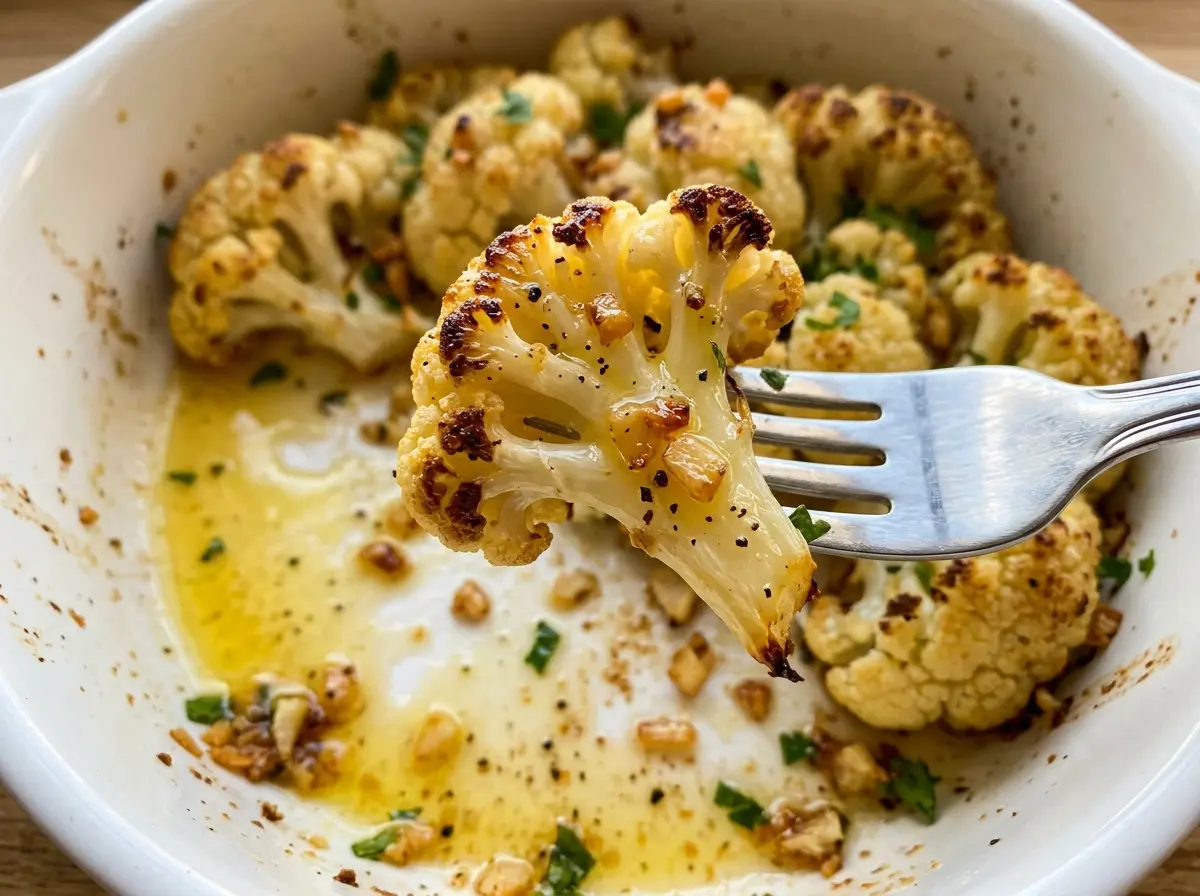
Cut the florets close to 1 1/2 inches so they soften at about the same pace. Oversized pieces can still be firm in the middle when the smaller ones are ready.
Save this garlic butter roasted cauliflower for browned edges and a fresh garlic-butter finish, without the bitter taste burnt garlic can leave behind.
Why the Garlic Butter Goes on After the First Roast
Cauliflower needs a good stretch in a hot oven to soften and brown. Minced garlic doesn’t need nearly that long. If it sits on the pan for the full roast, those little pieces can turn dark and bitter while the thicker parts of the florets are still cooking. Butter also has milk solids that brown quickly under high heat, so giving it the entire roasting time is a gamble.
Cooking the garlic gently in melted butter first gives you a fragrant coating without scorching the garlic. The cauliflower gets its head start on the pan, then the butter goes on for the final few minutes. That finish is long enough for the garlic to season the florets and for the edges to take on more color, but short enough to keep the garlic aromatic. You’re not trying to make a separate sauce; the melted butter settles into the roasted surfaces and gathers in the little spaces between florets.
This timing also makes it easier to judge the finish. The cauliflower is done when a fork slides into a floret and the edges look browned, while the garlic smells fragrant rather than toasted. If you want garlic flavor without bitterness, that last oven visit is the one to watch.
Why Fresh Cauliflower and Minced Garlic Matter More Than Fancy Butter
- Cauliflower — A large, fresh head gives you firm florets that can roast until tender while their edges brown. Cut them into pieces of a similar size; a dense head is easier to portion evenly than one with soft or discolored spots. There’s no need to seek out an unusual variety for this preparation.
- Olive oil — A light coating helps the cauliflower roast instead of drying out on the bare pan. A standard olive oil works well here; a premium bottle won’t change the main character of the dish, since the garlic butter goes on near the end.
- Unsalted butter — Unsalted butter lets the kosher salt season the cauliflower without making the final flavor harder to control. Regular grocery-store butter is a good fit; the garlic and roasted cauliflower are the flavors you’ll notice most.
- Fresh garlic — Minced cloves release their aroma quickly into the melted butter, which is why they work well for the brief, gentle cook. Fresh garlic has a cleaner, brighter smell than jarred minced garlic, and mincing it just before cooking keeps the pieces moist rather than dry.
Roast First, Then Let the Garlic Butter Finish the Job
Spread the Seasoned Florets on the Pan
Heat the oven to 425°F. Toss the cauliflower on a rimmed 18×13-inch baking sheet with the olive oil, kosher salt, and black pepper, then spread it into an even layer. The florets should sit on the pan rather than form a mound, so their edges have contact with the hot surface. If you see a few pieces tucked beneath others, spread them out before roasting.
Give the Cauliflower Its First Roast
Roast the cauliflower for 20 minutes before adding the garlic butter. The florets will begin softening and developing color, but don’t expect every edge to be browned yet. Keeping this first stretch free of garlic gives the cauliflower time to cook without exposing the minced pieces to the oven for the full roast. Use this interval to prepare the butter in a small skillet.
Warm the Garlic Gently in Butter
Melt the unsalted butter in a small skillet over medium-low heat. Add the minced garlic and cook for 30 to 60 seconds, just until you can smell it; the garlic shouldn’t brown. Keep an eye on the skillet, because the difference between fragrant and browned garlic comes down to a short window. Take it off the heat once that aroma is there.
Toss, Spread, and Roast Until Tender
Toss the partly roasted cauliflower with the garlic butter, then spread the florets back into an even layer. Return the pan to the oven for 5 to 8 minutes more. Check for fork-tender centers and browned edges rather than relying only on the timer, since florets can vary a little in size. The finished cauliflower should feel tender when pierced, not limp or falling apart.
Two Small Changes for a Different Garlic Butter Cauliflower
Make It Dairy-Free With Olive Oil
Replace the butter with olive oil at the same volume, then warm it with the minced garlic over medium-low heat until fragrant but not browned. The cauliflower will still pick up the garlic, but the finish will taste lighter and less rich than the butter version.
Keep the Garlic Flavor Milder
Use fewer minced garlic cloves in the butter if you prefer a softer garlic note. The same brief, gentle cooking keeps the flavor rounded, while the roasted cauliflower and browned edges stay at the center of the dish.
Storage and Reheating
- Refrigerator: Store leftovers in an airtight container for 3 to 4 days. The florets soften as they sit, so the edges won’t stay as crisp as they were fresh from the oven.
- Freezer: Roasted cauliflower can be frozen in an airtight container, though thawed florets will be softer. Freeze once cool and use within 2 to 3 months for the best quality.
- Reheating: Warm it in a 400°F oven until heated through to bring back some color. Avoid reheating it covered or piling it into a deep dish, which traps steam and softens the edges further.
Questions About Garlic Butter Roasted Cauliflower
Garlic Butter Roasted Cauliflower
Ingredients
Equipment
Method
- Heat the oven to 425°F. Toss the cauliflower with the olive oil, salt, and pepper on a rimmed 18x13-inch baking sheet, spread in an even layer, and roast for 20 minutes.
- While the cauliflower roasts, melt the butter in a small skillet over medium-low heat, add the garlic, and cook for 30 to 60 seconds until fragrant but not browned.
- Toss the cauliflower with the garlic butter, spread it back into an even layer, and roast for 5 to 8 minutes more, until fork-tender and browned at the edges.


