
When the first salmon cake hits the skillet, you want to hear a steady sizzle and see the edge begin to turn golden—not watch the patty spread into a loose scramble. Canned salmon makes these cakes quick to pull together, but a little care with the mixture gives you patties that hold their shape and brown cleanly. These Salmon Cakes pair flaky salmon with panko, Dijon, lemon, and a little Old Bay for a savory center under a crisp, pan-fried crust.
I like how the ingredients do their jobs without needing a complicated sauce or a long prep session. The egg and mayonnaise help bind the flakes, while panko gives the mixture structure without making the salmon disappear. A short rest in the refrigerator helps the shaped cakes firm up before they go into the hot skillet. Serve them while the outsides are still crisp and the centers are tender.
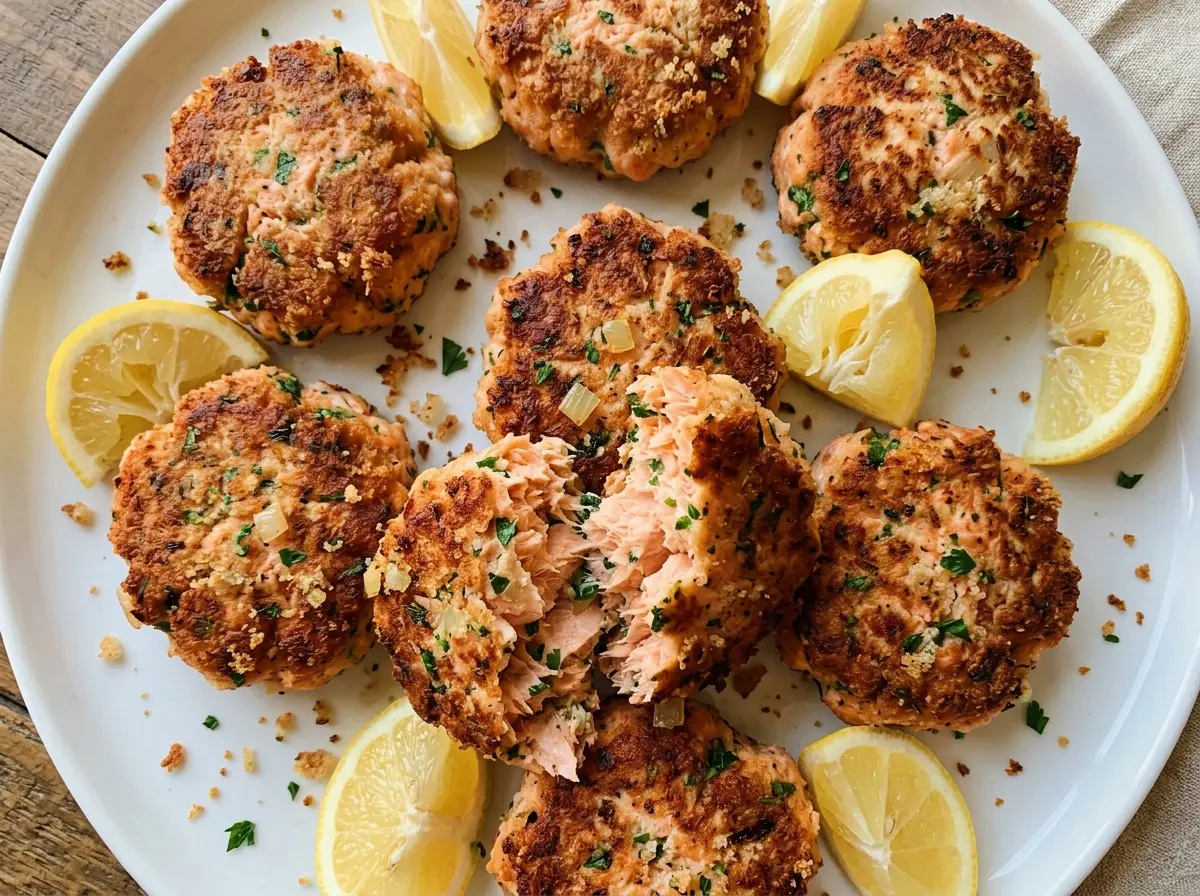
Kitchen Note
Give the patties the full 15 minutes in the refrigerator before frying. They feel noticeably more settled when you lift them into the skillet, which makes it easier to keep those neat edges intact.
Save these Salmon Cakes for a crisp-edged, tender-centered dinner made with pantry-friendly canned salmon.
Why Adding More Panko Isn’t the First Fix for Loose Salmon Cakes
A soft salmon mixture can make you reach for another handful of breadcrumbs, but more panko isn’t always the answer. The salmon needs to be drained and flaked before it goes into the bowl; excess liquid can leave the mixture loose before the panko has a chance to give it structure. If you add extra crumbs without checking that first, the cakes can turn dense and dry instead of tender.
The balance here comes from several ingredients working together. Panko gives the flakes a light framework, while egg and mayonnaise help hold the mixture together. Dijon and lemon juice add sharpness, and the seasonings bring a savory, lightly spiced note. Mix everything until evenly combined, then shape the patties and let the refrigerator do its part. This approach keeps the salmon at the center of each cake rather than burying it in breading.
Shape the mixture into equal patties instead of making a few large ones. That gives each cake a similar amount of contact with the skillet, so they brown at a similar pace. If the mixture seems softer than expected, handle it gently and give the shaped patties their rest rather than compressing them hard.
What the Salmon, Panko, and Binder Each Bring to the Cakes
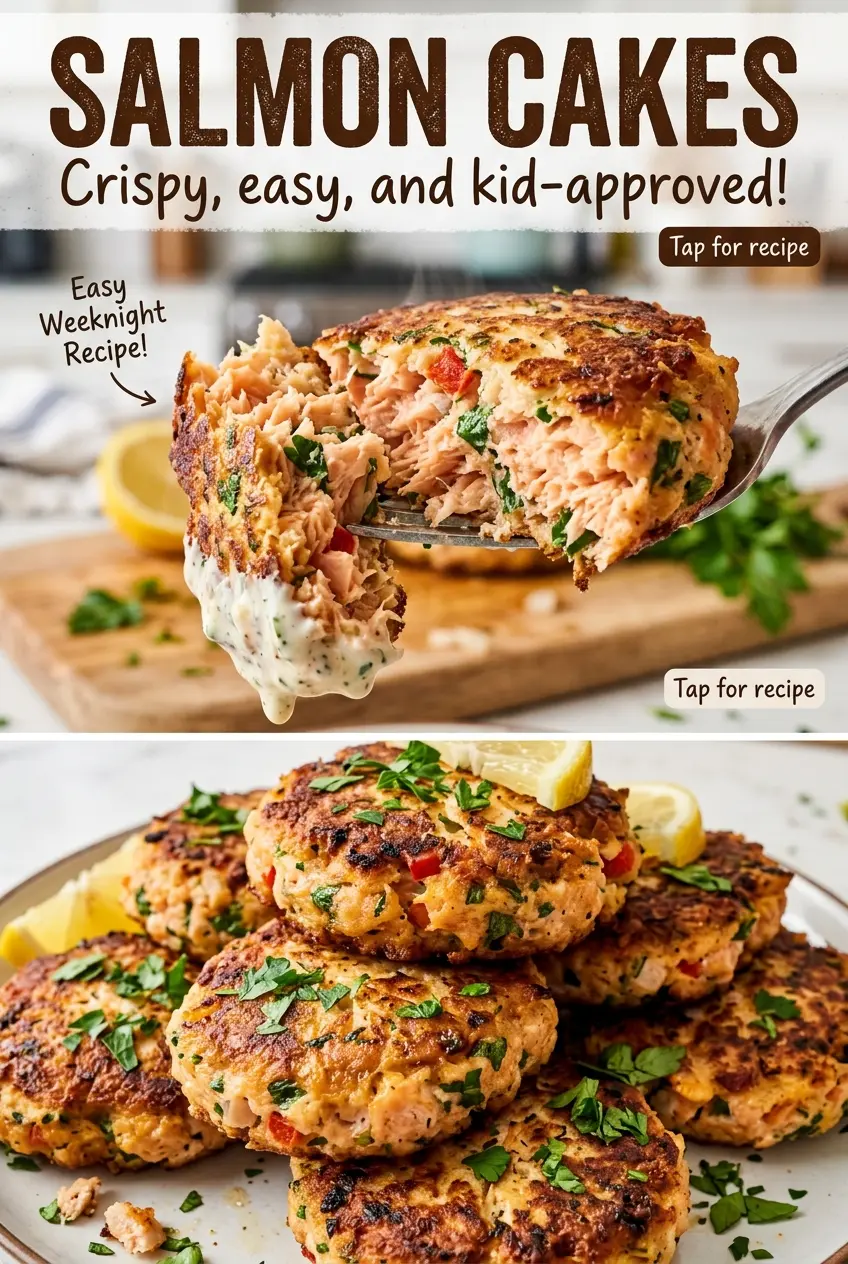
- Canned salmon — Draining and flaking it gives you a mixture that can be shaped without excess liquid. Choose a can that fits the recipe’s stated size; the salmon is the main ingredient, so it matters more than buying a specialty brand.
- Panko breadcrumbs — Their larger, airy crumbs give the cakes structure without packing them as tightly as fine crumbs. For a gluten-free version, use gluten-free panko in the same amount; the crust may be a little different, but the cakes still hold together.
- Egg and mayonnaise — These make up the rich binder that helps the salmon and crumbs form cohesive patties. The egg provides structure, while mayonnaise keeps the mixture from feeling lean or chalky. There isn’t a dependable direct swap that keeps the same texture.
- Dijon mustard — Dijon adds a mild tang throughout the mixture, rather than a strong mustard bite. Whole-grain mustard can stand in at the same amount if you want a little more texture and a less smooth finish.
- Green onion and parsley — Thinly sliced green onion gives a fresh, mild onion note without needing to cook it first. Fresh parsley keeps the flavor bright; chopped fresh dill can replace it in the same amount for a more pronounced, herby finish.
- Lemon juice and Old Bay — Lemon cuts through the richness of the mayonnaise, and Old Bay supplies the distinctive savory seasoning. Keep both in the mixture for the intended balance; adding more lemon would also add moisture.
- Vegetable oil — A neutral oil lets the cakes brown without competing with the salmon and seasonings. Use it for both batches so the second round gets a fresh portion of oil in the skillet.
Mix, Chill, and Pan-Fry Without Breaking the Patties
Bring the Salmon Mixture Together
In a medium bowl, combine the drained and flaked salmon with the panko, egg, mayonnaise, Dijon, green onion, parsley, lemon juice, Old Bay, black pepper, and kosher salt. Mix until everything is evenly distributed, but don’t mash the salmon into a paste. You should still see flakes throughout the bowl. If liquid is pooling at the bottom, it’s a sign the salmon wasn’t drained well enough.
Shape Eight Even Patties
Shape the mixture into 8 patties, each about 1/2 inch thick. Try to keep their size and thickness consistent so they cook at the same rate. Set them in the refrigerator for 15 minutes before frying. Don’t skip that pause; the patties are easier to move into the skillet after the mixture has had time to firm up.
Brown the First Batch
Heat 1 1/2 tablespoons vegetable oil in a 12-inch skillet over medium heat. Add 4 patties and cook them for 3 to 4 minutes per side, until golden brown and the centers reach 145°F. The cakes should develop a browned surface without the oil smoking. If the outside darkens too quickly, the skillet is hotter than medium and the centers may need more time than the crust can tolerate.
Finish the Second Batch
Add the remaining 1 1/2 tablespoons vegetable oil to the skillet, then cook the remaining patties in the same way. Let the second batch brown undisturbed on each side for its cooking time so the crust has a chance to form. The finished cakes should be golden on both sides and hot in the center. Serve them hot, while the contrast between the crisp outside and flaky middle is at its best.
Easy Swaps for Different Salmon Cake Cravings
Make Them Gluten-Free with Gluten-Free Panko
Replace the regular panko with the same amount of gluten-free panko. The cakes keep their crisp coating and familiar shape, though the crumb texture can vary a bit by brand.
Give the Herbs a Dill-Forward Finish
Swap the chopped parsley for the same amount of chopped fresh dill. Dill gives the cakes a more pronounced, bright herbal note that pairs naturally with the salmon and lemon.
Use Whole-Grain Mustard for a Little Texture
Replace the Dijon with the same amount of whole-grain mustard. It gives the mixture visible mustard seeds and a slightly more textured bite, while keeping the same savory tang.
Storage and Reheating
- Refrigerator: Store cooked cakes in a covered container for 3 to 4 days. The crust softens as they sit, but the centers stay moist.
- Freezer: Freeze cooked, cooled cakes in an airtight container with parchment between layers for up to 3 months for best quality.
- Reheating: Warm thawed cakes in a 350°F oven until the centers reach 165°F. Reheating in a microwave is quicker, but it softens the crust.
Questions That Come Up When Making Salmon Cakes
Salmon Cakes
Ingredients
Equipment
Method
- In a medium bowl, combine the salmon, panko, egg, mayonnaise, Dijon, green onion, parsley, lemon juice, Old Bay, black pepper, and salt until evenly mixed.
- Shape the mixture into 8 patties about 1/2 inch thick.
- Refrigerate the patties for 15 minutes so they hold together.
- Heat 1 1/2 tablespoons vegetable oil in a 12-inch skillet over medium heat.
- Cook 4 patties for 3 to 4 minutes per side, until golden brown and the centers reach 145°F.
- Add the remaining 1 1/2 tablespoons oil to the skillet.
- Cook the remaining patties in the same way.
- Serve hot.


