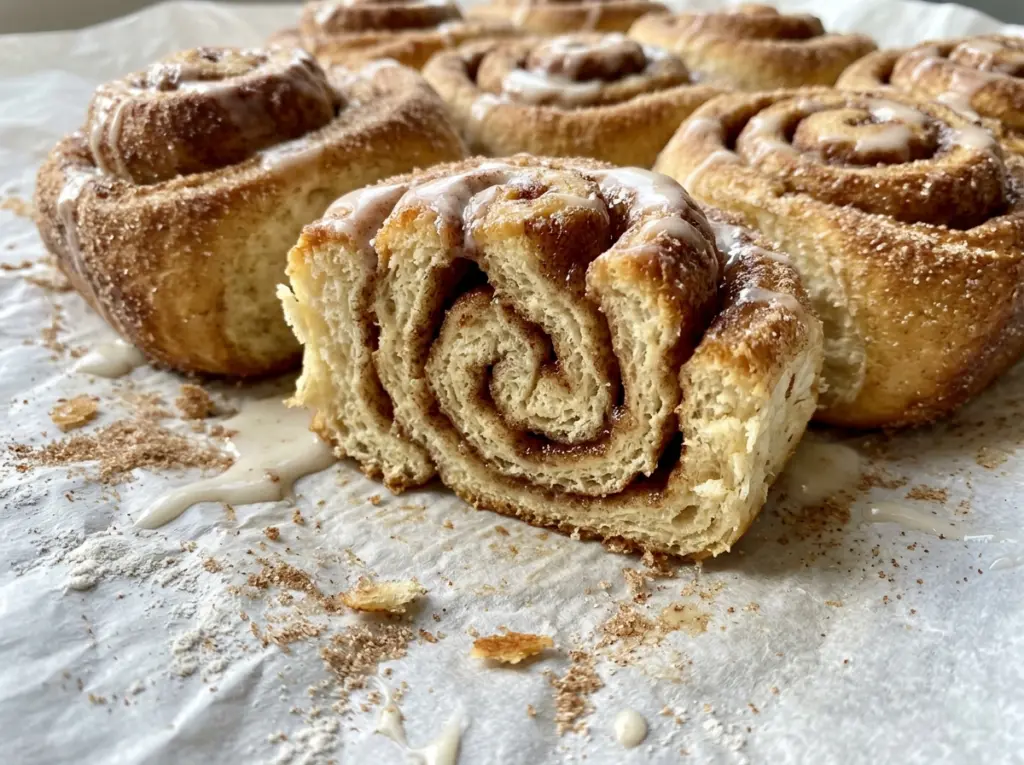
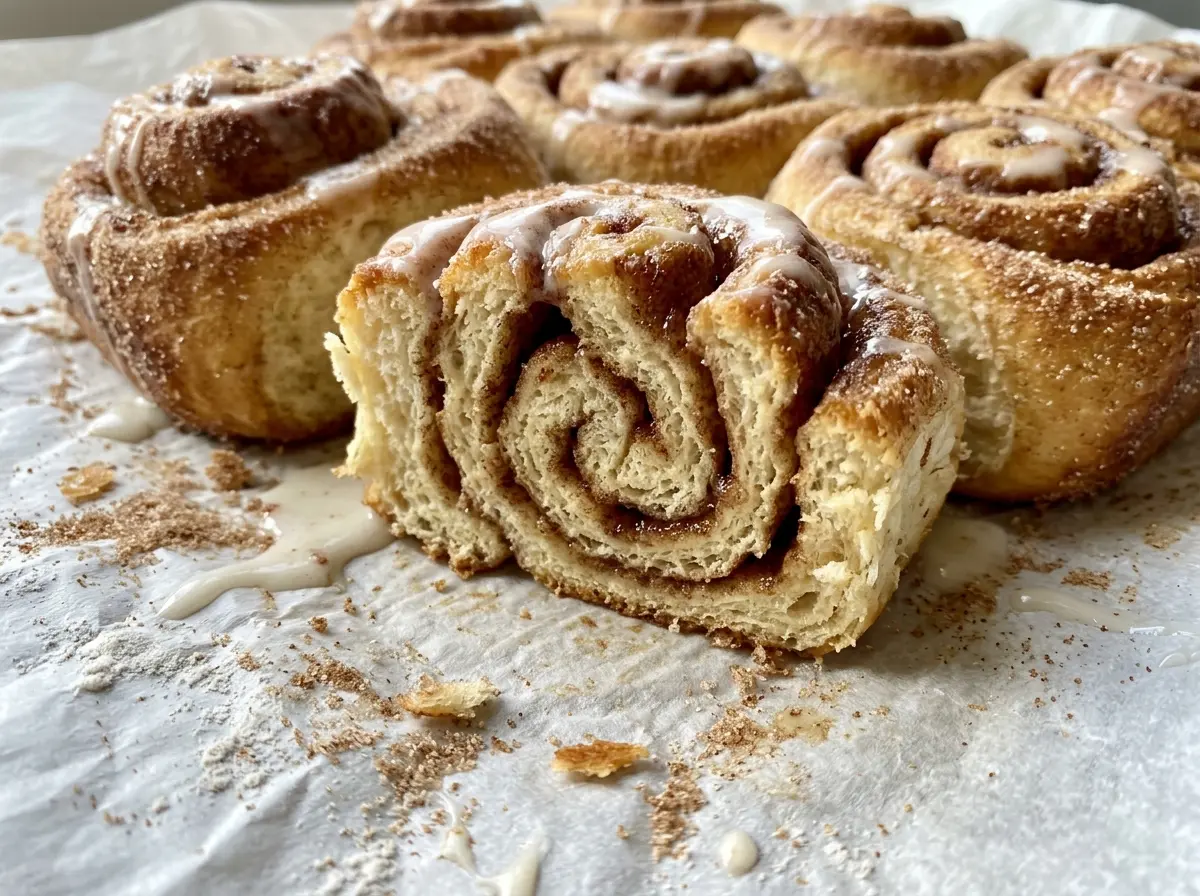
The first slice through a warm roll tells you whether the filling made it all the way to the edges: you want a cinnamon-sugar spiral in every bite, not a thick sweet patch in the middle. These Snickerdoodle Rolls bring the cinnamon and gentle tang of a snickerdoodle into soft yeast dough, with a simple vanilla icing drizzled over the top.
I like that the dough is tender without needing an elaborate technique. Knead it until it feels smooth and elastic, then give it time to rise until doubled; rushing that first rise leaves you with heavier rolls. The filling uses softened butter, so it spreads across the dough without melting into a puddle before you roll it up. Once baked, the centers stay soft while the tops turn golden, and the cream-of-tartar filling gives each spiral its snickerdoodle character.
Kitchen Note
Keep the milk in the 105–110°F range before you stir in the yeast. Too-hot milk can hurt the yeast, while milk that’s too cool may slow the rise; I check the temperature rather than guessing by touch.
Save these Snickerdoodle Rolls for a cozy bake: soft yeast dough, a cinnamon-sugar swirl, and a little snickerdoodle tang in every spiral.
The Little Tang That Keeps These from Tasting Like Ordinary Cinnamon Rolls
Cinnamon and sugar make a familiar filling, but cream of tartar shifts the flavor toward snickerdoodle. It brings a faint, clean tang that balances the sweetness instead of making the rolls taste like a standard cinnamon bun with a different name. Since it’s stirred into the filling rather than the dough, it contributes flavor here; it isn’t acting as a leavener.
That distinction is useful when you’re deciding whether to leave it out. The rolls will still bake if you omit the cream of tartar, but the filling will taste sweeter and more straightforwardly cinnamon-sugar. I keep it in for the gentle contrast, especially with the icing on top. The result isn’t sharply sour—the tang is subtle, and it keeps the cinnamon from feeling one-note.
What Each Ingredient Brings to the Dough, Swirl, and Icing
- Whole milk and instant yeast — The milk gives the dough tenderness, and instant yeast makes the rise straightforward: stir it in with the warm milk and other dough ingredients. Use milk within the specified temperature range, rather than relying on a warm-feeling bowl. The instant yeast is the yeast used for this method.
- All-purpose flour — It gives the dough enough structure to roll into a broad rectangle and hold the filling. Measure it carefully; adding extra flour just because the dough feels soft can make the baked rolls dense. The dough should become smooth and elastic as you knead.
- Egg and unsalted butter — The egg adds richness, while softened butter makes the dough tender and the filling easy to spread. Bring the egg to room temperature and use softened—not melted—butter in both parts. Unsalted butter lets the recipe’s salt level stay controlled; there’s no need for a specialty brand.
- Granulated sugar, cinnamon, and cream of tartar — Granulated sugar gives the filling its familiar sweet crunch, cinnamon supplies the warm spice, and cream of tartar contributes the distinctive slight tang. Use fresh, fragrant cinnamon if yours has been open for a long time; stale spice makes a quieter filling. Keep the sugar divided so some sweetens the dough and the rest goes into the swirl.
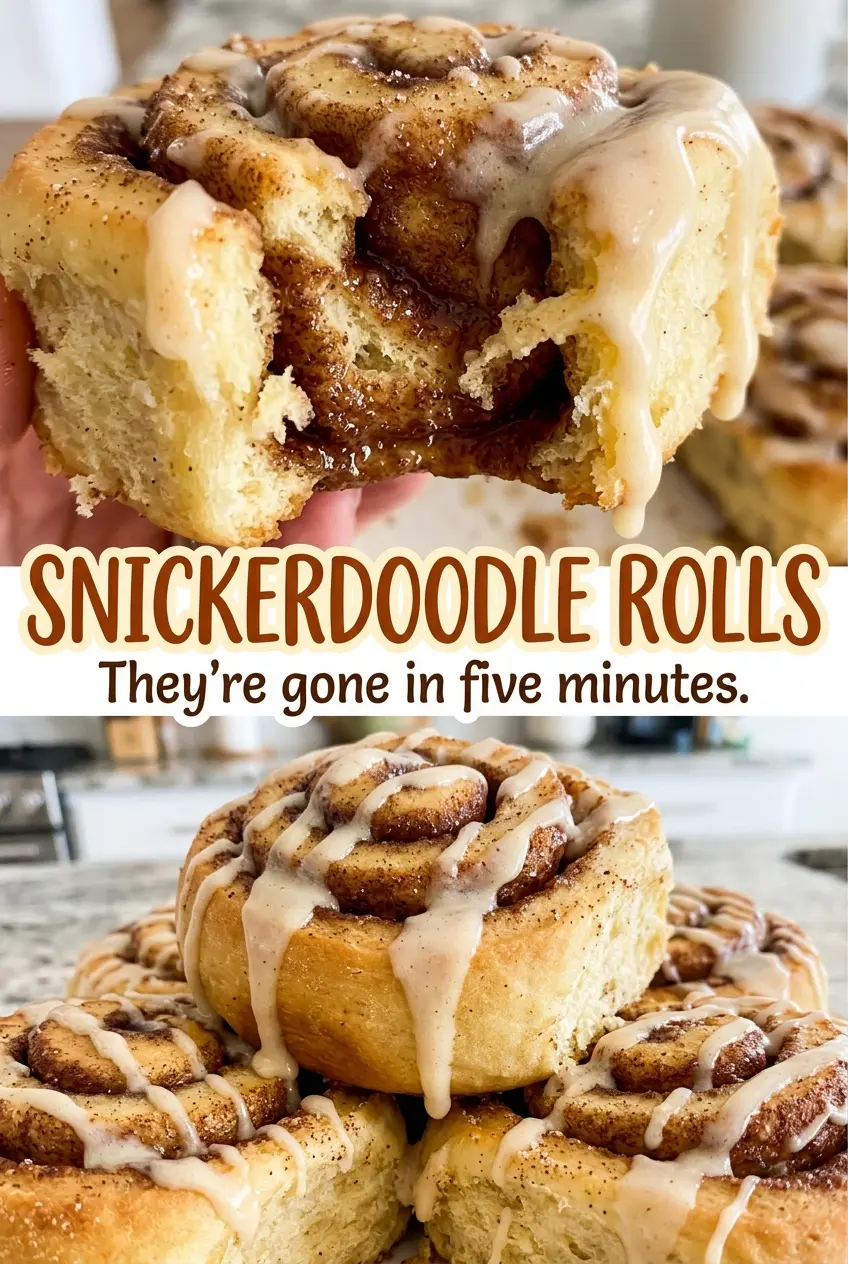
- Confectioners’ sugar, water, and vanilla — These make a quick, smooth icing that drizzles over the warm rolls. Stir until no dry pockets remain. If you want a creamier-tasting icing, use whole milk in place of the water, adding it gradually until the icing is smooth; the finish will taste a little richer.
Build the Dough and Swirl Without Losing the Soft Texture
Mix and Knead Until the Dough Turns Elastic
Stir the warm milk, instant yeast, part of the granulated sugar, and room-temperature egg together in a large bowl. Add the flour and salt, then mix in the portion of softened butter for the dough. Knead by hand or with a stand mixer for 8–10 minutes, stopping when the dough looks smooth and stretches with an elastic feel. If it still feels rough, keep kneading rather than reaching for extra flour.
Give the First Rise Time to Double
Set the dough in a lightly greased bowl, cover it, and leave it in a warm place for 1–1 1/2 hours. The useful cue is a dough that has doubled in size, not simply a timer that has gone off. A cooler room can make the rise take longer, so judge the dough by its volume. Keeping it covered helps the surface stay supple instead of drying out.
Spread the Filling and Shape Twelve Rolls
Stir together the remaining granulated sugar with the cinnamon and cream of tartar. Roll the risen dough into a 12×18-inch rectangle, spread the remaining softened butter over it, and scatter the cinnamon-sugar mixture evenly across the surface. Roll from a long edge into a log, then cut it into 12 equal rolls and set them cut side up in the greased 9×13-inch baking dish. Cover and let them rise for 30–45 minutes, until puffy, while the oven heats to 350°F.
Bake Until the Center Rolls Are Cooked Through
Bake for 25–30 minutes, looking for golden-brown tops and center rolls that are baked through. The middle is the part to check closely; the outside rolls can brown before the center finishes. If the tops look ready but the middle still seems doughy, give the pan more time in the oven rather than icing early. Let the rolls cool in the dish for 10 minutes, then stir the confectioners’ sugar, water, and vanilla until smooth and drizzle the icing over the warm rolls.
Two Simple Ways to Change the Sweetness and Spice
Leave the Rolls Uniced
Skip the confectioners’ sugar icing for a less-sweet finish that lets the cinnamon-sugar filling stand out. The rolls will have a drier top without the drizzle, but the dough and filling stay the same.
Turn Up the Cinnamon
For a more pronounced spice swirl, increase the ground cinnamon in the filling to 1 1/2 tablespoons and leave the sugar and cream of tartar unchanged. The rolls will taste more cinnamon-forward, with the same soft dough and sweet filling.
Storage and Reheating
- Refrigerator: Keep the rolls covered in an airtight container for up to 4 days. The dough will firm up and lose some of its fresh-baked softness when chilled.
- Freezer: Freeze cooled rolls in an airtight container for up to 2 months. Thaw in the refrigerator or at room temperature before warming.
- Reheating: Warm an individual roll in the microwave in short intervals until soft and warm. Avoid overheating, which dries the dough and can make the icing run.
Questions I Get Asked About Snickerdoodle Rolls
Snickerdoodle Rolls
Ingredients
Equipment
Method
- Grease a 9x13-inch baking dish.
- In a large bowl, stir together the warm milk, yeast, 1/4 cup of the granulated sugar, and egg.
- Add the flour and salt, then mix in 1/4 cup of the softened butter; knead by hand or with a stand mixer for 8–10 minutes, until the dough is smooth and elastic.
- Place the dough in a lightly greased bowl, cover, and let rise in a warm place for 1–1 1/2 hours, until doubled in size.
- Stir together the remaining 3/4 cup granulated sugar, cinnamon, and cream of tartar.
- Roll the dough into a 12x18-inch rectangle.
- Spread the dough with the remaining 1/2 cup softened butter.
- Sprinkle evenly with the cinnamon-sugar mixture.
- Starting at a long edge, roll the dough into a log.
- Cut the log into 12 equal rolls and arrange them cut side up in the prepared baking dish.
- Cover the dish and let the rolls rise for 30–45 minutes, until puffy.
- Meanwhile, heat the oven to 350°F.
- Bake for 25–30 minutes, until the rolls are golden brown and the center rolls are baked through.
- Let cool in the dish for 10 minutes.
- Stir together the confectioners’ sugar, water, and vanilla until smooth.
- Drizzle the icing over the warm rolls.


