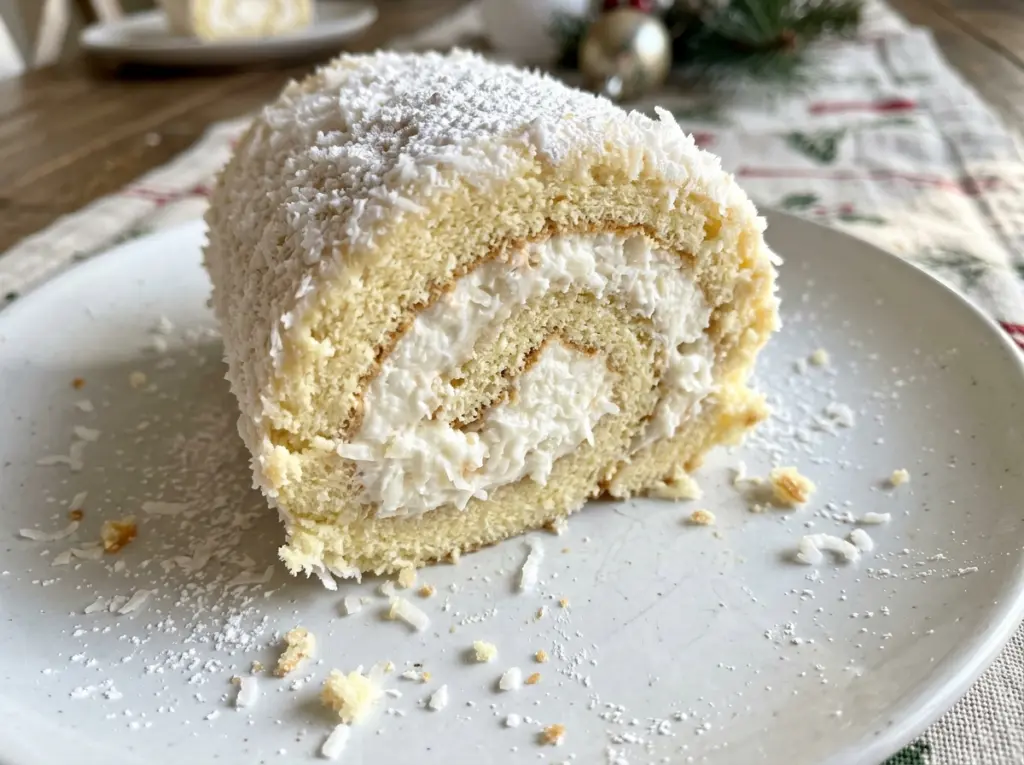
The cake comes out of the oven as a thin, springy sheet, and there’s a small window when it will bend without fighting you. Roll it while it’s hot, with a sugared towel inside, and it cools into a curve ready for filling. Wait until it’s cold and that first roll is much more likely to crack. That warm roll is what makes this Holiday Coconut Cake Roll manageable, even if you haven’t made a jelly-roll cake before.
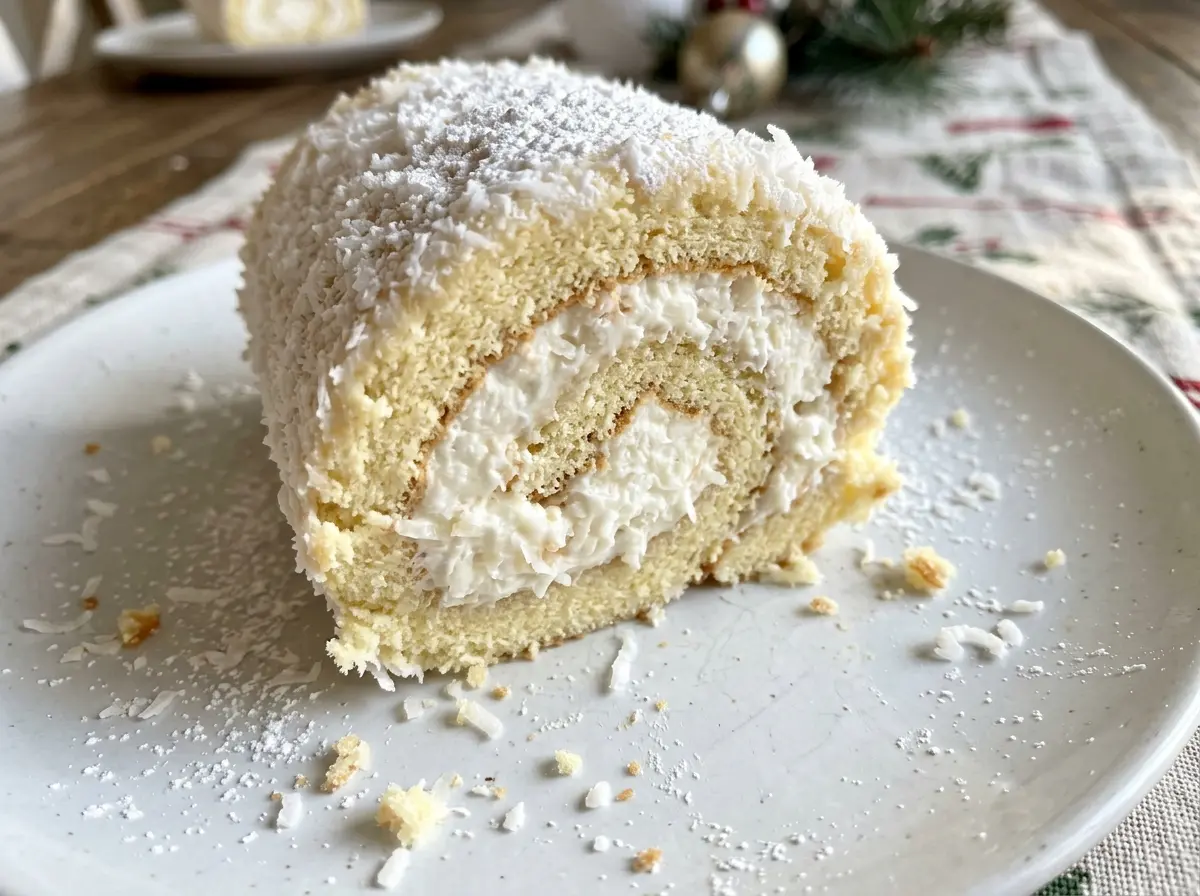
The batter gets its lift from eggs beaten separately: the whites become a glossy foam, while the yolks turn pale and thick. Folding them together gently keeps the sponge light enough to roll, and the cream cheese filling gives it a creamy center without hiding the coconut. Once the outside is coated, the whole cake looks like a snowy little log, with coconut in every slice.
Kitchen Note
Beat the whites until they’re glossy and hold stiff peaks, but stop before they look dry or clumpy. That smooth foam folds into the yolks more easily and gives the cake its light texture.
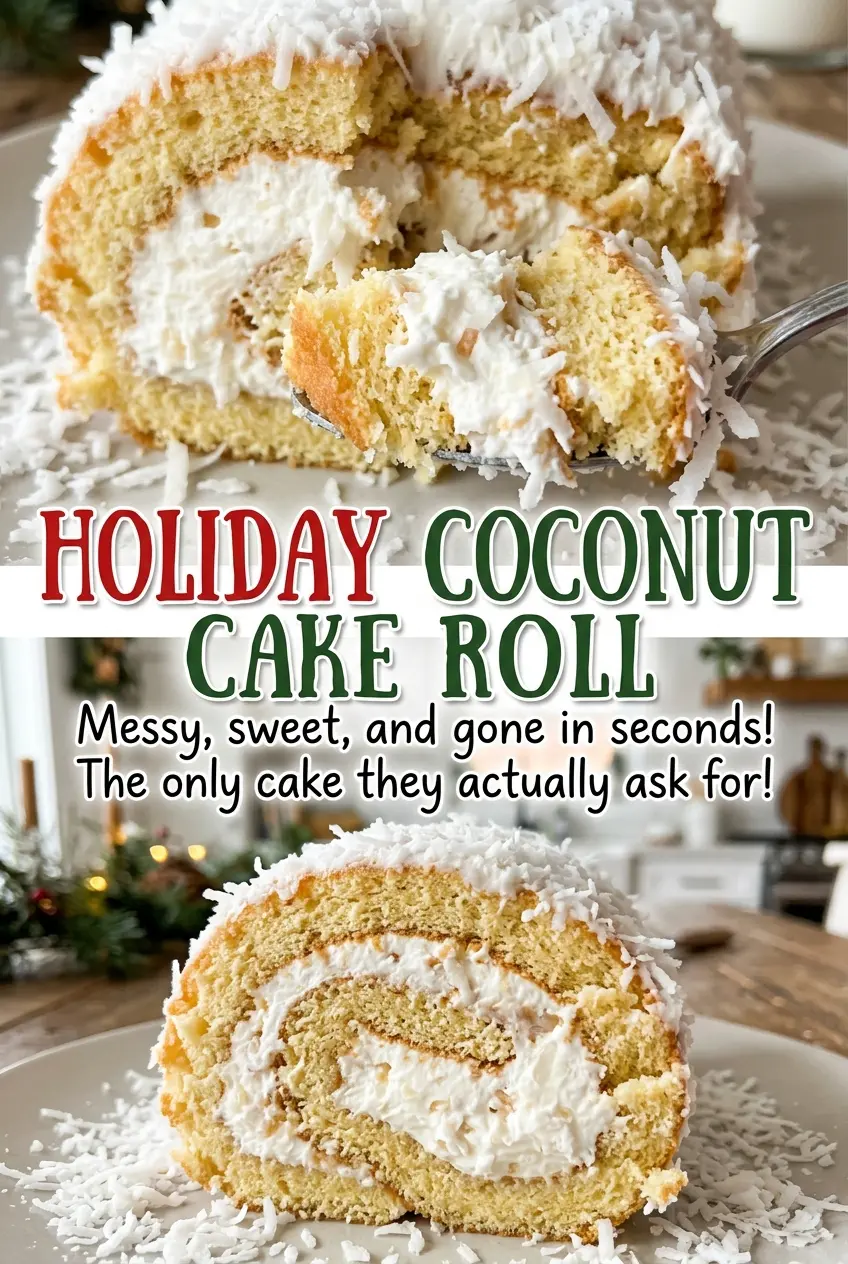
Save this Holiday Coconut Cake Roll for a celebration dessert with a soft sponge, creamy coconut filling, and a snowy finish.
Why This Cake Roll Needs Its First Roll Before It Cools
A thin sponge loses flexibility as it cools. Rolling it while hot gives the cake a gentle curve while it’s still pliable, so it can be filled and rolled again without asking a flat, cooled sheet to bend sharply. The towel supports the cake as you turn it and keeps the layers from sticking to one another.
The cake is ready for that first roll when the top springs back after a light touch. Don’t leave it in the pan to cool; turn it onto the towel, peel off the parchment, then roll from a short side with the towel tucked inside. Let it cool seam side down for about an hour. That pause lets the sponge hold its shape before you spread on the filling.
A few small cracks during the final roll aren’t a disaster. The cream cheese coating and coconut cover the outside, and a gentle hand matters more than trying to force the cake into a tight curl. Keep the roll relaxed as you guide it back over the filling, then set it seam side down so it stays closed.
The Ingredients That Give This Roll Its Lift and Creamy Center
- Room-temperature eggs — Separating the eggs lets the whites build an airy foam while the yolks give the batter richness. Room-temperature eggs whip readily; separate them while cold, then let them stand until they’re no longer chilly. Keep the whites in a clean bowl, since grease or yolk can interfere with whipping.
- Granulated sugar — It sweetens the cake and supports the whipped whites. A little is also sprinkled on the towel, where it helps keep the warm sponge from sticking as you roll it. Keep the sugar portions separate so the whites and yolks each get their share.
- All-purpose flour, baking powder, and salt — Sifting these together over the yolks disperses the leavening and helps prevent lumps in a delicate batter. Fold only until the dry mixture disappears; vigorous mixing knocks air out of the eggs and makes the sponge less light.
- Cream cheese and cold heavy cream — Softened cream cheese blends smoothly with the powdered sugar, while cold cream whips separately into the airy part of the filling. Use full-fat cream cheese for a sturdy, tangy base, and keep the cream cold so it can reach medium-stiff peaks.
- Sweetened flaked coconut — The flakes give the filling texture and the outside its snowy coating. Sweetened coconut brings a little extra sweetness and clings nicely to the cream cheese coating; larger flakes make a more textured finish.
From Foamy Eggs to a Neat Coconut-Coated Roll
Build Air Into the Egg Batter
Heat the oven to 375°F, then grease a 10×15-inch jelly-roll pan, line it with parchment, and grease the parchment. Beat the whites until foamy and gradually add their portion of sugar, stopping at stiff, glossy peaks. In a separate bowl, beat the yolks with their sugar until pale and thick, then mix in the vanilla. Sift the flour, baking powder, and salt over the yolks; fold in one-third of the whites to loosen the mixture, then fold in the rest just until no white streaks remain.
Bake Until the Top Springs Back
Spread the batter evenly into the prepared pan, reaching the corners without pressing out the air. Bake for 10–12 minutes, watching for a top that springs back when lightly touched. A pale, set surface is the cue; don’t wait for deep browning. Overbaking dries this thin cake and makes it more likely to crack when rolled.
Roll the Cake Warm and Let It Cool
Sprinkle a clean kitchen towel with the remaining sugar, then turn the hot cake out onto it. Peel away the parchment carefully, starting at a corner, and roll the cake from a short side with the towel inside. Set it seam side down and let it cool for about an hour. Roll while the cake is still warm and flexible rather than letting it sit flat on the counter.
Fill, Coat, and Chill Before Slicing
Beat the softened cream cheese with powdered sugar and vanilla until smooth. In another bowl, whip the cold cream to medium-stiff peaks, then fold it into the cream cheese mixture without deflating it. Set aside a cup for the outside and fold a cup of coconut into the rest. Unroll the cooled cake gently, spread the filling while leaving a half-inch border, and roll it back up without the towel. Place it seam side down, coat the outside with the reserved mixture, press on the remaining coconut, and refrigerate for at least an hour before slicing.
Two Simple Ways to Adapt the Coconut Cake Roll
Make It Gluten-Free
Replace the all-purpose flour with the same amount of a cup-for-cup gluten-free baking blend made for cakes. A blend that includes xanthan gum gives the sponge more help holding together as you roll it. The cake may feel a little more delicate, so fold gently and handle it with the towel supporting the sheet.
Keep the Outside Smooth
For a less shaggy finish, leave the coconut off the outside and spread the reserved cream cheese mixture over the roll as a smooth coat. The cake keeps its coconut filling, but the exterior is softer and easier to slice neatly.
Storage and Reheating
- Refrigerator: Keep the covered roll refrigerated for up to 3 days. The coconut coating softens a little as it sits.
- Freezer: Freeze the roll or individual slices tightly wrapped for up to 1 month. Thaw in the refrigerator; the whipped filling may be slightly less airy afterward.
- Reheating: This dessert is served chilled and doesn’t need reheating. Skip the microwave, which softens the cream cheese filling unevenly.
Questions That Come Up Before Slicing a Cake Roll
Holiday Coconut Cake Roll
Ingredients
Equipment
Method
- Heat the oven to 375°F.
- Grease a 10x15-inch jelly-roll pan.
- Line the pan with parchment paper and grease the parchment.
- In a clean large bowl, beat the egg whites until foamy.
- Gradually beat in 1/4 cup granulated sugar until stiff, glossy peaks form.
- In another large bowl, beat the egg yolks with 1/2 cup granulated sugar until pale and thick.
- Beat in the vanilla extract.
- Sift the flour, baking powder, and salt over the yolk mixture.
- Fold until just combined.
- Fold in one-third of the egg whites to loosen the batter.
- Gently fold in the rest until no white streaks remain.
- Spread the batter evenly in the prepared pan.
- Bake for 10–12 minutes, until the top springs back when lightly touched.
- Sprinkle a clean kitchen towel with the remaining 2 tablespoons granulated sugar.
- Turn the hot cake out onto the towel.
- Peel off the parchment.
- Roll the cake up from a short side with the towel inside.
- Cool seam side down for about 1 hour.
- Beat the cream cheese, powdered sugar, and vanilla until smooth.
- In a separate bowl, whip the heavy cream to medium-stiff peaks.
- Fold the whipped cream into the cream cheese mixture.
- Set aside 1 cup of the mixture for coating.
- Fold 1 cup coconut into the remaining mixture.
- Gently unroll the cooled cake.
- Spread the coconut filling over the cake while leaving a 1/2-inch border.
- Roll it back up without the towel and place it seam side down on a serving platter.
- Spread the reserved cream cheese mixture over the outside of the roll.
- Press the remaining 1 cup coconut onto it.
- Refrigerate for at least 1 hour before slicing.


