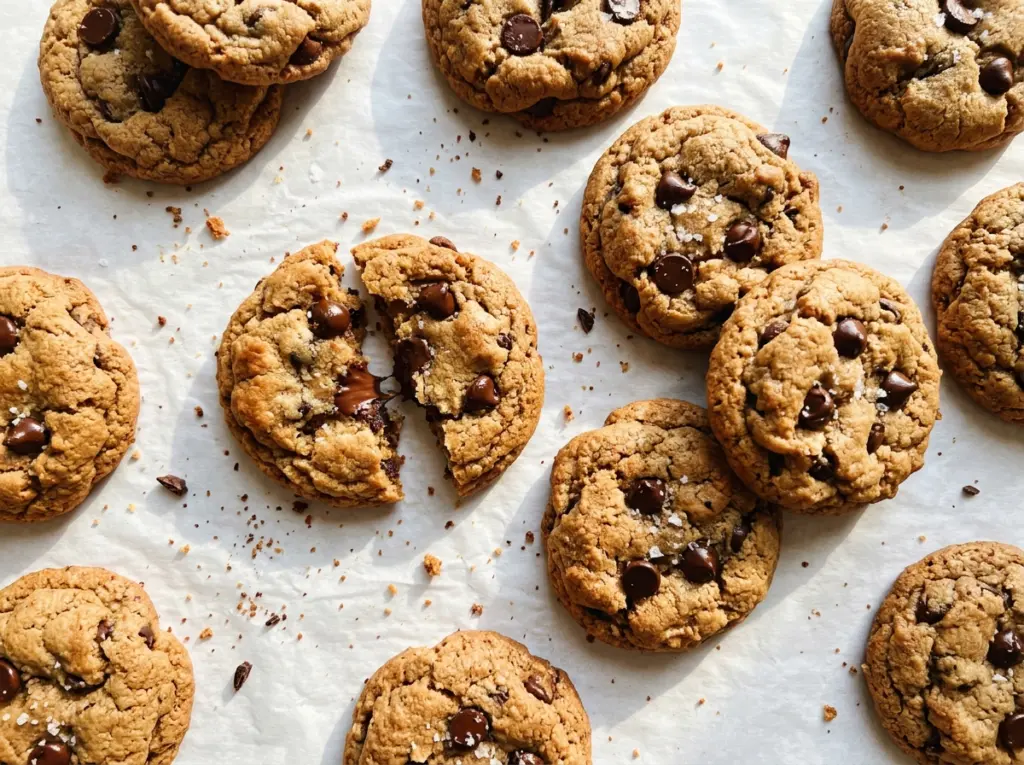
The first thing I watch with vegan cookie dough is how it feels after mixing: it should hold together around the chocolate chips, not look slick or loose. These vegan chocolate chip cookies get a flax-and-water binder instead of an egg, and that mixture needs a few minutes to thicken before it goes into the bowl.
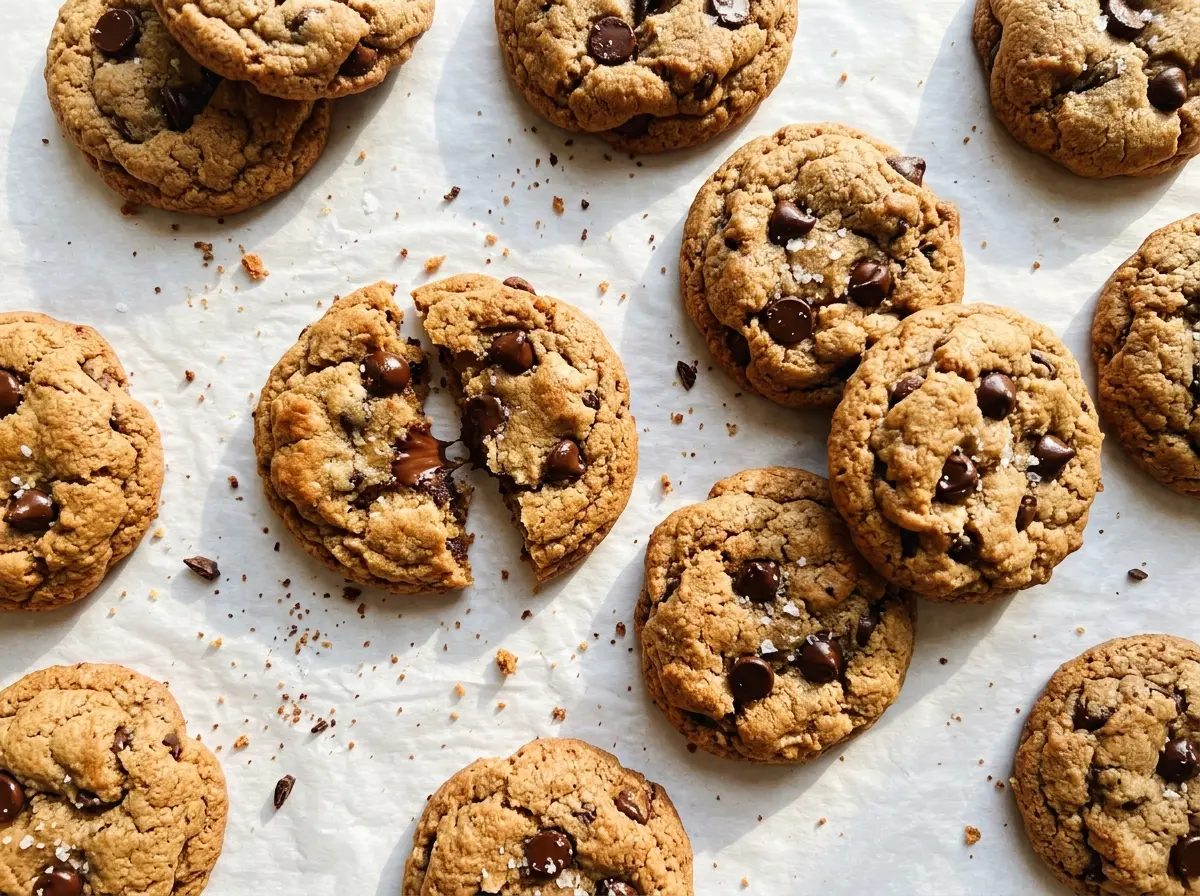
I also chill the dough before baking. That short rest gives the flour time to hydrate and firms the vegan butter back up after mixing, which helps the cookies bake into rounds instead of spreading too quickly. The edges turn lightly golden while the centers still look soft, then set as the cookies cool on the pan. You get tender middles, crisp-edged tops, and chocolate in every bite.
Kitchen Note
Stop mixing as soon as the last dry streak of flour disappears. A few small patches of flour are easy to fold in, but beating the dough longer than it needs can make the cookies less tender.
Save these vegan chocolate chip cookies for their soft centers, golden edges, and easy-to-freeze dough portions.
Why Vegan Cookie Dough Needs a Rest Before It Hits the Oven
Vegan butter behaves a little differently from a block of dairy butter, and the dough has no egg to help give it structure. Once the softened butter has been beaten with the sugars, the mixture is creamy and relatively warm. If it goes straight into a hot oven, the butter can melt before the flour has time to hold the cookie in shape. Chilling the mixed dough for 30 minutes gives it a firmer start.
The rest also gives the flour time to take up moisture from the flax mixture. That matters here because the flax is doing more than adding a plant-based ingredient: once hydrated, it thickens and helps bind the dough. The finished mixture should scoop cleanly, with the chips staying distributed instead of sinking through a loose batter. A short chill is enough; the goal is dough that feels cool and scoopable, not a hard block.
There’s no need to bake every portion at once. Keeping the second sheet in the refrigerator while the first bakes means those cookies start cold, too. It’s a small bit of timing that keeps the batches more consistent without changing the cookie’s soft center.
What the Flax, Vegan Butter, and Sugars Each Bring to These Cookies

- Ground flaxseed — Stirring it with water and letting it stand until thickened makes a simple binder for this egg-free dough. Use ground flax rather than whole seeds, which won’t hydrate the same way. If flax isn’t available, ground chia can fill the same role; mix it with the same amount of water and wait for it to thicken before adding.
- Vegan butter sticks — The stick form is useful because its fat and moisture are suited to cookie dough that needs to be scooped and chilled. Choose a brand you like the taste of, since the butter is a substantial part of the dough. Tub-style spreads can contain more water and may change how much the cookies spread.
- Light brown and granulated sugars — Brown sugar brings moisture and a gentle molasses note, while granulated sugar helps the edges bake up with a little crispness. Pack the brown sugar into the measuring cup, and spoon and level the flour rather than dipping the cup into the bag. Those measuring habits keep the dough from getting too dry or too flour-heavy.
- Vegan semi-sweet chocolate chips — Check that the chips are labeled vegan, since semi-sweet chocolate isn’t automatically dairy-free. A good-tasting brand matters because the chocolate stays in distinct pockets rather than disappearing into the dough. Chopped vegan semi-sweet chocolate works in place of chips if you want uneven pieces and a few larger melted spots.
- Vanilla extract — Vanilla rounds out the brown sugar and chocolate, so a familiar, pleasant-tasting extract is enough; there’s no need to reach for an expensive bottle for this bake. Measure it before adding, so it blends evenly into the creamed butter and sugar.
From Thickened Flax to Soft-Centered Cookies
Let the flax mixture thicken
Stir the ground flaxseed and water together in a small bowl, then leave it for 5 minutes. It’s ready when it looks thicker and slightly gelled rather than like plain water with seeds floating through it. While it stands, whisk the flour, baking soda, and fine salt together in a medium bowl. Breaking up any flour clumps now helps the dry ingredients mix evenly into the butter mixture later.
Cream the butter and sugars until smooth
Beat the softened vegan butter with both sugars in a large bowl for about 2 minutes, until creamy. The mixture should look blended rather than like separate bits of butter and sugar. Beat in the vanilla and the thickened flax mixture until they’re incorporated. If the flax mixture still looks watery, give it more time before adding it; the thickened texture is what lets it blend into the dough.
Fold in the flour, then the chocolate
Add the flour mixture to the wet ingredients and mix just until no dry streaks remain. The dough will be thick, and that’s what you want for cookies that hold a scoop shape. Stir in the vegan chocolate chips after the flour has been incorporated so they’re spread through the dough without overworking it. Cover the bowl and chill the dough for 30 minutes while the oven heats to 350°F.
Scoop, chill the second sheet, and bake
Line two large baking sheets with parchment paper and scoop the dough into 1 1/2-tablespoon portions, spacing them about 2 inches apart. Keep the second sheet refrigerated while the first one bakes. Bake one sheet at a time for 10–12 minutes; look for lightly golden edges and centers that still appear soft. Leave the cookies on the baking sheet for 5 minutes before moving them to a wire rack, since they’re delicate while hot.
Three Easy Swaps for a Different Batch of Vegan Chocolate Chip Cookies
Use dark brown sugar for a deeper note
Replace the light brown sugar with the same amount of packed dark brown sugar. The cookies will have a stronger molasses flavor and a slightly richer-tasting center, while keeping the same familiar chocolate-chip-cookie shape.
Chop a vegan chocolate bar instead of using chips
Use chopped vegan semi-sweet chocolate in place of the chips. The pieces will vary in size, so some bites have little chocolate flecks while others get a larger, softer pocket. Keep the chocolate vegan and stir it in after the flour mixture.
Make a gluten-free batch with a 1:1 baking blend
Replace the all-purpose flour with the same volume of a gluten-free 1:1 baking flour blend made for cookies. The dough may feel a little more delicate, so handle the scoops gently as you move them to the baking sheet; the flax binder and chill still help the cookies hold together.
Storage and Reheating
- Refrigerator: Store baked cookies in an airtight container for up to 1 week. They’ll firm up when cold, so let them sit at room temperature before eating.
- Freezer: Freeze fully cooled cookies in an airtight freezer-safe container for up to 2 months. Separate layers with parchment so the chocolate doesn’t make them stick together.
- Reheating: Warm a cookie in the microwave in 5-second bursts until just soft. Long heating can make the edges tough before the center warms through.
Questions That Come Up When Baking These Vegan Cookies
Vegan Chocolate Chip Cookies
Ingredients
Equipment
Method
- Stir the ground flaxseed and water together in a small bowl and let stand for 5 minutes, until thickened.
- Whisk the flour, baking soda, and salt together in a medium bowl.
- Beat the vegan butter, brown sugar, and granulated sugar in a large bowl until creamy, about 2 minutes.
- Beat in the vanilla and thickened flax mixture.
- Add the flour mixture and mix just until no dry streaks remain.
- Stir in the chocolate chips.
- Cover and chill the dough for 30 minutes.
- Preheat the oven to 350°F.
- Line two large baking sheets with parchment paper.
- Scoop the dough into 1 1/2-tablespoon portions, spacing them about 2 inches apart; keep the second sheet refrigerated while the first bakes.
- Bake one sheet at a time for 10–12 minutes, until the edges are lightly golden and the centers still look soft.
- Cool on the baking sheet for 5 minutes, then transfer to a wire rack.


