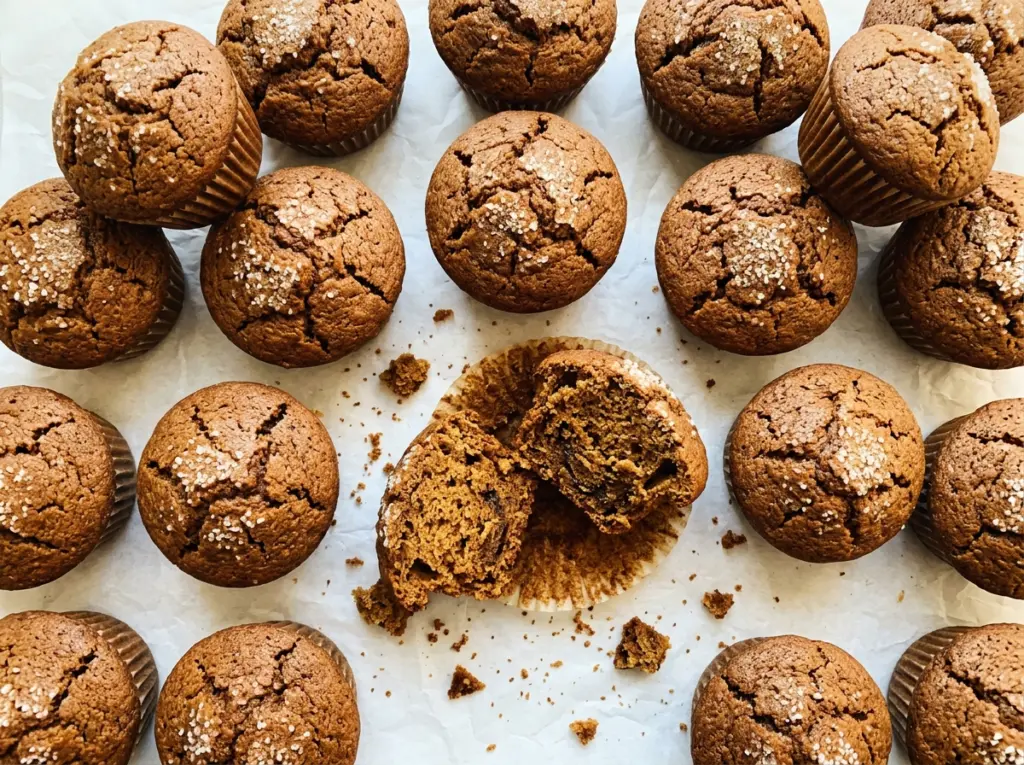
The first thing you notice is the molasses: the batter turns dark and glossy as soon as it meets the melted butter and brown sugar. These gingerbread muffins bake into tender, gently spiced middles with tops that spring back when you press them lightly. I like that the flavor comes from ground ginger, cinnamon, and cloves rather than a sugary topping, so every bite tastes warmly spiced without needing a finishing glaze.
The texture depends on a light touch once the flour goes in. I fold just until the dry streaks disappear, then stop; a few careful turns are better than chasing every tiny lump until the batter is perfectly smooth. With the oven hot and the pan ready, the muffins rise while keeping a soft crumb, and the toothpick cue makes it easy to catch them before they dry out.
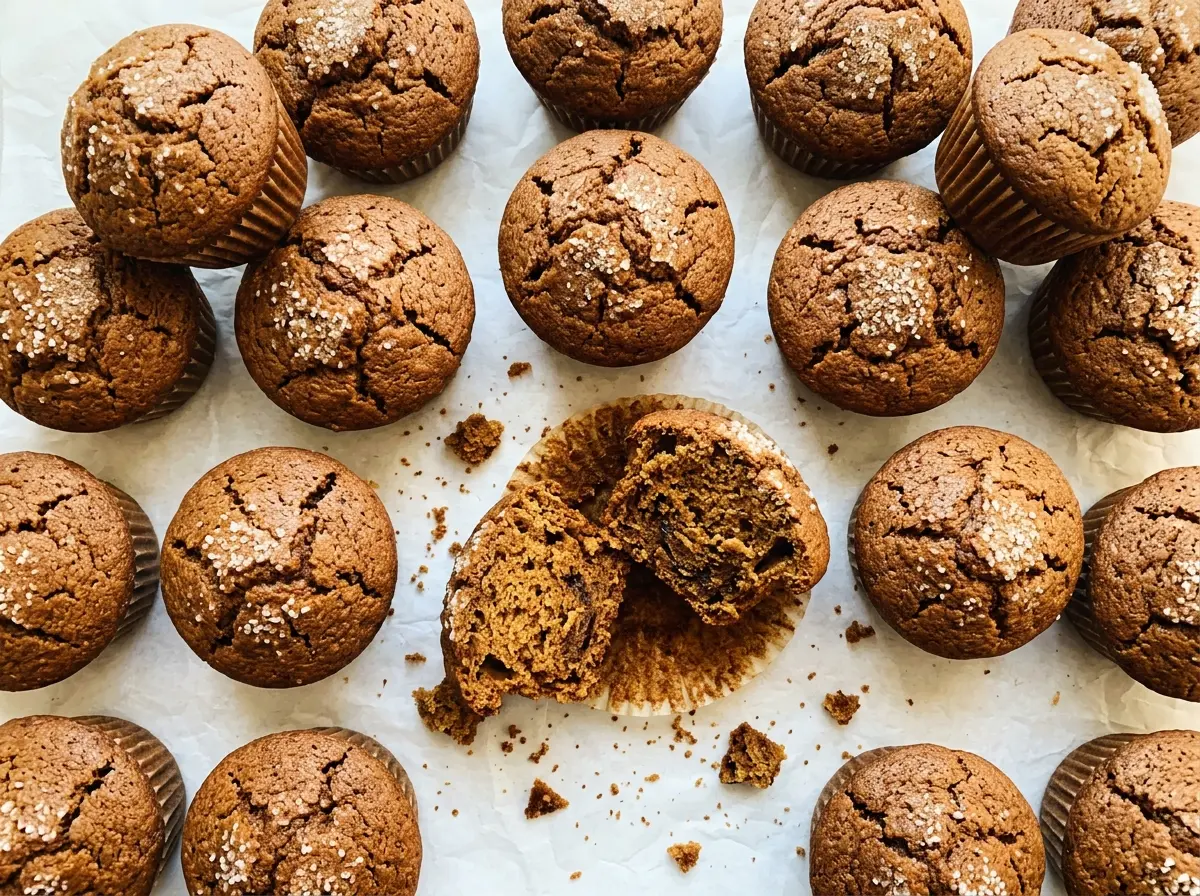
Kitchen Note
Stop folding as soon as the last dry streak disappears. Overworked batter makes tougher muffins, and a few small lumps are much less of a problem than continuing to stir.
Save these gingerbread muffins for a bake with deep molasses flavor and a soft, warmly spiced crumb.
Why the Molasses Needs Two Leaveners Around It
Molasses brings more than its dark, bittersweet flavor to these muffins. It also contributes moisture and acidity, which is one reason baking soda and baking powder both have a job here. The soda reacts with the acidic molasses, while the baking powder supplies additional lift. Together, they help the dense, rich batter rise into muffins rather than bake up heavy.
That balance is why I keep the molasses and leaveners in their stated proportions instead of treating one as interchangeable with another. Baking soda isn’t a one-for-one stand-in for baking powder, and adding extra soda can leave an unpleasant alkaline taste. The batter also needs the egg and flour for structure: the egg binds the wet ingredients, and the flour gives the risen muffins enough framework to hold their shape as they cool.
There isn’t a long creaming step or a separate syrup to prepare. The melted butter blends right into the wet mixture, and the dry ingredients are whisked separately so the raising agents and spices are spread throughout before they meet the molasses. That straightforward order keeps the flavor and lift distributed across all 12 muffins.
What Gives These Muffins Their Deep Gingerbread Flavor

- Unsulfured molasses — This is the main source of the muffins’ dark gingerbread flavor and moisture. Choose ordinary unsulfured molasses rather than blackstrap, which is much more bitter and can overpower the spices. Stir it into the wet mixture until it looks smooth and evenly dark.
- Ground ginger, cinnamon, and cloves — Ginger leads, cinnamon rounds out the warmth, and cloves add a sharper, deeper note. Fresh, fragrant spices make a noticeable difference; if a jar smells faint or dusty, the muffins will taste less vivid. Whisk the spices thoroughly with the flour so no clove-heavy pockets end up in a muffin.
- Light brown sugar — Packed brown sugar adds sweetness and a soft, moist crumb, while molasses supplies the more concentrated gingerbread character. Break up any hard sugar lumps before whisking so they dissolve into the wet ingredients.
- Unsalted butter and whole milk — Melted butter gives the batter richness without requiring a creaming step, and whole milk keeps the mixture from being too thick. Let the butter cool slightly before it goes into the bowl; very hot butter can make the egg difficult to incorporate smoothly.
- Flour and both leaveners — All-purpose flour gives the muffins their structure, while baking soda and baking powder work together for lift. Whisk them well with the salt before adding the wet ingredients; pockets of baking soda or powder can leave an uneven rise or a harsh-tasting spot.
Mixing and Baking Without Losing the Tender Crumb
Get the Pan and Dry Mix Ready
Heat the oven to 375°F and grease a standard 12-cup muffin pan or line it with paper liners before mixing. Whisk the flour, baking soda, baking powder, ginger, cinnamon, cloves, and salt together in a medium bowl. Take a moment to break up any clumps and distribute the spices evenly. The finished dry mixture should look uniform, with no concentrated streaks of spice.
Whisk the Molasses Mixture Smooth
In a large bowl, whisk the packed brown sugar, unsulfured molasses, melted and slightly cooled butter, whole milk, and egg. Keep whisking until the mixture looks smooth and the egg is fully blended in, rather than leaving streaks of yolk or dark molasses. If the butter is still hot, give it a little longer to cool before adding it. A smooth wet base makes it easier to fold in the flour quickly.
Fold Only Until the Flour Disappears
Add the dry mixture to the molasses mixture and fold gently, scraping the bottom and sides of the bowl as you go. Stop when you no longer see dry streaks; don’t whisk the batter or keep stirring to erase every small lump. If the batter gets worked too much, the muffins can turn dense and chewy instead of tender. Divide it evenly among the prepared muffin cups.
Use the Spring-Back and Toothpick Cues
Bake for 18 to 22 minutes. The tops should spring back when lightly pressed, and a toothpick inserted in the center should come out with a few moist crumbs rather than wet batter. Start checking near the beginning of that time range, since ovens can vary. Cool the muffins in the pan for 5 minutes, then transfer them to a wire rack so the bottoms don’t stay trapped in the hot pan.
Small Changes That Keep the Gingerbread Character
Bake a Half Batch
For six muffins, halve each ingredient and divide the batter among six cups of the same standard muffin pan. Keep the oven at 375°F and use the spring-back and toothpick cues rather than assuming a smaller batch needs a different oven setting. This gives you a fresh half batch without changing the spice balance.
Lean the Spice Blend Toward Ginger
For a sharper ginger note, increase the ground ginger slightly and reduce the cinnamon and cloves by the same small amount, keeping the combined spice quantity close to the original. The muffins will taste more gingery and less warmly sweet, while keeping the same basic batter. Leave the flour, egg, milk, butter, sugar, and leaveners unchanged so the texture and rise stay familiar.
Storage and Reheating
- Refrigerator: Keep the cooled muffins airtight for up to 4 days; refrigeration firms and dries the crumb sooner than room-temperature storage.
- Freezer: Freeze completely cooled muffins in a sealed freezer-safe container for up to 2 months. Thaw at room temperature while still wrapped to limit condensation on the surface.
- Reheating: Warm an individual muffin in the microwave for about 10 seconds, then add a few seconds if needed. Long microwave heating can make the crumb tough, so use short bursts.
Questions That Come Up While Baking Gingerbread Muffins
Gingerbread Muffins
Ingredients
Equipment
Method
- Heat the oven to 375°F and grease a standard 12-cup muffin pan or line it with paper liners.
- In a medium bowl, whisk together the flour, baking soda, baking powder, ginger, cinnamon, cloves, and salt.
- In a large bowl, whisk together the brown sugar, molasses, melted butter, milk, and egg until smooth.
- Add the flour mixture to the molasses mixture and fold just until no dry streaks remain; do not overmix.
- Divide the batter evenly among the muffin cups and bake for 18 to 22 minutes, until the tops spring back when lightly pressed and a toothpick inserted in the center comes out with a few moist crumbs.
- Cool the muffins in the pan for 5 minutes, then transfer them to a wire rack to cool.


