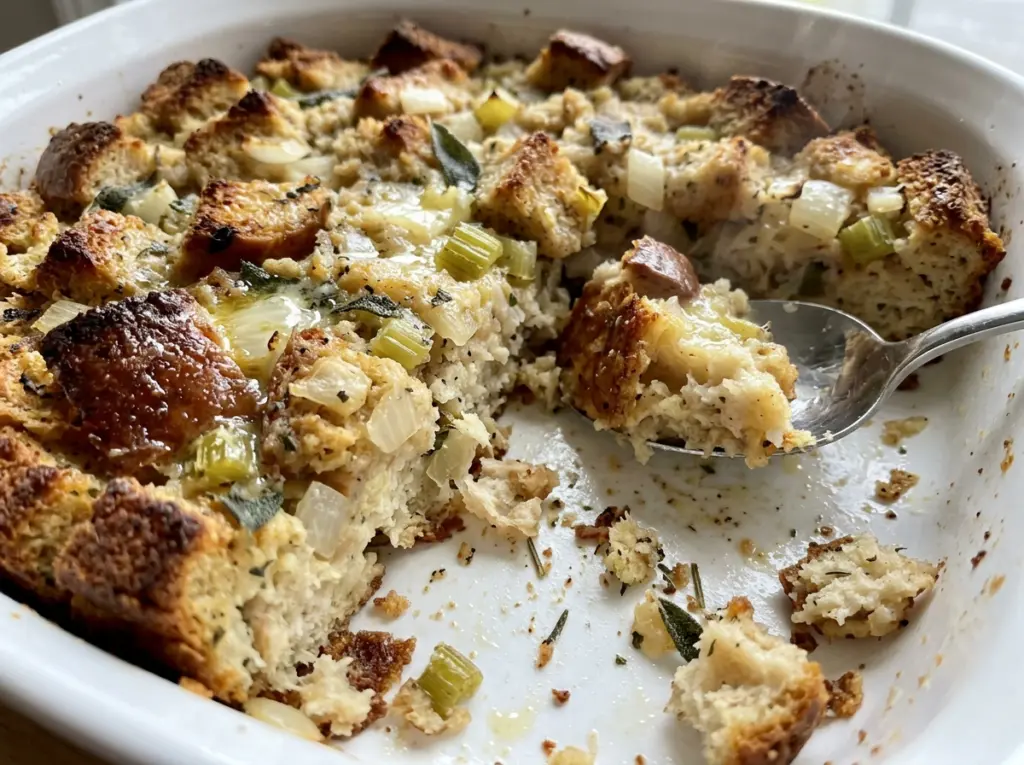
The cornbread comes out golden, but it needs to cool completely before it can be crumbled into the dressing. I used to rush that part; warm cornbread breaks down more easily, and the finished dish loses some of its distinct, tender pieces. Now I give it time, then dry it gently with the white bread before either one meets the broth. That extra oven step is what gives this Grandmas Thanksgiving Dressing a soft middle without a heavy, soggy texture.
The two breads do different jobs. Cornbread brings its familiar corn flavor and a delicate crumb, while day-old white bread gives the dressing enough structure to hold the broth and eggs. I keep the dried pieces pale rather than toasting them, so they absorb the savory broth instead of tasting crisp or browned before baking. The finished dish comes out with golden edges and a moist, seasoned center.
Kitchen Note
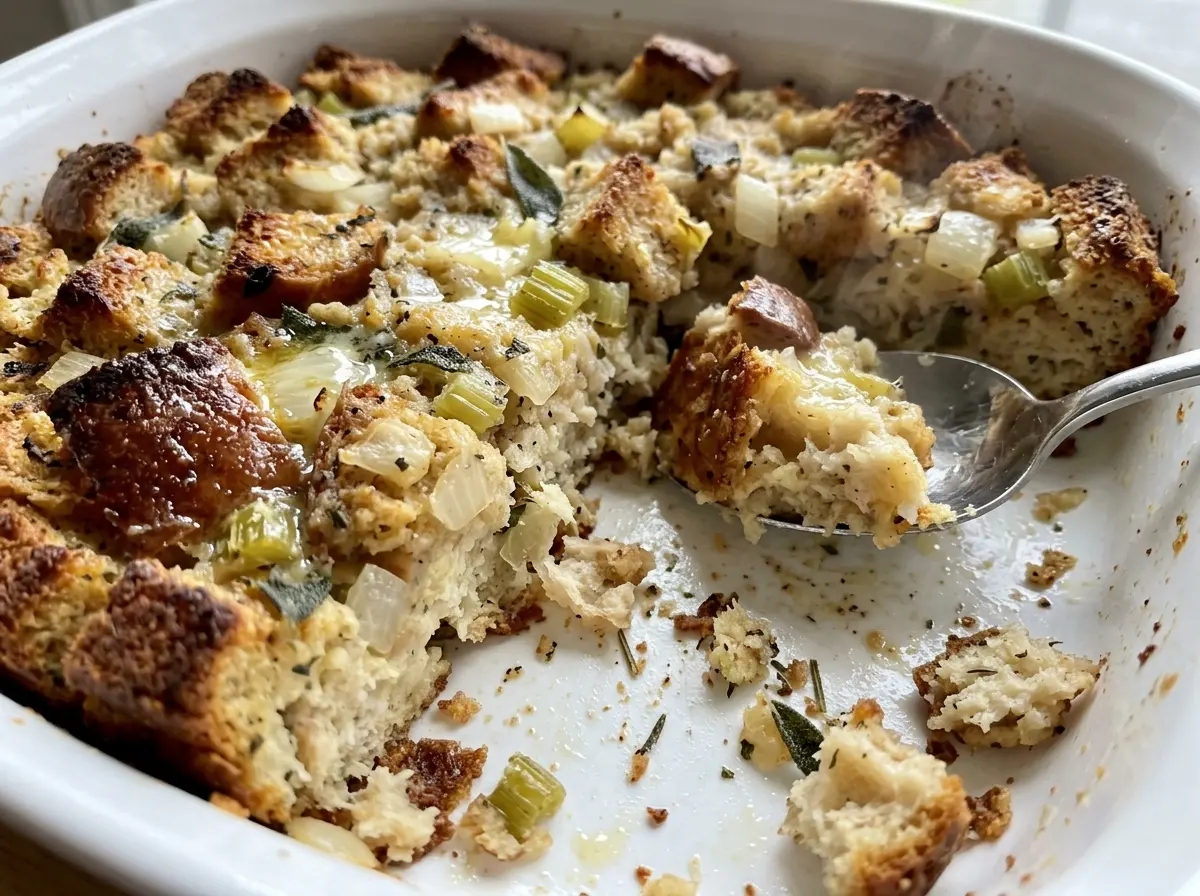
When the moistened bread goes into the baking dish, I spoon it in gently instead of pressing it down. A loose layer lets the edges brown while the center stays tender.
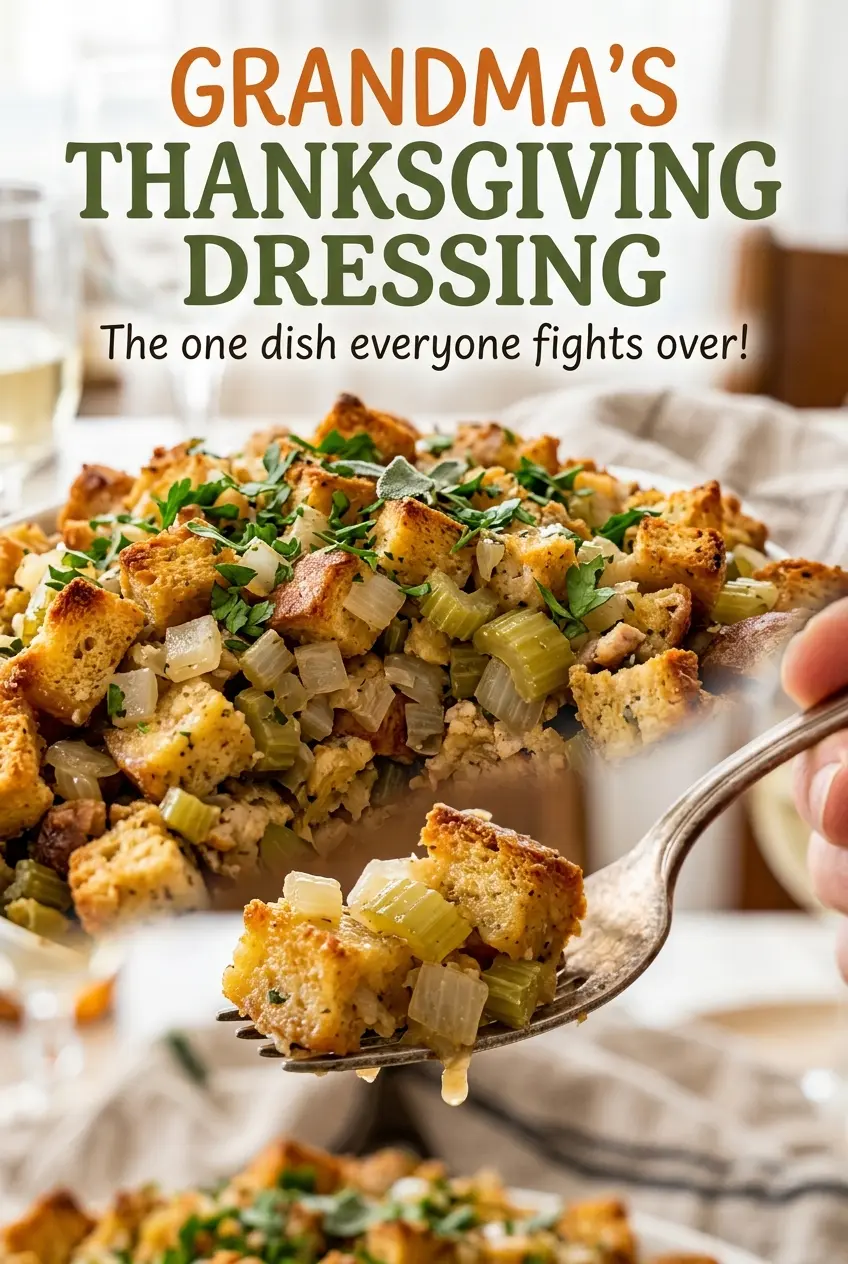
Save Grandmas Thanksgiving Dressing for its golden edges, soft center, and two-bread texture at the holiday table.
Why Dry Bread Matters More Than Extra Broth in This Dressing
It’s easy to assume that a moist dressing starts with adding more broth. Here, the better place to control the texture is earlier: dry the cornbread and white bread all the way through, but stop before they brown. Dry pieces can take in the broth and egg mixture evenly; bread that’s still damp inside starts out saturated and can turn dense before the center has a chance to set.
The low oven does this gently. At 250°F, the pieces lose moisture without developing the toasted flavor or firm crust you’d get from a hotter bake. That matters because the dressing still spends time covered in the oven, where the bread absorbs the seasoned liquid, and then uncovered, where the edges turn golden. If the pieces are browned during the drying stage, they can bring a tougher texture to the finished dish rather than the soft, cohesive crumb you want.
Think of the drying step as setting up the bread to absorb, not as making croutons. The pieces should feel dry throughout, and the cornbread should still look pale. That gives the measured broth room to do its job without needing extra liquid.
What the Cornbread, White Bread, and Seasonings Each Contribute
- Yellow cornmeal and all-purpose flour — The cornmeal gives the cornbread its distinct corn flavor and slightly grainy crumb; flour and baking powder help it hold together after crumbling. Regular grocery-store yellow cornmeal works well. Skip self-rising cornmeal, which would bring extra leavening and salt into a batter that already has both measured in.
- Buttermilk and eggs — Buttermilk gives the cornbread a gentle tang and keeps its crumb tender. Plain cultured buttermilk is a good choice; plain kefir can stand in at the same quantity, though the cornbread’s flavor will shift slightly. The eggs provide structure in both the cornbread and the dressing, so large eggs are the dependable size for this mix.
- Day-old white bread — A basic sandwich loaf is just right here; an expensive artisan loaf isn’t needed. The mild flavor gives the dressing a sturdy base without crowding out the cornmeal and sage. If you only have fresh white bread, it can still work once it has been dried along with the crumbled cornbread.
- Butter, sage, and poultry seasoning — Butter carries the onion and celery as they soften, while rubbed sage and poultry seasoning make the dressing taste savory and familiar. Use rubbed sage rather than assuming ground sage measures or distributes the same way. Low-sodium chicken broth is useful because it lets the kosher salt and seasonings remain balanced instead of making the finished dressing too salty.
Drying the Bread, Then Building the Dressing in Stages
Bake and Cool the Cornbread
Heat the oven to 400°F and coat a 9-inch square pan with nonstick cooking spray. Whisk the cornmeal, flour, baking powder, and 1 teaspoon of the kosher salt; in another bowl, whisk 2 eggs with the buttermilk and vegetable oil, then stir the wet mixture into the dry ingredients just until combined. Bake for 20–25 minutes, until the top is golden and a toothpick inserted in the center comes out clean. Let the cornbread cool completely before crumbling it into rough 1/2-inch pieces.
Dry Both Breads Without Toasting Them
Spread the crumbled cornbread and day-old white bread cubes across 2 rimmed baking sheets. Bake at 250°F for 35–45 minutes, rotating the sheets and stirring the pieces once. They should feel dry throughout but shouldn’t be browned; if you see golden color developing, check them closely rather than leaving them in for extra time. Cool the dried bread before mixing it with the dressing ingredients.
Soften the Onion and Celery in Butter
Heat the oven to 350°F and coat a 9×13-inch baking dish with nonstick cooking spray. Melt the butter in a 12-inch skillet over medium heat, then add the finely chopped onion and celery. Cook for 8–10 minutes, stirring often, until the vegetables are tender rather than browned. Stir in the rubbed sage, poultry seasoning, black pepper, and remaining kosher salt.
Moisten, Bake, and Rest
Put the dried breads in a 6-quart bowl and add the sautéed vegetables. Whisk the remaining 3 eggs with the chicken broth, pour it over the bread, and toss gently; let the mixture stand for 5 minutes until evenly moistened. Spoon it into the prepared dish, cover tightly with foil, and bake for 25 minutes. Uncover and bake for another 20–25 minutes, until the edges are golden and the center reaches 160°F, then rest the dressing for 10 minutes before serving.
Two Thoughtful Ways to Adapt This Thanksgiving Dressing
Make It Vegetarian with Vegetable Broth
Use low-sodium vegetable broth in place of the chicken broth at the same quantity. The dressing will keep its savory, herb-forward character, though it won’t have the same poultry depth. The eggs and butter remain, so this is a vegetarian adaptation rather than a vegan one.
Make a Gluten-Free Version
Use a cup-for-cup gluten-free flour blend in the cornbread and replace the white bread cubes with gluten-free white bread cubes, keeping the same quantities. Choose cornmeal that’s labeled gluten-free if cross-contact is a concern. The finished dressing may be a little more fragile, so toss the bread gently and spoon it into the dish without compressing it.
Storage and Reheating
- Refrigerator: Refrigerate leftovers within 2 hours in a covered container and use within 3–4 days. The crumb softens as it sits.
- Freezer: Freeze cooled portions in an airtight container for up to 3 months. Thaw in the refrigerator for the best texture.
- Reheating: Cover and warm in a 350°F oven until the center reaches 165°F. Reheating uncovered can dry the edges before the center is hot.
Questions That Come Up While Making Thanksgiving Dressing
Grandmas Thanksgiving Dressing
Ingredients
Equipment
Method
- Preheat the oven to 400°F and coat a 9-inch square baking pan with nonstick cooking spray.
- Whisk the cornmeal, flour, baking powder, and 1 teaspoon kosher salt in a medium bowl.
- In a separate bowl, whisk 2 eggs, the buttermilk, and vegetable oil.
- Stir the wet mixture into the dry ingredients just until combined.
- Pour the batter into the pan and bake for 20–25 minutes, until golden and a toothpick inserted in the center comes out clean.
- Cool the cornbread completely, then crumble it into rough 1/2-inch pieces.
- Spread the crumbled cornbread and bread cubes across 2 rimmed baking sheets.
- Bake at 250°F for 35–45 minutes, rotating the sheets and stirring once, until dry throughout but not browned; cool.
- Preheat the oven to 350°F and coat a 9x13-inch baking dish with nonstick cooking spray.
- Melt the butter in a 12-inch skillet over medium heat.
- Add the onion and celery and cook for 8–10 minutes, stirring often, until tender.
- Stir in the sage, poultry seasoning, black pepper, and remaining 1 teaspoon kosher salt.
- Put the dried cornbread and bread cubes in a 6-quart bowl and add the sautéed vegetables.
- Whisk the remaining 3 eggs with the chicken broth.
- Pour the egg and broth mixture over the bread and toss gently.
- Let stand for 5 minutes until evenly moistened.
- Spoon the mixture into the prepared baking dish and cover tightly with foil.
- Bake for 25 minutes; uncover and bake for 20–25 minutes more, until golden at the edges and the center reaches 160°F.
- Rest the dressing for 10 minutes before serving.


