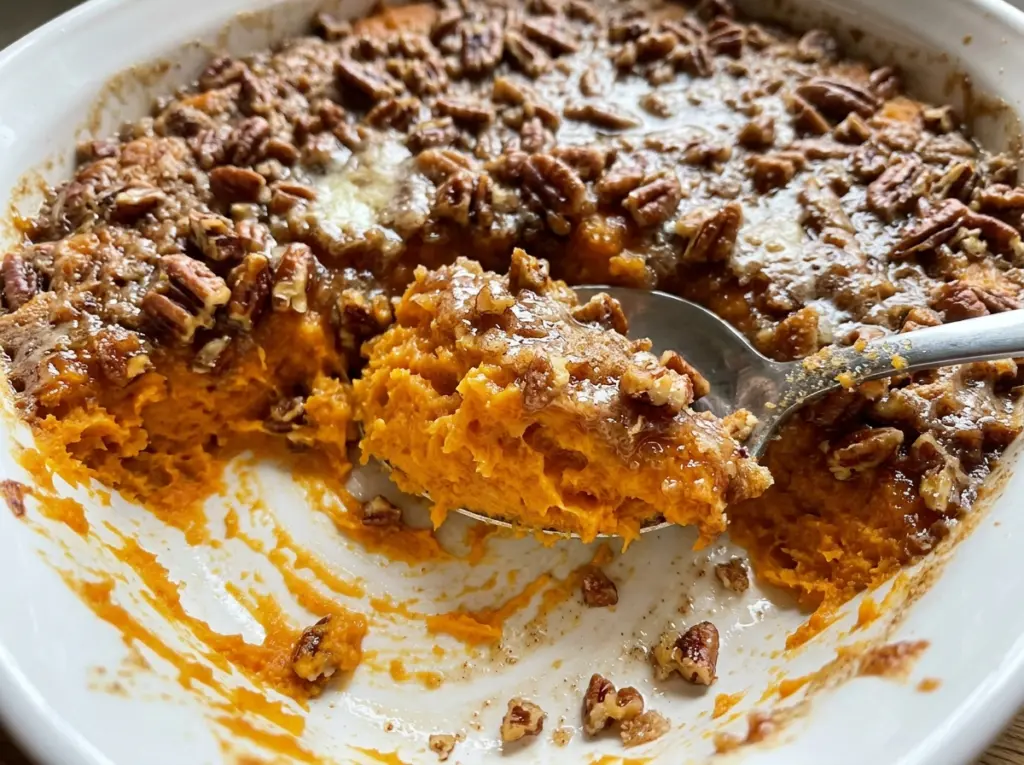
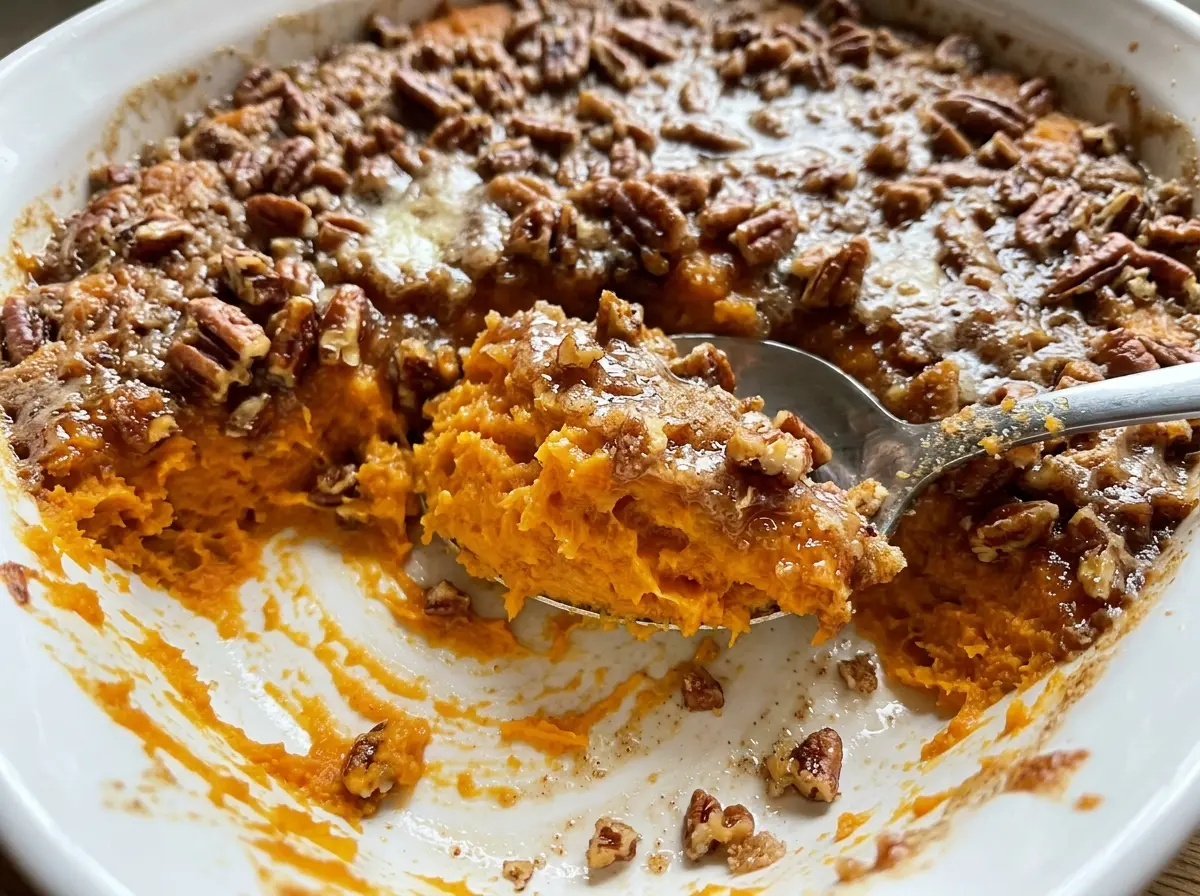
When the potatoes come out of the pot, they should mash without a fight; firm chunks can leave the filling lumpy once it’s baked. I pay attention to the fork-tender cue instead of trying to rush them along. This praline sweet potato casserole starts with a smooth, lightly sweet filling, then gets a pecan topping that bakes into a crisp, buttery layer. The contrast is what makes each spoonful feel like more than a bowl of mashed sweet potatoes.
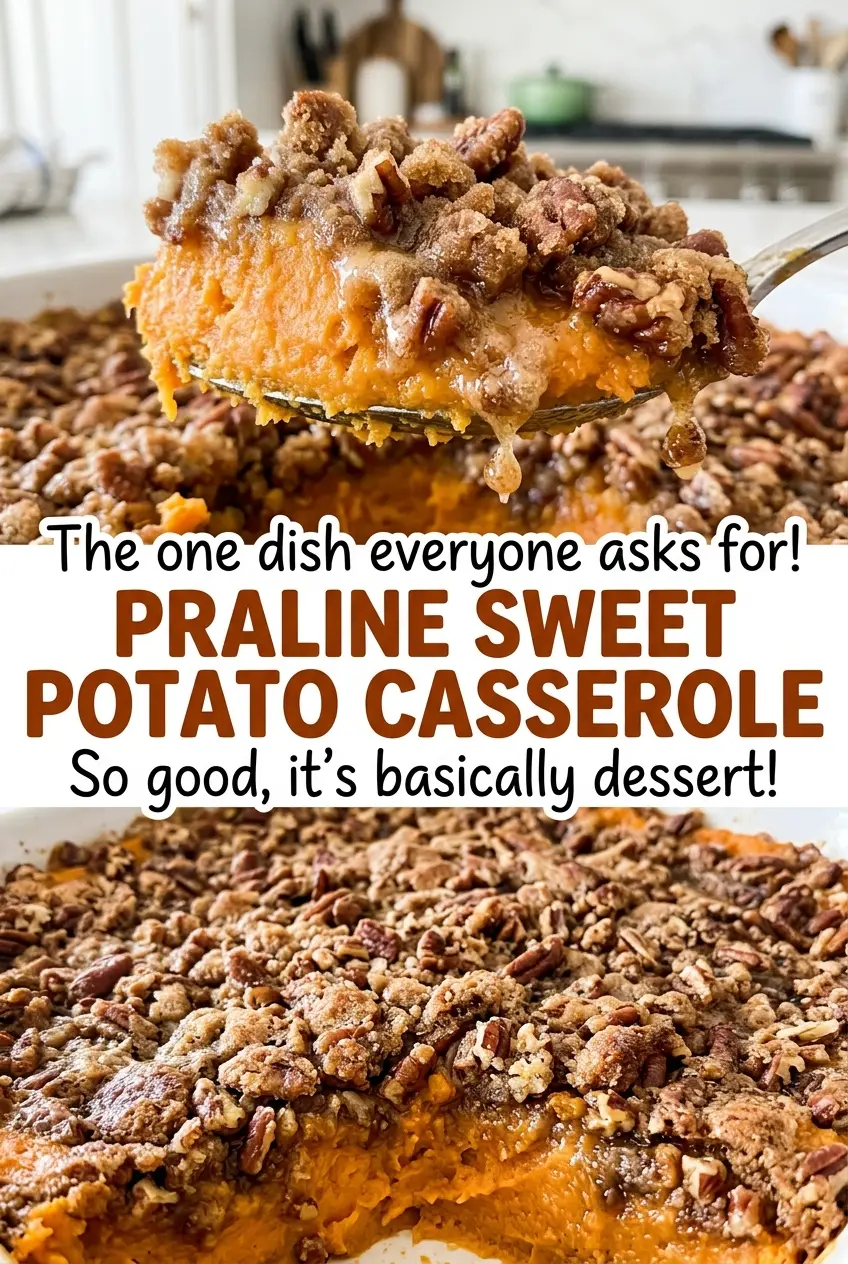
I keep the topping crumbly rather than mixing it into the filling. The pecans and brown sugar stay on top, where the butter helps them brown while the sweet potatoes bake underneath. The filling stays soft and creamy, and the praline layer gives it a little crunch. It’s a comforting casserole with familiar ingredients and a proper pecan finish.
Kitchen Note
Lightly beat the eggs before they go into the warm mash, then mix until the filling looks smooth. That small bit of prep helps the eggs blend evenly instead of leaving streaks through the potatoes.
Save this praline sweet potato casserole for its smooth filling and buttery pecan topping, a familiar side with a crisp finish.
Why the Center Needs More Than a Browned Topping
A browned top is a useful visual cue, but it doesn’t tell you whether the center of a thick sweet potato filling has finished baking. The casserole includes eggs, which help the mashed potatoes hold together as they bake. The middle needs time in the oven to set; judging the casserole by color alone can leave the center softer and looser than intended.
I use the temperature at the center as the clear doneness check: it should reach 160°F. Insert the thermometer into the middle of the casserole, not just under the surface or near the edge, where the topping and filling heat differently. The topping should also be browned by the time the casserole is ready. If those cues don’t line up, the center temperature is the one that tells you whether the filling has reached its target.
The 10-minute rest after baking gives the casserole a chance to settle before you serve it. It won’t turn the filling firm like a slice of pie; it should still be soft and spoonable, with the praline topping easy to portion across the top.
The Pecans and Flour Make This a Praline Topping
- Sweet potatoes — Choose firm potatoes without soft or damaged spots. Cutting them into uniform 1-inch chunks helps them become fork-tender at about the same time. Their natural sweetness and soft texture are the foundation of the filling, so there isn’t a close swap that will give the same result.
- Eggs and whole milk — The eggs help the filling set as it bakes, while whole milk loosens the mash and adds richness. Use large eggs, lightly beaten, so they’re easy to incorporate evenly. The milk’s fat contributes to the creamy texture; a lower-fat option would make the filling less rich.
- Unsalted butter — Butter brings richness to both the potato mixture and the pecan topping. Unsalted butter also leaves the salt level under your control. Melt it for each part, then stir it into the appropriate mixture rather than combining the topping butter with the filling butter.
- Pecans — They supply the distinctive nutty crunch that gives the topping its praline character. Fresh pecans matter here because stale nuts can taste flat or bitter. Chop them before mixing so they’re distributed through the topping instead of sitting in a few large pieces.
- Brown sugar, flour, and cinnamon — Packed light brown sugar gives the topping its molasses-like sweetness, while all-purpose flour helps the melted butter cling to the pecans and form a crumbly layer. Ground cinnamon adds warmth without taking over. Stir these dry ingredients together first so the cinnamon and flour are spread through the pecans before the butter goes in.
- Granulated sugar, vanilla, and kosher salt — These season the sweet potato filling rather than the topping. Vanilla rounds out the sweetness, and salt keeps the mash from tasting one-note. Stir them into the potatoes along with the other filling ingredients.
From Fork-Tender Potatoes to a Crisp Praline Top
Boil the Sweet Potatoes Until They Mash Easily
Put the peeled, 1-inch potato chunks in a 5-quart pot and cover them with cold water by about 1 inch. Bring the water to a boil, then lower the heat to a simmer and cook for 15 to 20 minutes. Check a few chunks with a fork; it should pass through the center easily. Drain the potatoes well before mashing so extra water doesn’t thin the filling.
Mix the Filling Until Smooth
Heat the oven to 350°F and grease a 9×13-inch baking dish. Mash the drained potatoes in a large bowl, then add the melted butter, granulated sugar, lightly beaten eggs, whole milk, vanilla, and kosher salt. Mix until the filling is smooth, breaking up any lingering potato lumps as you go. Stop when the ingredients are evenly combined and the mixture looks creamy.
Keep the Praline Mixture Crumbly
Stir the chopped pecans, packed light brown sugar, flour, and cinnamon together in a medium bowl. Add the melted butter and stir until the mixture is evenly moistened and crumbly. You’re looking for coated pecans with small clumps, not a smooth paste. If dry flour is still sitting at the bottom, keep stirring until it’s incorporated.
Bake Until the Center Sets
Spread the filling evenly in the prepared baking dish, then scatter the topping across it. Bake for 30 to 35 minutes, until the topping is browned and the center reaches 160°F. Check the center with a thermometer rather than relying on the browned pecans alone. Rest the casserole for 10 minutes before serving so it settles and is easier to scoop.
Two Small Changes for a Different Pecan Bite
Fine-Chopped Pecans for a More Even Crunch
Chop the pecans more finely before stirring them with the brown sugar, flour, and cinnamon. The topping will spread more evenly, with smaller nut pieces in each bite. The ingredient balance stays the same, but the texture feels more uniform.
Coarser Pecans for Bigger, Toasty Pieces
Keep the pecan pieces on the larger side when chopping them for the topping. You’ll get more distinct nutty bites against the smooth filling, though the topping won’t look quite as fine or even. Use pieces that are still small enough to scatter over the casserole.
Storage and Reheating
- Refrigerator: Cool, cover, and refrigerate within 2 hours. Store for 3 to 4 days; the pecan topping softens as it sits.
- Freezer: Freeze tightly covered for up to 2 months. The filling holds up well, though the topping may lose some crunch after thawing.
- Reheating: Reheat covered in a 350°F oven until the center reaches 165°F. Uncovered reheating can dry the filling before it warms through.
Questions That Come Up When Making This Casserole
Praline Sweet Potato Casserole
Ingredients
Equipment
Method
- Put the sweet potatoes in a 5-quart pot and cover with cold water by about 1 inch. Bring to a boil, then simmer for 15 to 20 minutes, until the potatoes are fork-tender; drain well.
- Heat the oven to 350°F and grease a 9x13-inch baking dish.
- Mash the potatoes in a large bowl, then mix in the melted butter, granulated sugar, eggs, milk, vanilla, and salt until smooth.
- Stir the pecans, brown sugar, flour, and cinnamon together in a medium bowl.
- Add the melted butter and stir until the mixture is evenly moistened and crumbly.
- Spread the sweet potato mixture evenly in the prepared baking dish and scatter the praline topping over it.
- Bake for 30 to 35 minutes, until the topping is browned and the center reaches 160°F.
- Rest for 10 minutes before serving.


