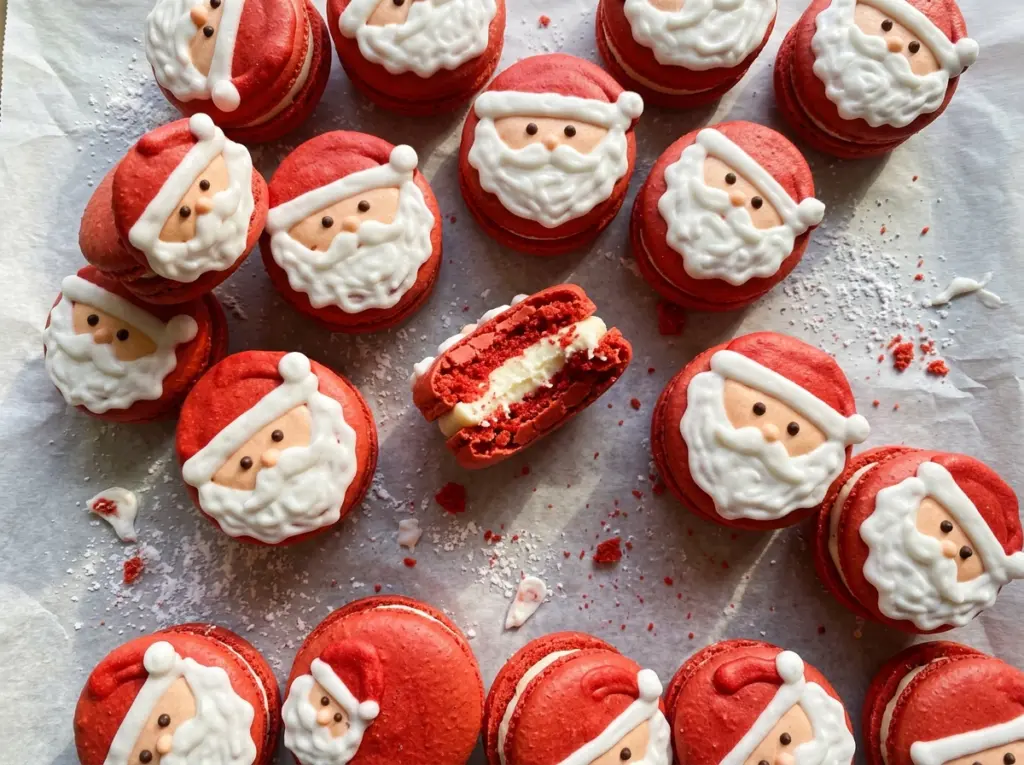
When the red macaron batter falls from the spatula in a thick ribbon, it’s ready for the piping bag—but a few extra folds can turn that promising batter into flat circles. I watch the trail closely as it settles back into the bowl. For these Santa Claus macarons, that small visual cue helps keep the shells round enough to sandwich and decorate.
The shells start with almond flour and confectioners’ sugar sifted together twice, so the dry mixture folds into the meringue without lumps. I add it in three batches and fold gently, stopping when the batter moves like a ribbon rather than a stiff mound. Once filled with vanilla buttercream and decorated with chocolate-chip eyes and candy noses, the red shells make cheerful little Santa faces.
Kitchen Note
Don’t rush the rest before baking. The shells should feel dry on top and shouldn’t stick when you touch one lightly; if they’re still tacky, give them more time before they go in the oven.
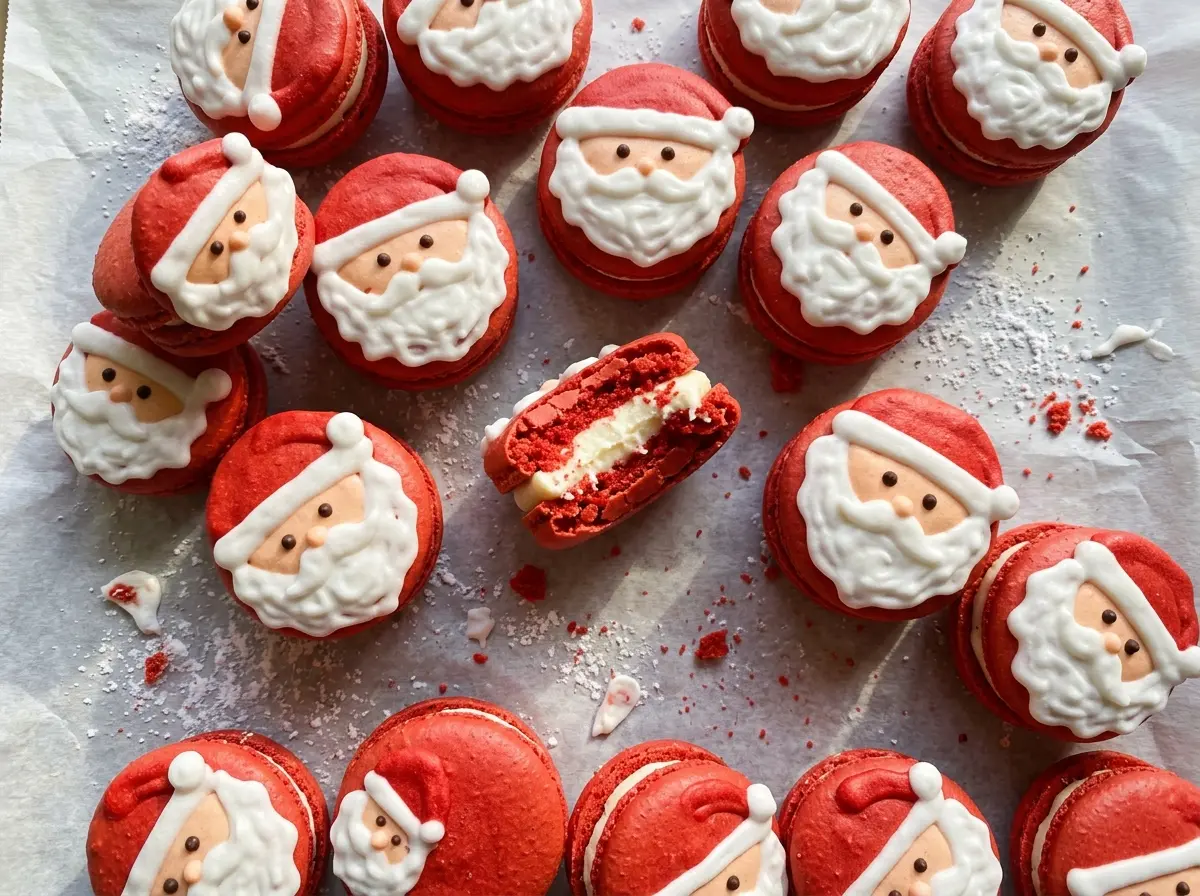
Save these Santa Claus macarons for a holiday bake: red shells, vanilla buttercream, and little chocolate-chip eyes.
Why These Macaron Shells Bake One Sheet at a Time
It’s tempting to put both prepared sheets in the oven together and get the baking done faster, but these shells bake one sheet at a time on the center rack. That keeps the baking setup consistent from one batch to the next, rather than asking the oven to heat two crowded pans at once. The sheet also gets rotated halfway through, which helps the shells bake more evenly.
Macarons are small, but their smooth tops and ruffled feet depend on steady baking. Keep the second sheet at room temperature while the first bakes; don’t slide it into the oven early just because the first pan looks close. The shells are ready when they’re set and don’t wobble under a gentle touch. If you take them out while they still move, their centers haven’t set enough to support the finished sandwich.
Cooling matters, too. Let the shells cool completely right on the parchment-lined baking sheets before peeling them away. A warm shell is delicate, and trying to lift it too soon can tear the bottom instead of releasing it cleanly.
What the Almond Flour, Meringue, and Gel Color Each Bring
- Almond flour — It gives the shells their characteristic tender, slightly chewy texture. Use a finely ground flour for a smoother batter; coarser almond meal won’t give you the same delicate finish. Sifting it with the confectioners’ sugar twice helps catch larger pieces before they reach the meringue.
- Egg whites and cream of tartar — Room-temperature whites whip more readily, and the cream of tartar helps stabilize the foam as it’s beaten. Use a clean, grease-free bowl; even a trace of fat can make it harder for the whites to build into glossy, stiff peaks.
- Granulated and confectioners’ sugar — Granulated sugar goes into the egg whites gradually to help build the meringue. The confectioners’ sugar is divided between the shells and buttercream, so measure it with that split in mind and sift the portion for the shells with the almond flour.
- Red gel food coloring — Gel adds color without the extra liquid that can loosen macaron batter. Liquid coloring isn’t a good direct swap here; it can change the batter consistency before the shells are piped.
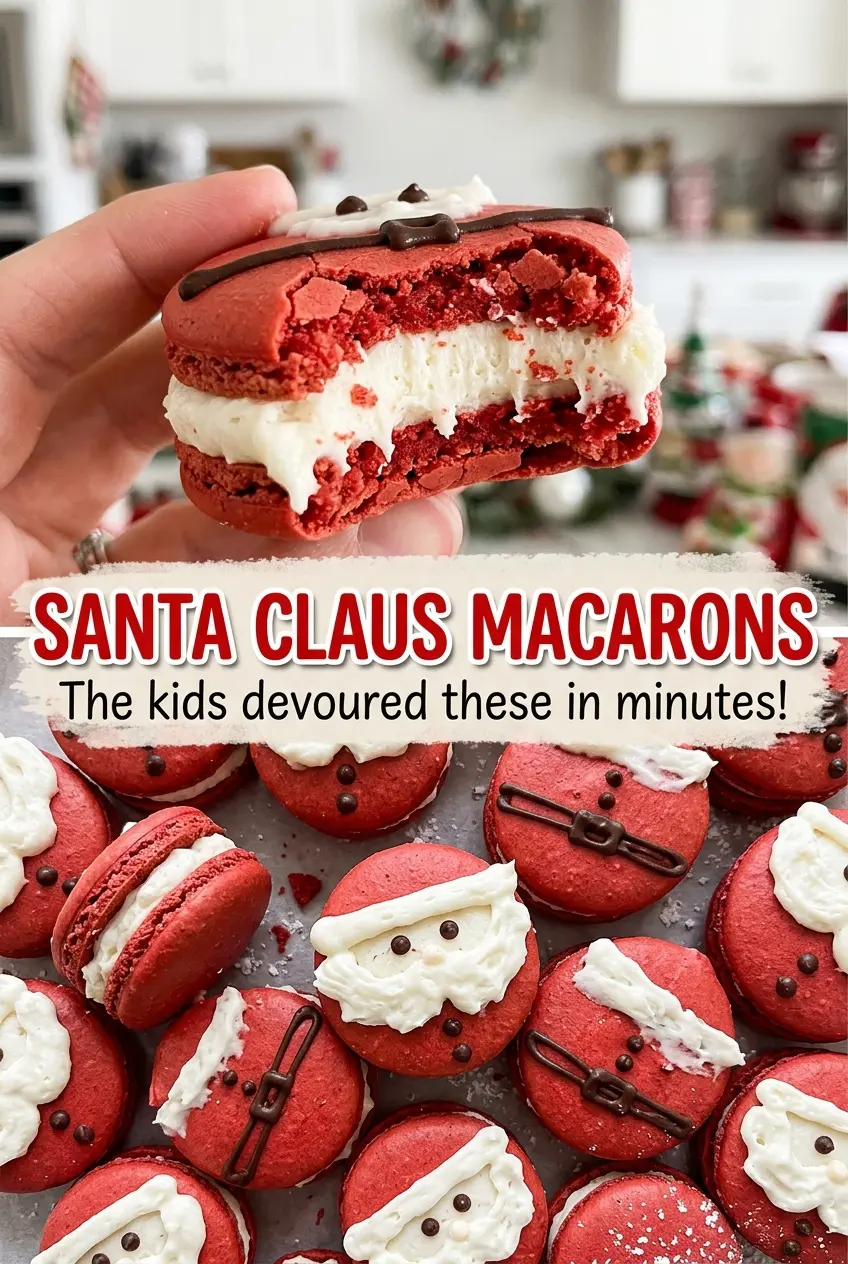
- Butter, cream, and vanilla — Softened unsalted butter makes a smooth base for the filling and decorations, while heavy cream loosens it to a pipeable texture. Vanilla gives the buttercream its familiar flavor. Choose butter you like the taste of, since it makes up most of the frosting.
- Chocolate chips and red candies — Mini semisweet chocolate chips make the eyes, and the red candy-coated chocolates become the noses. Their small size suits the scale of the piped Santa faces.
From Glossy Meringue to Finished Santa Faces
Sift the Shell Mixture Until It’s Fine
Line two 18×13-inch rimmed baking sheets with parchment and heat the oven to 300°F, with a rack in the center. Sift the almond flour and the shell portion of confectioners’ sugar into a bowl, then sift them together once more. That second pass catches coarse bits that might otherwise leave bumps on the shells. Set the mixture aside while you whip the egg whites.
Beat the Whites to Stiff, Glossy Peaks
Start the room-temperature egg whites in a clean, grease-free bowl on medium speed until foamy. Add the cream of tartar, then gradually beat in the granulated sugar. Increase the mixer to medium-high and beat for 5–7 minutes, until the peaks stand stiff and look glossy rather than wet or slumped. Beat in the red gel coloring at the end.
Fold, Pipe, and Tap Out Air Bubbles
Fold the dry mixture into the meringue in three additions, scraping around the bowl as you go. Stop when the batter falls in a thick ribbon and the trail merges back in about 10–15 seconds; a batter that stays piled up needs more folding, while one that runs flat has gone too far. Transfer it to a piping bag fitted with a 1/2-inch round tip and pipe 1 1/2-inch rounds about 1 inch apart. Tap each sheet firmly on the counter and pop any visible bubbles with a toothpick.
Let the Tops Dry, Then Bake Until Set
Leave the piped shells at room temperature for 30–60 minutes, until the surfaces feel dry and aren’t tacky when lightly touched. Bake one sheet at a time on the center rack for 15–18 minutes, rotating the sheet halfway through. The shells should feel set and not wobble when gently touched. Cool them completely on the baking sheets before carefully peeling them off the parchment.
Fill, Decorate, and Chill the Macarons
Beat the softened butter on medium speed until smooth and fluffy, about 2 minutes. Add the remaining confectioners’ sugar, heavy cream, vanilla, and salt; beat on low until combined, then on medium-high until fluffy, about 2 minutes. Pair the shells by size, pipe buttercream onto the flat side of half, and sandwich with the rest, pressing gently until the filling reaches the edges. Use the remaining buttercream to pipe a beard, mustache, hat brim, and pompom on each macaron; add two chocolate chips for eyes and one red candy for the nose, then refrigerate the macarons in a single layer in an airtight container for 12–24 hours and bring them to room temperature for 20 minutes before serving.
Small Changes That Still Keep the Santa Macarons in Shape
Make the Shells Without Red Coloring
Leave out the red gel food coloring for pale shells, keeping the rest of the shell method the same. The Santa details will still show against the light background, though you’ll lose the classic red-and-white look.
Make the Buttercream Dairy-Free
Replace the butter with firm stick-style dairy-free butter and the heavy cream with unsweetened oat cream, using the same amounts. The buttercream may be a little softer, so choose a stick-style butter rather than a tub spread. The shells still contain egg whites and almond flour, so this change makes the filling dairy-free, not the macarons vegan or nut-free.
Storage and Reheating
- Refrigerator: Store in an airtight container for up to 3 days. The shells soften a little as they sit with the buttercream.
- Freezer: Freeze assembled macarons in a single layer in an airtight container for up to 1 month. Thaw overnight in the refrigerator before opening the container.
- Reheating: Don’t reheat macarons. Let them sit at room temperature for 20 minutes before serving; warming them can soften the buttercream too much.
Questions That Come Up While Making Santa Claus Macarons
Santa Claus Macarons
Ingredients
Equipment
Method
- Line two 18x13-inch rimmed baking sheets with parchment paper and set them aside.
- Preheat the oven to 300°F with a rack in the center.
- Sift the almond flour and 1 1/4 cups confectioners' sugar into a bowl, then sift them together once more.
- In a clean, grease-free bowl, beat the egg whites on medium speed until foamy.
- Add the cream of tartar and gradually beat in the granulated sugar.
- Increase to medium-high and beat until stiff, glossy peaks form, 5–7 minutes.
- Beat in the red gel food coloring.
- Fold the dry mixture into the meringue in three additions until the batter falls in a thick ribbon and its trail merges back in about 10–15 seconds.
- Transfer the batter to a piping bag fitted with a 1/2-inch round tip and pipe 1 1/2-inch rounds about 1 inch apart on the prepared sheets.
- Tap each sheet firmly on the counter and use a toothpick to pop any visible air bubbles.
- Let the piped shells stand at room temperature for 30–60 minutes, until their surfaces feel dry and are not tacky when lightly touched.
- Bake one sheet at a time on the center rack for 15–18 minutes, rotating the sheet halfway through, until the shells are set and do not wobble when gently touched.
- Cool the shells completely on the baking sheets before carefully peeling them off the parchment.
- Beat the butter in a bowl on medium speed until smooth and fluffy, about 2 minutes.
- Add the remaining 2 cups confectioners' sugar, heavy cream, vanilla extract, and salt.
- Beat on low until combined, then on medium-high until fluffy, about 2 minutes.
- Pair the shells by size.
- Pipe buttercream onto the flat side of half of the shells.
- Sandwich with the remaining shells, pressing gently until the filling reaches the edges.
- Pipe a white beard, mustache, hat brim, and pompom on each macaron with the remaining buttercream.
- Press two chocolate chips in as eyes and one red candy in as the nose.
- Arrange the macarons in a single layer in an airtight container and refrigerate for 12–24 hours.
- Bring the macarons to room temperature for 20 minutes before serving.


