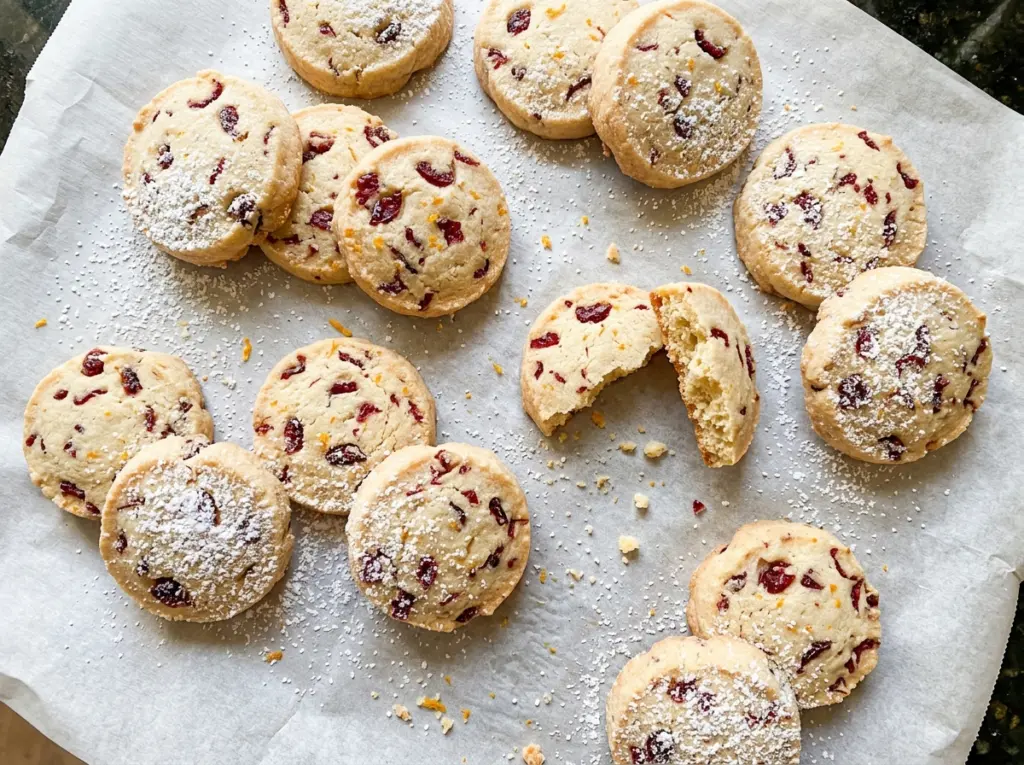
A sharp knife tells you whether shortbread dough has chilled long enough: a firm log cuts into a neat round, while a soft center smears against the blade. I wait until the whole log feels firm before reaching for the baking sheet. These cranberry orange shortbread cookies bake up with crisp, lightly golden edges and a tender, buttery middle.
Finely grated orange zest brings its fragrant oils into every bite, while finely chopped dried cranberries add little bursts of tartness without making the dough wet. The powdered sugar keeps the crumb delicate, and the vanilla rounds out the bright citrus so it doesn’t take over.
Once the logs are shaped, the refrigerator does most of the work. You’ll have tidy slices ready to bake in batches, with the remaining dough staying chilled while the first cookies turn golden at the edges.

Kitchen Note
Wait until the center of each log feels firm before slicing. If the knife presses into a soft middle, the rounds can lose their shape before they even reach the oven.
Save these cranberry orange shortbread cookies for a buttery, citrusy slice-and-bake treat with tart cranberry in every bite.
Why Mixing Shortbread Dough Past the Flour Stage Makes It Tough
Shortbread has a short ingredient list, so it’s easy to assume the mixing doesn’t matter much. It does. Once flour is added, continued mixing develops gluten, which can turn a tender cookie firm and chewy. The dough should come together on low speed, not become elastic or smooth like bread dough.
I beat the softened butter and powdered sugar until smooth and creamy first. That gives the dough an even base before the flour goes in. After adding flour, stop as soon as you no longer see loose dry patches; a few small crumbs around the bowl are easier to work in than an overmixed dough.
Then stir in the finely chopped cranberries rather than running the mixer for a long time. The pieces distribute through the dough without needing extra mixing, and the finished cookies keep their delicate shortbread texture. If you keep mixing until the dough looks polished, you’ve gone further than this dough needs.
What Orange Zest and Dried Cranberries Each Bring to These Cookies

- Unsalted butter — Butter supplies the rich flavor and tender texture that define shortbread. Use it softened so it blends smoothly with the powdered sugar; melted butter won’t give you the same creamed base. I stick with unsalted butter so the kosher salt stays in balance.
- Powdered sugar — Its fine texture blends into the butter without the grit that granulated sugar can leave behind. I wouldn’t swap in granulated sugar here; the crumb would be less delicate.
- Orange zest — Finely grated zest carries the orange aroma without adding juice or extra moisture. A fine grater gives you small pieces that spread evenly through the dough. If you want a simpler cranberry shortbread, you can leave the zest out.
- Dried cranberries — Dried fruit adds concentrated tartness without loosening the dough. Chop it finely so the pieces don’t interrupt clean slices; if you’re out, leaving it out makes a plain orange shortbread rather than a dough that needs a replacement.
- All-purpose flour — This gives the cookies enough structure to hold their round shape. Measure it carefully and mix only until the dough comes together; adding extra flour to a sticky-looking bowl can make the baked cookies dry.
- Vanilla and kosher salt — Vanilla softens the sharper citrus and fruit notes, while salt keeps the buttery dough from tasting flat. I keep both in the mix; neither needs a special brand to do its job.
From Creamy Butter to Neat, Golden-Edged Rounds
Cream the Butter and Sugar Until Smooth
Beat the softened butter and powdered sugar in a large bowl with an electric mixer on medium speed for about 2 minutes. Stop when the mixture looks smooth and creamy, with no visible pockets of butter. If the butter is still too firm, it won’t blend evenly, so let it soften before you start. This stage gives the shortbread a consistent base without needing to whip it until fluffy.
Add the Flavor, Then Bring the Dough Together
Mix in the vanilla, orange zest, and kosher salt. Add the flour and mix on low just until the dough comes together; stop when the loose flour has disappeared rather than waiting for the dough to form a perfectly smooth ball in the bowl. Stir in the finely chopped cranberries so they’re spread throughout. If a few pieces sit near the bottom, scrape the bowl and fold them in gently.
Shape and Chill the Logs
Divide the dough in half and shape each portion into a log about 1 1/2 inches in diameter. Wrap each log and refrigerate until firm, at least 1 hour. Aim for logs that are even in thickness from end to end, since uneven sections bake at different rates. A firm log also makes it much easier to cut rounds that hold their shape.
Slice, Bake, and Cool in Two Stages
Heat the oven to 350°F and line an 18×13-inch baking sheet with parchment paper. Slice the chilled logs into 1/4-inch-thick rounds, arrange them about 1 inch apart, and bake in batches, keeping the remaining dough chilled. Bake each batch for 12 to 15 minutes, until the edges are lightly golden; the centers should stay pale. Let the cookies cool on the baking sheet for 5 minutes, then move them to a wire rack to cool completely.
Two Easy Ways to Adjust the Cranberry-Orange Balance
Make them orange shortbread without the cranberries
Leave out the dried cranberries and keep the orange zest. The dough will be simpler and more citrus-forward, with an uninterrupted buttery crumb. There’s no replacement ingredient to add, and the same slice-and-bake method works.
Let the cranberries lead
Omit the orange zest for a more direct buttery-and-tart cookie. The cranberries still bring little tangy bites, but you’ll lose the aromatic citrus note. Keep the other ingredients and the shaping method the same.
Storage and Reheating
- Refrigerator: Refrigeration isn’t needed; keep completely cooled cookies airtight at room temperature for up to 1 week. The refrigerator firms the butter and can make the tender cookies feel harder.
- Freezer: Freeze fully cooled cookies in an airtight container with parchment between layers for up to 2 months. Thaw them at room temperature before serving.
- Reheating: These cookies are best at room temperature and don’t need reheating. Avoid microwaving them, which can soften the shortbread unevenly.
Questions That Come Up When Baking Cranberry Orange Shortbread
Cranberry Orange Shortbread Cookies
Ingredients
Equipment
Method
- In a large bowl, beat the softened butter and powdered sugar with an electric mixer on medium speed until smooth and creamy, about 2 minutes.
- Mix in the vanilla, orange zest, and salt.
- Add the flour and mix on low just until the dough comes together; stir in the cranberries.
- Divide the dough in half and shape each portion into a log about 1 1/2 inches in diameter; wrap and refrigerate until firm, at least 1 hour.
- Heat the oven to 350°F.
- Line an 18x13-inch baking sheet with parchment paper.
- Slice the logs into 1/4-inch-thick rounds and arrange them about 1 inch apart on the prepared baking sheet.
- Bake in batches, keeping the remaining dough chilled, for 12 to 15 minutes, until the edges are lightly golden.
- Cool the cookies on the baking sheet for 5 minutes, then transfer them to a wire rack to cool completely.


