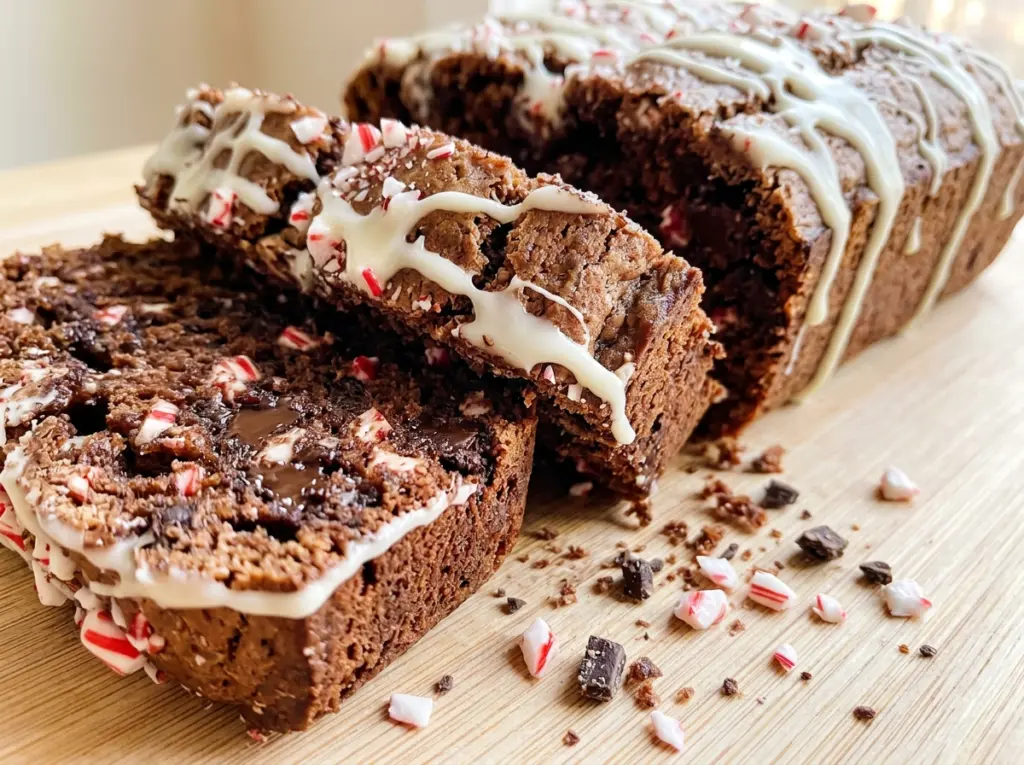
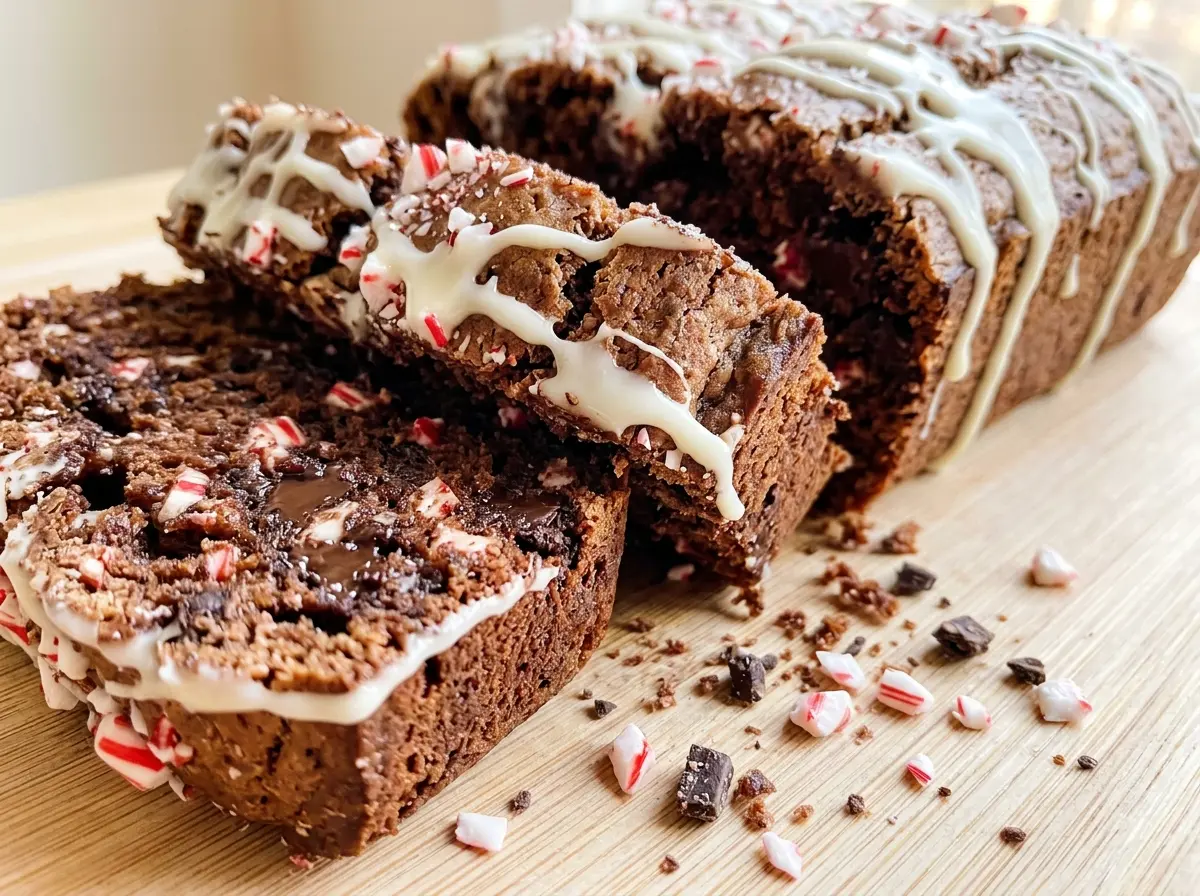
At the first cut, the white chocolate gives a little crack before the knife reaches the dark, tender crumb. That contrast is what I want from Peppermint Bark Bread: cocoa-rich chocolate bread with a hint of peppermint, finished with crushed candy canes and a thin semisweet chocolate drizzle. The mint comes through clearly, but it doesn’t drown out the chocolate.
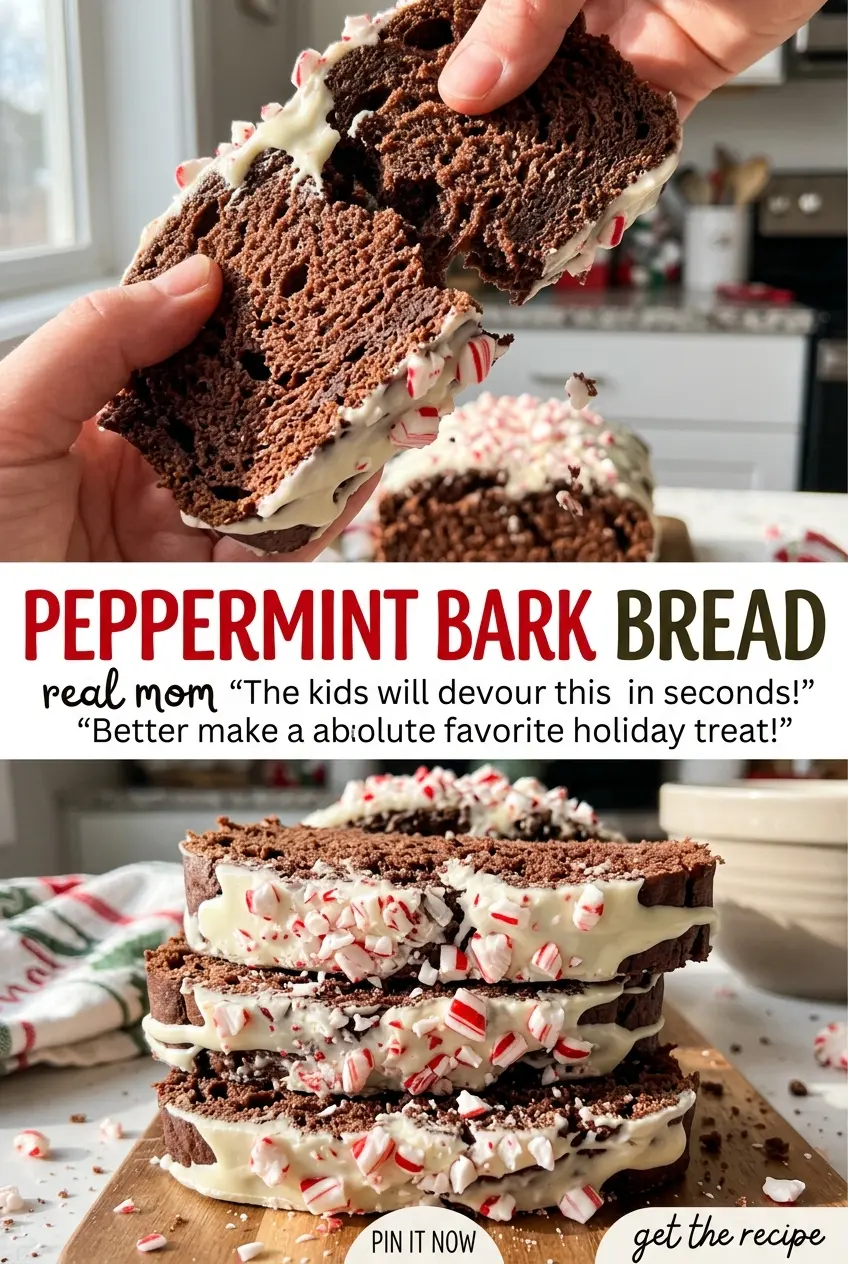
I mix the loaf batter in two bowls, then stir the dry ingredients into the wet just until they disappear. The topping is what gives this bread its peppermint bark look: a smooth white chocolate layer, candy cane pieces scattered over it, and dark chocolate drizzled across the top. Once the loaf is sliced, you get a little of each in every piece, with a soft crumb under the crisp candy.
Kitchen Note
Crush the candy canes into small pieces rather than leaving big shards. They spread more evenly over the white chocolate and give each slice a pleasant crunch instead of one hard bite.
Save this Peppermint Bark Bread for a chocolate-and-mint bake with a crisp candy cane finish and a smooth white chocolate top.
Why the Peppermint Bark Has to Wait for a Fully Cooled Loaf
A loaf can feel cool at the edges while its center is still holding warmth. Spread white chocolate over that warmth and it softens as soon as it lands, making the layer more likely to slide or turn thin in places. Letting the bread cool completely gives you a firm surface for an even coat and keeps the topping distinct from the tender crumb.
There are two textures to protect here. The bread should stay soft, while the candy cane pieces sit on top of the white chocolate rather than sinking into a warm surface. Spread the white chocolate only after the loaf is fully cool, then scatter the candy canes right away, while the chocolate is still tacky. The semisweet drizzle goes on after that, so it can sit in fine ribbons across the white layer instead of disappearing into it. Give the finished topping time to set before you slice, and the bark-like finish stays neat on the loaf.
What Cocoa, Buttermilk, and Oil Bring to This Chocolate Peppermint Loaf
- Natural cocoa powder — It gives the loaf its deep chocolate flavor without adding the sweetness of a chocolate bar. Keep natural cocoa here; Dutch-process cocoa has a different acidity and can change how the baking soda performs.
- Buttermilk — Its tang balances the sugar, and its acidity works with the baking soda to help the loaf rise. Regular milk doesn’t bring the same acidity, so it isn’t a like-for-like swap in this batter.
- Neutral oil — Oil keeps the crumb tender and lets the cocoa and peppermint stay in front. Choose one without a strong flavor; a strongly flavored oil would show through the chocolate.
- Peppermint extract — This is the mint running through the bread itself, not just the topping. Use peppermint extract rather than peppermint oil, which is much more concentrated and isn’t a direct swap.
- White chocolate — Chopped white chocolate melts into the smooth base of the bark topping. A good-quality bar is worth choosing here because the topping’s texture depends on getting it melted and spreadable.
- Crushed candy canes — They add both peppermint flavor and the crisp finish that makes the top read as bark. Crush them into small pieces so the topping is easier to slice and eat.
- Semisweet chocolate — The small amount used for the drizzle gives a darker, less-sweet contrast to the white chocolate. Chopping it helps it melt evenly in short microwave bursts.
Building the Loaf and Setting the Bark Topping
Whisk the Dry and Wet Mixtures Separately
Heat the oven to 350°F and grease a 9×5-inch loaf pan. In a medium bowl, whisk together the flour, natural cocoa powder, baking powder, baking soda, and kosher salt until the cocoa is evenly distributed. In a large bowl, whisk the granulated sugar, eggs, buttermilk, neutral oil, vanilla extract, and peppermint extract until smooth. Keeping the two mixtures separate until this point makes it easier to distribute the leaveners through the flour.
Mix Just Until the Flour Disappears
Add the flour mixture to the egg mixture and stir until no dry streaks remain. The batter will be thick and chocolate-colored; stop there rather than continuing to beat it smooth. Scrape it into the greased pan and smooth the top. Overmixing after the flour goes in can make a quick bread tougher than it needs to be.
Bake, Then Cool the Bread Completely
Bake for 55 to 65 minutes. Test the center with a toothpick: it should come out with a few moist crumbs and no wet batter. Cool the bread in the pan for 15 minutes, then remove it and let it cool completely on a wire rack. Don’t spread the topping while the loaf is still warm.
Melt and Layer the Peppermint Bark
Put the chopped white chocolate and neutral oil in a heatproof bowl, then microwave in 15-second bursts, stirring between each, until smooth. Spread it over the cooled loaf and immediately sprinkle on the crushed candy canes. In a clean heatproof bowl, microwave the chopped semisweet chocolate in 15-second bursts, stirring between each, until smooth, then drizzle it over the top. Let the topping set for 20 to 30 minutes before slicing.
Three Ways to Adjust the Peppermint Bark Bread
Make It Gluten-Free
Replace the all-purpose flour with the same amount of a cup-for-cup gluten-free baking blend that includes a binder such as xanthan gum. The chocolate flavor and topping stay the same, though the crumb may be a little more delicate, so handle the loaf gently when you remove it from the pan.
Keep the Peppermint Milder
Leave the peppermint extract out of the batter for a subtler mint note. The candy canes still bring peppermint to the topping, while the chocolate bread itself tastes more cocoa-forward.
Skip the Candy Cane Pieces
Leave off the crushed candy canes for a smoother white-and-dark chocolate finish. You’ll lose the crisp texture and some of the peppermint sweetness on top, but the peppermint extract will still flavor the loaf.
Storage and Reheating
- Refrigerator: Keep the loaf in an airtight container for up to 5 days. The chilled crumb will feel firmer, so let slices come back to room temperature for a softer texture.
- Freezer: Freeze the fully cooled loaf, tightly wrapped, for up to 2 months. The candy cane pieces may soften a little after thawing, but the bread and chocolate topping freeze well.
- Reheating: This bread is best served at room temperature rather than reheated. A microwave can melt the chocolate topping before the center of a slice warms through.
Questions That Come Up When Baking Peppermint Bark Bread
Peppermint Bark Bread
Ingredients
Equipment
Method
- Preheat the oven to 350°F.
- Grease a 9x5-inch loaf pan.
- In a medium bowl, whisk together the flour, cocoa powder, baking powder, baking soda, and salt.
- In a large bowl, whisk together the sugar, eggs, buttermilk, oil, vanilla extract, and peppermint extract until smooth.
- Add the flour mixture to the egg mixture and stir just until no dry streaks remain.
- Scrape the batter into the prepared pan.
- Smooth the top.
- Bake for 55 to 65 minutes, until a toothpick inserted in the center comes out with a few moist crumbs and no wet batter.
- Cool the bread in the pan for 15 minutes.
- Remove the bread from the pan and cool completely on a wire rack.
- Microwave the white chocolate and oil in a heatproof bowl in 15-second bursts, stirring between each, until smooth.
- Spread the white chocolate over the cooled bread.
- Immediately sprinkle with the crushed candy canes.
- Microwave the semisweet chocolate in a clean heatproof bowl in 15-second bursts, stirring between each, until smooth.
- Drizzle the semisweet chocolate over the topping.
- Let the topping set for 20 to 30 minutes before slicing.