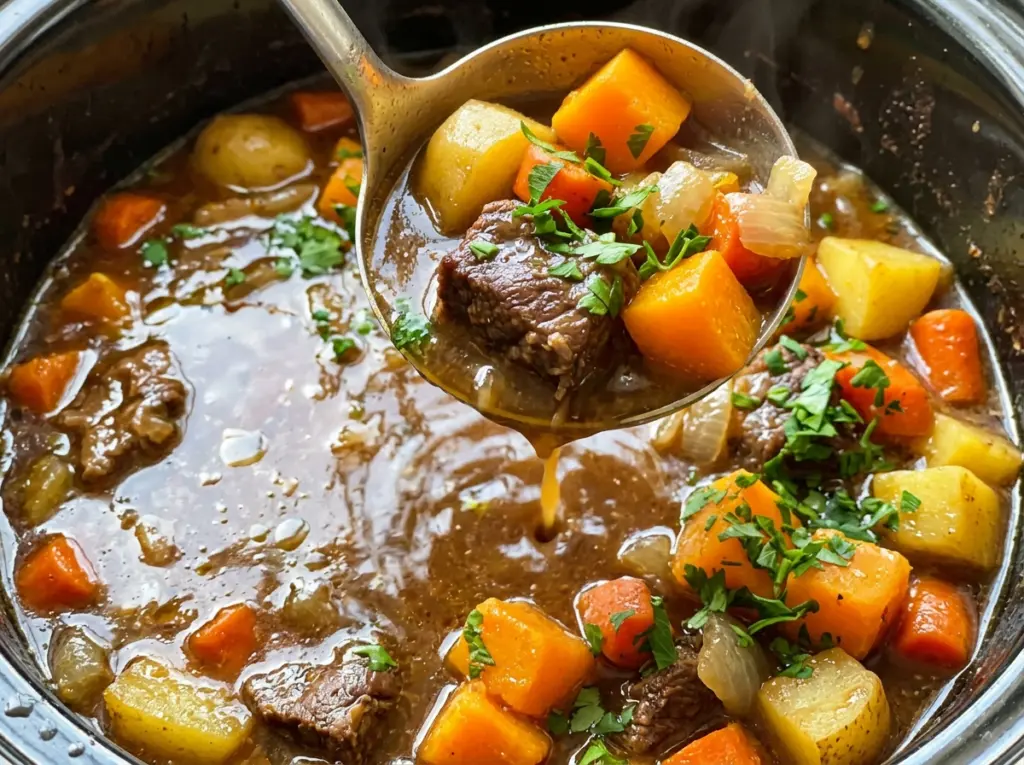
The first thing you notice when you lift the lid is how the beef has turned the broth dark and savory, while the carrots and potatoes have softened around it. I brown the chuck before it goes into the slow cooker, then build the broth in the same skillet so those browned bits don’t get left behind. It takes a little attention up front, but the hands-off cooking afterward makes this slow cooker beef stew with butternut squash an especially satisfying dinner to come back to.
Butternut squash needs a shorter cooking window than the beef and potatoes. I add it after those have had a head start, which gives the squash time to become tender without disappearing into the broth. Cut the vegetables into even pieces, and you’ll get a stew with fork-tender beef, soft potatoes, and squash that still holds its shape in the bowl.
Kitchen Note
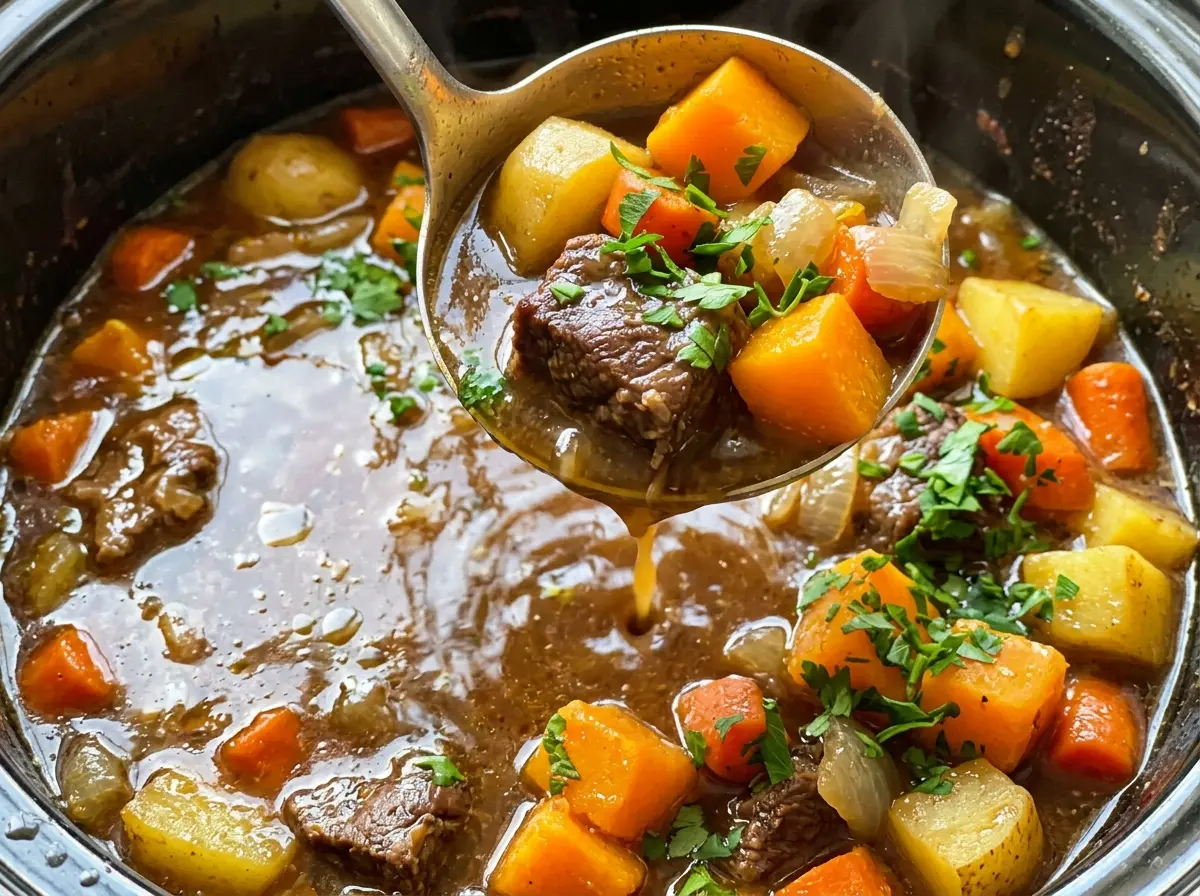
Give the finished stew its full 10 minutes uncovered before serving. The broth settles a little as the steam escapes, and it’s easier to ladle without splashing while it’s piping hot.
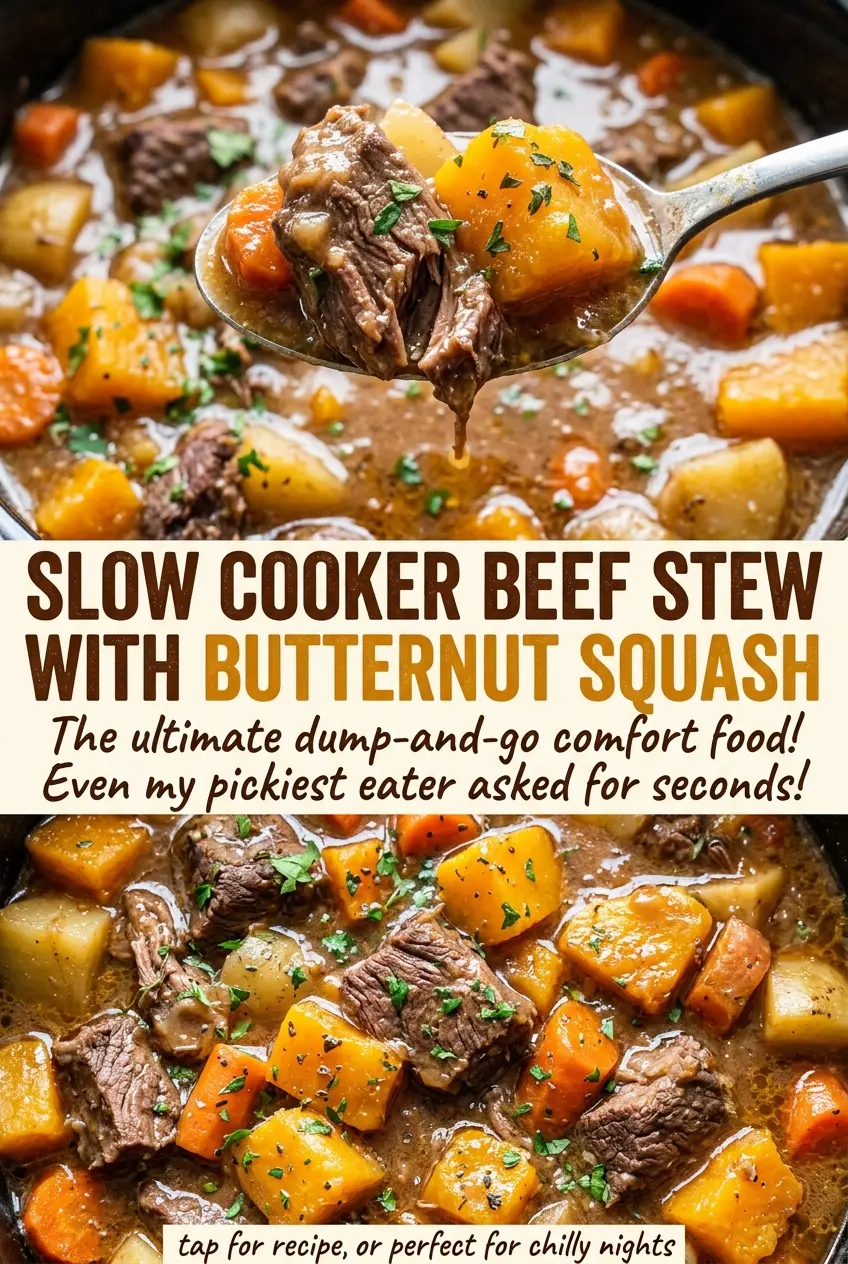
Save this slow cooker beef stew with butternut squash for a cozy dinner with fork-tender beef and squash that keeps its shape.
Why the Butternut Squash Goes in After the Beef Has a Head Start
Squash and beef don’t become tender on the same schedule. The chuck needs several hours in the slow cooker before its connective tissue softens; the squash, cut into 1-inch pieces, needs less time. Adding everything at the beginning may leave you with squash that’s too soft by the time the beef is ready.
Instead, the carrots and Yukon Gold potatoes cook with the broth while the beef starts to tenderize. Once the beef is beginning to give under a fork, stir in the squash and let the stew finish cooking. That second window is long enough for the squash to turn tender, but short enough to help it stay in pieces rather than blending into the broth.
Use the texture—not just the clock—as your final cue. Slow cookers and the size of your beef cubes can affect when the meat reaches that fork-tender point. The first cooking window gets you close; the second brings the beef and squash to the finish together.
What the Chuck, Squash, and Potatoes Each Bring to the Pot
- Beef chuck — Chuck has enough connective tissue to become tender during a long, moist cook, and its rich flavor gives the broth a substantial base. Trim away large hard pieces of fat, then cut the roast into evenly sized cubes so they cook at a similar pace. Boneless short ribs can work in its place, though they’ll bring more fat and a richer result.
- Butternut squash — Fresh squash gives the stew a gentle sweetness and a firm, creamy bite. Choose one that feels heavy for its size and has unblemished skin; pre-cut squash is fine if the pieces look fresh and are close to the same size. Sweet potato is a practical substitute, but it tastes sweeter and tends to soften more readily.
- Yukon Gold potatoes — Their creamy centers and relatively sturdy texture suit a slow-cooked stew. Red potatoes are the closest swap and hold their shape well; russets are starchier and more likely to break down into the broth.
- Tomato paste and beef broth — Tomato paste adds concentrated savory depth, while low-sodium broth lets the beef and Worcestershire come through without making the finished stew overly salty. A tube of tomato paste is convenient and keeps well refrigerated after opening; store-brand broth works just fine here.
- Worcestershire, thyme, and bay leaf — Worcestershire deepens the beefy, savory taste, while thyme and bay give the broth a restrained herbal note. Dried thyme is a good fit, and there’s no need to buy a specialty brand of Worcestershire; choose one you already like using in savory cooking.
- Flour — All-purpose flour helps give the broth a fuller, lightly thickened texture after it cooks with the tomato paste and liquid. If you need a gluten-free version, use the cornstarch method in the variations below rather than swapping in an unfamiliar flour blend.
Building the Broth Before the Slow Cooker Takes Over
Brown the Chuck in Manageable Batches
Season the beef with kosher salt and black pepper, then heat a tablespoon of vegetable oil in a 12-inch skillet over medium-high heat. Brown the cubes in batches, adding the remaining oil as needed, and transfer each batch to a 6-quart slow cooker. Give the pieces room in the pan; crowding makes it harder for their surfaces to brown. The browned edges are what give the finished broth a deeper, more roasted taste.
Soften the Aromatics and Cook the Flour
Reduce the skillet heat to medium, then cook the chopped onion and celery for 4 to 5 minutes, until softened. Add the minced garlic and cook for 30 seconds, just until fragrant. Stir in the flour and tomato paste and cook for 1 minute so the flour is incorporated and the paste darkens slightly. Keep stirring around the bottom of the pan so the mixture doesn’t catch.
Whisk Up the Broth and Start the Long Cook
Gradually whisk in the beef broth and Worcestershire, scraping up the browned bits as the liquid loosens them from the skillet. Stir in the thyme, then pour the mixture over the beef in the slow cooker. Add the bay leaf, carrots, and potatoes, and stir to combine. Cover and cook on LOW for 5 1/2 to 6 hours or HIGH for 2 1/2 to 3 hours, until the beef is beginning to become fork-tender.
Add the Squash for the Final Stretch
Stir in the butternut squash once the beef has had its first cooking window, then cover the slow cooker again. Cook on LOW for 1 1/2 to 2 hours or HIGH for 1 to 1 1/2 hours. Check that the beef is fork-tender and the squash gives easily when pierced but still holds its shape. Discard the bay leaf before serving.
Simple Changes for a Different Pot of Beef Stew
Make the stew gluten-free with cornstarch
Leave out the all-purpose flour. Before adding the broth, whisk 2 tablespoons cornstarch with 2 tablespoons of the cool broth until smooth, then whisk that slurry into the skillet with the remaining broth and Worcestershire. Use gluten-free beef broth and Worcestershire, too. The broth will thicken differently—more glossy than flour-thickened—but still makes a hearty stew.
Bring in a little heat
Stir 1/4 teaspoon red pepper flakes into the skillet with the dried thyme. The gentle heat will sit behind the beef and sweet squash rather than changing the stew into a fiery dish. Add more only if you already know you want a stronger kick.
Storage and Reheating
- Refrigerator: Store cooled leftovers in an airtight container for 3 to 4 days. The potatoes and squash will soften a little more as they sit.
- Freezer: Freeze in airtight, freezer-safe containers for up to 3 months for the best texture. The vegetables may be softer after thawing, but the stew remains a good make-ahead meal.
- Reheating: Warm on the stovetop over medium-low heat, stirring gently, or microwave in a covered microwave-safe dish and stir partway through. Reheat leftovers to 165°F; avoid a hard boil, which can break up the potatoes and squash.
Questions That Come Up When Making This Slow Cooker Stew
Slow Cooker Beef Stew with Butternut Squash
Ingredients
Equipment
Method
- Season the beef with the salt and pepper.
- Heat 1 tablespoon of the oil in a 12-inch skillet over medium-high heat and brown the beef in batches, adding the remaining oil as needed.
- Transfer the beef to a 6-quart slow cooker.
- Reduce the skillet heat to medium, add the onion and celery, and cook for 4 to 5 minutes until softened.
- Add the garlic and cook for 30 seconds.
- Stir in the flour and tomato paste and cook for 1 minute.
- Gradually whisk in the beef broth and Worcestershire sauce, scraping up the browned bits.
- Stir in the thyme, then pour the mixture into the slow cooker.
- Add the bay leaf, carrots, and potatoes and stir to combine.
- Cover and cook on LOW for 5 1/2 to 6 hours or HIGH for 2 1/2 to 3 hours, until the beef is beginning to become fork-tender.
- Stir in the butternut squash, cover, and cook on LOW for 1 1/2 to 2 hours or HIGH for 1 to 1 1/2 hours, until the beef is fork-tender and the squash is tender but holds its shape.
- Discard the bay leaf.
- Let the stew stand uncovered for 10 minutes before serving.