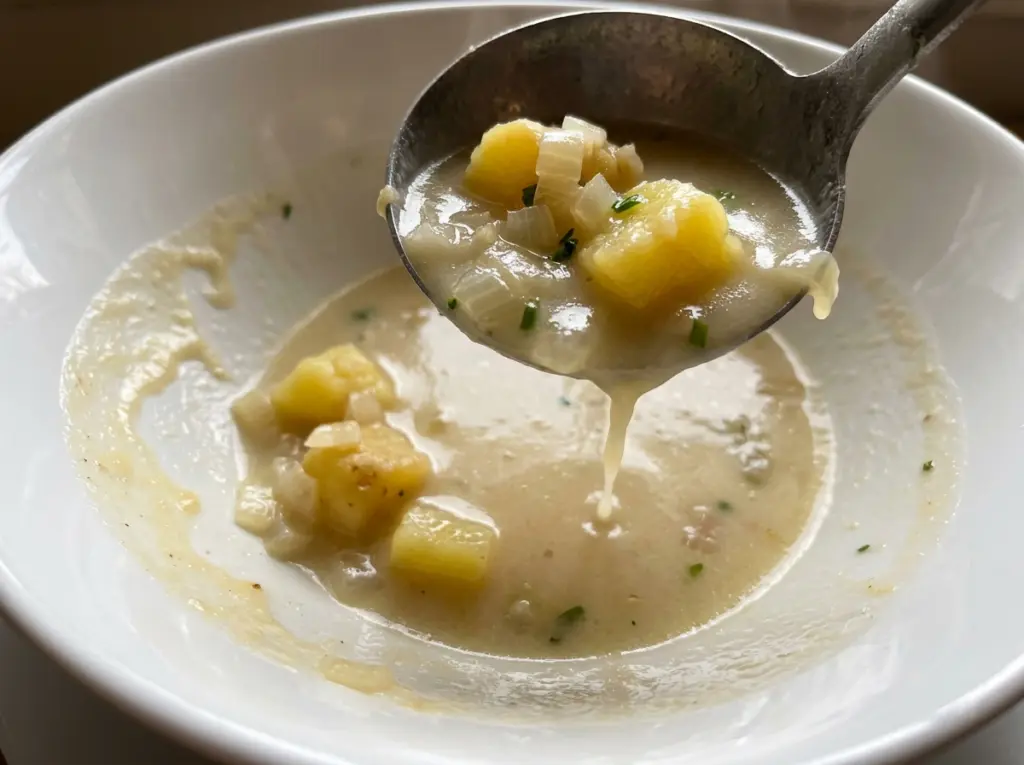
The potatoes soften and start to cloud the broth as they simmer, and that’s the first sign this soup is building its own thickness. I like that there’s no separate pan to wash and no flour-based thickener to fuss with. These potatoes cook right in the pot, then get mashed into the liquid for a bowl that’s hearty without being completely smooth.
Russets are a good fit because they turn tender and break down easily; the onion softens alongside them while the broth picks up their starch. I mash everything off the heat, then stir in whole milk and warm the soup gently. That last part matters: boiling after the milk goes in can spoil the soup’s smooth finish.
The result is a simple, cozy potato soup with soft onion, a little pepper, and enough small potato pieces to make each spoonful feel substantial.
Kitchen Note
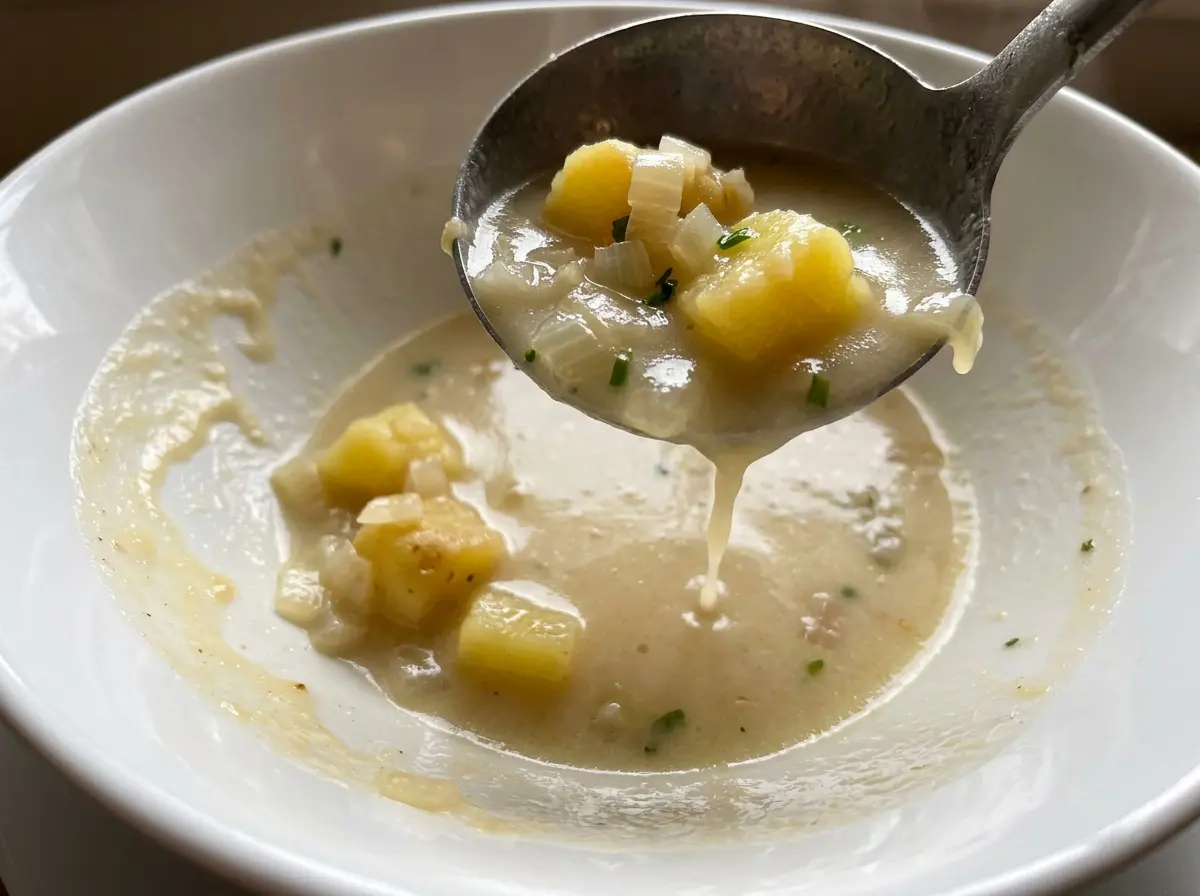
Don’t rely on the timer alone before you mash. A fork should slide into the potato cubes with almost no resistance; if you feel a firm center, give them more time in the simmering broth.
Save this 4 Ingredient Potato Soup for a cozy bowl with tender potato pieces and a broth that thickens as it cooks.
Why the Potatoes Cook Right in the Broth
Cooking the potatoes in the broth instead of boiling them separately keeps the starch they release right where you want it: in the soup. As the cubes soften, a little starch moves into the liquid. Mashing then brings that broth and the tender potato together, so the soup thickens without a roux or another thickener.
There’s a practical payoff, too. The onion has time to soften in the same pot, and the broth carries its flavor through the potatoes. Nothing gets drained away, and you don’t need to build a separate base before adding the vegetables. The finished soup is meant to be thick but still slightly chunky, not completely smooth or as heavy as a cream soup. If you expect a silky purée, you’ll be looking for a different texture; this one keeps small bits of potato in the bowl.
That balance depends on the order: simmer the potatoes in the seasoned broth, mash them there, and only then add the milk. The milk rounds out the broth without replacing the potato flavor that gives the soup its body.
Why Russets, Yellow Onion, and Whole Milk Matter Here

- Russet potatoes — Their starchy texture helps thicken the broth when you mash them. Choose firm potatoes without soft spots or green patches. Yukon Golds can work, but they hold their shape more and won’t give the soup quite the same thick, fluffy texture.
- Yellow onion — It mellows as it simmers and gives the broth a savory, gently sweet base. A firm onion is all you need; there’s no reason to seek out a specialty variety. Dice it evenly so the pieces soften during the same simmer as the potatoes.
- Low-sodium chicken broth — It supplies the cooking liquid and savory flavor, while its lower salt level leaves room for the soup’s seasoning. Broths vary by brand, so taste the finished soup before serving if you’re unsure about the seasoning.
- Whole milk — Whole milk gives the soup a rounder, softer finish than a thinner milk would. Stir it in after mashing rather than simmering it from the start, and keep the heat low once it’s in the pot.
- Salt and black pepper — The salt seasons the potatoes as they cook, and black pepper gives the mild broth a little warmth. The low-sodium broth makes the salt easier to control.
Three Stages for Thick, Slightly Chunky Potato Soup
Simmer the Potatoes and Onion Until Soft
Put the cubed potatoes, diced onion, chicken broth, salt, and pepper in a 4-quart pot. Bring the mixture to a boil over medium-high heat, then lower the heat and simmer uncovered for 20 to 25 minutes. Keep the simmer steady rather than letting the pot boil hard; the cubes should soften throughout while the onion loses its raw bite. Cut the potatoes into even half-inch pieces so they cook at about the same pace.
Mash in the Pot, Not in a Separate Bowl
Take the pot off the heat before mashing. Use a potato masher directly in the broth, pressing until the soup thickens but still has a few small potato pieces. A few deliberate presses are enough to break down the tender cubes; don’t keep mashing just because the surface isn’t perfectly smooth. The soup should look creamy and substantial, with visible bits rather than a uniform purée.
Warm the Milk Without Boiling
Stir the whole milk into the mashed potato mixture, then set the pot over low heat for 2 to 3 minutes. Stir often so the milk warms evenly through the thick soup. Watch for gentle steam, not bubbling; boiling can give the milk a cooked taste and compromise the smooth texture. Take the pot off the heat once the soup is warmed through.
Texture Tweaks and a Vegetarian Adaptation
Make It Vegetarian with Vegetable Broth
Replace the chicken broth with the same amount of low-sodium vegetable broth. The soup stays hearty, though its savory base will taste a little different; keep the rest of the ingredients and method the same.
Leave It Extra Chunky
For larger pieces of potato, use fewer presses with the masher and stop as soon as the broth thickens. You’ll get a more rustic spoonful, with clearer potato pieces and a less uniform texture.
Make the Texture More Even
Mash the potatoes a little more thoroughly with the potato masher for a smoother, thicker spoonful. It will still have a homemade texture, but fewer distinct pieces than the lightly mashed version.
Storage and Reheating
- Refrigerator: Refrigerate leftovers in a covered container within 2 hours and use them within 3 to 4 days. The soup will thicken as it sits.
- Freezer: Freeze in airtight containers for up to 2 months. The potatoes may turn a little grainy after thawing, so the texture won’t be quite as smooth as freshly made.
- Reheating: Warm it gently in a saucepan over low heat, stirring often, until it reaches 165°F. Avoid a hard boil, which can make the milk taste cooked and the texture less pleasant.
Questions That Come Up with This Potato Soup
4 Ingredient Potato Soup
Ingredients
Method
- Combine the potatoes, onion, chicken broth, salt, and pepper in a 4-quart pot.
- Bring to a boil over medium-high heat.
- Reduce the heat and simmer uncovered for 20 to 25 minutes, until the potatoes are very tender when pierced with a fork.
- Remove the pot from the heat.
- Mash the potatoes in the broth with a potato masher until the soup is thick but still slightly chunky.
- Stir in the milk.
- Warm the soup over low heat for 2 to 3 minutes, stirring often; do not let it boil.


