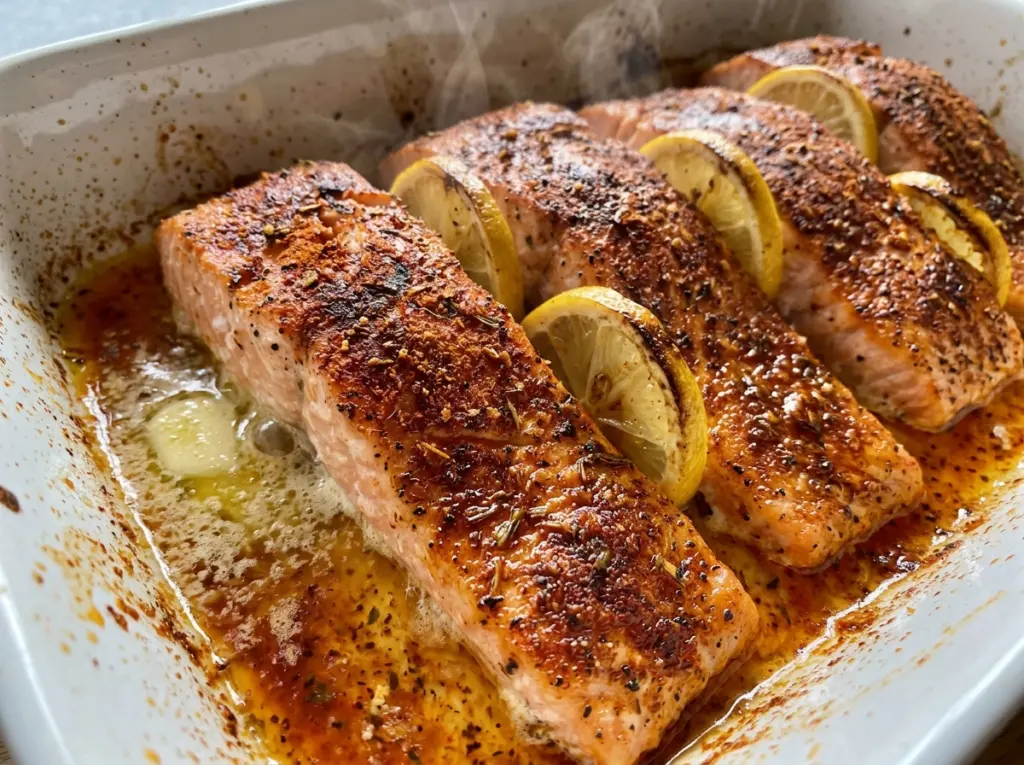
When salmon comes out of the oven with a dry rim and a center that still needs time, the fillets may not be the same thickness. I keep these Cajun baked salmon portions close to an inch thick so they cook evenly, with a boldly seasoned top and tender flakes underneath. The skin stays on while the fish bakes, which makes the fillets easier to handle on the parchment-lined pan.
I drizzle the salmon with olive oil before rubbing on the Cajun seasoning; it helps the seasoning coat the surface instead of scattering across the pan. A squeeze from the lemon wedges cuts through the seasoning’s warmth without hiding the salmon. The result is a straightforward dinner with a savory, spicy top, moist flakes, and bright lemon on the side.
Kitchen Note
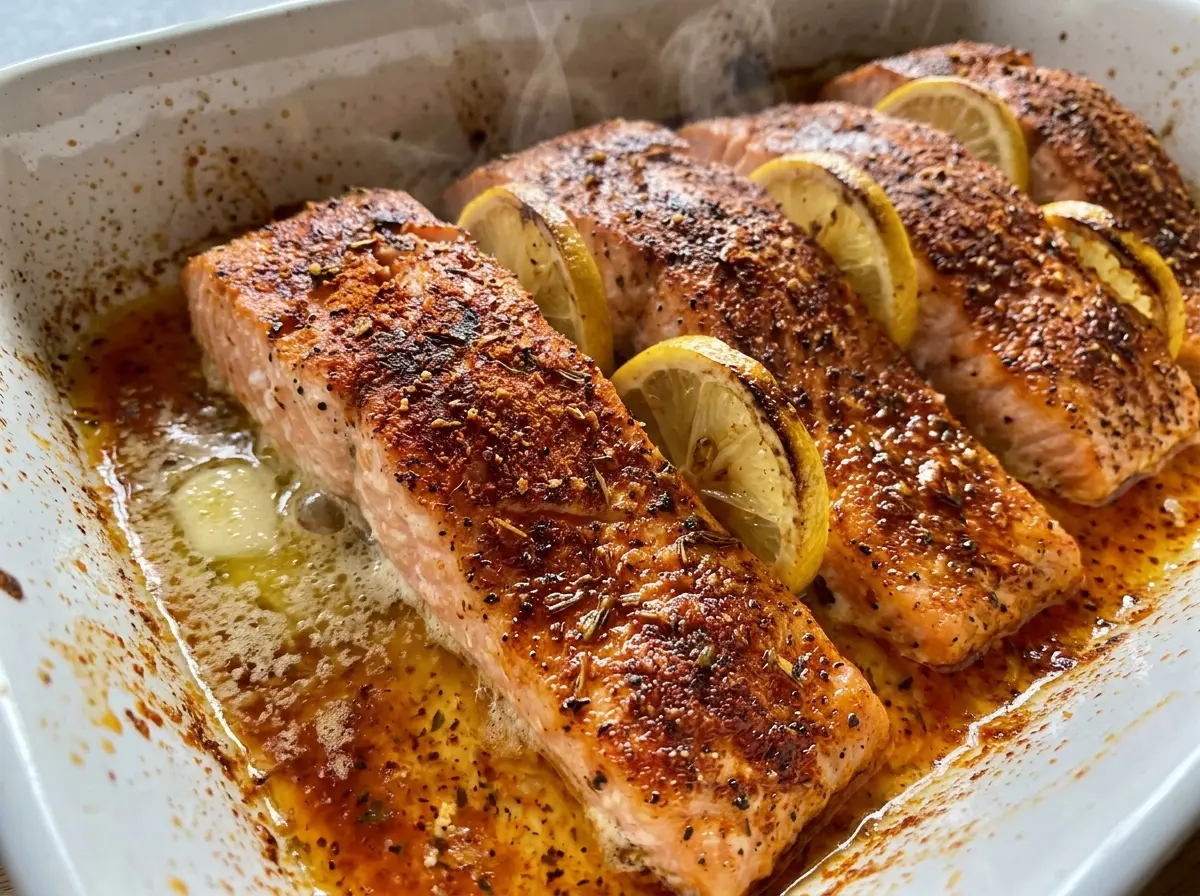
Let the salmon rest before you lift it from the pan or break it into flakes. Those three minutes give the juices time to settle, and the fillets are less likely to fall apart when you serve them.
Save this Cajun baked salmon for a weeknight dinner with a spicy, seasoned top and lemony finish.
Why the Thickest Part, Not the Clock, Tells You When Salmon Is Ready
Oven time gives you a useful window, but it can’t tell you whether every piece of fish has reached the same doneness. Even fillets cut to about an inch can vary a little in shape, and the narrow end will cook sooner than the thick center. Checking the thickest part keeps a thin edge from deciding when the whole fillet comes out.
Use an instant-read thermometer in the thickest part of a fillet and look for 145°F. The fish should also flake easily with a fork. Think of those checks together: the thermometer gives you a clear target, while the flakes tell you what the texture is doing. If the narrow end looks ready first, don’t judge the center by it. This small check is especially helpful when you’re baking all four portions on one sheet and want each serving tender rather than relying on color alone.
Why Skin-On Salmon, Olive Oil, and Cajun Seasoning Work So Well Together
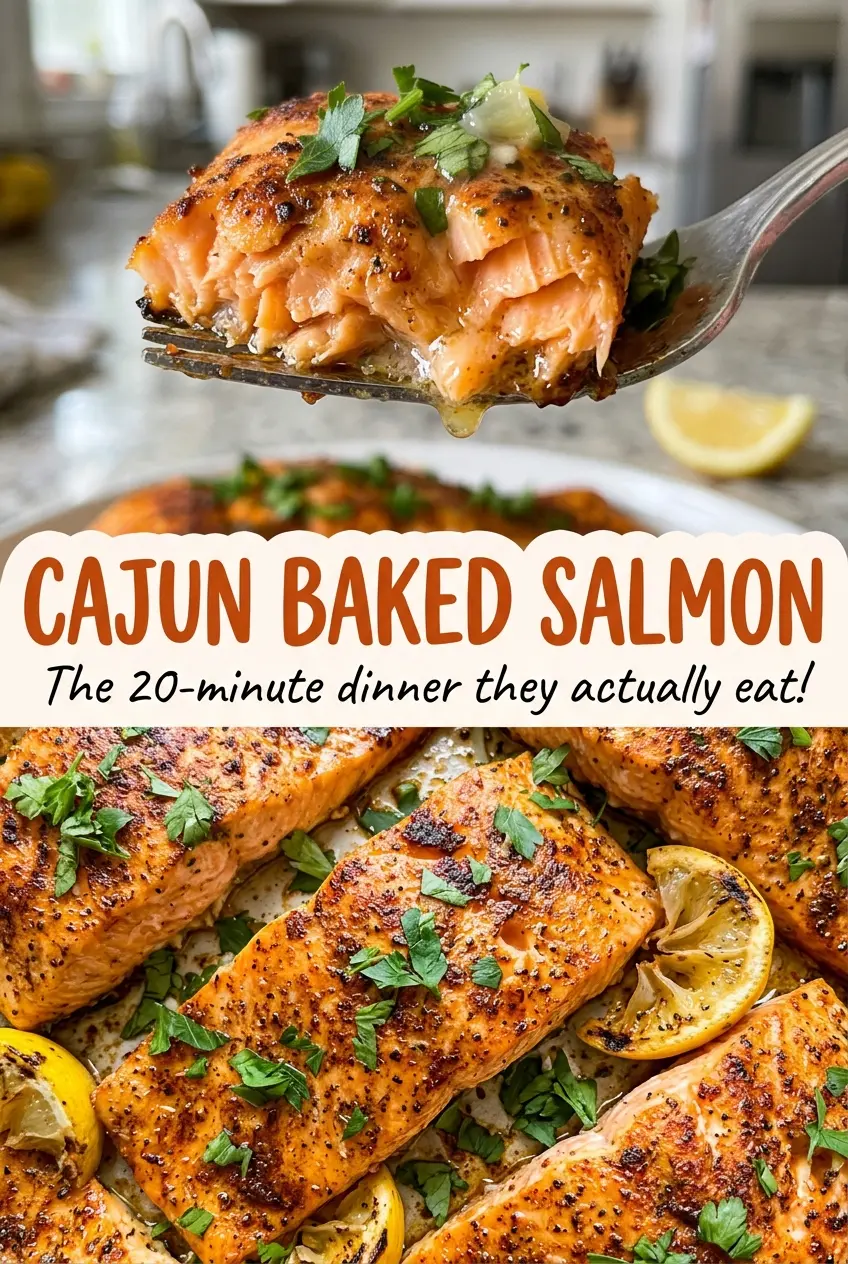
- Skin-on salmon — The skin helps the fillets hold together as you move them, and it sits between the flesh and the baking sheet. Choose pieces cut to a similar thickness for more even cooking. Fresh-looking salmon with a clean, mild smell is a better buy than a bargain fillet that looks dry at the edges. Skinless salmon can work, but the skin-on pieces are easier to handle whole.
- Olive oil — A thin coating helps the Cajun seasoning cling to the top of the fish and keeps the exposed surface from looking dry. There’s no need for an expensive bottle here; a basic olive oil works well because it’s being used to coat the salmon, not as a finishing oil. Drizzle it over the fish so the seasoning has a lightly slick surface to adhere to.
- Cajun seasoning — This blend supplies the recipe’s savory heat in one step. Different blends can vary in saltiness and spice, so choose one whose heat level you already enjoy; the salmon itself doesn’t need extra ingredients to carry the seasoning. Rub it across the tops so each portion gets a fairly even coating.
- Lemon — The wedges bring a fresh, tart contrast to the seasoned fish. A fresh lemon gives you both the juice and the familiar bright aroma; serve the wedges alongside so everyone can add lemon to taste. Bottled juice won’t give you the same fresh citrus finish, and there’s no need to add it to the pan before baking.
From Dry Fillets to a Seasoned Top: The Three Stages
Prepare the Pan and Dry the Salmon
Heat the oven to 400°F and line a rimmed baking sheet with parchment paper. Pat the salmon dry before arranging the four fillets skin-side down; a damp surface makes it harder to get an even coating of oil and seasoning. Keep the pieces in a single layer with a little room around them. If the fillets are crowded or stacked, they won’t bake as evenly.
Coat the Tops with Oil and Cajun Seasoning
Drizzle the olive oil over the fillets, then rub the Cajun seasoning across their tops. The surface should look lightly coated rather than slick with pooled oil. Keep the seasoning on the exposed flesh instead of rubbing it under the fish. A gentle, even coating gives you a more consistent bite from edge to center.
Bake Until the Center Is Done, Then Rest
Bake for 12–15 minutes, checking the thickest part of the salmon for the temperature and flaking cues described above. The thinner end may look more opaque before the center is ready, so check the middle of the thickest section rather than pulling the pan at the first sign of flakes. Once the salmon is ready, rest it before serving with the lemon wedges. The finished flesh should separate into moist flakes without needing to be pressed or scraped.
Three Simple Ways to Change the Finish or Format
Use Skinless Fillets
Skinless salmon gives you the same Cajun-seasoned flavor in a more delicate portion, though it won’t have the skin to help the fillet hold together when lifted. Keep the fillets about the same thickness and use the parchment-lined pan; handle them gently when serving.
Make the Lemon Finish More Pronounced
Keep the same lemon wedges, but squeeze them over the salmon just before eating instead of leaving all the wedges on the side. The juice spreads across the seasoned surface, making each bite brighter and more citrus-forward.
Serve It Flaked Instead of Whole
After the salmon rests, break it into large flakes and serve the lemon wedges alongside. This changes the presentation without changing the seasoning or cooking method, and the smaller pieces make it easy to portion the fish for a casual meal.
Storage and Reheating
- Refrigerator: Store cooked salmon in an airtight container for 3–4 days. The flesh will firm up as it chills, so it may flake less neatly when cold.
- Freezer: It freezes best when wrapped tightly or sealed in an airtight freezer container; use it within 2–3 months for the best quality. Thaw it in the refrigerator before reheating.
- Reheating: Warm it gently in a low oven, covered, or use short bursts in the microwave. High heat and long reheating make salmon dry, so stop as soon as it’s warmed through.
Questions That Come Up While Baking Cajun Salmon
Cajun Baked Salmon
Ingredients
Equipment
Method
- Preheat the oven to 400°F.
- Line a rimmed baking sheet with parchment paper.
- Pat the salmon dry.
- Arrange the fillets skin-side down on the baking sheet.
- Drizzle the salmon with the olive oil.
- Rub the Cajun seasoning over the tops.
- Bake for 12–15 minutes, until the salmon reaches 145°F in the thickest part and flakes easily with a fork.
- Rest the salmon for 3 minutes.
- Serve with the lemon wedges.


