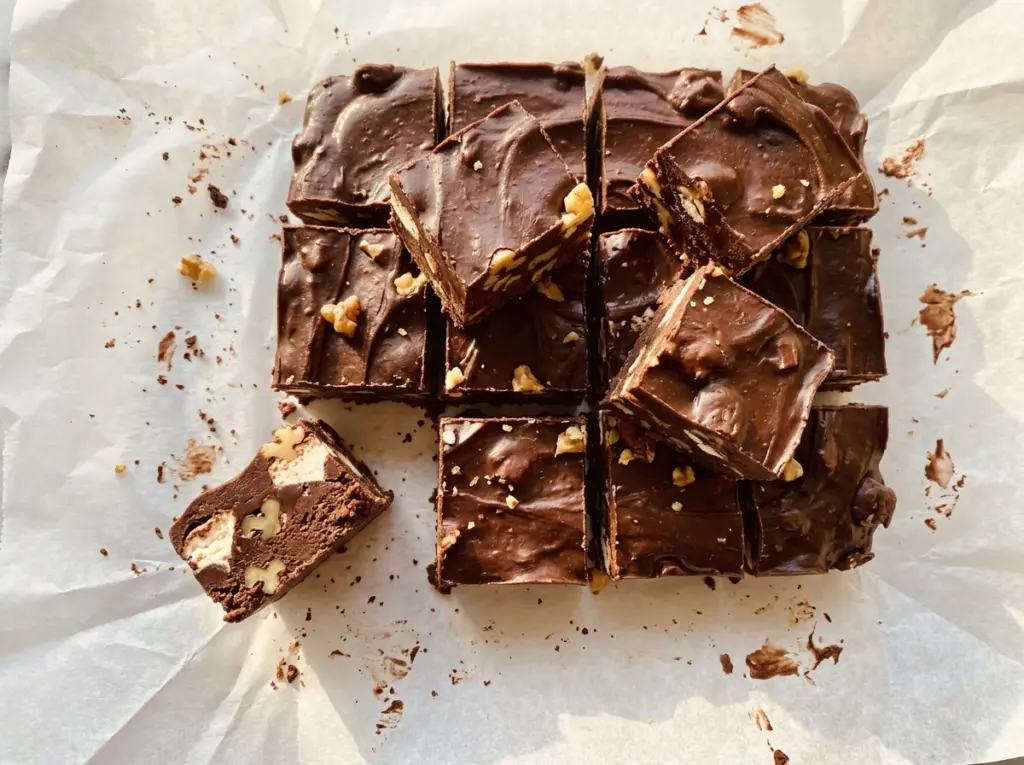
The sugar, evaporated milk, and butter look deceptively simple in the pot, but fudge can go from soft to crumbly with only a small change in how far that syrup cooks. The first time I made Million Dollar Fudge, I trusted the clock more than the candy thermometer. The pieces tasted right, but they never quite held their shape. Now I watch the temperature and the bubbling mixture instead of assuming every stove runs the same.
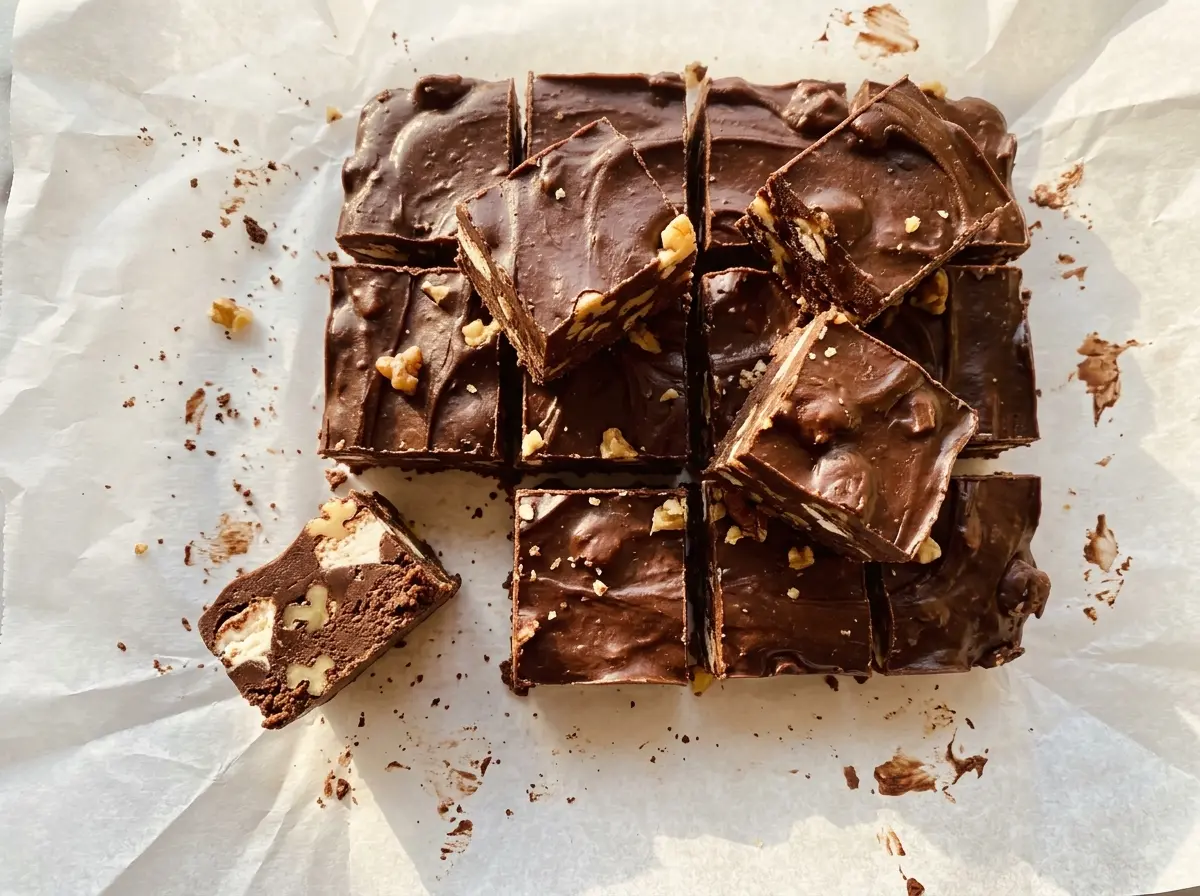
This version gets its rich chocolate flavor from two kinds of chocolate, while marshmallow creme helps give the finished squares a smooth, firm texture. Once the syrup reaches its target, the chocolate and creme go in off the heat, so there’s no need to keep cooking the chocolate mixture. Let the pan cool completely before cutting, and you’ll have neat squares with a soft bite and plenty of walnut crunch.
Kitchen Note
Have the chocolate unwrapped and the marshmallow creme jars open before the syrup comes off the heat. Once you start stirring, it’s much easier to keep the mixture moving if you’re not stopping to wrestle with packaging.
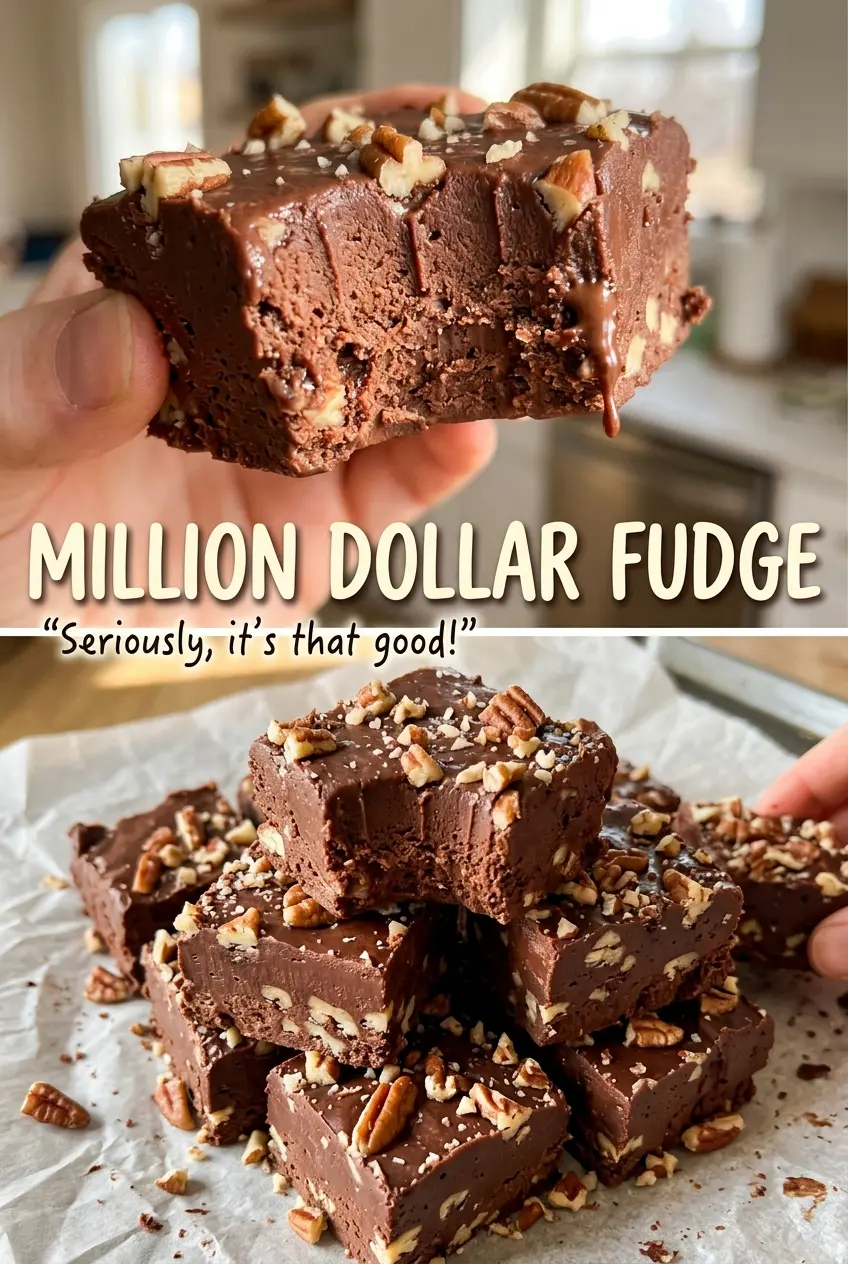
Save Million Dollar Fudge for a chocolatey, walnut-studded batch that cuts into generous squares and is easy to share.
Why the Boil, Not the Clock, Decides Whether This Fudge Sets
Fudge starts with a concentrated sugar syrup. As it boils, water cooks away and the mixture changes from a pourable base into one that will firm as it cools. A few minutes can make a noticeable difference, which is why the listed cooking window is a helpful estimate rather than the final test.
A candy thermometer gives you a clearer target than bubbles alone. Check that its sensing end is in the syrup without touching the bottom of the saucepan; contact with the hot pan can give you a misleading reading. If the syrup stops short, the cooled fudge may stay too soft to cut cleanly. Cook it too far, and the squares can turn dry or crumbly. That narrow balance is what makes steady attention during the boil worth it.
What Each Chocolate and Sweetener Brings to Million Dollar Fudge
- Unsalted butter — It gives the syrup richness and helps coat the prepared parchment. Unsalted butter keeps the flavor balanced; salted butter works in a pinch, though the finished fudge will taste saltier. Save the separate tablespoon for greasing the parchment.
- Granulated sugar — This is the foundation of the candy syrup, so there isn’t a dependable one-for-one swap with a liquid sweetener or sugar substitute. Those change the moisture and how the fudge sets.
- Evaporated milk — Its concentrated milk solids add creaminess without bringing in as much water as regular milk. Don’t use sweetened condensed milk instead; it adds sugar as well as a much thicker consistency and changes the balance of the syrup.
- Semisweet chips and German sweet chocolate — Together, they make the chocolate base taste deeper than either one alone. Use fresh chocolate that melts smoothly. If German sweet chocolate isn’t available, another sweet baking chocolate is the closest swap, though the final sweetness will vary; unsweetened baking chocolate is not an equivalent replacement.
- Marshmallow creme — It blends into the hot syrup and helps the fudge set with a smooth, cohesive texture. Mini marshmallows aren’t a direct substitute, since they don’t have the same consistency or melt into the mixture in quite the same way.
- Walnuts — Chopped walnuts add a pleasant crunch against the soft chocolate. Chopped pecans are the closest easy substitute; leaving the nuts out gives you a smooth, walnut-free batch with less crunch.
- Vanilla extract — It rounds out the chocolate without taking over. A good basic extract is all you need here; vanilla bean paste can also stand in without changing the method.
From Sugar Syrup to Squares: The Stages That Matter
Line and Grease the Pan
Line a 9×13-inch baking pan with parchment, leaving overhang on two opposite sides. Butter the parchment with 1 tablespoon of the butter so the sticky fudge releases cleanly. The overhang gives you something to hold when lifting the firm slab from the pan. Set the prepared pan within reach before you start cooking.
Dissolve the Sugar Before the Boil
Combine the sugar, evaporated milk, and remaining 1 cup butter in a 5-quart heavy-bottomed saucepan. Cook over medium heat, stirring constantly, until the butter has melted and the sugar has dissolved; this takes about 3 to 5 minutes. The mixture should look uniform rather than grainy. Don’t rush this stage by turning the heat up, because the sugar needs to dissolve before the syrup reaches a full boil.
Cook the Syrup to Its Temperature
Bring the mixture to a full boil, then keep cooking and stirring until a candy thermometer reads 234–238°F. This usually takes about 5 to 8 minutes after it boils, but use the thermometer reading to judge the syrup. Keep the thermometer positioned in the mixture and avoid scraping the pan with it. The syrup will be bubbling steadily as it approaches the target.
Stir in the Chocolate Off the Heat
Take the saucepan off the heat before adding the semisweet chips, chopped German sweet chocolate, and marshmallow creme. Stir until no streaks of creme or unmelted chocolate remain and the mixture looks glossy and even. Then stir in the vanilla and chopped walnuts. If you see a few chocolate flecks, keep stirring off the heat rather than putting the pan back over the burner.
Let the Slab Firm Before Cutting
Spread the fudge evenly in the prepared pan, working it into the corners. Leave it at room temperature for 3 to 4 hours, until the surface and center feel firm. Lift the slab out by the parchment overhang and cut it into 48 pieces. Cutting while the center is still soft can press the squares out of shape.
How to Change the Crunch Without Changing the Fudge Base
Swap Walnuts for Pecans
Stir chopped pecans in at the same point as the walnuts. They bring a slightly sweeter, buttery crunch while keeping the same general texture. This is the closest swap if you want to change the nut without changing the chocolate base.
Make a Walnut-Free Batch
Leave out the walnuts for a smoother, walnut-free fudge; the chocolate mixture still works without them. You’ll lose the crunch, but the pieces will have the same chocolate-and-creme base. If you’re avoiding nuts because of an allergy, check ingredients and cross-contact information on the chocolate and marshmallow creme packaging.
Storage and Reheating
- Refrigerator: Keep the pieces in an airtight container for up to 2 weeks. They’ll be firmer straight from the fridge.
- Freezer: Freeze in an airtight container with parchment between layers for up to 2 months. Thaw while still covered to limit condensation on the surface.
- Reheating: Fudge doesn’t need reheating. Let chilled squares sit at room temperature until they soften slightly; microwaving can make them greasy or overly soft.
The Fudge Questions That Come Up at the Stove
Million Dollar Fudge
Ingredients
Equipment
Method
- Line a 9x13-inch baking pan with parchment paper, leaving overhang on two sides, and butter the parchment with 1 tablespoon of the butter.
- Combine the sugar, evaporated milk, and remaining 1 cup butter in a 5-quart heavy-bottomed saucepan. Cook over medium heat, stirring constantly, until the butter melts and the sugar dissolves, about 3 to 5 minutes.
- Bring the mixture to a full boil and continue cooking and stirring until it reaches 234–238°F on a candy thermometer, about 5 to 8 minutes.
- Remove the pan from the heat and stir in the chocolate chips, German sweet chocolate, and marshmallow creme until smooth.
- Stir in the vanilla and walnuts.
- Spread the fudge evenly in the prepared pan.
- Cool at room temperature for 3 to 4 hours, until firm.
- Lift the fudge out of the pan and cut it into 48 pieces.


