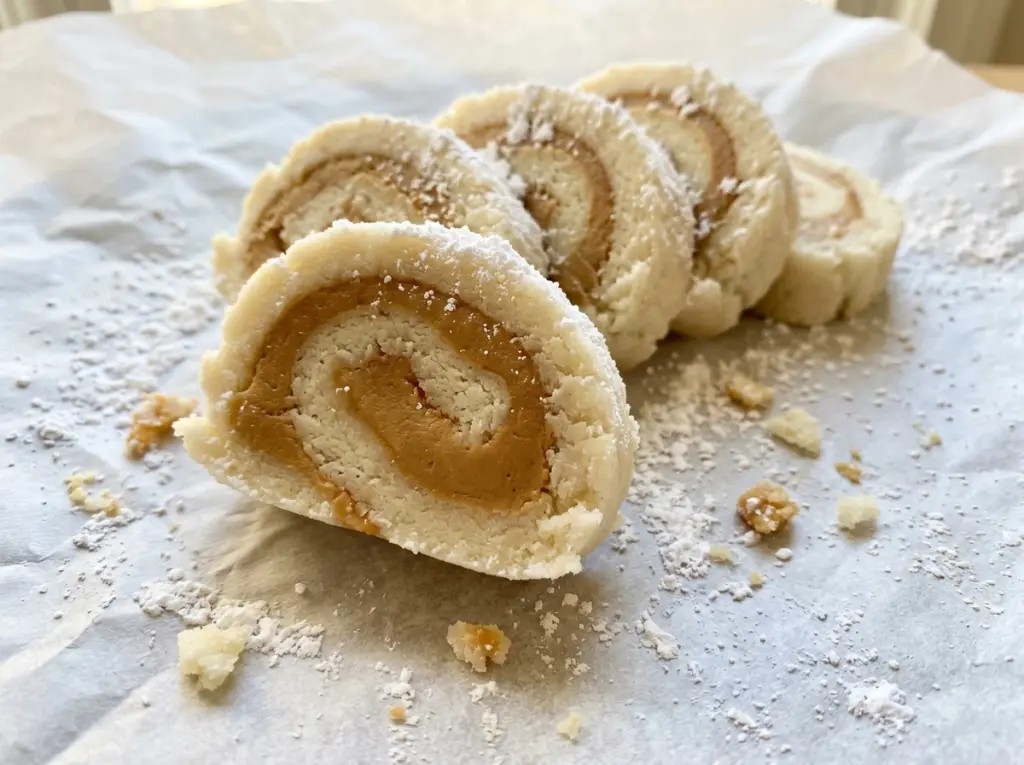
A bowl of smooth mashed potato looks like the start of dinner, not candy. Then confectioners’ sugar goes in, and the potato turns into a soft, rollable dough; that’s the old-fashioned surprise behind these peanut butter pinwheels. The first cups of sugar stir in easily, but the dough firms as you add more, so I add it gradually and pay attention to how the dough feels rather than pouring it all in at once.
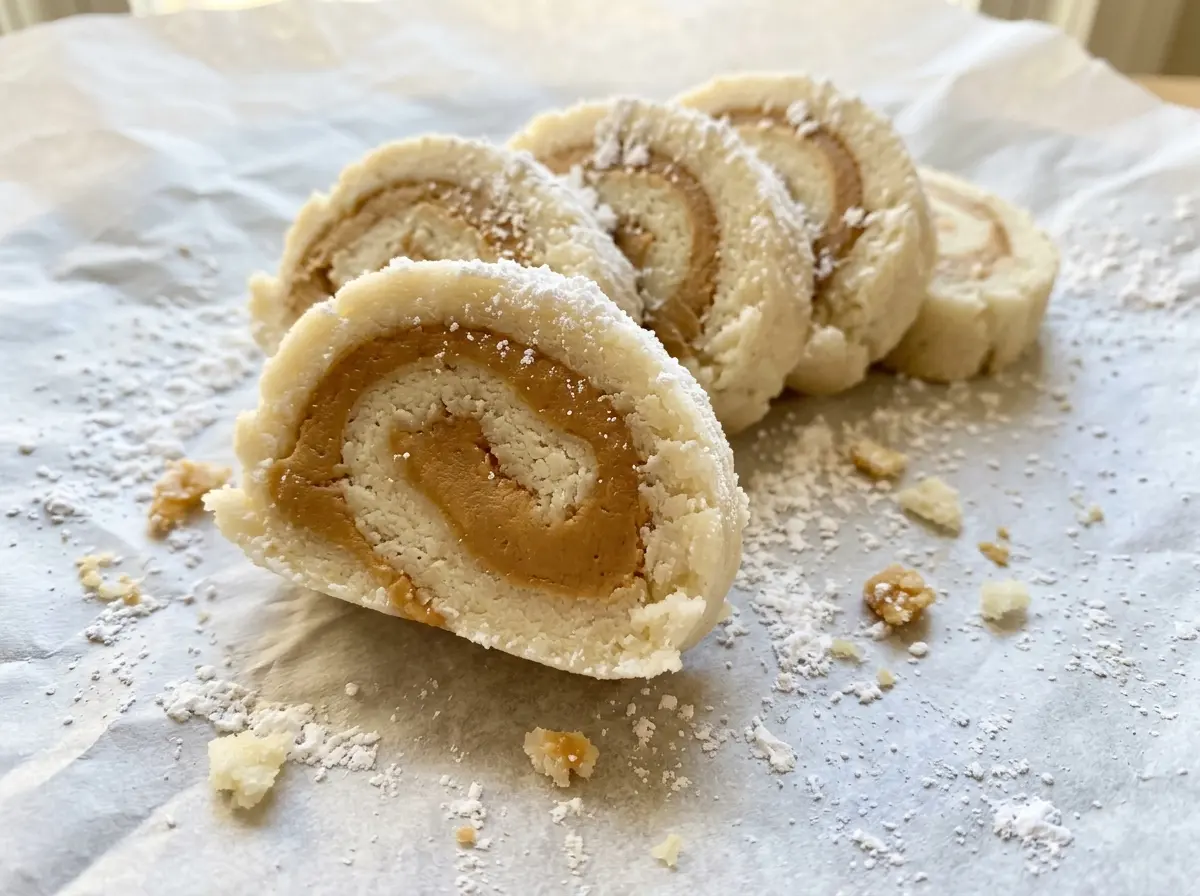
The potato supplies the moisture that lets the sugar become pliable, which is why the amount of mash matters as much as the amount of sugar. I measure the potato after cooking and mashing, then roll the chilled dough between parchment so it stays manageable. Creamy peanut butter makes an even ribbon through the middle, and the cut slices show off that familiar spiral of pale candy and peanut butter.
Kitchen Note
Let the potato cool completely before you mix the dough. Warm mash can make the sugar mixture softer and harder to handle, so I give the potato time to cool all the way through.
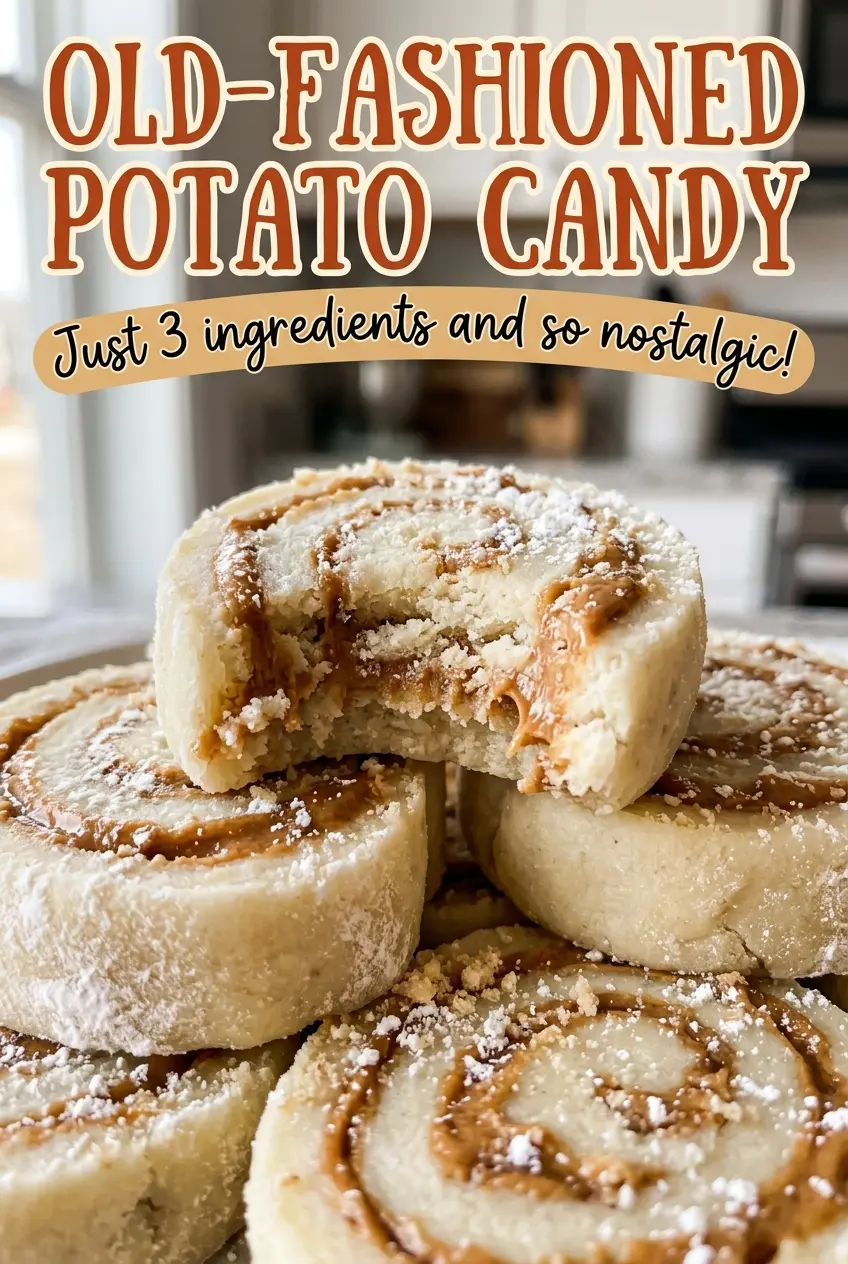
Save this Old Fashioned Potato Candy for its soft, sugar-dusted dough and neat peanut butter pinwheel slices.
Why the Peanut Butter Border Makes a Cleaner Pinwheel
The small bare strip of dough isn’t wasted space. It gives the roll a clean edge where the final turn of dough can meet itself, instead of pushing peanut butter out at the seam. Spread the filling over the rectangle but stop short of one short edge, then begin rolling from the opposite short edge. That direction carries the filling along inside the dough and brings the uncoated edge around to finish the log.
If peanut butter reaches every edge, it has nowhere to go as the dough wraps around itself. Some can squeeze out, making the log slippery and the slices less defined. Keep the filling layer even, too; thick patches make the roll bulge in one spot and can leave other slices with a thin stripe. A neat, tightly rolled log gives you the familiar spiral without needing to press hard enough to flatten the dough.
Why Russet Potato and Confectioners’ Sugar Set the Dough’s Texture
- Russet potato — Its fluffy, starchy flesh mashes smoothly and gives the dough its moisture. Cook it until a knife slides easily into the center, peel it, then measure the mash; the potato’s size alone doesn’t tell you how much belongs in the dough. There isn’t a direct shortcut with a different potato product because the moisture can change the dough.
- Confectioners’ sugar — This fine sugar sweetens and builds the dough’s body without leaving the gritty texture granulated sugar would. Add it gradually, since the potato’s moisture affects how much the mixture can take. Keep to confectioners’ sugar rather than swapping in another type.
- Vanilla extract — Vanilla rounds out the sweet dough, but an everyday bottle works well here; there’s no need for an expensive extract. Measure it into the potato mixture before adding the sugar so it stirs through evenly.
- Creamy peanut butter — A smooth filling spreads into a thin, even layer and makes the spiral easy to see. A standard creamy peanut butter is a dependable choice; thick, smooth texture matters more than choosing a premium brand.
- Salt — The small amount balances the sweetness of the dough. Stir it in with the vanilla so it disperses before the mixture thickens.
From Cooked Potato to a Sliceable Peanut Butter Log
Cook and Measure the Potato
Prick the russet all over with a fork, then microwave it on high for 5 to 7 minutes, turning it halfway through. It is ready when a knife slides easily into the center; if the middle still feels firm, it needs more time. Cool the potato completely, peel it, and mash until smooth. Measure 1/2 cup of mash for the dough, and reserve or discard any extra.
Stir the Dough Until It Stops Sticking
In a medium bowl, stir together the mashed potato, vanilla, and salt. Add 4 cups of confectioners’ sugar, 1 cup at a time, mixing between additions. Then work in more sugar a little at a time, up to 5 cups total, until the dough feels soft and no longer sticks to your hands. Don’t add the remaining sugar automatically; stop when the texture cue is right.
Chill, Then Roll Between Parchment
Cover the dough and refrigerate it for 30 minutes, until firm enough to roll. Set it between two sheets of parchment and roll it into a 10-by-12-inch rectangle about 1/4 inch thick. The parchment keeps the soft dough from clinging to the rolling surface. Aim for an even rectangle so the finished log has a consistent thickness from end to end.
Fill, Wrap, and Slice the Log
Spread the peanut butter evenly over the dough, leaving a 1/2-inch border along one short edge. Starting at the opposite short edge, roll the dough tightly into a log, then wrap it in parchment. Refrigerate the wrapped log for 1 hour, until firm. Unwrap it and cut it into 1/2-inch slices.
Two Easy Swaps for the Peanut Butter Filling
Make It Peanut-Free with Sunflower Seed Butter
Replace the creamy peanut butter with the same amount of creamy sunflower seed butter. It keeps the filling smooth and gives the pinwheels a mild, nut-free flavor; choose a thick, spreadable version so it stays in an even layer as you roll.
Give the Filling an Almond Note
Use creamy almond butter in place of the peanut butter for a mellow, distinctly nutty center. The candy keeps its familiar rolled shape, though the filling tastes less like the classic peanut butter version. Choose a smooth, thick almond butter rather than one with a loose layer of oil.
Storage and Reheating
- Refrigerator: Keep slices in an airtight container for up to 4 days. They stay firm and become a little firmer when cold.
- Freezer: Freeze slices in an airtight container with parchment between layers for up to 2 months. Thaw them in the refrigerator.
- Reheating: No reheating is needed. Serve the slices chilled, or let out only the portion you plan to serve for a softer bite; warming the log makes it harder to cut cleanly.
Questions That Come Up When Making Potato Candy
Old Fashioned Potato Candy
Ingredients
Equipment
Method
- Prick the potato all over with a fork.
- Microwave the potato on high for 5 to 7 minutes, turning halfway through, until a knife slides easily into the center; cool completely.
- Peel the potato.
- Mash the potato smooth and measure 1/2 cup; reserve or discard any extra.
- In a medium bowl, stir together the mashed potato, vanilla, and salt.
- Stir in 4 cups confectioners' sugar, 1 cup at a time.
- Add more confectioners' sugar a little at a time, up to 5 cups total, until the dough is soft and no longer sticky.
- Cover and refrigerate the dough for 30 minutes, until firm enough to roll.
- Roll the dough between two sheets of parchment paper into a 10-by-12-inch rectangle about 1/4 inch thick.
- Spread the peanut butter evenly over the dough, leaving a 1/2-inch border along one short edge.
- Starting at the opposite short edge, roll the dough tightly into a log.
- Wrap the log in parchment and refrigerate for 1 hour, until firm.
- Unwrap the log and cut it into 1/2-inch slices.


