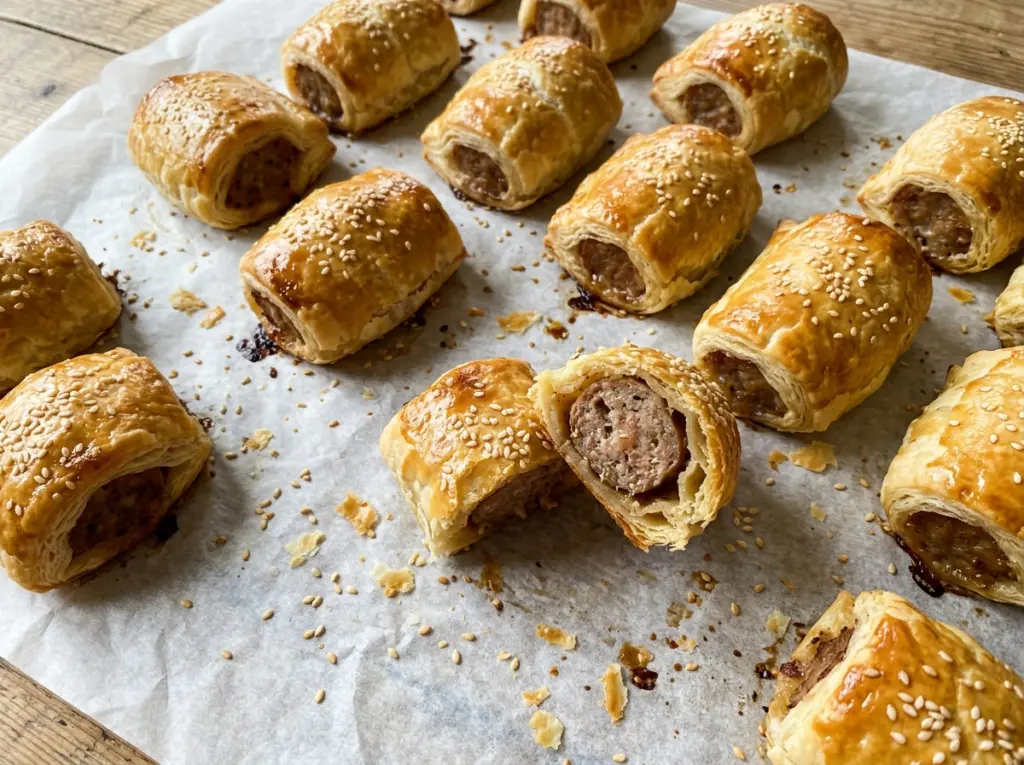
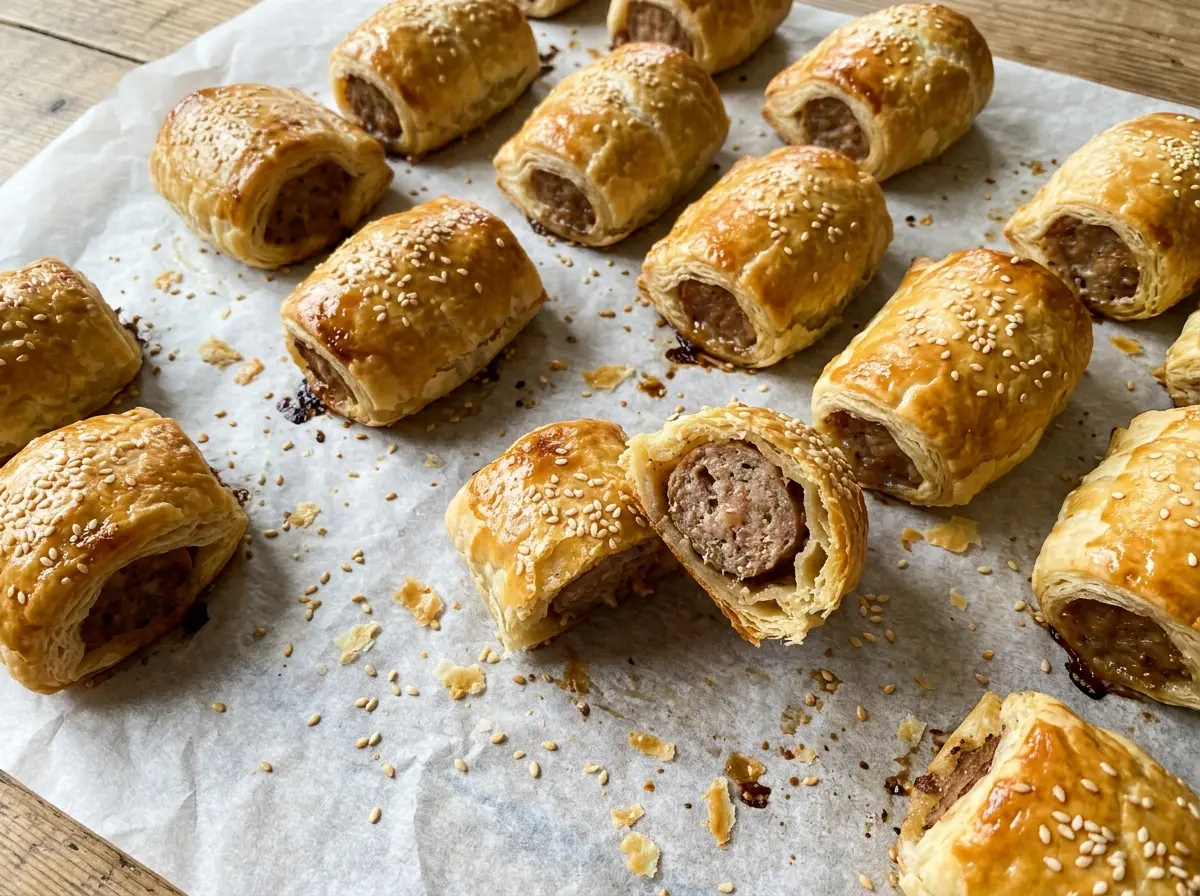
As the rolls bake, the seams puff up and the tops turn a deep gold; that’s when the kitchen starts to smell of pastry and sage. I like these sausage rolls because the filling is mixed in one bowl, then tucked into frozen puff pastry that’s thawed but still cold. Each strip gets a rope of sausage, so the filling stays centered and the pastry has room to rise around it.
Plain dry breadcrumbs go right into the sausage mixture. They help the filling hold together instead of feeling loose when you cut into a roll. I also keep the pastry cold while I work: warm pastry gets harder to handle and loses the clean layers that make these rolls puff. With a pressed seam, a good coat of egg wash, and enough space on the pan, you get crisp, golden pastry around a savory sausage center.
Kitchen Note
Keep the pastry cold enough to feel firm but flexible. If it gets soft and sticky while you’re shaping the rolls, pause and chill it before continuing; warm pastry is much more likely to stretch or tear.
Save these sausage rolls for a savory bake with crisp puff pastry, sage-seasoned pork, and golden tops.
Why Breadcrumbs Belong in the Sausage, Not Under the Pastry
Breadcrumbs are easy to think of as a coating or a way to stretch a filling, but here they’re mixed directly into the sausage. As the rolls bake, the crumbs help hold the filling together and take up some of the moisture released by the meat. That gives you a more cohesive center, rather than a loose filling that crumbles when you cut or bite into a roll.
Mix the sausage, crumbs, sage, and black pepper just until they’re evenly combined. If you leave dry pockets of breadcrumbs, some sections can feel firmer than others; if you work the mixture far past evenly combined, the filling can turn dense. Dividing it into six equal portions also matters: a rope that’s thicker in the middle than at the ends won’t bake as evenly along its length. Aim for a steady thickness and keep each rope centered on its pastry strip, leaving the long edges free to meet and seal.
What the Sausage, Sage, and Pastry Each Contribute

- Bulk pork sausage — Choose uncooked bulk sausage so it’s easy to mix and shape into ropes. A standard grocery-store package works well; the sausage already brings its own seasoning, so there’s no need to seek out a specialty blend. Raw sausage links can work in a pinch if you remove the casings first, but bulk sausage is simpler to handle.
- Plain dry breadcrumbs — Fine, dry crumbs blend into the sausage more evenly than coarse crumbs and help the filling hold its shape. A basic store brand is fine. For a gluten-free version, plain gluten-free dry breadcrumbs can replace them in the same measure.
- Dried rubbed sage and black pepper — Rubbed sage gives the filling its recognizable savory, herbal note, while black pepper adds a little warmth. Freshly ground pepper is nice, but preground works just as well here. Ground sage is finer and more concentrated than rubbed sage, so it won’t give the same result in a direct swap.
- Frozen puff pastry — Frozen pastry is a reliable, convenient choice; what matters most is that it’s thawed enough to unfold and still cold when you shape it. The two sheets give you six long strips for the filling. Keep the pastry’s edges intact so they can be pressed together to seal.
- Egg and water — Whisked together, they make the wash that helps the seam seal and leaves the tops glossy and deep golden. Use a large egg as listed. The water loosens the egg so it brushes across the pastry without forming a thick, uneven layer.
From Even Filling Ropes to Deep-Golden Tops
Mix a Filling That Holds Together
Put the bulk pork sausage, plain dry breadcrumbs, dried rubbed sage, and black pepper in a medium bowl. Mix until the seasonings and crumbs are evenly distributed, but stop once there are no visible pockets of crumbs or sage. Divide the mixture into six equal portions. Shape each portion into a rope as long as one pastry strip, keeping the thickness as even as you can from end to end.
Cut, Fill, and Seal the Pastry
Heat the oven to 400°F and line a 13×18-inch rimmed baking sheet with parchment paper. Work with one thawed, cold pastry sheet at a time, unfold it on parchment, and cut it lengthwise into three equal strips. Set a sausage rope down the center of each strip, then brush one long edge with the egg wash made from the egg and water. Fold the opposite edge over the filling and press the edges together; if they don’t meet cleanly, adjust the filling instead of stretching the pastry thin.
Brush and Bake Until the Centers Are Cooked
Cut each filled strip crosswise into three pieces and arrange the rolls seam-side down on the lined pan, leaving space between them. Brush the tops with the remaining egg wash, taking care not to let pools collect around the edges. Bake for 25–30 minutes, until the pastry is puffed and deep golden and the sausage reaches 160°F in the center. Rest the rolls on the baking sheet for 5 minutes before serving so the filling settles slightly and the pastry is easier to handle.
Two Practical Ways to Change These Sausage Rolls
Make Them Gluten-Free
Use plain gluten-free dry breadcrumbs in the filling and gluten-free puff pastry for assembly. Choose pastry sheets that are large enough to cut into three strips each, and handle them according to the package directions because gluten-free pastry can be more delicate. The pork filling and sage seasoning stay the same, while the pastry may have a slightly different texture.
Let the Pork Flavor Lead
Leave out the dried rubbed sage for a simpler, more pork-forward filling. The rolls will lose that familiar herbal note, but the sausage, black pepper, and flaky pastry still make a savory combination. Keep the breadcrumbs in place so the filling stays cohesive.
Storage and Reheating
- Refrigerator: Refrigerate cooked leftovers within 2 hours and keep them covered for 3–4 days. The pastry will soften as it sits.
- Freezer: Freeze baked, cooled rolls in a freezer-safe container or bag for up to 2–3 months. Thaw them in the refrigerator for the most even reheating.
- Reheating: Reheat on a baking sheet in a 350°F oven until hot throughout and the center reaches 165°F. A microwave warms the filling quickly but leaves the puff pastry soft, so avoid it if you want the crust crisp.
Questions That Come Up While Making Sausage Rolls
Sausage Rolls
Ingredients
Equipment
Method
- In a medium bowl, mix the bulk pork sausage, plain dry breadcrumbs, dried rubbed sage, and black pepper until evenly combined.
- Heat the oven to 400°F.
- Line a 13x18-inch rimmed baking sheet with parchment paper.
- Working with one sheet at a time, unfold the frozen puff pastry on a piece of parchment.
- Cut each pastry sheet lengthwise into 3 equal strips.
- Divide the filling into 6 equal portions.
- Shape each portion into a rope as long as a pastry strip.
- Place one rope down the center of each strip.
- Whisk the large egg with the water to make egg wash.
- Brush one long edge of each strip with egg wash.
- Fold the opposite edge over the filling and press the edges together to seal.
- Cut each filled strip crosswise into 3 pieces.
- Arrange the pieces seam-side down on the baking sheet, leaving space between pieces.
- Brush the tops with the remaining egg wash.
- Bake for 25–30 minutes, until the pastry is puffed and deep golden and the sausage reaches 160°F in the center.
- Rest the sausage rolls on the baking sheet for 5 minutes before serving.


