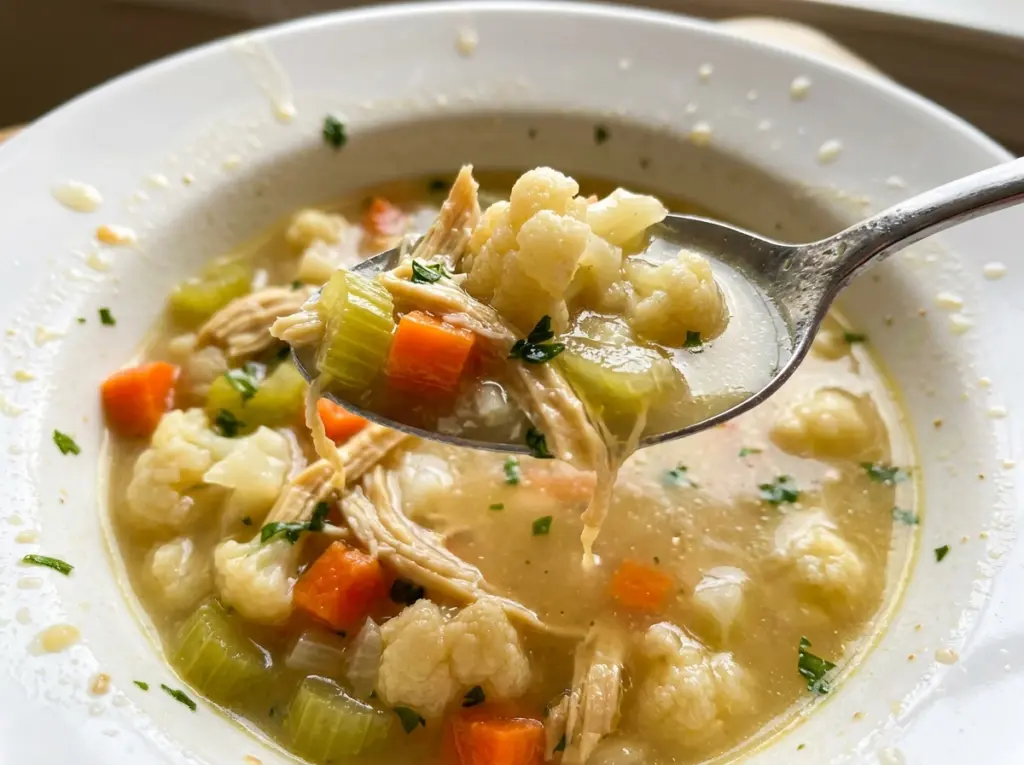
Onion and celery soften in olive oil first, then thyme and garlic make the kitchen smell like soup before the broth even goes in. I add the chicken breasts to that broth and let them cook gently while the rest of the pot stays simple. That order gives this cauliflower chicken soup a savory base without asking the cauliflower to simmer for as long as the chicken.
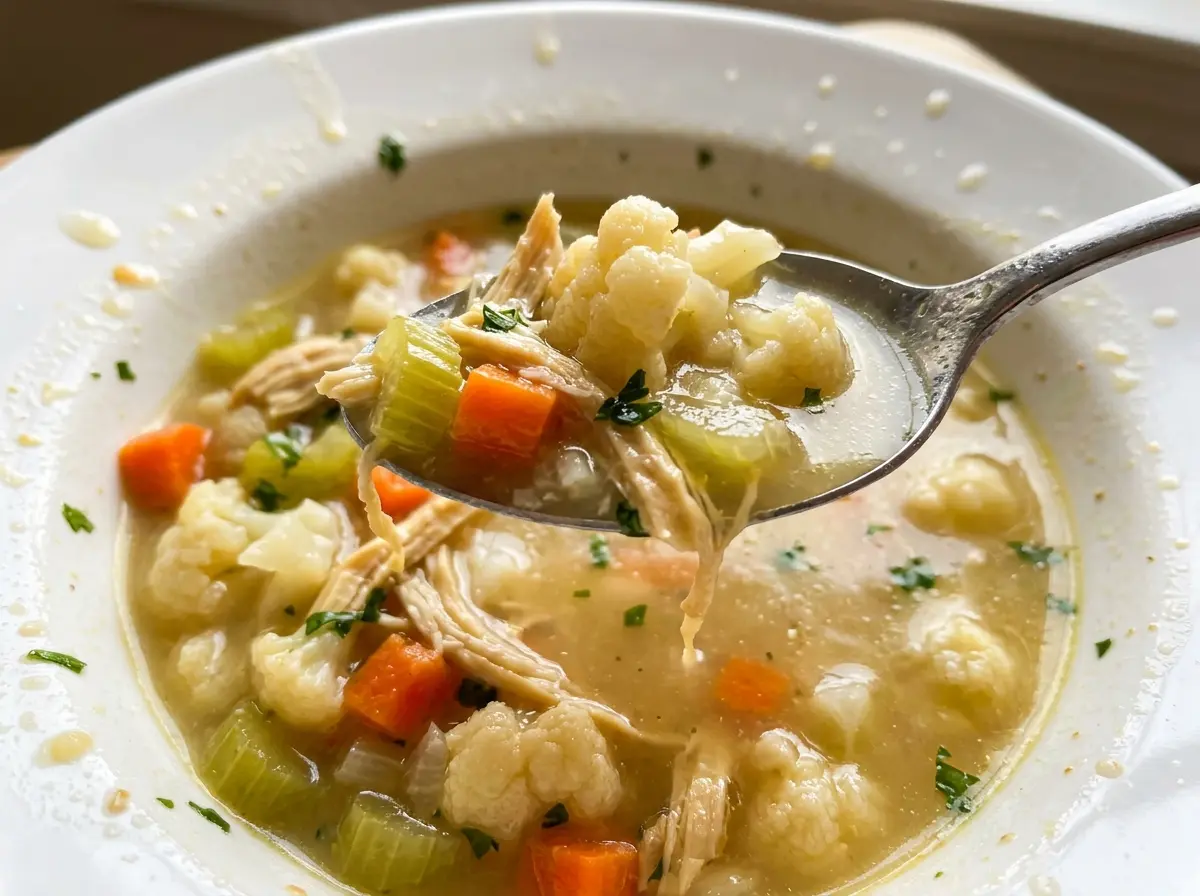
Cauliflower can go from tender to falling apart if it spends too much time in the pot, so I add it after the chicken comes out. While the florets cook, the chicken rests; then I shred it and return it to the broth. A little heavy cream rounds out the soup at the end, and parsley keeps each spoonful tasting fresh. The result is a smooth, savory broth with tender cauliflower and pieces of chicken in every bowl.
Kitchen Note
Use the full 6-quart Dutch oven for this batch. It gives you room to add the cauliflower and stir without pressing the florets against the sides of the pot.
Save this cauliflower chicken soup for a cozy dinner: tender cauliflower, shredded chicken, and a broth finished with cream.
Why the Cauliflower Goes In After the Chicken Comes Out
The chicken and cauliflower need different amounts of time in the broth. Chicken breasts need a longer, gentle cook to reach a safe temperature, while bite-size florets turn tender sooner. If they start together, the cauliflower has to stay in the pot while the chicken finishes, which can leave it too soft to hold its shape.
Cooking the ingredients in sequence solves that without adding another pan. The chicken flavors the broth as it cooks, then gets a short rest on a plate while the cauliflower simmers in that same liquid. When the florets are fork-tender, the shredded chicken goes back in. You get distinct pieces of cauliflower and chicken instead of a pot where one ingredient has lost its texture waiting for the other.
This order also makes the final cream step easier to control. The chicken is already cooked and the cauliflower is tender before the cream goes in, so the soup only needs a gentle warming at the finish.
What Gives This Soup Its Savory Base and Creamy Finish

- Chicken breasts — Boneless, skinless breasts cook directly in the broth and are easy to shred once rested. Choose pieces that are close in size so they cook at a similar pace; the thickest part is the one to check.
- Cauliflower — Cut the florets into bite-size pieces so they are easy to spoon up and cook through in the soup. A fresh, firm head is a good fit here; trim away the leaves and core before cutting.
- Low-sodium chicken broth — This is the soup’s main liquid and the cooking medium for the chicken. Low-sodium broth lets the salt and pepper season the pot without the broth taking over; broth quality matters because its flavor carries through every bowl.
- Heavy cream — Cream adds body and softens the savory edge of the broth. Its higher fat content gives a more stable, velvety finish than regular milk, so use heavy cream for the version below.
- Yellow onion, celery, garlic, and dried thyme — Onion and celery make a mellow base, while garlic and thyme bring the more recognizable soup aroma. Dice the vegetables evenly and mince the garlic so the pieces soften and release flavor in the short cooking time.
- Olive oil, kosher salt, black pepper, and fresh parsley — Olive oil carries the aromatics as they soften, and salt and pepper season them from the start. Fresh parsley goes in at the end rather than cooking with the vegetables, keeping its herbal note distinct.
Build the Soup in Stages for Tender Chicken and Cauliflower
Soften the Onion and Celery
Heat the olive oil in a 6-quart Dutch oven over medium heat. Add the diced onion and celery with the kosher salt, black pepper, and dried thyme, then cook for 5 to 7 minutes, stirring occasionally. Look for softened vegetables rather than crisp edges; they should be yielding before the garlic goes in.
Start the Chicken in the Seasoned Broth
Stir in the minced garlic and cook for 30 seconds, just until fragrant. Pour in the chicken broth and add the chicken breasts, then bring the pot to a gentle simmer over medium-high heat. Once it simmers, reduce the heat enough to keep the liquid gentle rather than bubbling hard.
Cook the Chicken, Then Give the Cauliflower Its Turn
Simmer the soup uncovered for 15 to 20 minutes, until the thickest part of each breast reaches 165°F, then transfer the chicken to a plate. Add the bite-size cauliflower florets to the pot and simmer for 10 to 15 minutes. Test a floret with a fork; it should pierce easily without the piece collapsing.
Rest and Shred the Chicken
Let the chicken rest for 5 minutes while the cauliflower cooks. Shred it into bite-size pieces, taking care not to pull it into fine strands that disappear into the soup. Return the chicken to the pot once the cauliflower is fork-tender.
Warm the Cream and Parsley Without Boiling
Stir in the heavy cream and chopped fresh parsley, then warm the soup over low heat for 2 to 3 minutes, until hot throughout. Keep the heat low and don’t let the soup boil after the cream is added. The finished broth should look smooth, with the florets and chicken still easy to see in the bowl.
Simple Ways to Adjust the Creaminess and Texture
Make It Dairy-Free and Broth-Forward
Hold back 1 cup of the recipe’s 6 cups of chicken broth and use it in place of the heavy cream at the finish, adding it with the parsley. The soup will be lighter and more broth-forward rather than creamy, while keeping the same total amount of broth.
Leave Out the Parsley
Skip the chopped parsley if you want a simpler finish. The soup will still have its savory thyme-and-garlic base, but it won’t have parsley’s fresh herbal contrast.
Keep the Chicken in Larger Pieces
Instead of shredding the rested breasts into small bite-size pieces, pull them into larger, rustic pieces. The bowl will feel chunkier and more chicken-forward, though the larger pieces are a little less evenly distributed from spoonful to spoonful.
Storage and Reheating
- Refrigerator: Cool promptly, refrigerate within 2 hours, and keep covered for 3 to 4 days. The cauliflower will soften a little as it sits.
- Freezer: For the best texture, freeze the soup before adding the cream and parsley. Store it in an airtight freezer-safe container for up to 3 months; thaw in the refrigerator, then finish with the cream and parsley.
- Reheating: Warm gently in a saucepan over low heat, stirring occasionally, until hot throughout. Avoid bringing the creamy soup to a boil, which can make the texture less smooth.
Questions That Come Up While Making Cauliflower Chicken Soup
Cauliflower Chicken Soup
Ingredients
Equipment
Method
- Heat the olive oil in a 6-quart Dutch oven over medium heat.
- Add the onion, celery, salt, pepper, and thyme and cook for 5-7 minutes, stirring occasionally, until the vegetables soften.
- Stir in the garlic and cook for 30 seconds.
- Pour in the chicken broth and add the chicken breasts, then bring to a gentle simmer over medium-high heat.
- Reduce the heat to maintain a gentle simmer and cook uncovered for 15-20 minutes, until the thickest part of each chicken breast reaches 165°F.
- Transfer the chicken to a plate.
- Add the cauliflower to the pot and simmer for 10-15 minutes, until fork-tender.
- Rest the chicken for 5 minutes.
- Shred the chicken into bite-size pieces.
- Return the chicken to the pot.
- Stir in the heavy cream and parsley.
- Warm over low heat for 2-3 minutes without boiling, until the soup is hot throughout.


