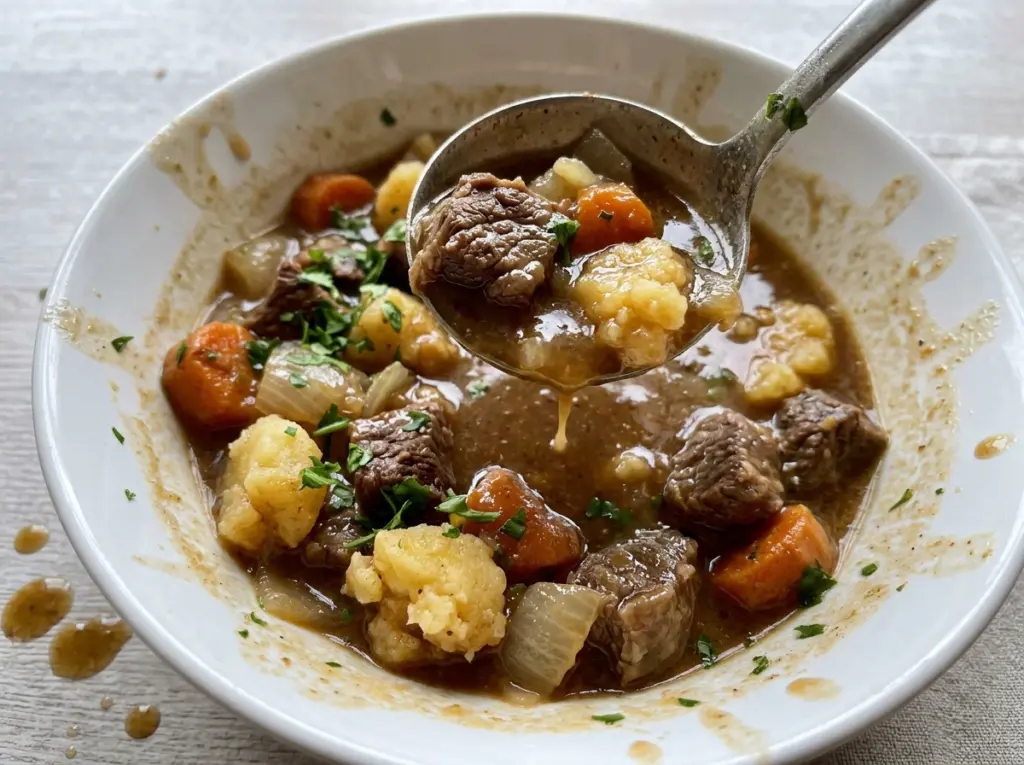
The first batch of beef should sizzle when it hits the hot oil, then turn deeply brown as you rotate the cubes. Give each piece room; crowded beef steams instead of browning, and you lose those savory bits that make the broth taste like it simmered all day. That’s the start of a good Scottish Beef Stew: browned chuck, a pot scraped clean with broth, and a gentle simmer that gives the meat time to soften.
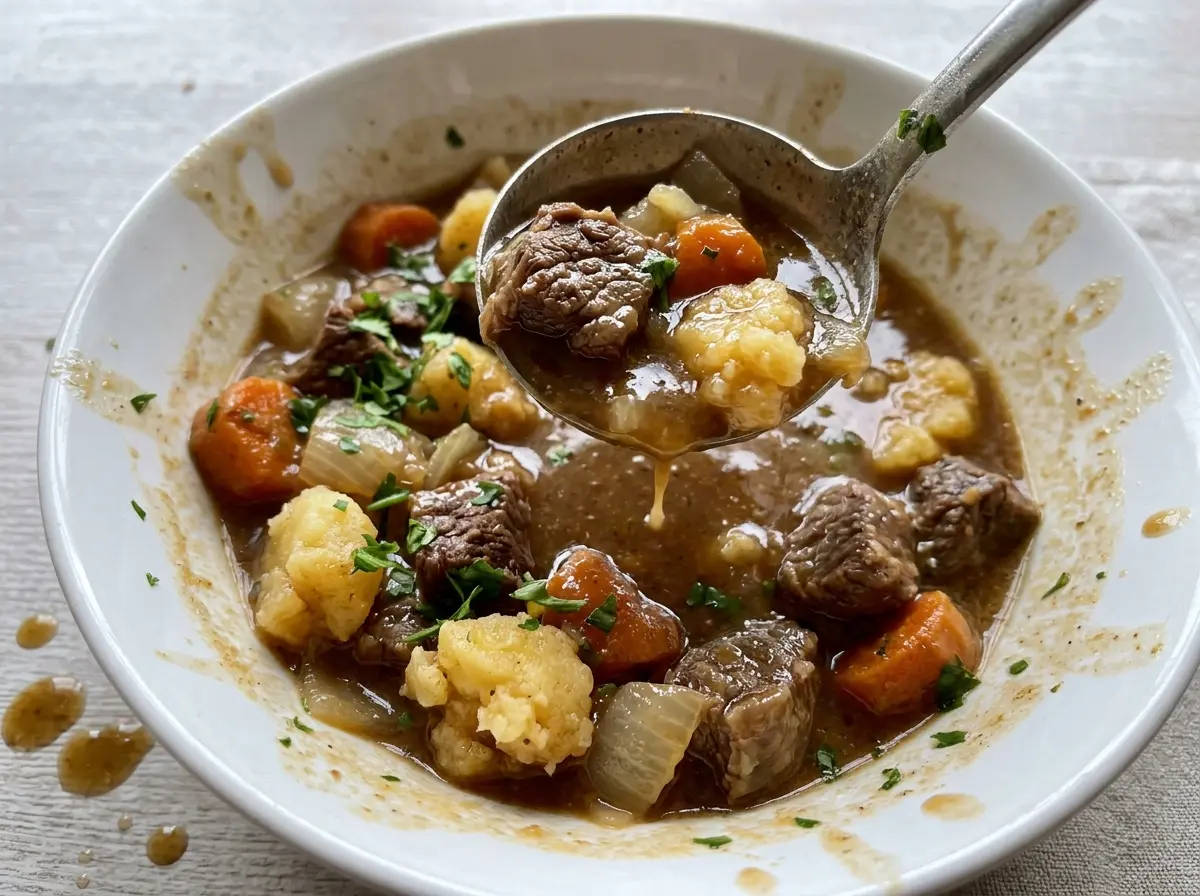
I add the carrots, rutabaga, and Yukon Gold potatoes only after the beef has started to turn tender. They need less time than the chuck, and that later start lets them keep their shape instead of collapsing into the broth. By the time the stew is ready, the beef is fork-tender, the roots are soft without disappearing, and the broth is rich with browned beef and thyme.
Kitchen Note
Brown the beef in batches and turn the cubes so every side gets color. It takes about 8 minutes per batch, but rushing or crowding the pot leaves you with pale patches instead of the browned surface you want.
Save this Scottish Beef Stew for a slow-simmered supper with tender chuck, carrots, rutabaga, and potatoes.
Why the Root Vegetables Wait Until the Beef Starts to Soften
Chuck needs a long, gentle simmer before it becomes fork-tender. Carrots, rutabaga, and potatoes don’t need that much time, so adding them at the beginning puts them on two very different cooking schedules. By the time the beef is ready, the vegetables could be too soft to hold their shape.
Instead, let the beef simmer by itself until it’s beginning to turn tender, then stir in the vegetables for their own covered simmer. That timing gives the rutabaga time to lose its firm bite while helping the Yukon Golds and carrots stay in distinct pieces. The cue before adding them isn’t completely tender beef; it’s beef that has started to yield. It will finish cooking alongside the vegetables, and you’ll know the stew is ready when the beef is fork-tender and the vegetables are tender too.
Keep the simmer gentle through both stages. A hard boil won’t make the chuck tender faster, and it can jostle the vegetables once they’re in the pot.
What the Chuck, Flour, and Root Vegetables Bring to the Pot

- Beef chuck — Chuck has the rich, beefy character this long simmer needs, and its connective tissue softens as it cooks. Cut the beef into even 1 1/2-inch cubes so the pieces cook at a similar pace. Choose cubes with some marbling; very lean beef is more likely to turn dry before it softens.
- All-purpose flour — The light coating helps the beef brown and gives the broth a little body as it simmers. Toss until the cubes are evenly coated, shaking off any loose clumps that gather in the bowl. The stew’s broth won’t be as thick without the flour.
- Low-sodium beef broth and Worcestershire sauce — Low-sodium broth gives you a beefy base without adding as much salt as regular broth, while Worcestershire brings a savory, tangy note. Scraping the browned bits into the liquid matters; they carry the flavor from the seared beef and onion into the broth.
- Rutabaga and Yukon Gold potatoes — Rutabaga brings an earthy sweetness that makes this stew different from one made with potatoes alone. Yukon Golds have a creamy texture and hold their shape well in a covered simmer. Peel the rutabaga and cut it, the carrots, and the potatoes to the sizes in the recipe card so they cook evenly.
Building the Stew in Stages, from Browned Beef to Tender Roots
Coat and brown the chuck
Toss the beef in a large bowl with the flour, kosher salt, and black pepper until the cubes are coated all over. Heat the vegetable oil in a 6-quart Dutch oven over medium-high heat, then brown the beef in batches, turning to color all sides; each batch takes about 8 minutes. Transfer the browned pieces to a plate as they’re ready. If you put all the beef in at once, the pot gets crowded and the cubes won’t brown as well.
Soften the onion and scrape the pot
Add the chopped onion to the Dutch oven and cook over medium heat, stirring often, until softened, about 5 minutes. Pour in the beef broth and Worcestershire sauce, then stir in the bay leaves and dried thyme. Scrape the bottom of the pot as the liquid goes in so the browned bits loosen into the broth rather than sticking there. Return the beef and any juices from the plate to the pot.
Simmer the beef before adding vegetables
Bring the pot to a boil over medium-high heat, then reduce the heat to low, cover, and simmer gently for 1 1/2 to 2 hours. Look for a calm simmer, not a rolling boil. At this point the beef should be beginning to turn tender, though it doesn’t need to be fork-tender yet. If the liquid is bubbling hard, lower the heat so the chuck cooks gently.
Finish with the roots and rest
Stir in the carrots, rutabaga, and potatoes, cover the pot, and simmer gently for 35 to 45 minutes. The vegetables should be tender, and a fork should slide into the beef easily; if either is still firm, give the stew more time at a gentle simmer. Fish out the bay leaves before serving. Let the pot rest off the heat for 5 minutes, which gives the stew a moment to settle before you ladle it into bowls.
Two Practical Ways to Adapt This Scottish Beef Stew
Make It Lower in Sodium
Leave out the kosher salt and keep the low-sodium beef broth. The stew will taste less seasoned, but the beef, Worcestershire, thyme, and browned onion still give the broth savory depth. This is the simplest change if you’re watching sodium without changing the vegetables or cooking method.
Make the Rutabaga Less Prominent
For a milder root-vegetable flavor, leave out the rutabaga and use more carrots and Yukon Gold potatoes. The stew will be sweeter and more familiar, with less of rutabaga’s earthy bite. Keep the vegetables in similarly sized pieces and add them at the same stage.
Storage and Reheating
- Refrigerator: Refrigerate leftovers in a covered container within 2 hours and use them within 3 to 4 days. The broth may thicken as it chills, and the vegetables will soften a little.
- Freezer: Freeze in airtight, freezer-safe containers for up to 2 to 3 months for best quality. The potatoes may be softer after thawing, but the stew is still good to eat.
- Reheating: Reheat gently on the stovetop, stirring carefully, until the center reaches 165°F. Avoid a hard boil, which can break up the potatoes and carrots.
Questions That Come Up While the Stew Simmeres
Scottish Beef Stew
Ingredients
Equipment
Method
- In a large bowl, toss the beef with the flour, salt, and pepper until evenly coated.
- Heat the oil in a 6-quart Dutch oven over medium-high heat.
- Brown the beef in batches, turning to brown all sides, about 8 minutes per batch.
- Transfer the browned beef to a plate.
- Add the onion to the pot and cook over medium heat, stirring often, until softened, about 5 minutes.
- Stir in the broth, Worcestershire sauce, bay leaves, and thyme, scraping up the browned bits.
- Return the beef and any juices to the pot.
- Bring to a boil over medium-high heat.
- Reduce the heat to low, cover, and simmer gently for 1 1/2 to 2 hours, until the beef is beginning to turn tender.
- Stir in the carrots, rutabaga, and potatoes.
- Cover and simmer gently for 35 to 45 minutes, until the vegetables are tender and the beef is fork-tender.
- Remove the bay leaves.
- Let the stew rest off the heat for 5 minutes before serving.


