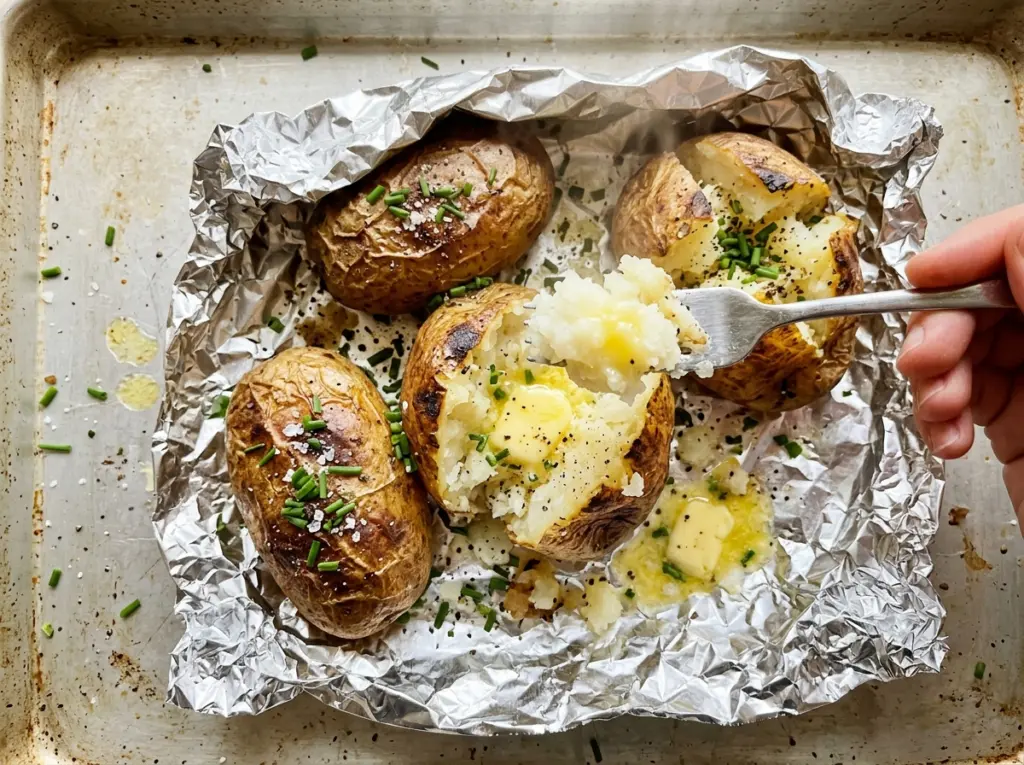
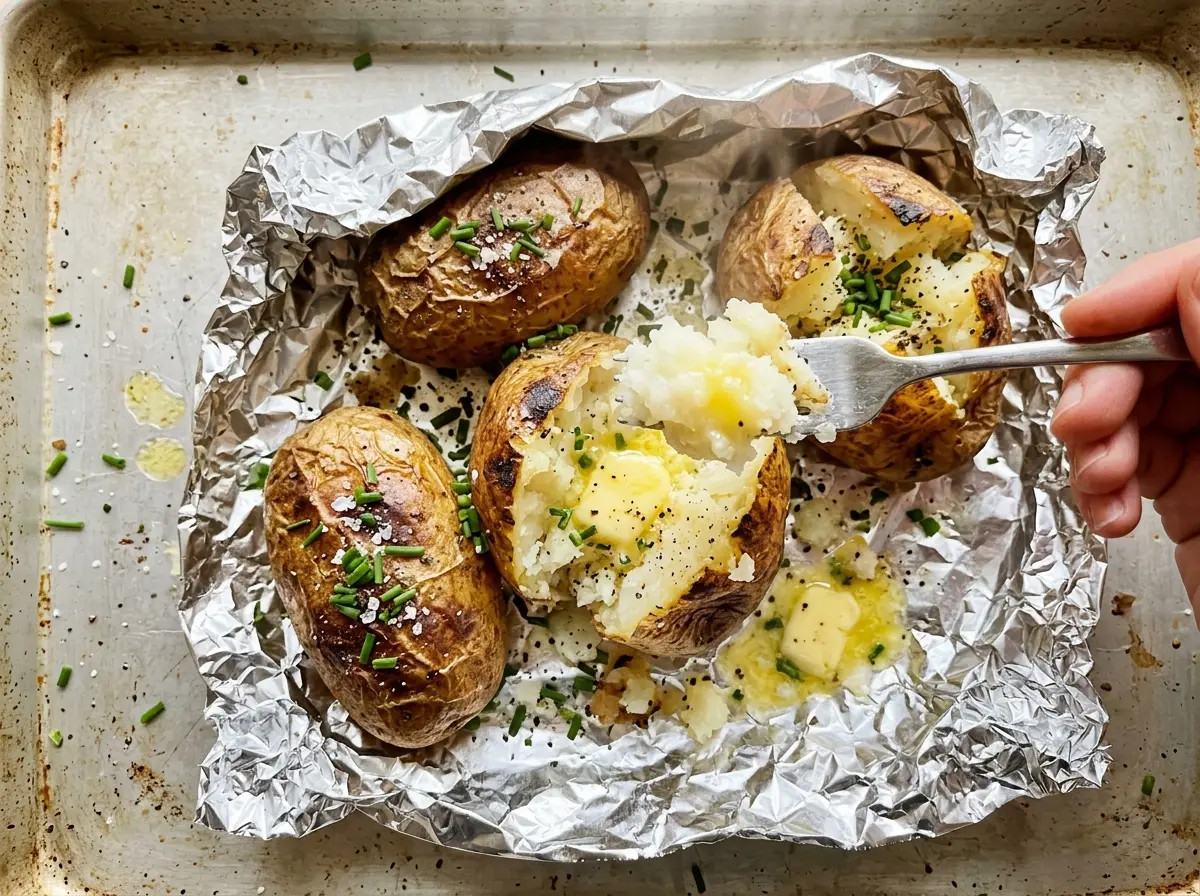
The foil gives a faint crackle when you open it, and a little burst of steam tells you the potatoes have been tucked in there doing their thing. I used to expect the skin to come out crisp, then wondered why it was soft. Foil changes the finish: it keeps moisture close to the potato, so the inside turns tender while the skin stays soft. That’s exactly what I want when I’m after a simple, hot potato without fussing over it.
For Baked Potatoes in Foil, I stick with large russets, a light coating of olive oil, and a simple seasoning of kosher salt and black pepper. The potatoes go straight onto the oven rack, where they bake until a knife slips easily into the center. You don’t need to peel or cut them, and each one is already wrapped for serving. Split one open while it’s hot, and the fluffy center is ready for whatever you like to serve alongside it.
Kitchen Note
Dry the potatoes thoroughly after scrubbing. Water left on the skins dilutes the oil and can make the salt and pepper slide around instead of coating the potatoes evenly.
Save these foil-wrapped russet potatoes for a simple, fluffy-centered side that needs just a few pantry staples.
Why Foil-Baked Potatoes Have Soft Skins, Not Crisp Ones
Foil traps moisture around each potato as it bakes. That steamy pocket helps the inside turn tender, but it also means the skin won’t dry out and crisp the way it does on an unwrapped potato. Neither finish is better for every occasion; they’re simply different. Choose foil when you want a soft skin and an easy, self-contained package, not when crispness is the goal.
There’s another small difference in how the potato eats. The outside gets seasoned before it’s wrapped, so each bite starts with a little salt and pepper on the skin. The russet’s starchy flesh stays mild and fluffy, which makes the skin-to-center contrast pleasant without needing a complicated seasoning mix. Wrap each potato snugly and keep the foil intact so the enclosed cooking environment stays consistent. If you prefer a dry, crisp exterior, this foil method isn’t the right route; the soft skin is part of the result you’re choosing.
The Russets and Seasonings That Shape Each Bite
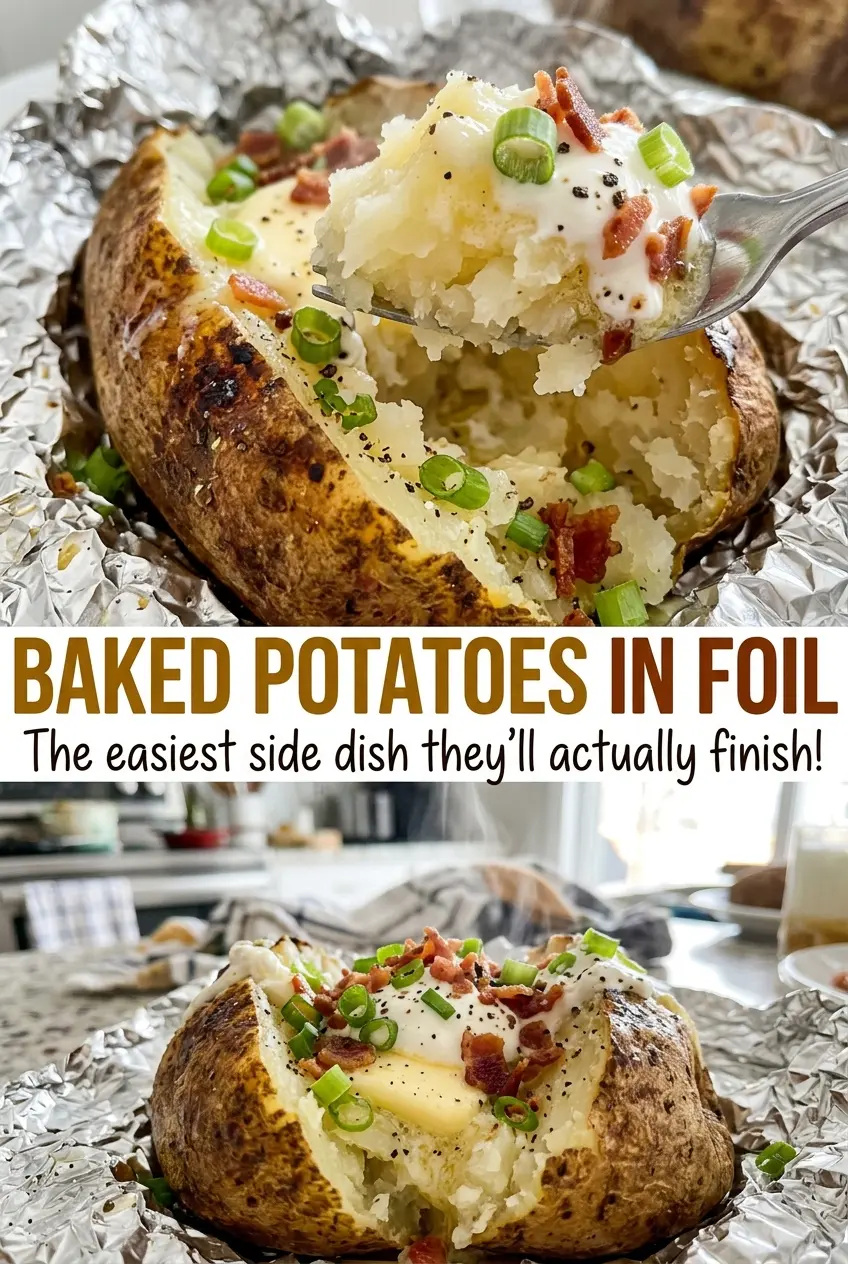
- Russet potatoes — Their starchy flesh bakes up fluffier and less waxy than the flesh of many small, firm potatoes. Pick large potatoes that feel firm, with skins free of deep soft spots; there’s no need to buy specialty or premium produce. The recipe’s roughly 8-ounce size gives you a substantial potato and helps the four cook at a similar pace. A Yukon Gold can be used, but expect a denser, creamier center rather than the classic russet texture.
- Olive oil — A thin coating helps the seasonings cling to the outside and adds a gentle olive note. A basic everyday olive oil is fine; an expensive bottle won’t transform a foil-wrapped potato. If you’re out, use the same amount of a neutral oil such as canola, knowing the skin will have less olive flavor.
- Kosher salt — Its crystals are easy to scatter over the curved surface, and the salt gives the plain potato skin a bit of seasoning. Use ordinary kosher salt rather than a specialty finishing salt. If you only have fine table salt, use about half as much by volume because its smaller crystals pack more tightly; the result will taste a little less mineral.
- Black pepper — Ground pepper adds a mild, savory bite that keeps the outside from tasting one-note. Freshly ground pepper smells brighter, but the basic pre-ground kind works well here. Ground white pepper can replace it measure for measure for a subtler, earthier warmth without the dark flecks.
From a Clean Scrub to a Tender Center
Scrub, Dry, and Prick the Potatoes
Scrub each potato under running water, then dry it thoroughly with a clean towel. Use a fork to prick each one 6 to 8 times, making small punctures around the skin rather than cutting into the flesh. These holes give steam a way to escape as the potatoes bake. Keep the potatoes whole so their centers cook inside the skins.
Coat the Skins with Oil and Seasoning
Rub the olive oil over the full surface of each potato, then distribute the kosher salt and black pepper evenly. Rotate each potato in your hands as you season so one side doesn’t end up bare. A light, even coating is all you need; excess oil or seasoning tends to collect in patches. Do this before wrapping so the outside is seasoned inside the foil.
Wrap and Bake on the Oven Rack
Preheat the oven to 400°F, then wrap each potato tightly in aluminum foil. Set them directly on the oven rack and bake for 60 to 75 minutes. Start checking near the shorter end of that range: slide a knife into the center of each potato, since a larger or denser one may need more time. They’re ready when the knife moves through the middle easily, without a firm or crunchy spot.
Unwrap Carefully and Serve Hot
Take care as you open the foil because hot steam escapes as soon as the package loosens. Peel the foil back away from your hands, then serve the potatoes while they’re hot. If one still resists the knife, wrap it again and return it to the oven until the center is tender. The foil keeps the skin soft, so don’t wait for it to feel crisp as a sign of doneness.
Three Small Changes That Keep the Potato, but Change the Result
Bake a two-potato half batch
Use two large russets and half of each seasoning and oil measure from the recipe card. Keep the potatoes close to the original size so the stated oven range remains useful, and test each center rather than assuming both finish at the same moment. This smaller batch uses the same method and gives you fewer leftovers.
Make the seasoning pepper-free
Leave out the black pepper and keep the oil and kosher salt. The result is a cleaner, simpler-tasting skin that lets the mild russet flavor come through. This is an easy adjustment for anyone who prefers a pepper-free potato.
Skip the oil for an oil-free potato
Omit the olive oil and season the dry potatoes with the salt and pepper before wrapping. The potatoes will still bake in their foil packets, but the seasoning won’t cling as evenly and the skins will taste plainer. The soft interior stays the main attraction.
Storage and Reheating
- Refrigerator: Remove the foil and refrigerate the potatoes within 2 hours. Keep them covered and use within 3 to 4 days; the skin will soften further.
- Freezer: They freeze, though the potato’s texture may turn a little grainy after thawing. Remove the foil, cool the potatoes, wrap them individually in freezer-safe packaging, and use within 1 month for the best texture.
- Reheating: Warm an unwrapped potato in a 350°F oven or in the microwave until hot throughout. The microwave is quicker but softens the skin more, so avoid expecting it to regain any firmness.
Questions That Come Up Once the Foil Comes Off
Baked Potatoes in Foil
Ingredients
Method
- Preheat the oven to 400°F.
- Scrub the potatoes and dry them thoroughly.
- Prick each potato 6 to 8 times with a fork.
- Rub the potatoes with the olive oil.
- Season the potatoes evenly with the kosher salt and black pepper.
- Wrap each potato tightly in aluminum foil and place them directly on the oven rack.
- Bake for 60 to 75 minutes, until a knife slides easily into the center of each potato.
- Carefully unwrap and serve the potatoes while hot.


