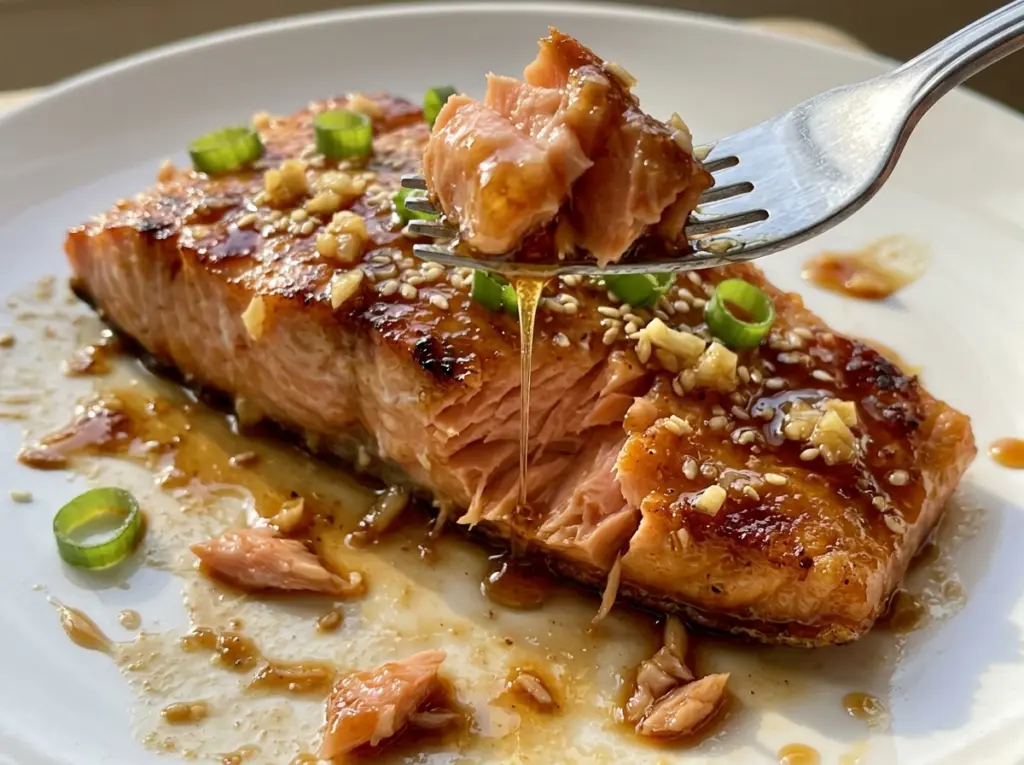
Butter melts around the garlic, and within half a minute the kitchen smells warm and savory. I used to think a honey glaze needed to cook right on the fish, but sugary sauces can get messy in a hot air fryer. For this Air Fryer Honey Garlic Salmon, I cook the sauce separately and spoon it over the fillets at the end, where it stays glossy and coats each bite.
The sauce comes together in a small saucepan while the air fryer heats. A little cornstarch, mixed with water before it goes into the pan, helps the honey, soy sauce, butter, garlic, and lemon juice turn into a clingy glaze instead of a thin drizzle. The salmon itself needs only olive oil, salt, and pepper before it goes skin-side down into the basket. In about 10 minutes, you have tender fish with a savory-sweet finish and no skillet splatter to clean up.
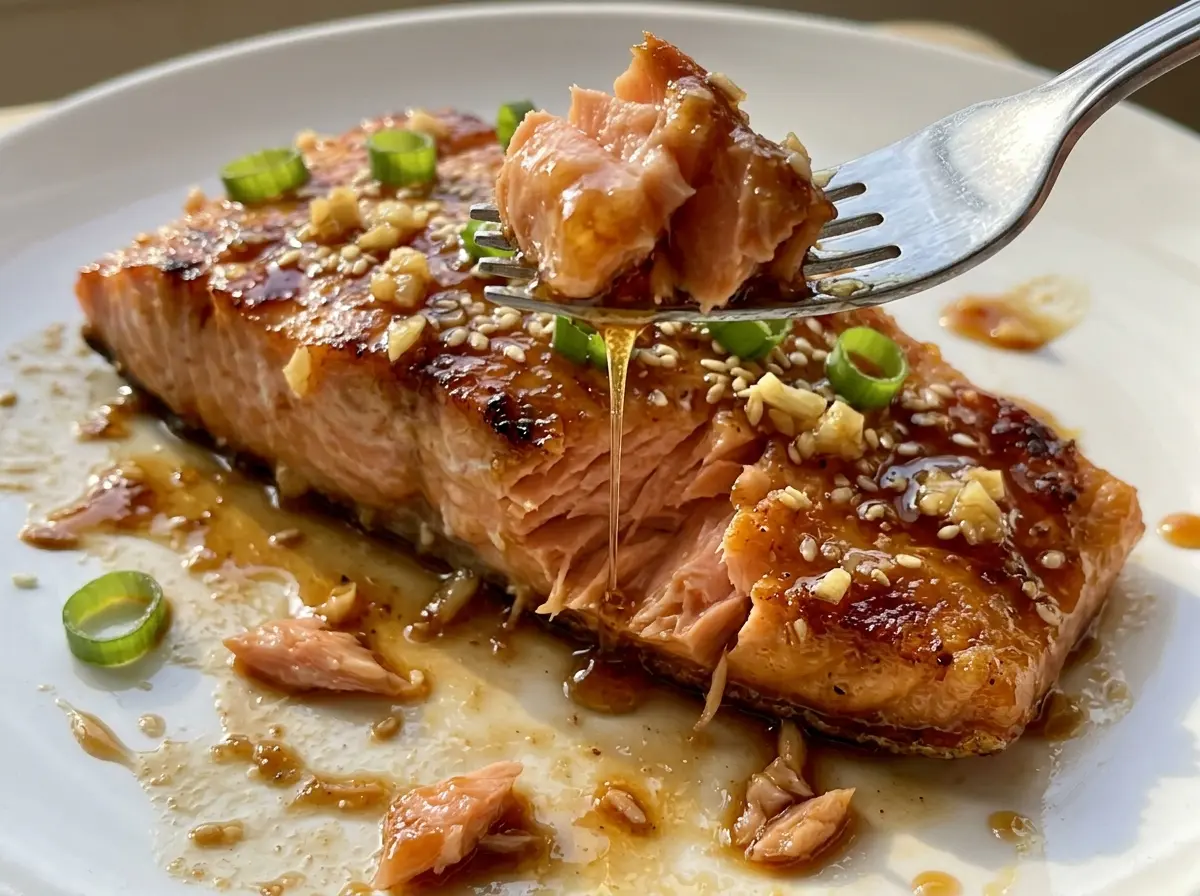
Kitchen Note
Salmon fillets don’t all have the same thickness, so use the thickest part as your doneness check rather than relying on the timer alone. Let the fish rest for two minutes before adding the warm sauce.
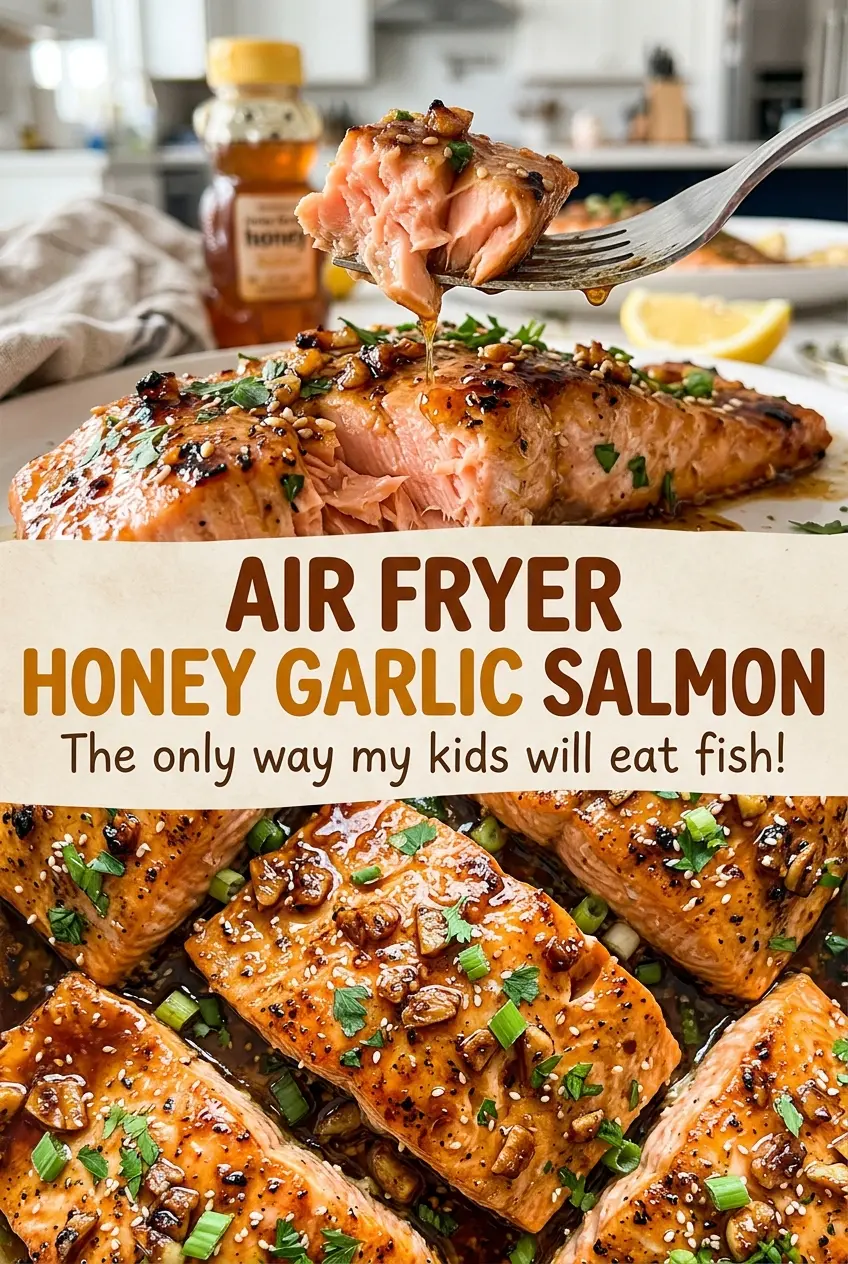
Save this Air Fryer Honey Garlic Salmon for a quick dinner with tender fish and a glossy, sweet-savory garlic sauce.
Why the Honey Garlic Sauce Goes on After the Salmon Comes Out
Honey tastes lovely in a glaze, but it’s also the part that can turn sticky and overcooked when exposed to the air fryer’s direct heat. Making the sauce on the stovetop gives you control over its texture, and adding it after cooking keeps the salmon’s surface from sitting under a sugary coating while it air-fries. The fish gets a clean, lightly seasoned cook; the sauce brings the concentrated flavor at the finish.
The small cornstarch slurry is what makes the sauce cling instead of running straight off the fillets. Stir the cornstarch and water together first, then add that mixture to the saucepan with the honey, soy sauce, and lemon juice. A brief simmer gives the sauce time to turn glossy and slightly thickened. It should still be easy to spoon over the fish, not set up like a paste. If you skip mixing the starch with water first, dry clumps are much harder to smooth out once they hit the hot sauce.
This separation also makes the timing easier to manage. You can focus on the salmon in the air fryer without worrying about the glaze scorching or sticking to the basket. Keep the sauce warm while the fish cooks, then spoon it over just before serving so the garlic aroma and shiny finish are fresh.
The Ingredients That Make This Glaze Cling Without Masking the Salmon
- Skin-on salmon — The skin gives the fillets a sturdier side to rest on in the basket, helping the fish hold together when you lift it out. Choose evenly sized fillets when you can; thickness affects how quickly the center cooks more than the label weight alone suggests.
- Honey — Honey brings the rounded sweetness that defines the glaze. A standard grocery-store honey works well here; a strongly flavored variety will be more noticeable against the delicate salmon.
- Soy sauce — This adds salty, savory depth that keeps the sauce from tasting like straight honey. Regular soy sauce is fine; a gluten-free tamari swap is covered below.
- Fresh garlic — Minced garlic gives the sauce its fragrant, savory backbone. Stir it in after the butter melts and cook only until fragrant; browned garlic can taste bitter.
- Lemon juice — A little acidity brightens the sweet and salty notes. Freshly squeezed juice has a clean taste, though bottled lemon juice works when that’s what you have.
- Cornstarch — This thickens the sauce so it coats the fish. Mixing it with water before it goes into the saucepan prevents lumps; don’t add it dry.
- Unsalted butter — Butter rounds out the sauce and carries the garlic flavor. Unsalted butter gives you better control over seasoning alongside the soy sauce.
- Olive oil — Brushing the fillets with oil helps the simple salt-and-pepper seasoning adhere and keeps the surface from being completely dry during air-frying.
From Fragrant Garlic to Glazed, Just-Rested Salmon
Build the glossy sauce
Melt the butter in a small saucepan over medium-low heat, then stir in the minced garlic. Cook for 30 seconds, stirring, until it smells fragrant; keep the heat gentle so the garlic doesn’t brown. Stir in the honey, soy sauce, and lemon juice. Mix the cornstarch with the water, stir that slurry into the saucepan, and simmer for one minute, stirring, until glossy and slightly thickened.
Season while the air fryer heats
Preheat the air fryer to 400°F for three minutes. While it heats, pat the salmon dry, brush the fillets with olive oil, and season with kosher salt and black pepper. Drying the surface first helps the oil and seasoning stay on the fish instead of sliding around. Have the fillets ready to place skin-side down once the basket is hot.
Air-fry until the center is cooked
Arrange the fillets skin-side down in the air fryer basket and cook at 400°F for 7 to 10 minutes. Start checking toward the shorter end of that range if your fillets are thinner, since a narrow piece cooks faster than a thick one. Check the thickest part of the fish, not just the surface; it should reach 145°F. If it hasn’t reached that temperature, continue cooking and check again.
Rest, then spoon over the glaze
Lift the salmon out carefully and let it rest for two minutes. The fillets are tender, so use a broad spatula to support them rather than pulling at the edges. Spoon the warm honey garlic sauce over the fish right before serving. If the sauce has cooled while the salmon cooked, warm it gently in the saucepan until it’s easy to spoon.
Three Easy Ways to Change the Honey Garlic Glaze
Make the sauce gluten-free with tamari
Use tamari in place of the soy sauce in the same amount. It keeps the glaze savory and balanced, with a slightly different depth than standard soy sauce; choose a gluten-free tamari if you need the finished dish to be gluten-free.
Use plant-based butter for a dairy-free version
Swap in an equal amount of plant-based butter for the unsalted butter. The sauce will still have a smooth, buttery quality, though the flavor depends on the brand you use. Keep the heat at medium-low while the garlic cooks.
Trade the honey for maple syrup
Use the same amount of pure maple syrup in place of the honey. The sauce will taste less floral and more distinctly maple, while the cornstarch slurry still thickens it into a spoonable glaze.
Storage and Reheating
- Refrigerator: Store leftover salmon in an airtight container for 3 to 4 days. The fish will firm up as it chills, and the sauce may lose some of its original gloss.
- Freezer: Freeze cooked portions in an airtight freezer-safe container for up to 2 months for best quality. Thaw overnight in the refrigerator; the cornstarch-thickened sauce may be looser after thawing.
- Reheating: Warm a portion covered in the microwave at reduced power in short bursts, or use a low oven until heated through. Reheat leftovers to 165°F; high heat can dry the salmon before it warms evenly.
Questions That Come Up With Air Fryer Honey Garlic Salmon
Air Fryer Honey Garlic Salmon
Ingredients
Equipment
Method
- Melt the butter in a small saucepan over medium-low heat, add the garlic, and cook for 30 seconds, stirring until fragrant.
- Stir in the honey, soy sauce, and lemon juice, then mix the cornstarch with the water and stir it into the saucepan; simmer for 1 minute, stirring, until glossy and slightly thickened.
- Preheat the air fryer to 400°F for 3 minutes.
- Pat the salmon dry, brush with the olive oil, and season with the salt and pepper.
- Arrange the fillets skin-side down in the air fryer basket and cook at 400°F for 7 to 10 minutes, until the thickest part reaches 145°F.
- Rest the salmon for 2 minutes, then spoon the warm honey garlic sauce over the fillets before serving.


