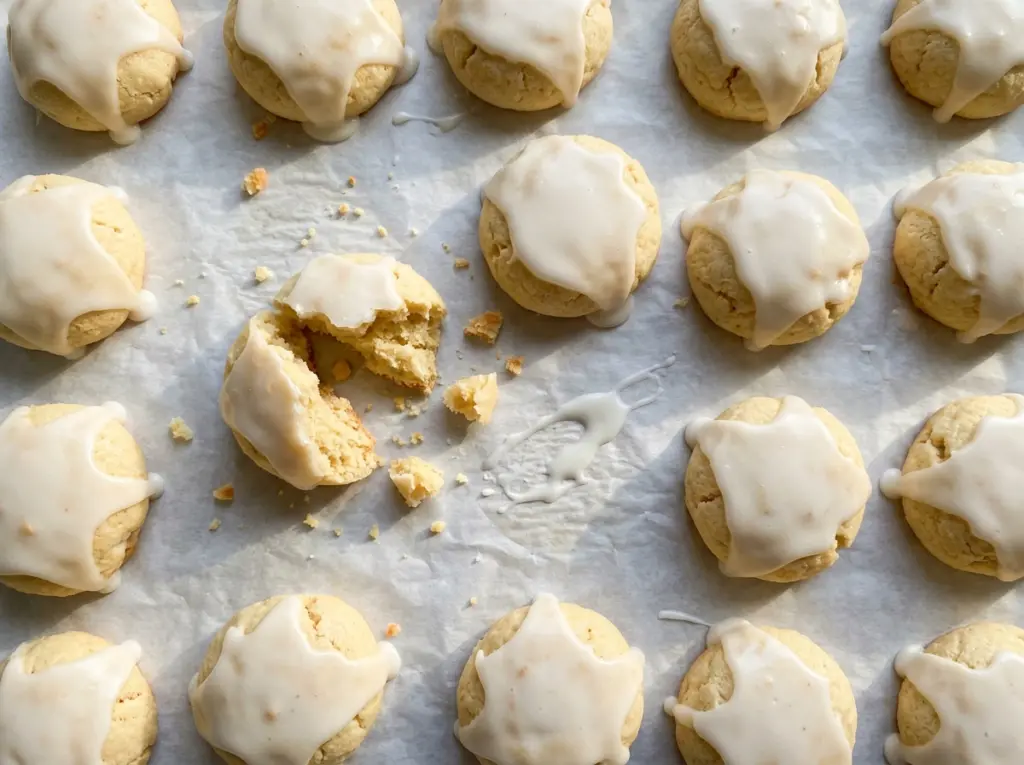
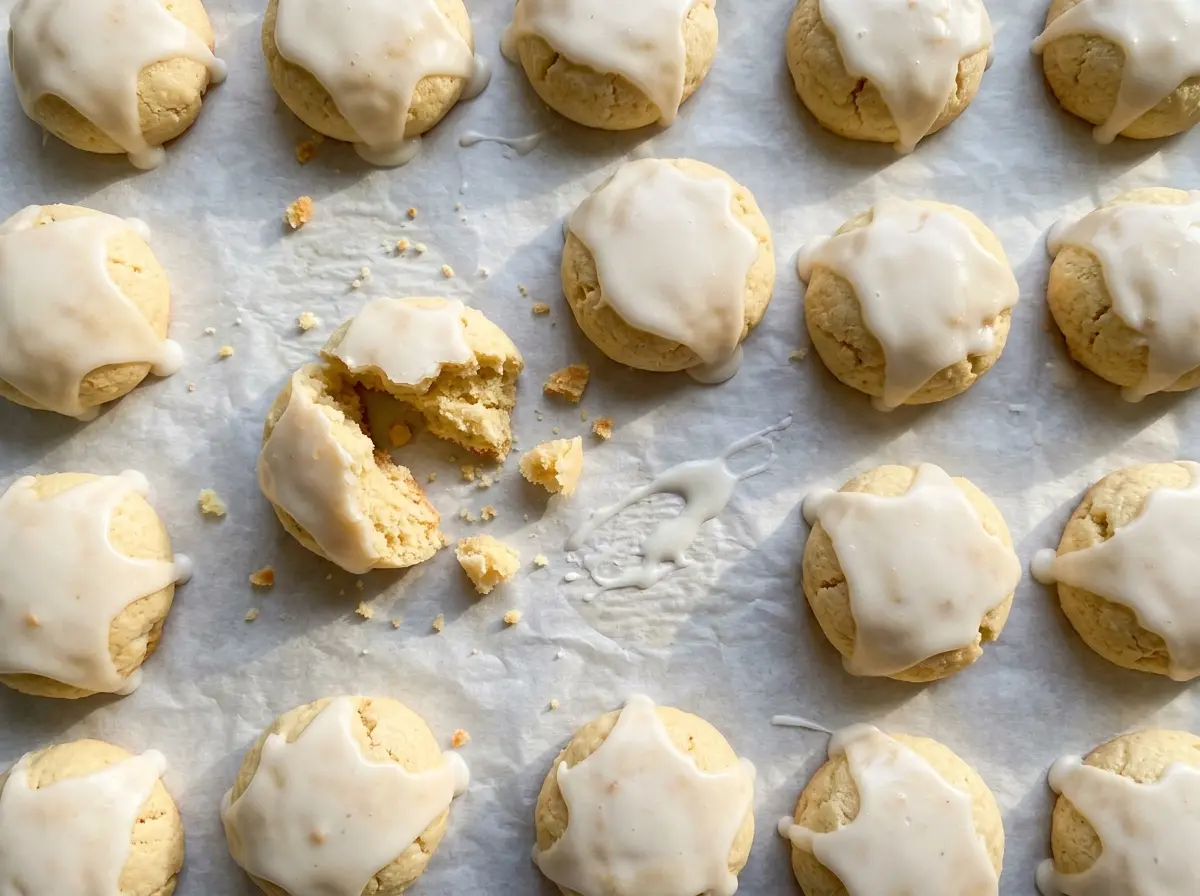
The cookies look almost unfinished when they come out of the oven: pale on top, with just a hint of gold underneath. That’s exactly where you want them. Almond meltaway cookies are meant to stay delicate, and baking until the tops brown can take them from tender to dry before you notice.
I keep the dough simple and give it a full 30 minutes in the refrigerator before shaping. That short rest firms up the butter, so the dough rolls neatly into balls instead of sticking to your hands. A thin almond glaze finishes each cookie without hiding its soft, buttery crumb.
Kitchen Note
Give the dough the full 30 minutes in the refrigerator before rolling. It should feel firm and easy to handle, not sticky or greasy, which makes shaping all 24 cookies much less fussy.
Save these almond meltaway cookies for a bake-ahead treat with a soft crumb and a smooth almond glaze.
Why Cornstarch Gives These Cookies Their Meltaway Crumb
These cookies aren’t just small sugar cookies with almond flavor. Cornstarch replaces part of the flour, which limits the dough’s gluten and gives the baked cookies their fine, tender texture. That’s what makes them feel soft and almost powdery as you bite into them, rather than chewy or crisp.
That delicate texture also means the dough needs a light touch. Mix the dry ingredients into the butter only until they’re combined; a long beating after the flour goes in can make the cookies tougher. And don’t judge doneness by the tops. They should look set while their bottoms are only beginning to turn golden, not deeply browned.
The glaze adds a thin, sweet finish and another layer of almond aroma. It’s deliberately simple, so the cookie stays the main event. Spread it only after the cookies have cooled completely; warm cookies soften the glaze and make it harder to keep an even coating.
What the Butter, Starch, and Almond Extract Each Bring

- Unsalted butter — Butter supplies the rich flavor and carries the almond aroma through the dough. It should be softened enough to beat smooth, but not melted or greasy. A firm plant-based baking stick can replace it measure for measure; tub-style spread is too soft for a dependable dough.
- Powdered sugar — Its fine texture blends into the butter without the gritty feel granulated sugar can leave behind. Use sugar that’s loose and free of hard clumps for a smooth glaze. Granulated sugar isn’t a good direct replacement in either the dough or topping.
- Almond extract — Extract gives the cookies their defining aroma without adding liquid from chopped nuts. Pure extract has a rounded, fragrant quality; imitation extract works too, though its aroma may come across more sharply. Vanilla extract can replace it measure for measure, but the cookies will no longer taste distinctly of almond.
- All-purpose flour — Flour gives the dough enough structure to hold its shape around the tender starch. Fluff it before measuring so it doesn’t pack into the cup; too much flour is one of the easiest ways to lose that delicate bite. For a gluten-free batch, use a measure-for-measure baking blend made for cookies.
- Cornstarch — This is the ingredient that keeps the crumb especially soft. Arrowroot starch can stand in measure for measure, though the texture may be a little less familiar; don’t replace it with more flour if you’re after the meltaway finish.
- Milk — A small amount loosens the powdered sugar into a spreadable glaze. Any unsweetened plant milk works in its place, but add it gradually if you’re adjusting the glaze so it doesn’t become too thin to stay on the cookies.
From Soft Dough to a Glaze That Sets Cleanly
Beat the Butter Until Creamy
Heat the oven to 350°F and line an 18×13-inch rimmed baking sheet with parchment paper. Beat the softened butter with the portion of powdered sugar for the cookies until the mixture looks smooth and creamy, then mix in the almond extract for the dough. If the butter is still cold, it won’t blend evenly; if it has melted, the dough can turn greasy.
Mix Gently and Chill the Dough
Whisk the flour, cornstarch, and salt together in a medium bowl so the starch is spread through the flour. Add the dry mixture to the butter mixture and mix just until no loose flour remains. Cover the bowl and chill the dough for 30 minutes; stop mixing once it comes together so the cookies stay tender.
Shape Even Balls and Flatten Them Lightly
Roll the chilled dough into 24 balls and set them about 2 inches apart on the prepared baking sheet. Gently flatten each ball rather than pressing it into a thin disc. Keeping the portions close in size helps them bake at the same pace, while a light flattening gives each cookie an even shape.
Bake to a Pale Finish, Then Cool
Bake for 10–12 minutes, watching for cookies that look set and have bottoms just beginning to turn golden. The tops can stay pale, so don’t wait for all-over browning as a doneness cue. Let them cool on the baking sheet for 5 minutes, then move them to a rack and wait until they’re completely cool before glazing.
Stir and Spread the Almond Glaze
Stir the remaining powdered sugar with the almond extract for the glaze and the milk until smooth. If you see dry pockets, scrape the sides and bottom of the bowl as you stir rather than spreading an uneven mixture. Spread the glaze over the cooled cookies and leave them undisturbed until the surface sets.
Two Smart Changes for Different Cookie Jars
Gluten-Free Meltaways
Replace the all-purpose flour with the same volume of a measure-for-measure gluten-free baking blend formulated for cookies. The cornstarch still contributes tenderness, while the blend supplies structure; expect a slightly different crumb from the wheat-flour version.
A Vanilla Version Without Almond
Use vanilla extract in place of the almond extract in both the dough and glaze, keeping the same divided amounts. You’ll get a gentle vanilla cookie with the same delicate texture, but you’ll give up the unmistakable almond fragrance.
Storage and Reheating
- Refrigerator: These cookies don’t need refrigeration. Keep them airtight at room temperature for up to 5 days; chilling can firm the tender crumb.
- Freezer: Freeze the baked cookies without glaze in an airtight container, with parchment between layers, for up to 2 months. Thaw completely at room temperature, then glaze.
- Reheating: Skip reheating; heat can soften the cookies and make the glaze sticky. Let chilled cookies come back to room temperature before serving.
Questions That Come Up With Almond Meltaway Cookies
Almond Meltaway Cookies
Ingredients
Equipment
Method
- Heat the oven to 350°F.
- Line an 18x13-inch rimmed baking sheet with parchment paper.
- Beat the butter and 1/2 cup powdered sugar in a large bowl until smooth and creamy.
- Beat in 3/4 teaspoon almond extract.
- Whisk the flour, cornstarch, and salt in a medium bowl.
- Mix the flour mixture into the butter mixture just until combined.
- Cover and chill the dough for 30 minutes.
- Roll the dough into 24 balls.
- Place the balls about 2 inches apart on the prepared baking sheet.
- Gently flatten each ball.
- Bake for 10–12 minutes, until the cookies look set and their bottoms are just beginning to turn golden.
- Cool on the baking sheet for 5 minutes, then transfer to a rack to cool completely.
- Stir the remaining 1 cup powdered sugar, 1/4 teaspoon almond extract, and milk in a small bowl until smooth.
- Spread the glaze over the cooled cookies.
- Let the glaze set.


