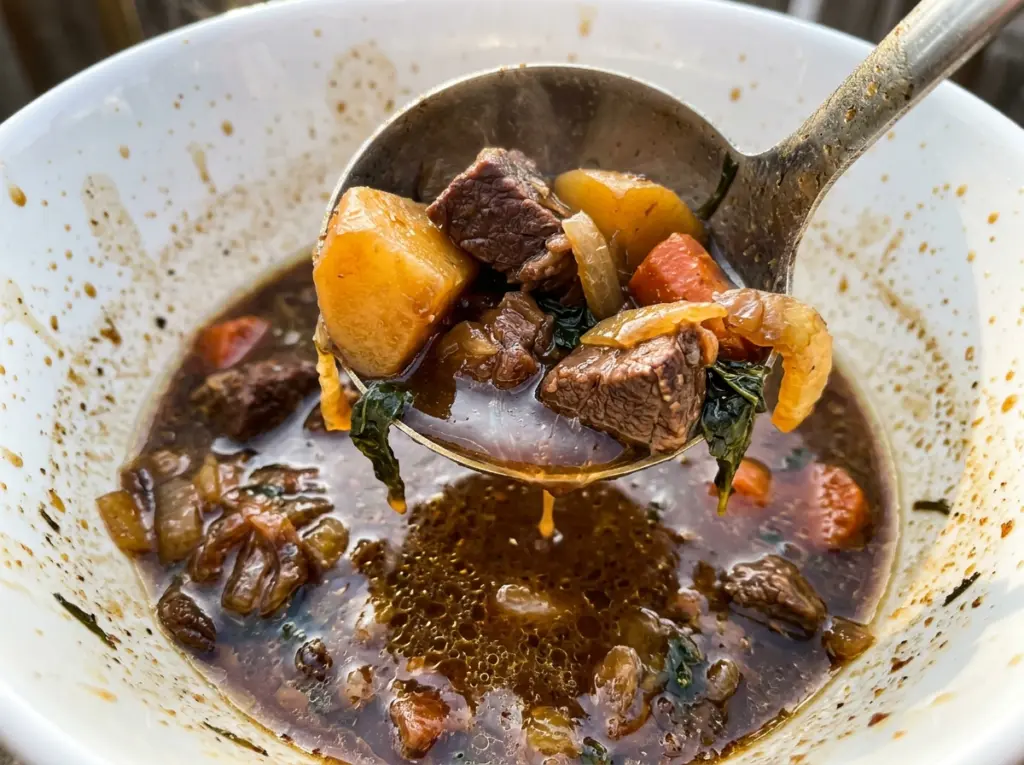
The bacon begins to render in the Dutch oven, and the kitchen starts to smell like the first good decision of the afternoon. Once the beef gets its turn in that same pot, the browned bits left behind become part of the stew instead of something to scrub away. Anthony Bourdain’s Beef Stew builds its deep, savory base from those layers, then lets the oven do the patient work.
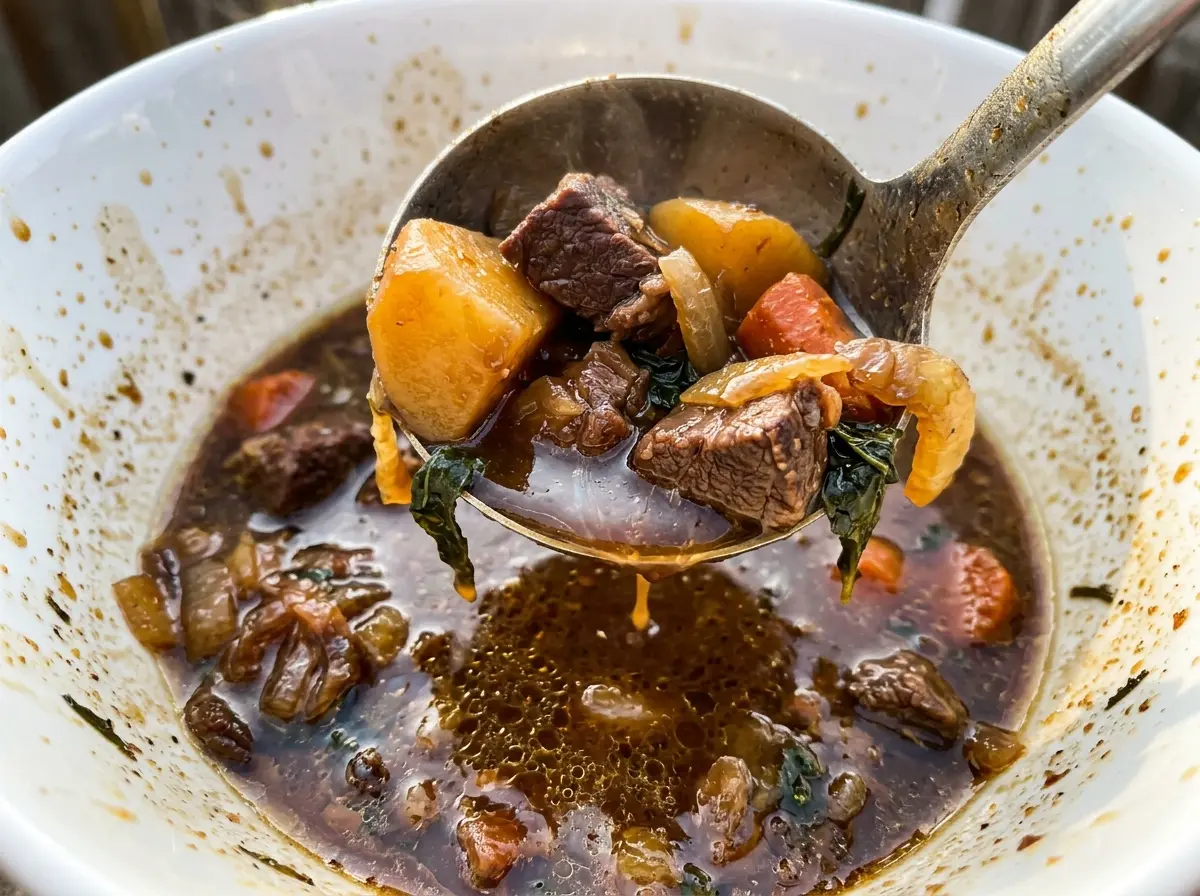
I like this stew because the vegetables still have their own texture when the beef turns tender. The red wine gives the broth a full, savory edge, while the bacon makes it feel rich without needing a complicated sauce. Let the beef braise until a fork slips into it easily, and you’ll have a pot of tender chunks, soft onions, and mushrooms tucked into glossy gravy.
Kitchen Note
Pat the beef dry before seasoning it, and brown it in batches rather than piling it into the pot. Crowded pieces release moisture and steam; a little space lets the surfaces take on real color.
Save Anthony Bourdain’s Beef Stew for a slow-cooked dinner with tender chuck, red wine gravy, and soft pearl onions.
Why the Pearl Onions and Mushrooms Go In Late
The stew’s long first bake is for the chuck, not for every ingredient in the pot. Pearl onions and mushrooms need less time to soften than large beef pieces, and leaving them in for the entire braise would blur their texture into the gravy. Adding them for the final stretch gives them time to turn tender while keeping them recognizable on the spoon.
That timing also makes the stew feel more balanced. The beef becomes yielding and rich, while the onions stay sweet and the mushrooms keep a little bite. Neither addition needs to brown separately or create another pan to wash; they go straight into the braising liquid once the beef has had its first two hours in the oven.
Watch for soft pearl onions and beef that gives easily to a fork at the end. If the onions are soft but the beef still resists, let the beef’s texture guide you rather than serving it firm. The final rest gives the gravy a moment to settle around the vegetables and meat.
What Gives This Stew Its Savory, Full-Bodied Base

- Beef chuck — Its marbling and connective tissue suit a long, covered braise, giving you tender pieces and a richer broth. Choose a chuck roast with some visible marbling, then cut it into evenly sized pieces; boneless beef shoulder is the closest swap.
- Thick-cut bacon — It renders flavorful fat for browning and leaves substantial crisp pieces in the stew. Regular bacon works if that’s what you have, though the pieces won’t be as meaty; brown them until crisp before lifting them out.
- Dry red wine — A dry wine lends acidity and depth that plain broth can’t fully match. Use a bottle you’d enjoy drinking, but there’s no need for an expensive one. For a wine-free pot, replace the wine with the same volume of beef broth; expect a rounder, less wine-forward gravy.
- Frozen pearl onions — Thawed frozen onions save the peeling and keep their small, sweet shape in the finished stew. Thaw them before adding so they’re ready to soften in the final bake.
- Cremini mushrooms — Their earthy flavor stands up to the wine and beef. White button mushrooms are an easy substitute; halve or quarter them to a similar size so they soften evenly.
- Tomato paste and flour — Tomato paste adds a concentrated savory note, and the flour helps the braising liquid become gravy. A cup-for-cup gluten-free flour blend can replace the all-purpose flour if you need a gluten-free version.
Building the Braise in the Dutch Oven
Render the Bacon, Then Brown the Beef
Heat the oven to 325°F and season the beef with the first portion of salt and the black pepper. Cook the bacon in a 6-quart Dutch oven over medium heat for 6–8 minutes, until browned and crisp, then transfer it to a plate with a slotted spoon. Brown the beef in batches in the bacon fat, about 3–4 minutes per side, adding the olive oil if the pot looks dry. Move the beef to the plate with the bacon.
Soften the Vegetables and Cook the Flour
Add the chopped yellow onions, carrots, and celery to the pot. Cook for 6–8 minutes, stirring and scraping up the browned bits until the vegetables have softened. Stir in the tomato paste and cook it for 1 minute, then add the flour and remaining salt. Cook for 1 minute, stirring so the flour coats the vegetables instead of gathering in dry pockets.
Pour in the Wine and Start the Oven Braise
Gradually stir in the red wine and beef broth, scraping the bottom as the liquid loosens the cooked-on bits. Add the bay leaves, thyme sprigs, browned beef, and bacon, then bring the pot to a simmer. Cover it and transfer it to the oven for 2 hours. Keep the lid on during this stretch so the beef braises gently rather than losing too much liquid.
Add the Late Vegetables and Rest
Stir in the thawed pearl onions and mushrooms, then cover the pot again. Bake for 45–60 minutes, until the beef is fork-tender and the onions are soft. Lift out the bay leaves and thyme stems before serving. Let the stew rest for 10 minutes so the bubbling settles and the gravy can gather around the beef.
Three Changes That Still Let the Beef Stew Shine
Make It Gluten-Free
Use a cup-for-cup gluten-free all-purpose flour blend in place of the regular flour. Stir it in and cook it for the same minute before adding the liquids; the stew keeps its thick, gravy-like body, though the exact thickness may vary a little by blend.
Use Shiitakes for a Woodsy Mushroom Flavor
Replace the cremini mushrooms with the same amount of shiitake caps, removing any tough stems and cutting the caps into halves or quarters. They bring a more pronounced earthy flavor and a slightly firmer bite to the last stage of the stew.
Leave Out the Bacon
Skip the bacon and use the olive oil to brown the beef, adding it when the pot looks dry. The stew still braises well, but it won’t have the smoky flavor or bacon pieces, so the finished gravy tastes a little cleaner.
Storage and Reheating
- Refrigerator: Store in a covered container for 3–4 days. The gravy thickens as it chills, and the beef firms up until warmed.
- Freezer: Freeze cooled portions in airtight containers for up to 3 months. The mushrooms may soften a little after thawing, but the stew holds up well.
- Reheating: Warm gently in a covered pot on the stovetop, stirring now and then until steaming throughout. Avoid a hard boil, which can make the beef seem drier; loosen thick gravy with a splash of beef broth.
Questions That Come Up While the Stew Is Braising
Anthony Bourdains Beef Stew
Ingredients
Equipment
Method
- Heat the oven to 325°F.
- Season the beef with 1 teaspoon of the salt and the pepper.
- In a 6-quart Dutch oven over medium heat, cook the bacon for 6–8 minutes until browned and crisp; transfer it to a plate with a slotted spoon.
- Brown the beef in batches in the bacon fat, adding the olive oil if the pot looks dry, about 3–4 minutes per side; transfer the browned beef to the plate.
- Add the yellow onions, carrots, and celery to the pot and cook for 6–8 minutes, stirring and scraping up browned bits, until softened.
- Stir in the tomato paste and cook for 1 minute.
- Stir in the flour and remaining 1/2 teaspoon salt and cook for 1 minute.
- Gradually stir in the wine and beef broth, then add the bay leaves, thyme, browned beef, and bacon.
- Bring to a simmer.
- Cover and bake for 2 hours.
- Stir in the pearl onions and mushrooms.
- Cover and bake for 45–60 minutes, until the beef is fork-tender and the onions are soft.
- Remove the bay leaves and thyme stems.
- Let the stew rest for 10 minutes before serving.


