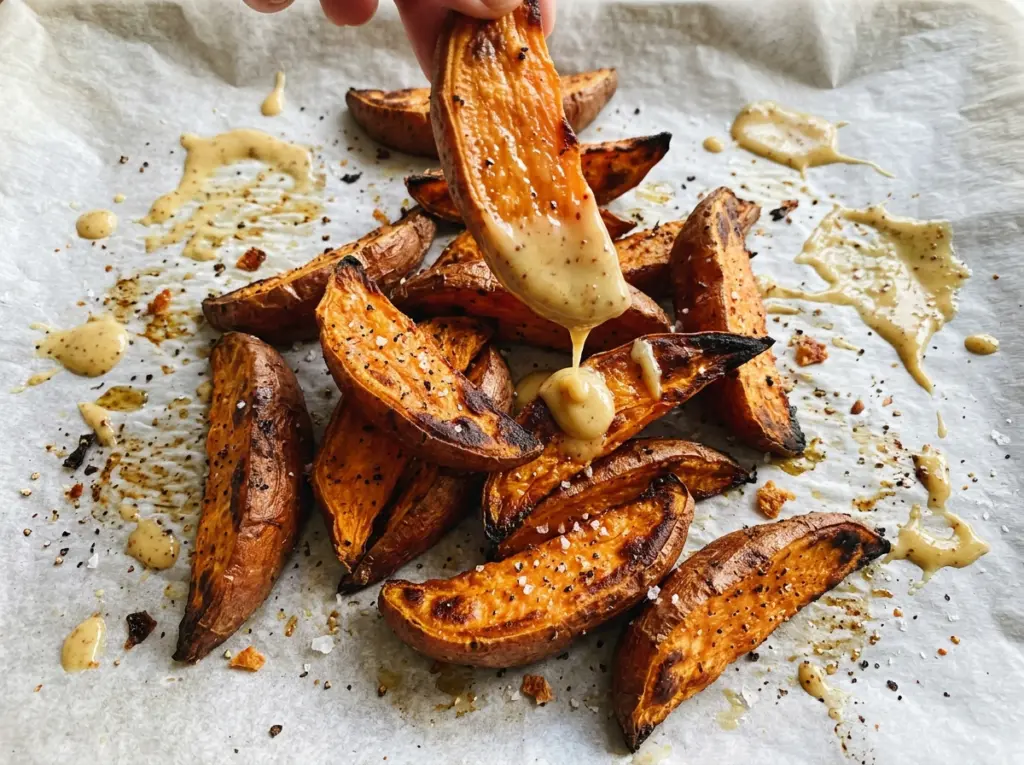
The edges are the first thing I watch: they start to turn golden while the centers stay soft and sweet. That contrast is what makes these baked sweet potato wedges satisfying, without needing to deep-fry them or fuss over a complicated coating. I cut them lengthwise into even wedges, toss them with olive oil and a little paprika, then let the oven do the work.
The dip comes together in the time the potatoes bake. Mayonnaise gives it a creamy base, Dijon brings a gentle bite, and honey rounds out the mustard without hiding it. A little lemon juice keeps the sauce from tasting heavy. After the wedges come out of the oven, I give them two minutes to rest before bringing them to the table with the honey mustard alongside.
They’re tender through the middle, browned at the edges, and just right for scooping through that sweet-tangy dip.
Kitchen Note
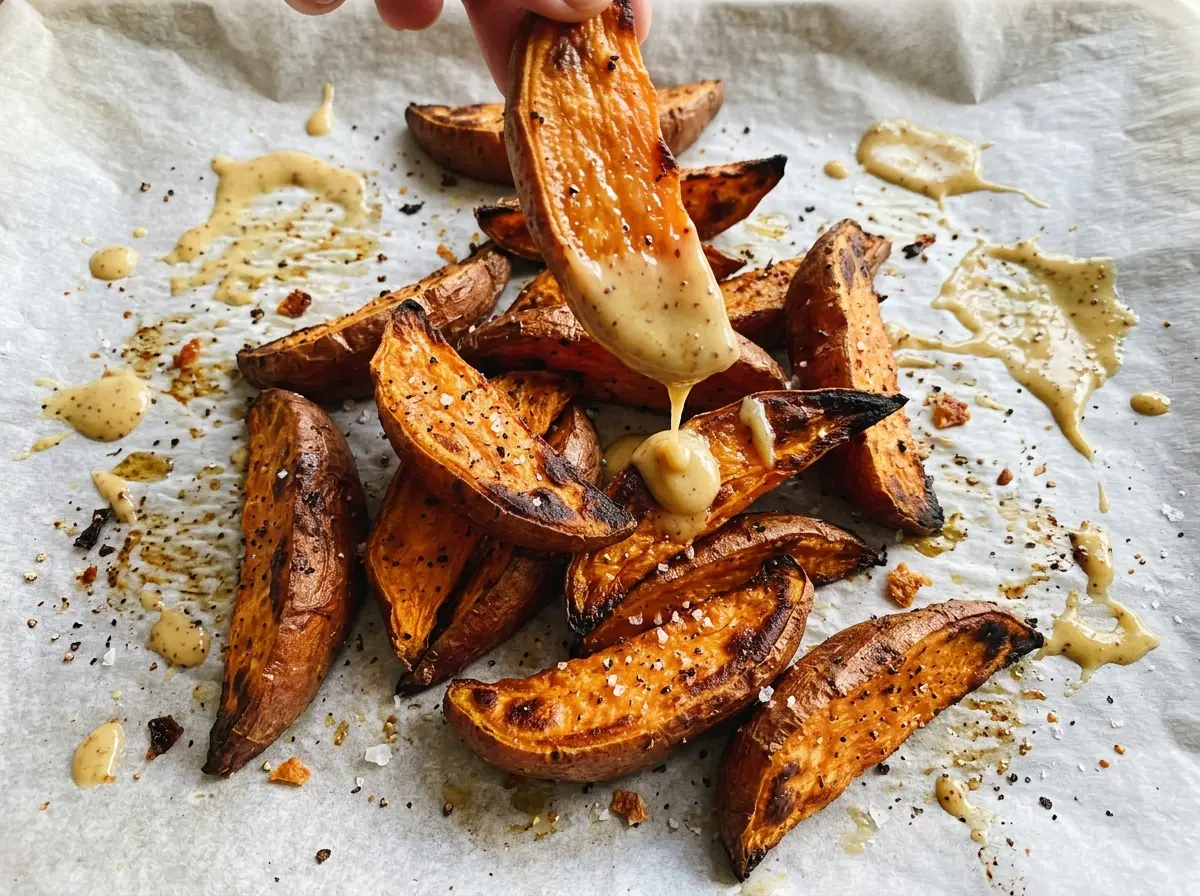
Give the wedges their full two-minute rest after baking. They’re hot and tender right out of the oven, and that short pause makes them easier to pick up and dip without losing their browned edges.
Save these baked sweet potato wedges with honey mustard for an easy side with browned edges and a creamy, tangy dip.
Why These Wedges Need Browning, Not a Crispy-Fry Makeover
Sweet potatoes don’t behave exactly like regular potatoes in the oven. Their centers turn soft and tender while the outside browns, but the result isn’t meant to have the shattering crunch of a deep-fried fry. Waiting for every surface to look crisp can leave the thinner ends too dark before the thicker parts are ready. I look for browned edges and tender centers instead.
Cutting the potatoes into wedges of the same thickness helps the batch finish together. The 1/2-inch cut gives each piece enough body to stay soft inside while the exposed sides color in the oven. If one wedge is much thicker than the rest, it may still feel firm when its neighbors are tender. Aim for consistency as you cut, and judge doneness by the texture of the potato as well as its color.
The other detail that matters is room on the baking sheet. A single layer gives the wedges contact with the hot pan and lets their edges brown; piled-up pieces are more likely to soften against one another. Turn them halfway through so the sides have a chance to color evenly. The goal is a tender middle and visible browning, not a uniformly crisp shell.
What the Sweet Potatoes, Paprika, and Dip Each Bring

- Sweet potatoes — Choose firm potatoes without soft spots, then scrub them well. Their natural sweetness deepens as the edges brown, while the centers stay creamy. Keeping the cut size consistent matters more than finding potatoes that look identical.
- Olive oil, kosher salt, black pepper, and paprika — The oil helps the seasonings cling and encourages browning; kosher salt and pepper keep the sweet potato from tasting one-note. Paprika adds a warm, mild savoriness rather than a strong heat. Freshness matters most for paprika that’s been sitting open for a long time, since its aroma fades; everyday olive oil works well here.
- Mayonnaise — This is the body of the honey mustard, making it thick enough to cling to a wedge instead of running off. A reduced-fat mayonnaise works too, though the dip will taste a little lighter. Use the mayonnaise you enjoy eating on its own; its flavor is noticeable in a sauce with just a few ingredients.
- Dijon mustard, honey, and lemon juice — Dijon gives the dip its sharp mustard character, honey softens that edge, and lemon juice keeps the mixture tasting bright. Since there’s no cooking to mellow the mustard, use a Dijon you like. Stir the ingredients until the sauce looks uniform, with no streaks of honey or mustard.
From Even Wedges to a Smooth Honey Mustard Dip
Cut and Season the Potatoes Evenly
Heat the oven to 425°F and line a large rimmed baking sheet with parchment paper. Cut the scrubbed sweet potatoes lengthwise into 1/2-inch wedges, keeping the pieces as even as you can. Toss them with the olive oil, kosher salt, black pepper, and paprika until the surfaces are coated. If you see dry patches or seasoning gathered at the bottom of the bowl, toss again before arranging the wedges.
Roast Until Tender and Browned at the Edges
Arrange the wedges in a single layer on the prepared baking sheet. Bake for 30 to 35 minutes, turning them halfway through, until they’re tender and browned at the edges. Use a thin knife or fork to check a thicker wedge; it should pass through the center without resistance. The thinner tips may color faster, so use the overall tenderness and browned edges as your cues rather than waiting for every piece to look identical.
Stir the Dip While the Oven Works
While the wedges bake, stir the mayonnaise, Dijon mustard, honey, and lemon juice together in a small bowl. Keep mixing until the dip is smooth and its color looks even from edge to edge. If a little honey sits at the bottom, scrape the bowl and stir again rather than serving it in streaks. Let the finished wedges rest for 2 minutes, then serve them with the honey mustard.
Easy Ways to Adapt the Wedges and Dip
Make a Half Batch
For a smaller meal, halve every ingredient, including the honey mustard, while keeping the wedges the same 1/2-inch thickness. Arrange them in a single layer and use the same oven temperature and turning method; begin checking for tenderness at the lower end of the bake time. You’ll have less dip left over, which is handy when you’re cooking for two.
Leave Out the Paprika for a Milder Flavor
Omit the paprika and keep the olive oil, salt, and black pepper in the seasoning. The sweet potato flavor comes through more plainly, without the warm savory note paprika adds. The wedges still roast the same way, so there’s no need to change the cut or oven method.
Keep the Dip Gluten-Free
The ingredients here don’t include wheat, but packaged condiments can vary. Choose mayonnaise and Dijon mustard marked gluten-free if you’re cooking for someone who needs that assurance. The dip keeps its creamy, tangy character without changing the wedges.
Storage and Reheating
- Refrigerator: Refrigerate the wedges and dip in separate covered containers within 2 hours. The wedges keep for 3 to 4 days; their edges soften as they sit.
- Freezer: Freezing isn’t recommended. The cooked wedges tend to lose their pleasant texture after thawing, and the mayonnaise-based dip can separate.
- Reheating: Warm the wedges in a 425°F oven until hot throughout. A microwave heats them, but it also makes the edges softer; keep the dip cold and serve it on the side.
Questions That Come Up When Making These Sweet Potato Wedges
Baked Sweet Potato Wedges with Honey Mustard
Ingredients
Equipment
Method
- Heat the oven to 425°F.
- Line a large rimmed baking sheet with parchment paper.
- Cut the sweet potatoes lengthwise into 1/2-inch wedges.
- Toss the sweet potato wedges with the olive oil, salt, pepper, and paprika until evenly coated.
- Arrange the wedges in a single layer on the baking sheet.
- Bake for 30 to 35 minutes, turning them halfway through, until tender and browned at the edges.
- While the wedges bake, stir the mayonnaise, Dijon mustard, honey, and lemon juice together in a small bowl until smooth.
- Let the wedges rest for 2 minutes.
- Serve the wedges with the honey mustard.


