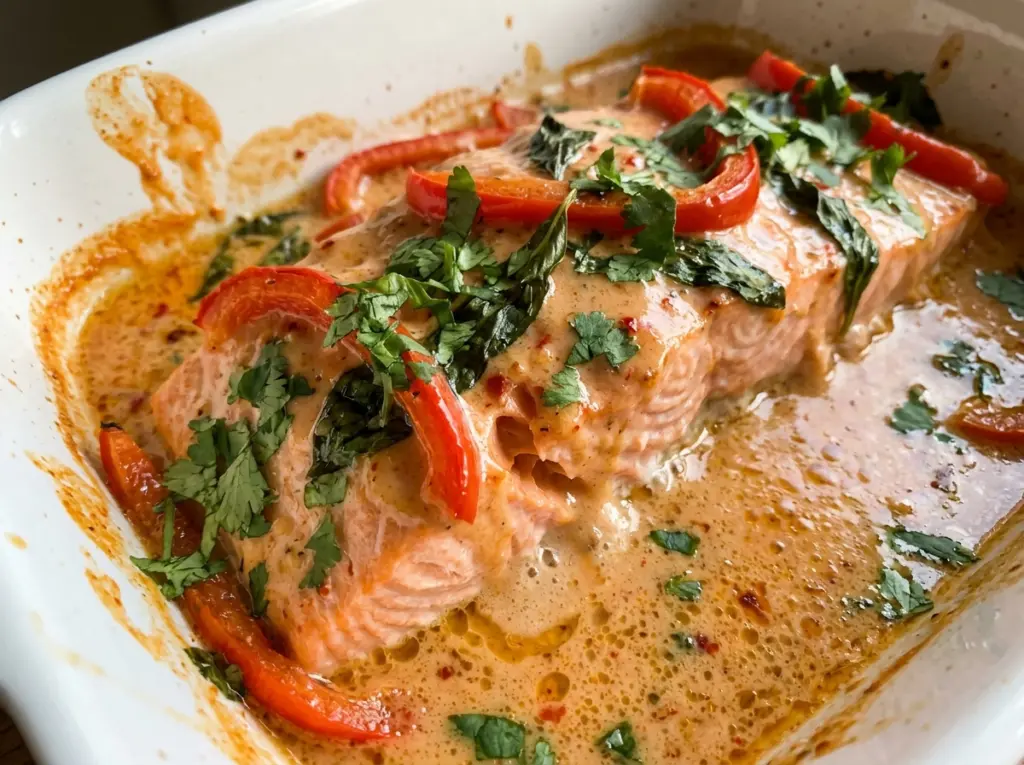
The coconut milk and red curry paste turn into a silky, fragrant sauce as soon as they meet in the bowl. I like this baked Thai red curry salmon for the way it gets a full, savory sauce around the fish without asking me to stand over a pan while dinner cooks. Each fillet bakes right in the coconut mixture, so there’s sauce to spoon over the top when it comes out of the oven.
Fish sauce and a little brown sugar round out the curry paste, while fresh lime juice keeps the coconut from tasting heavy. The sauce takes only a quick whisk, and the oven does the rest. Since salmon fillets aren’t always the same thickness, I check each one rather than guessing from the clock. You get tender salmon with a bright, gently rich curry sauce in every bite.
Kitchen Note
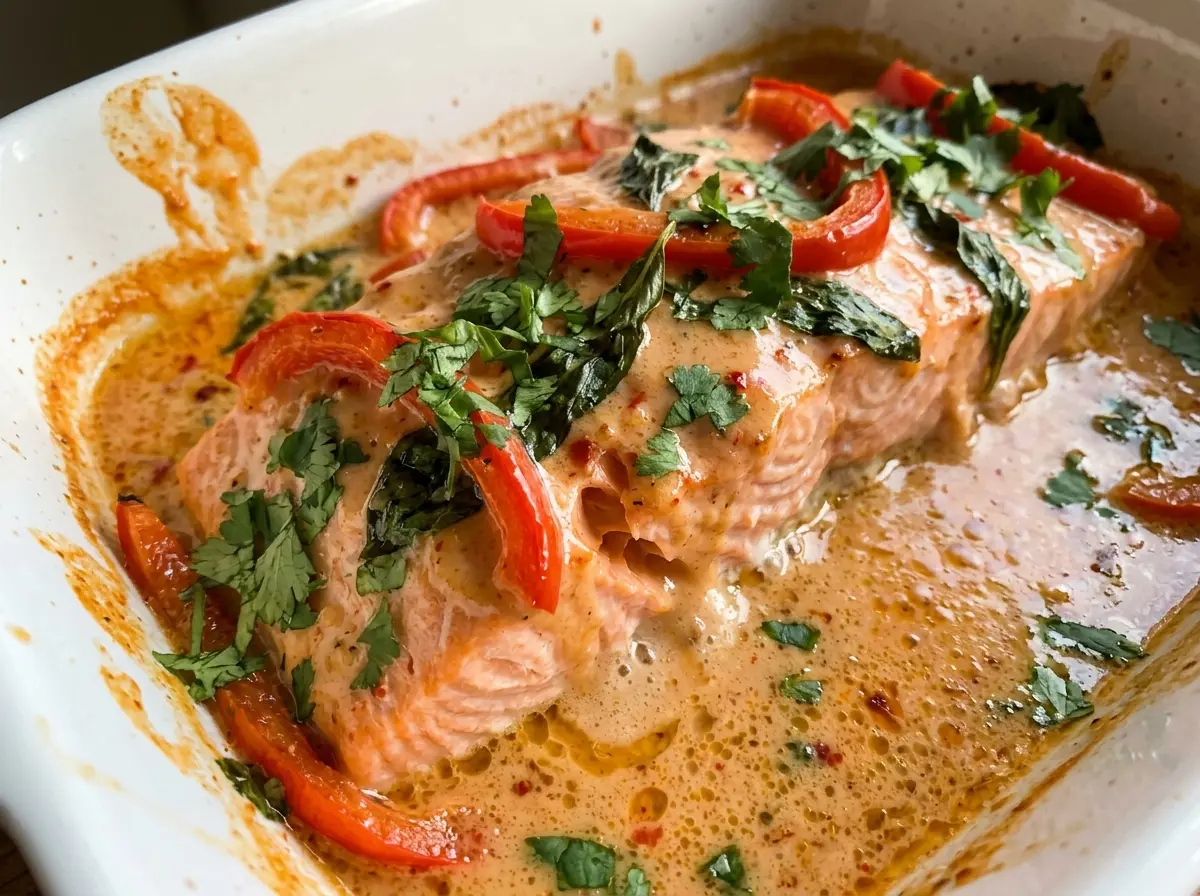
Whisk until the curry paste is fully blended into the coconut milk, with no stubborn streaks left at the bottom of the bowl. A smooth sauce pours evenly around the fillets instead of leaving one spot more concentrated than another.
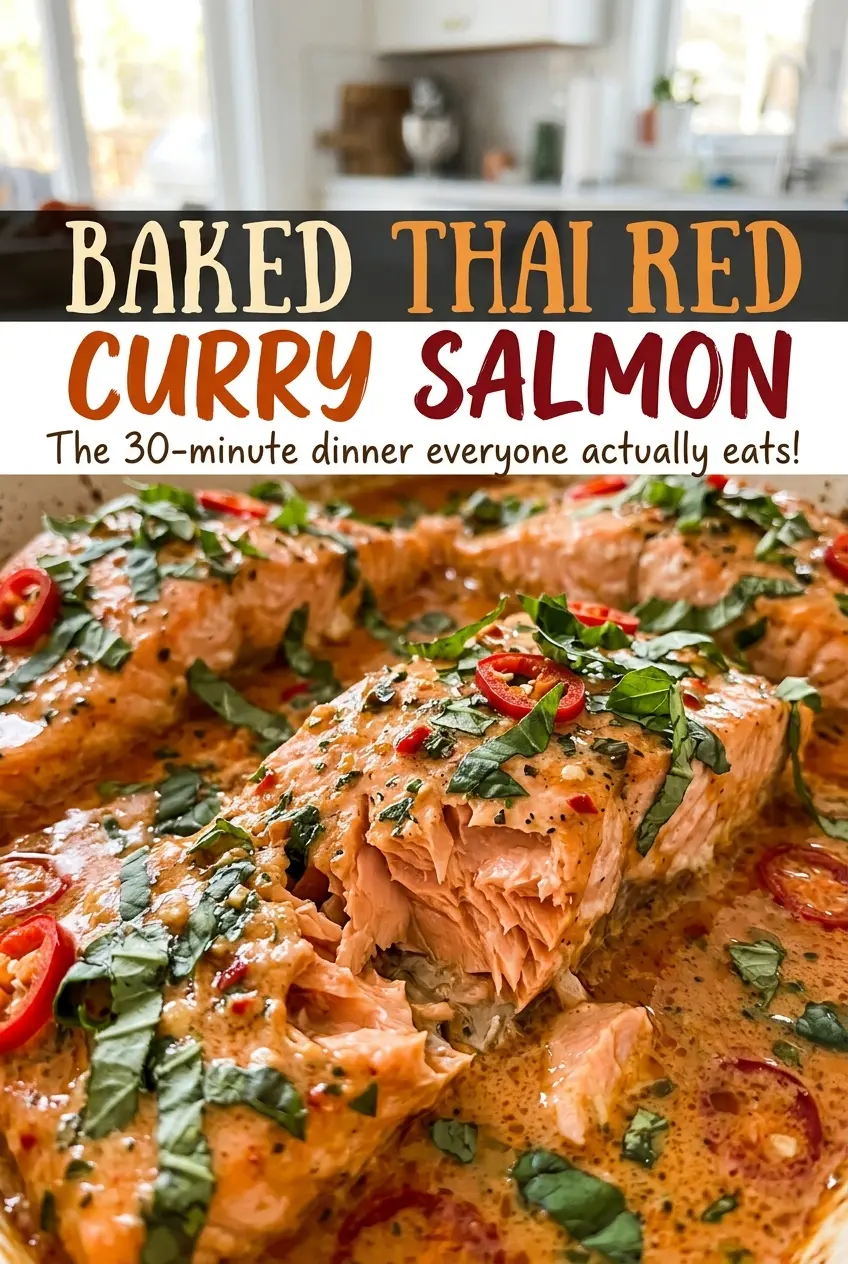
Save this baked Thai red curry salmon for a low-fuss dinner with tender fillets and coconut curry sauce.
Why This Salmon Bakes in the Sauce Instead of Getting a Curry Glaze
This sauce is meant to surround the fillets, not cook down into a sticky coating. Coconut milk keeps it loose in the baking dish, while red curry paste, fish sauce, brown sugar, and lime juice give it its savory, sweet, and tangy balance. Pouring it over and around the fish means the exposed tops and sides get coated as they bake, and there’s still plenty left in the dish to spoon over the salmon.
That distinction matters if you’re expecting a thick, reduced restaurant-style curry. The oven method gives you baked salmon and a pourable sauce, not a simmered curry with a dense gravy. Use a 9×13-inch baking dish so the four fillets can sit in one layer rather than crowding or stacking; the sauce can spread around them, and the fish cooks evenly. Skin-side down keeps the skin between the flesh and the baking dish, while the sauce adds moisture around the fillets.
The balance is deliberately modest: the curry paste brings the main flavor, fish sauce adds savory depth, and brown sugar softens the sharp edges. Lime juice lifts the whole mixture. Taste the combined sauce before it goes into the dish if you want to notice how those elements come together; once it’s poured over the fish, there’s no need to make a separate glaze or reduce it on the stove.
What the Coconut Milk and Curry Paste Contribute to the Sauce
- Unsweetened coconut milk — It gives the sauce its creamy body and carries the curry paste around the salmon. Shake the can well before measuring or pouring; coconut milk can separate in the can, and you want its contents evenly combined. Unsweetened matters here because the brown sugar already provides the sauce’s sweetness.
- Thai red curry paste — This is the concentrated source of chile and aromatic flavor, so the taste and heat can vary among brands. Use a paste you like the flavor of, and keep the quantity at the listed two tablespoons for the intended balance. A mild paste is a useful choice if you prefer less heat.
- Fish sauce — A tablespoon adds salty, savory depth without making the sauce taste like fish. It isn’t interchangeable with extra kosher salt; salt seasons, while fish sauce adds its own distinct fermented savoriness.
- Packed light brown sugar — Packing it gives you a consistent measure, and its gentle sweetness balances the curry paste and fish sauce. Dark brown sugar has a deeper molasses note, so light brown sugar keeps the sauce’s sweetness restrained.
- Fresh lime juice — Lime brightens the coconut milk and keeps the sauce from feeling one-note. Fresh juice has a cleaner, livelier taste than bottled juice, and it takes only a small amount to make that contrast noticeable.
- Skin-on salmon fillets — The skin helps protect the underside of the fish as it bakes in the sauce. Choose fillets close to the same size so they’re easier to cook together, and check their thickest portions individually rather than relying on appearance alone.
How to Bake the Salmon Without Overcooking the Thickest Parts
Whisk a Smooth Coconut Curry Sauce
Heat the oven to 400°F. In a bowl, whisk together the well-shaken coconut milk, Thai red curry paste, fish sauce, packed light brown sugar, and fresh lime juice until combined. Scrape around the sides and bottom of the bowl so paste and sugar don’t sit in concentrated pockets. The finished mixture should look evenly blended and pourable.
Arrange the Fillets and Add the Sauce
Lightly grease a 9×13-inch baking dish with the neutral oil. Set the four skin-on salmon fillets skin-side down in the dish, then sprinkle them evenly with kosher salt. Pour the curry sauce over and around the fillets, aiming to distribute it across the dish rather than leaving most of it pooled in one corner. Keep the fillets in a single layer.
Bake to Temperature, Then Let the Fish Rest
Bake for 15 to 20 minutes, checking the thickest part of each fillet with a thermometer. Salmon portions can differ in thickness, so one fillet may reach the target before another; don’t use the first reading as a reason to skip checking the rest. Take the dish from the oven when the thickest part of each fillet reaches 145°F. Let the salmon rest in the dish for 3 minutes before serving.
Small Changes for a Milder or Lighter Curry Sauce
Choose a Milder Red Curry Paste
Use a mild Thai red curry paste in the same amount for a gentler sauce. You’ll keep the coconut, fish sauce, lime, and brown sugar balance, but the finished salmon will have less chile heat. Paste brands vary, so this is the easiest way to tune the heat without changing the rest of the mixture.
Use Light Unsweetened Coconut Milk
Light unsweetened coconut milk works in place of regular unsweetened coconut milk if you want a less rich sauce. The trade-off is a thinner, less creamy result, so the curry won’t cling to the salmon quite as much. Keep the can size and the other sauce ingredients the same.
Storage and Reheating
- Refrigerator: Store leftover salmon and sauce in an airtight container for 3 to 4 days. The fish will firm up as it chills.
- Freezer: Freeze portions with some sauce in an airtight freezer-safe container for up to 2 to 3 months. The coconut sauce may separate a little after thawing, but it can be stirred as it warms.
- Reheating: Warm covered in the microwave in short bursts, spooning sauce over the fish and checking that leftovers reach 165°F. Stop once heated through; prolonged reheating dries out salmon.
Questions That Come Up When Baking Salmon in Curry Sauce
Baked Thai Red Curry Salmon
Ingredients
Equipment
Method
- Heat the oven to 400°F.
- Whisk the coconut milk, red curry paste, fish sauce, brown sugar, and lime juice in a bowl until combined.
- Lightly grease a 9x13-inch baking dish with the oil.
- Arrange the salmon skin-side down in the dish and sprinkle evenly with the salt.
- Pour the curry sauce over and around the salmon.
- Bake for 15 to 20 minutes, until the thickest part of each fillet reaches 145°F.
- Rest the salmon in the dish for 3 minutes before serving.


