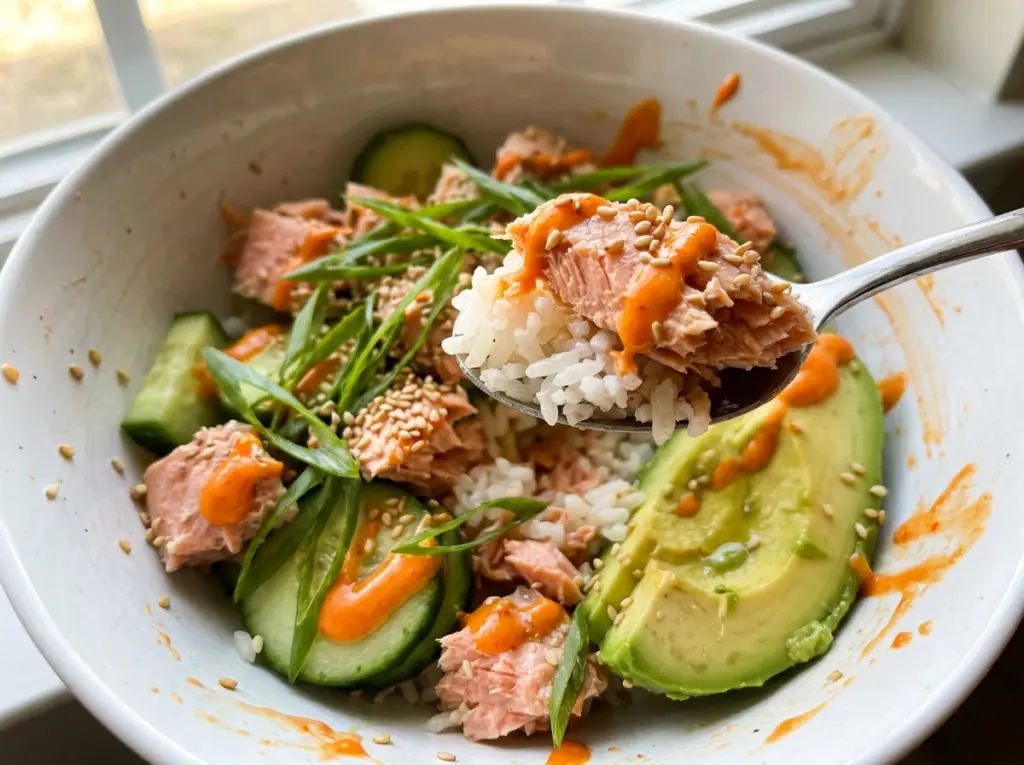
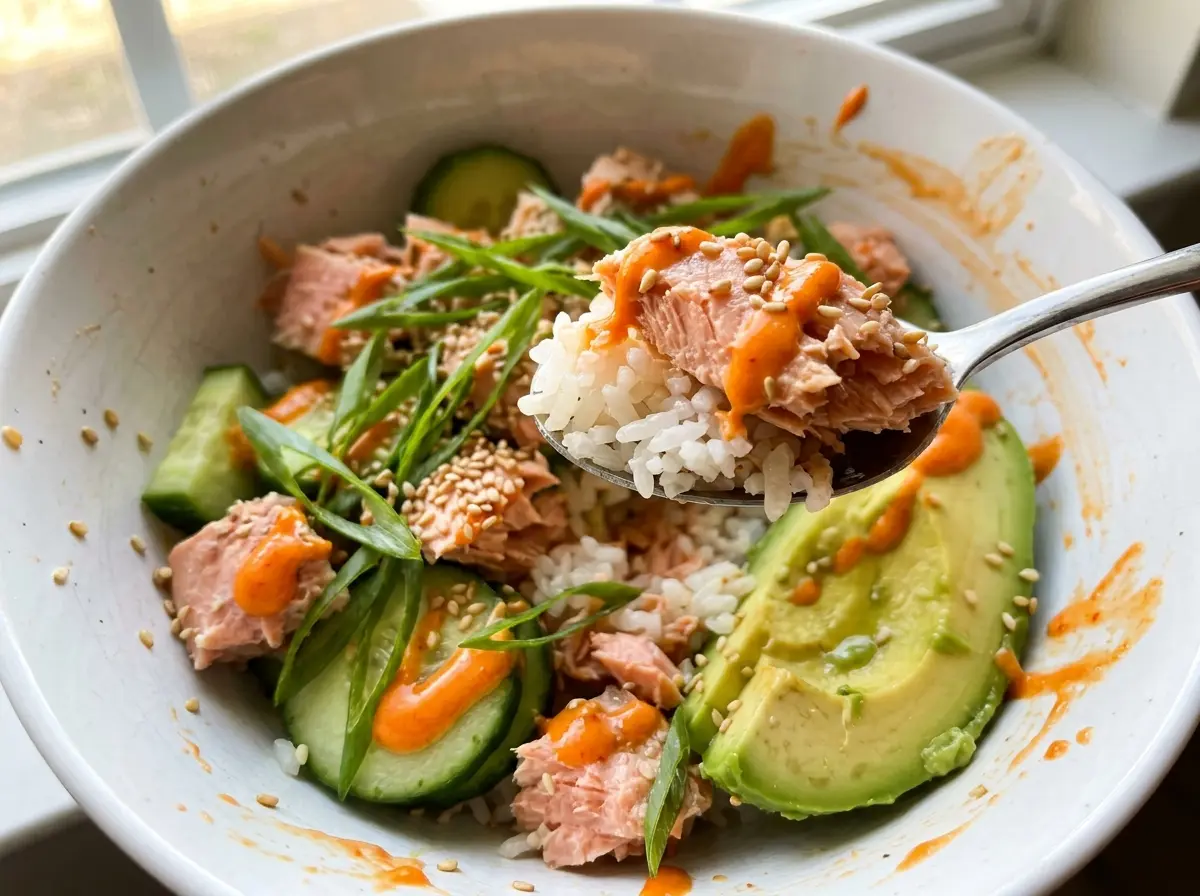
The best bite in this bowl starts with rice that’s tender but still separate, then picks up a little creamy salmon and a cool crunch of cucumber. I make this Canned Salmon Rice Bowl when I want a filling meal from pantry staples without cooking a separate piece of fish. The recipe makes two bowls, and the toppings go on right before serving so each one keeps its own texture.
The salmon gets mixed with mayonnaise, soy sauce, sriracha, and lime juice right in a bowl. That quick dressing clings to the flakes without needing a pan or an extra sauce to simmer. The lime brightens the richness, while the sriracha brings a small, adjustable kick.
Long-grain white rice gives the bowl a mild base that lets the salmon and fresh toppings stand out. Set everything over the rice and take a spoonful that catches both the creamy salmon and crisp cucumber.
Kitchen Note
Let the rice stand covered for the full 10 minutes after it comes off the heat. That quiet rest lets the grains finish absorbing moisture, so the rice is tender without turning wet at the bottom of the pot.
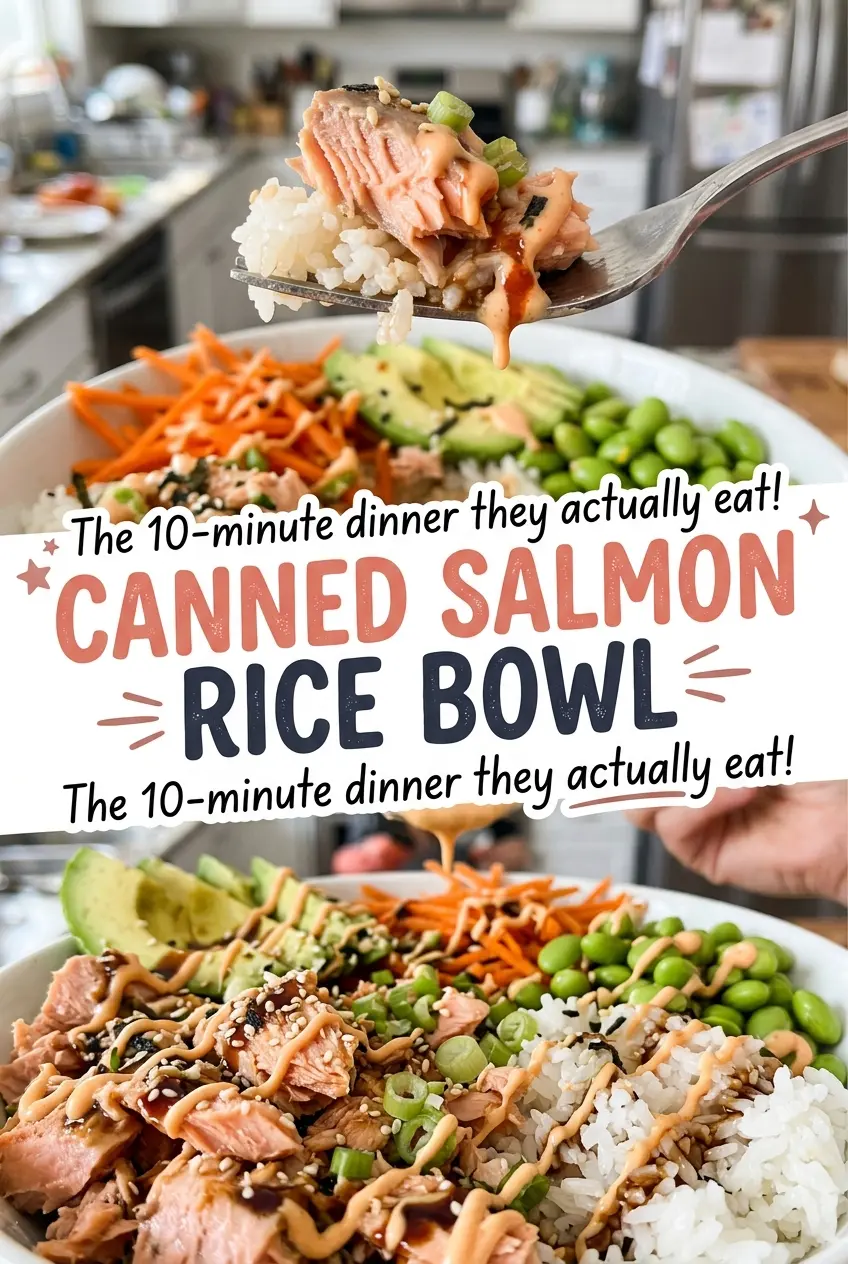
Save this Canned Salmon Rice Bowl for a pantry dinner with creamy salmon, fluffy rice, and crisp cucumber.
Why This Bowl Works Better Layered Than Tossed Together
It’s easy to think of a rice bowl as one mixture, but the different textures are what make this one satisfying. The salmon is coated in a creamy, tangy dressing, while the rice stays mild and distinct underneath. Keeping those parts layered means you can get a little of each in every bite without turning the rice into a mayonnaise-heavy mixture.
The toppings have their own jobs, too. Cucumber brings a fresh crunch, avocado softens the sharper edges, and scallions add a clean, savory finish. Sesame seeds give the top a little texture. Put them over the salmon and rice at the end rather than stirring everything together, and the cucumber stays crisp while the avocado keeps its shape. It’s a simple assembly choice, but it makes the bowl feel composed instead of mushy.
This balance also makes the bowl easy to adjust at the table. A bite with more salmon tastes richer; one with more rice is gentler. The ingredients don’t need to be perfectly mixed for the bowl to taste complete.
What Gives the Salmon Its Creamy, Tangy Balance
- Long-grain white rice — Its separate, tender grains make a neutral base for the more strongly seasoned salmon. Rinsing removes loose surface starch; drain it well so excess rinse water doesn’t change the amount in the pot.
- Canned salmon — Plain canned salmon is convenient and flakes readily into the dressing. Drain it thoroughly, remove the skin and large bones, then flake it before mixing; a premium brand matters less here than a clean, well-drained texture.
- Mayonnaise — This gives the salmon mixture its creamy body and helps the seasonings coat the flakes. A plain mayonnaise is the right fit; strongly flavored varieties can take over the mild fish.
- Soy sauce — It brings savory depth without needing a separate seasoning mix. Standard soy sauce is fine; for a gluten-free bowl, use certified gluten-free tamari instead.
- Sriracha and lime juice — Sriracha adds heat, while lime cuts through the richness with acidity. Fresh lime has a brighter aroma, though bottled lime juice works when that’s what you have.
- Cucumber, avocado, scallions, and sesame seeds — These provide the cool crunch, soft richness, fresh allium bite, and nutty finish that contrast with the dressed fish. Choose a firm cucumber and an avocado that yields gently when pressed; the sesame seeds keep well in the pantry.
Cook the Rice Gently, Then Dress the Salmon
Rinse Until the Water Runs Mostly Clear
Put the rice under cool running water and rinse until the water runs mostly clear. Drain it well before it goes into the saucepan; rice that carries a lot of rinse water can cook unevenly. This quick rinse helps the grains stay more distinct instead of clumping together. Take the time to drain rather than tipping wet rice straight into the pot.
Bring the Pot to a Boil Before Covering
Combine the rice, water, and salt in a 2-quart saucepan, then bring it to a boil over medium-high heat. Once it boils, cover the pan and reduce the heat to low. Simmer for 15 to 18 minutes, until the water is absorbed and the grains are tender. Keep the lid on during the simmer; lifting it lets steam escape and makes it harder to judge the rice by the stated timing.
Let the Rice Stand Covered
When the rice is tender and the water has been absorbed, remove the saucepan from the heat without uncovering it. Let it stand, still covered, for 10 minutes. The trapped steam helps the grains settle and finish evenly. Fluffing or serving before the rest is complete can leave the texture uneven from top to bottom.
Mix the Salmon and Build Each Bowl
In a medium bowl, stir the drained, flaked salmon with the mayonnaise, soy sauce, sriracha, and lime juice until combined. Stop once the dressing is distributed; vigorous mixing breaks the flakes down more than you need. Divide the rice between two bowls, then top with the salmon mixture. Finish with the diced cucumber and avocado, sliced scallions, and sesame seeds.
Easy Changes for a Milder or Gluten-Free Salmon Bowl
Make the Salmon Mild
Leave out the sriracha for a gentler, savory salmon mixture. The mayonnaise, soy sauce, and lime still make a cohesive dressing; you’ll lose the chili heat, not the creamy texture.
Make It Gluten-Free
Replace the soy sauce with the same amount of certified gluten-free tamari. The savory note stays in place, though tamari can taste a little deeper and less sharp than soy sauce.
Storage and Reheating
- Refrigerator: Refrigerate leftovers in covered containers within 2 hours and use within 3 to 4 days. The cucumber softens and the avocado may brown, so the toppings won’t stay as crisp or bright.
- Freezer: Freezing the assembled bowls isn’t recommended; cucumber and avocado turn watery, and the mayonnaise dressing may separate as it thaws.
- Reheating: For the best texture, store the rice separately from the salmon and fresh toppings. Reheat the rice with a small splash of water until steaming hot, then add the salmon mixture and toppings; heating the mayonnaise-based salmon along with the rice can make its texture less smooth.
Questions That Come Up When Making This Salmon Rice Bowl
Canned Salmon Rice Bowl
Ingredients
Equipment
Method
- Rinse the rice under cool water until the water runs mostly clear, then drain it well.
- Combine the rice, water, and salt in a 2-quart saucepan and bring to a boil over medium-high heat.
- Cover, reduce the heat to low, and simmer for 15 to 18 minutes, until the water is absorbed and the rice is tender.
- Remove the saucepan from the heat and let the rice stand, covered, for 10 minutes.
- Stir the salmon, mayonnaise, soy sauce, sriracha, and lime juice together in a medium bowl until combined.
- Divide the rice between two bowls and top with the salmon mixture, cucumber, avocado, scallions, and sesame seeds.


