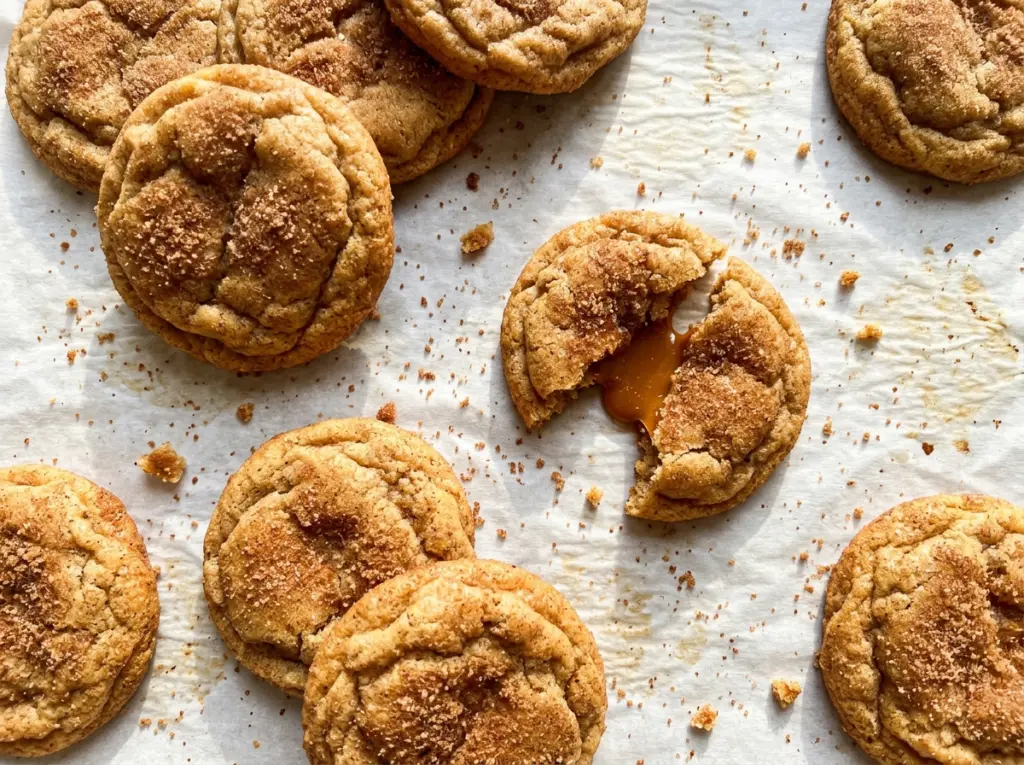
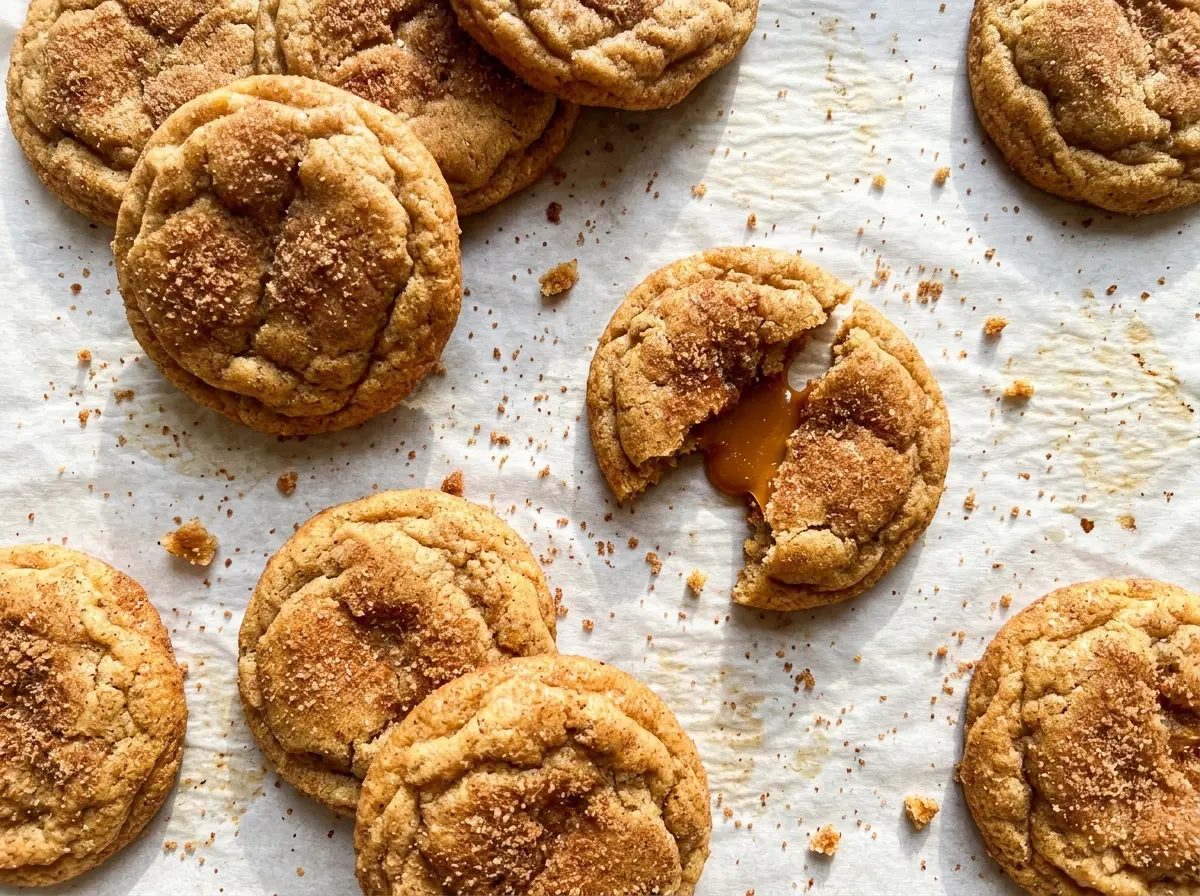
The caramel starts to soften in the oven before the cookie edges have even begun to turn golden, and that’s the moment these cookies need a little patience. I learned to leave them on the baking sheet after they come out; moving them too soon can split the soft cookie around its warm center. These caramel apple cider cookies bake up tender, with a cinnamon-scented middle and a pocket of melted caramel tucked inside.
Reducing the cider takes a few minutes, but it gives the dough a concentrated apple note without pouring a cup of extra liquid into it. I mix that reduction into the butter and sugars only after it’s completely cool, then chill the dough so it’s easier to shape around each candy. The finished cookies have lightly golden edges, set tops, and a chewy caramel middle.
Kitchen Note
Give the dough its full 30-minute chill before shaping. Cooler dough is much easier to wrap around each soft caramel without tearing or sticking to your hands.
Save these caramel apple cider cookies for a cozy bake: concentrated cider, cinnamon dough, and a soft caramel center in every cookie.
Why Plain Apple Cider Makes a Weaker Cookie Dough
Apple cider brings plenty of flavor, but using it straight from the carton would add far more liquid than this dough needs. A cup simmered down to a quarter cup keeps the apple character while limiting the extra moisture. That balance matters in a filled cookie: dough that’s too loose is harder to shape around a caramel, and the cookies can spread before their edges set.
Reducing the cider also changes its flavor. As water simmers away, the apple taste becomes more concentrated, so it comes through against brown sugar and cinnamon instead of fading into the background. Stir occasionally as it cooks, and use the measured final amount as your cue rather than relying on the clock alone; saucepan size and heat can affect how quickly it reduces. The result should be cider with a stronger aroma, not a pan of nearly dry syrup.
The Cider, Caramel, and Butter Each Have a Job

- Apple cider — Start with cider that smells clearly of fresh apples; a faint, flat-tasting cider won’t bring as much character after it’s reduced. The reduction is part of the dough, not a drizzle, so apple juice or cider vinegar isn’t an equal stand-in.
- Soft caramel candies — The soft candies melt into the chewy center these cookies are built around. Hard candies won’t give you the same texture. Unwrap the candies before you start shaping so each portion of dough can be filled without a pause.
- Unsalted butter — Softened butter creams smoothly with the sugars and lets you control the salt in the dough. It should yield to a light press but still feel cool; melted butter won’t cream the same way.
- Light brown sugar — Its moisture helps make the cookie tender and gives the dough a warm, toffee-like note that suits the caramel. Pack it into the measuring cup so the amount stays consistent.
- All-purpose flour and cinnamon — Flour gives the dough enough body to enclose the candy, while cinnamon adds a gentle spice that doesn’t overpower the cider. Whisk them with the baking soda and salt so the leavener and seasoning are spread through the dough.
Build the Dough, Then Seal Each Caramel Inside
Reduce the Cider Before Mixing
Simmer the cider in a small saucepan over medium heat for 12 to 18 minutes, stirring occasionally, until it measures a quarter cup. Pour it into a heatproof cup and let it cool completely. If you stop before it reaches that reduced amount, the dough will carry more liquid than intended. The concentrated cider should smell distinctly apple-forward.
Cream the Butter and Sugar
Whisk the flour, cinnamon, baking soda, and salt together in a medium bowl. In a large bowl, beat the softened butter with both sugars on medium speed until creamy, about 2 minutes. Beat in the egg and vanilla, then mix in the cooled cider reduction until combined. If the mixture looks a little uneven before the flour goes in, keep mixing just until the cider is incorporated.
Bring the Dough Together and Chill
Add the flour mixture and mix on low only until no dry streaks remain. Stop there; continued mixing can make the cookies tougher. Cover the bowl and chill the dough for 30 minutes. While it chills, heat the oven to 350°F and line two large baking sheets with parchment paper.
Fill, Bake, and Let the Cookies Set
Scoop the dough into 18 portions, about 1 1/2 tablespoons each. Flatten each portion, put one unwrapped soft caramel in the center, then wrap the dough around it and seal it completely; any exposed caramel can escape onto the pan. Arrange 9 cookies on each baking sheet with about 2 inches between them. Bake for 10 to 12 minutes, rotating the sheets between oven racks halfway through, until the edges are lightly golden and the tops look set; cool on the sheets for 5 minutes before moving the cookies to a wire rack.
Two Ways to Change the Caramel Apple Cider Cookies
Bake a batch without the caramel centers
Leave out the candies and portion the chilled dough into 18 cookies. You’ll get a more straightforward apple-cinnamon cookie without the gooey middle, and there’s no filling to seal into each portion.
Make them gluten-free with a cup-for-cup blend
Replace the all-purpose flour with the same amount of a measure-for-measure gluten-free baking blend made for cookies, ideally one that includes xanthan gum. Keep the other ingredients and method the same. The crumb may be a little more delicate, so let the cookies cool on the baking sheets for the full 5 minutes before transferring them.
Storage and Reheating
- Refrigerator: Keep the cooled cookies in an airtight container for up to 5 days. The cookies and caramel will firm up when cold.
- Freezer: Freeze fully cooled cookies in an airtight container for up to 2 months. Separate layers with parchment, then thaw at room temperature.
- Reheating: Warm one cookie in the microwave for about 5 seconds if you want a softer center. The caramel heats quickly, so avoid long bursts and let it sit briefly before biting.
Questions About Cider, Caramel, and Cookie Dough
Caramel Apple Cider Cookies
Ingredients
Equipment
Method
- Simmer the apple cider in a small saucepan over medium heat for 12–18 minutes, stirring occasionally, until reduced to 1/4 cup.
- Pour the cider reduction into a heatproof cup and cool completely.
- Whisk the flour, cinnamon, baking soda, and salt together in a medium bowl.
- Beat the butter, brown sugar, and granulated sugar in a large bowl with an electric mixer on medium speed until creamy, about 2 minutes.
- Beat in the egg and vanilla.
- Mix in the cooled cider reduction until combined.
- Add the flour mixture and mix on low just until no dry streaks remain.
- Cover and chill the dough for 30 minutes.
- Heat the oven to 350°F.
- Line two large baking sheets with parchment paper.
- Scoop the dough into 18 portions, about 1 1/2 tablespoons each.
- Flatten each portion and place a caramel in the center.
- Wrap the dough around each caramel, sealing completely.
- Arrange 9 cookies on each baking sheet, leaving about 2 inches between them.
- Bake for 10–12 minutes, rotating the sheets between oven racks halfway through, until the edges are lightly golden and the tops look set.
- Cool the cookies on the baking sheets for 5 minutes.
- Transfer the cookies to a wire rack to cool.


