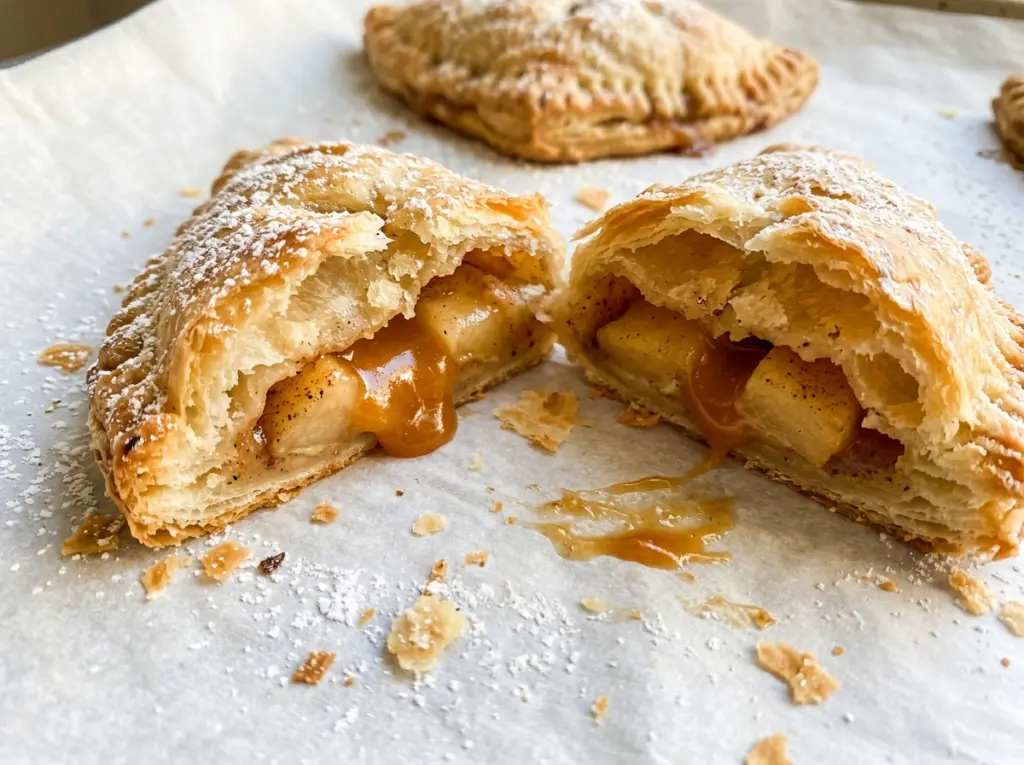
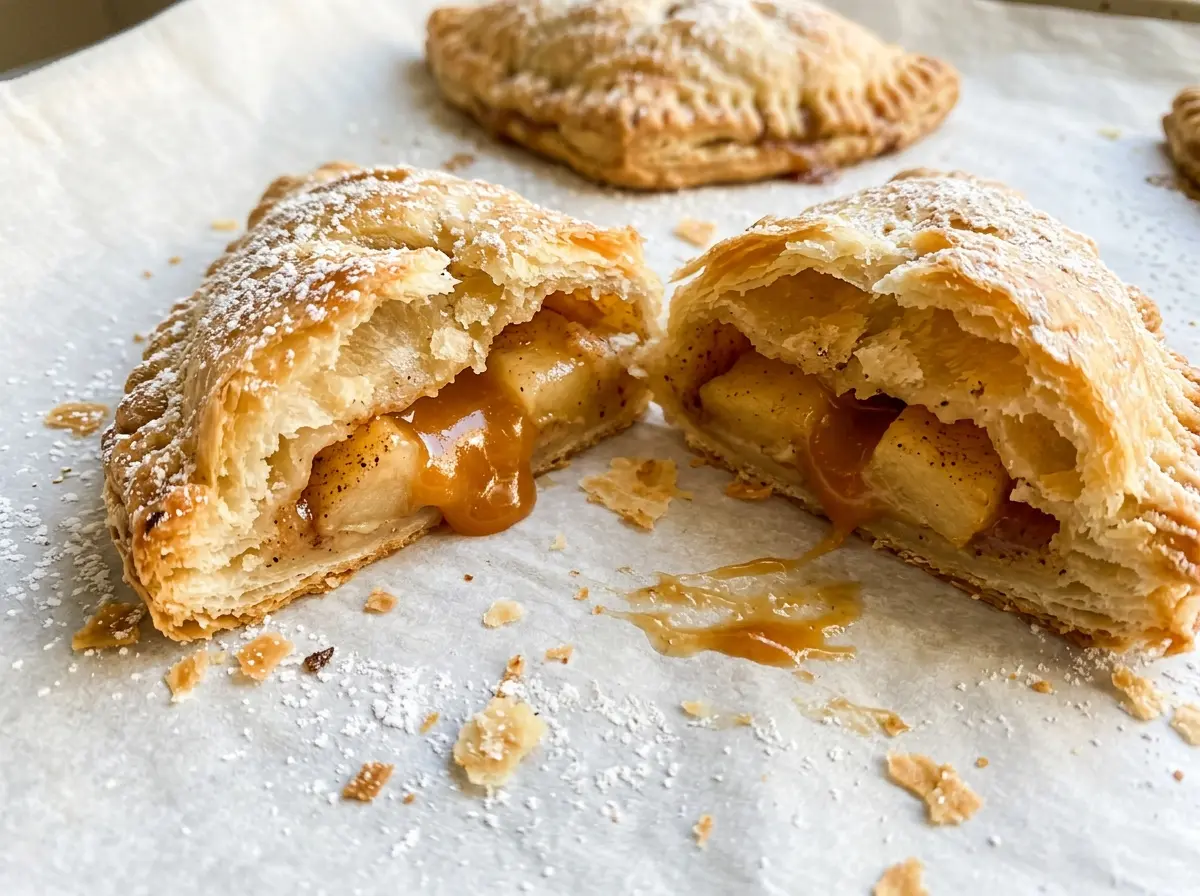
When the apple filling is ready, the juices look glossy and cling to the little cubes instead of pooling at the bottom of the skillet. That’s the moment I want before it goes anywhere near puff pastry. I cook the apples with brown sugar, cinnamon, and cornstarch, then stir in thick caramel off the heat. These caramel apple turnovers come out with crisp, layered edges and a soft center that tastes like caramel-coated apples.
The part worth planning for is the filling’s cooling time. Warm filling softens the pastry before it reaches the oven, so I make the apple mixture first and let it chill completely. The pastry should be thawed but still cold when you unfold it; that makes the squares easier to handle and helps them keep their shape. Once the filling is cool, each turnover comes together with a fork-sealed edge and a shiny egg wash, then bakes until puffed and deep golden.
Kitchen Note
Keep the puff pastry cold after thawing; soft, warm pastry is harder to unfold and seal neatly. If it starts feeling limp while you work, pause and chill it until it firms up again.
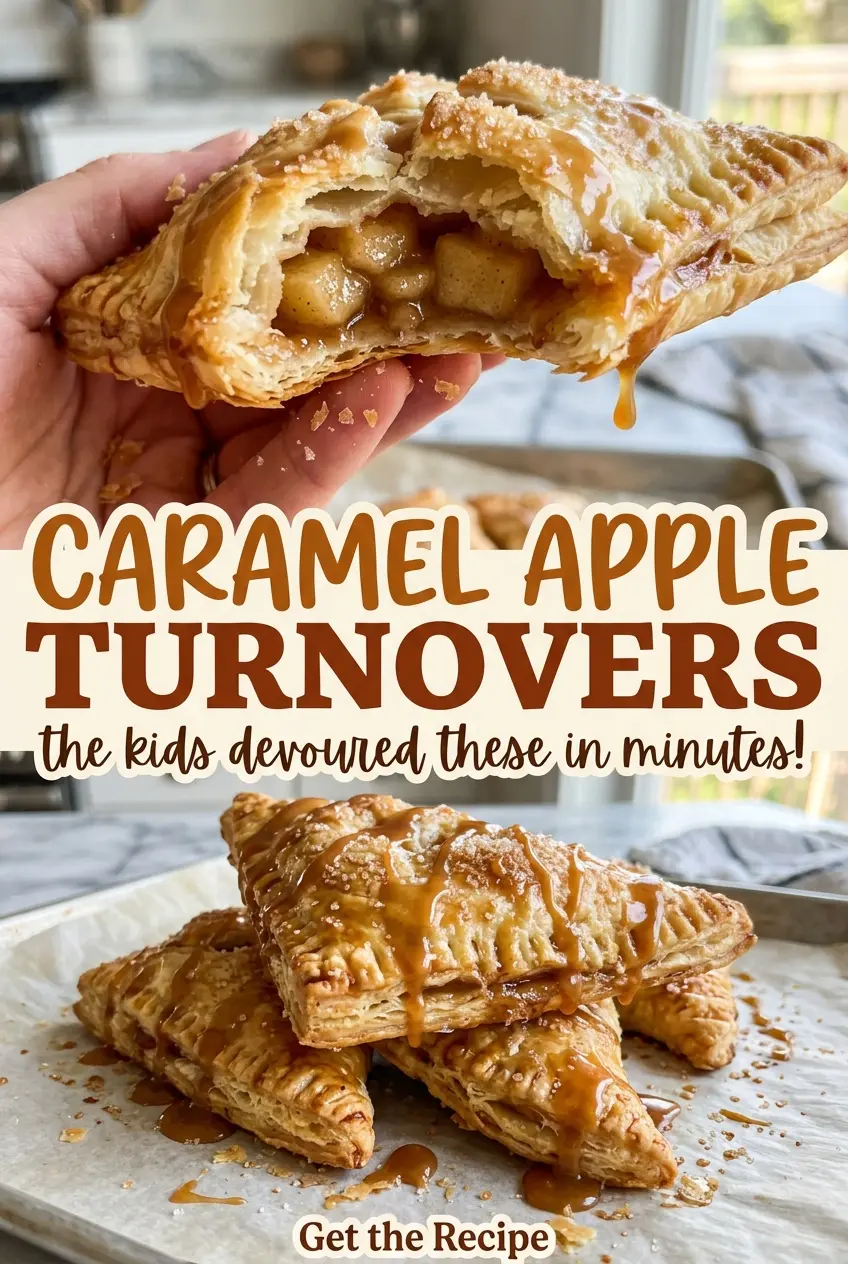
Save these caramel apple turnovers for a crisp, flaky pastry filled with cinnamon apples and thick caramel.
Why the Filling Must Thicken Before It Meets the Pastry
Apple pieces release juice as they cook, and that liquid is what can turn a flaky turnover bottom damp or push filling through the seams. Cornstarch gives those juices a chance to thicken in the skillet, before they’re enclosed in pastry. Stir it in with the apples and sugar at the start so it’s evenly dispersed; added later, it can clump instead of coating the fruit.
Look for tender apple pieces and juices that cling to them rather than run freely when you stir. The filling will thicken further as it cools, but it shouldn’t be watery when you take the skillet off the heat. The caramel goes in only after the skillet leaves the burner, so it blends into the cooked apples without being simmered along with them. This gives you a cohesive filling that stays inside the folded pastry instead of leaking onto the pan.
There’s a useful balance here: the filling should be soft enough to spoon onto each square, but not so loose that it slides toward the edges. If the mixture still looks runny at the end of cooking, give it a little more time over medium heat and keep stirring. The apple pieces should stay distinct, not collapse into applesauce.
What the Apple, Starch, and Caramel Each Bring to the Filling
- Apple — A firm apple holds its shape through the skillet cooking, so each bite has tender pieces instead of a soft puree. A tart baking apple such as Granny Smith gives the caramel a sharper contrast; a sweeter firm apple makes the filling taste gentler. Peel, core, and cut it into even small dice so the pieces cook at about the same pace.
- Cornstarch — This is what thickens the apple juices in the filling. Stir it in before the apples cook, while the mixture is still cool enough to coat evenly. There isn’t a direct one-for-one swap in this formula that keeps the same texture, so I stick with cornstarch here.
- Thick caramel sauce — A thick sauce brings the caramel flavor without adding a lot of loose liquid. Brand matters less than texture: choose one that holds its shape on a spoon rather than a thin dessert drizzle. Stir it in once the skillet is off the heat.
- Frozen puff pastry — The pastry creates the crisp, airy layers that make these turnovers different from a hand pie. Use both sheets from a standard two-sheet package and thaw them while keeping them cold. The butter in puff pastry is what gives it those flaky layers, so a different dough won’t bake up quite the same way.
- Beaten egg — Brushing the tops with egg gives the pastry a glossy, deep-golden finish. Beat it until the white and yolk are blended, then brush across the tops without letting it pool heavily along the edges.
- Brown sugar and cinnamon — Packed light brown sugar sweetens the apple and brings a mild molasses note; cinnamon makes the filling taste warmly spiced. Ground cinnamon distributes easily through the diced fruit, so there’s no need to prepare it separately.
From Skillet Filling to Deep-Golden Turnovers
Cook the apples until tender
Melt the butter in a 10-inch skillet over medium heat. Stir in the diced apple, brown sugar, cornstarch, cinnamon, and kosher salt until the apple is coated. Cook for 8–10 minutes, stirring frequently, until the apple is tender and the juices have thickened. Keep the mixture moving around the skillet so the sugar and starch don’t sit on the bottom.
Stir in caramel and cool the filling
Take the skillet off the heat, then stir in the thick caramel sauce until it’s incorporated. Transfer the filling to a bowl rather than leaving it in the hot skillet, where it would keep cooking. Refrigerate it for at least 30 minutes, until completely cool. The filling should be cold before it goes onto the pastry squares.
Cut, fill, and fold the pastry
Heat the oven to 400°F and line an 18×13-inch baking sheet with parchment paper. Unfold each of the two pastry sheets on a clean work surface and cut each into four equal squares. Divide the cooled filling among the squares, leaving a 1/2-inch border, then fold each square diagonally into a triangle. Press the edges closed with a fork so the filling is enclosed.
Brush and bake until deeply golden
Arrange the turnovers on the prepared baking sheet and brush the tops with the beaten egg. Bake for 18–22 minutes, until the pastry is puffed and deep golden brown; pale pastry needs more oven time. Let the turnovers cool on the baking sheet for 10 minutes before serving. The filling will be hot straight from the oven, so give it that rest instead of biting in immediately.
Two Simple Ways to Change the Turnovers
Choose a tart apple for a brighter filling
Use a firm, tart baking apple, such as Granny Smith, in place of a sweeter apple. The cooked fruit keeps its shape and its tang offsets the caramel, so the filling tastes less sweet overall without changing the method.
Fold them into rectangles instead of triangles
For a different turnover shape, place the filling on one side of each square and fold the other side over it, then seal the edges with a fork. You’ll get rectangular pockets rather than triangular ones, with the same apple-caramel filling and crisp puff pastry.
Storage and Reheating
- Refrigerator: Store cooled turnovers in an airtight container for up to 3 days. The pastry will soften as it sits.
- Freezer: Freeze fully cooled baked turnovers in an airtight container for up to 2 months. Separate layers with parchment so they don’t stick together.
- Reheating: Warm them in a 350°F oven until heated through and crisp again, about 8–10 minutes. The microwave warms them quickly but leaves the pastry soft.
Questions That Come Up When Making Apple Turnovers
Caramel Apple Turnovers
Ingredients
Equipment
Method
- Melt the butter in a 10-inch skillet over medium heat.
- Stir in the apple, brown sugar, cornstarch, cinnamon, and salt until the apple is coated.
- Cook for 8–10 minutes, stirring frequently, until the apple is tender and the juices have thickened.
- Remove from the heat and stir in the caramel sauce.
- Transfer the filling to a bowl and refrigerate for at least 30 minutes, until completely cool.
- Heat the oven to 400°F and line an 18x13-inch baking sheet with parchment paper.
- Unfold each puff pastry sheet on a clean work surface and cut it into 4 equal squares.
- Divide the cooled filling evenly among the squares, leaving a 1/2-inch border.
- Fold each square diagonally to form a triangle and press the edges closed with a fork.
- Arrange the turnovers on the baking sheet.
- Brush the tops with the beaten egg.
- Bake for 18–22 minutes, until puffed and deep golden brown.
- Cool on the baking sheet for 10 minutes before serving.


