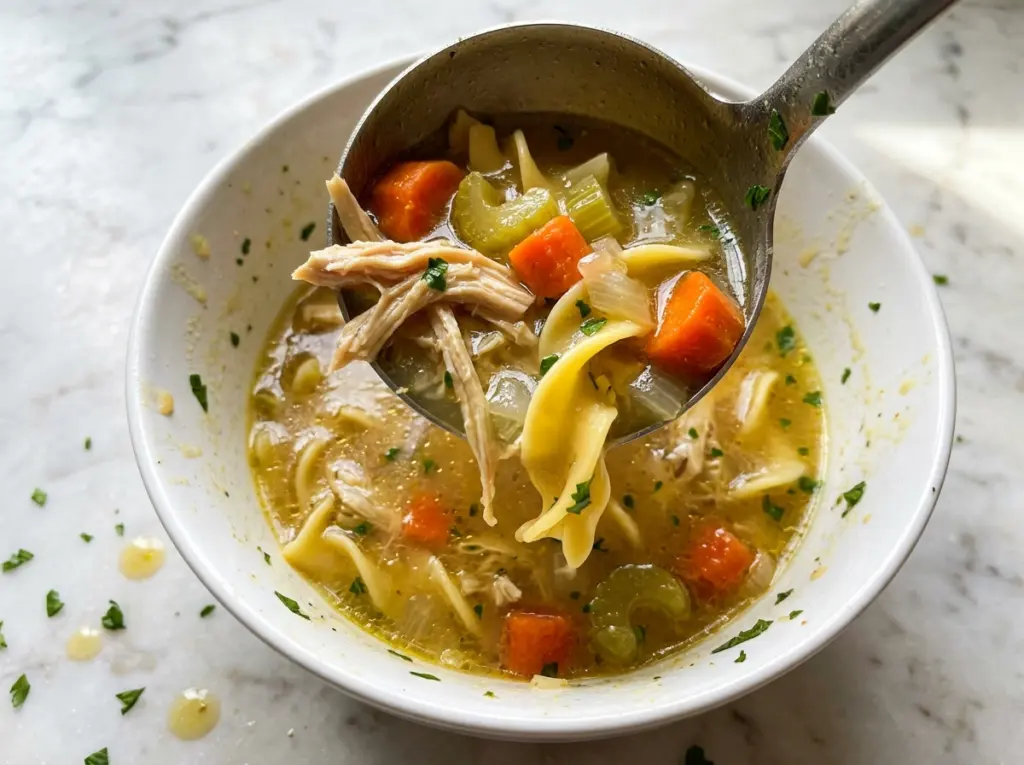
The onion softens in the oil first, and soon the carrots and celery smell sweet and savory. That’s when I know the pot has a proper start instead of a rushed one. This copycat Panera Bread chicken noodle soup follows that same comforting rhythm: the vegetables soften, chicken simmers in seasoned broth, and wide egg noodles cook right in the pot. I like that there’s no second saucepan to wash, and the broth picks up flavor as each part cooks.
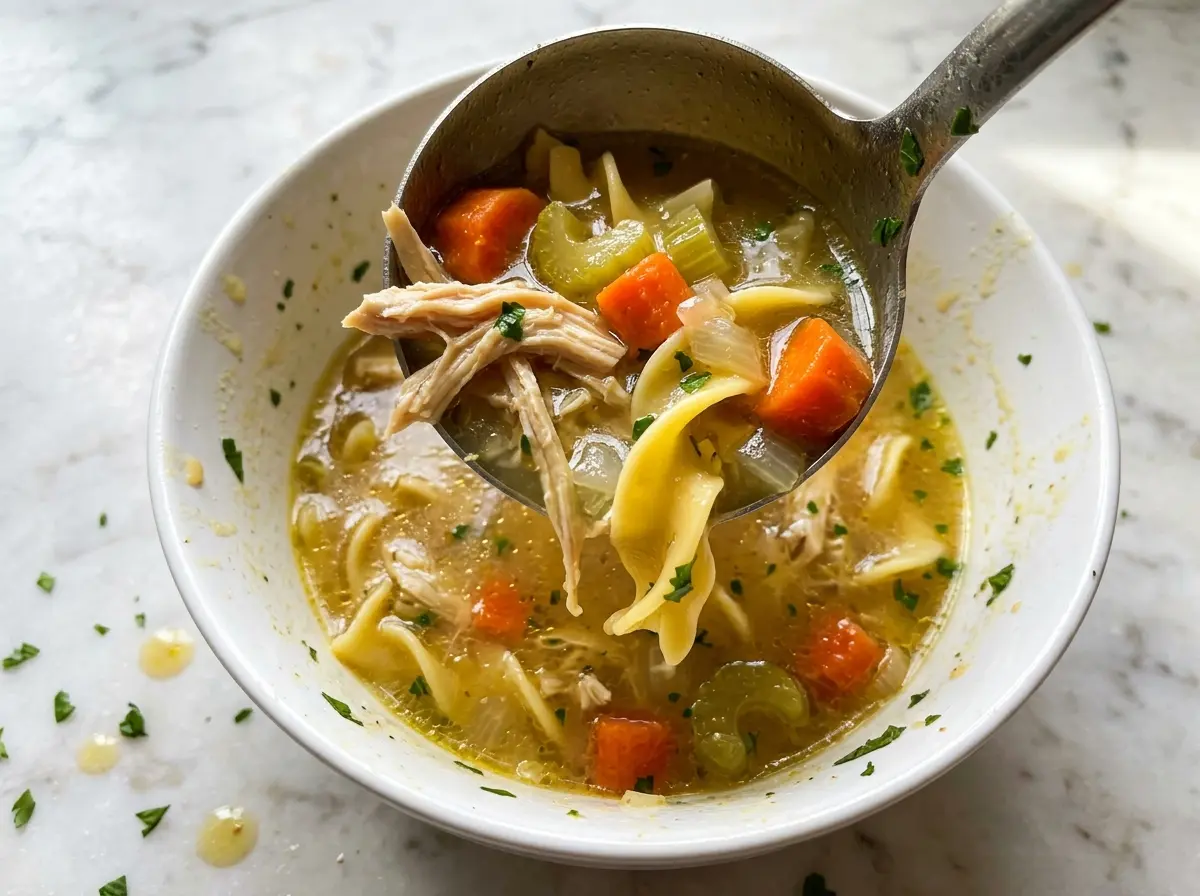
I keep the chicken breasts whole while they simmer, then take them out before the noodles go in. That gives the chicken and noodles the cooking time each one needs, without leaving the chicken in the pot longer than necessary. A little thyme perfumes the broth, and the finished soup has tender chicken with noodles that feel at home in every spoonful.
Kitchen Note
I lift out the bay leaf before the noodles go in, while the surface is still clear. That small check saves you from fishing around among slippery noodles later.
Save this copycat Panera Bread chicken noodle soup for its thyme-scented broth and wide noodles cooked right in the pot.
Why the Chicken Comes Out Before the Noodles Go In
Chicken breasts and egg noodles don’t need the same amount of time in the pot. The chicken simmers until it’s cooked through, while the noodles take only a short stretch in the broth to turn tender. Leaving the chicken in for both cooking windows can push it past the point where it shreds into juicy strands.
Taking the breasts out also gives the noodles room to move around as they cook. They’re added after the chicken comes out, so you can stir them without knocking the chicken apart or trying to work around large pieces. Once the noodles are tender, the shredded chicken goes back in just long enough to warm through.
This order matters especially in a soup where the noodles cook in the broth. They get a chance to take on the thyme-seasoned liquid, and there’s no separate pot of pasta water to deal with. The result is a bowl where the chicken stays distinct and the noodles are cooked through, not left simmering while you wait for the rest of dinner.
The Broth Is Where the Salt Balance Gets Decided

- Low-sodium chicken broth — It gives you room to season the soup with the measured kosher salt without starting with a salty base. A familiar grocery-store broth is fine; the low-sodium label matters more here than choosing an expensive brand.
- Boneless, skinless chicken breasts — They’re easy to lift out and shred once simmered. Choose pieces that are close in size so they cook at a similar pace, and keep them whole for the poaching stage rather than cutting them into small pieces first.
- Wide egg noodles — Their broad shape makes a substantial bite alongside the chicken. If you need a gluten-free version, use 8 ounces of gluten-free wide noodles in their place and follow the package timing; the texture can be a little different, so use tenderness rather than the clock alone as your cue.
- Onion, carrots, celery, and garlic — These form the savory base. Fresh, firm carrots and celery hold their shape during the simmer, while dicing the onion and slicing the other vegetables helps them soften together. Mince the garlic finely so it distributes through the broth.
- Dried thyme, turmeric, and bay leaf — Dried thyme brings an even herbal note to the simmer, and the turmeric gives the broth a warm color. A whole bay leaf is easy to remove before serving; don’t chop it into the soup.
- Fresh parsley — Chopped parsley goes in at the end, where its fresh, green flavor stays noticeable. Chop it just before stirring it into the pot if you can; it loses some of its freshness when it sits cut for a long time.
Build the Soup in Stages, Then Let the Noodles Finish
Soften the vegetables in the olive oil
Heat the olive oil in a 6-quart Dutch oven over medium heat, then add the diced onion, sliced carrots, and sliced celery. Cook for 5–7 minutes, stirring occasionally, until the onion softens. The vegetables should look glossy and begin to relax, not take on a deep browned crust. If the onion still looks firm, give it the full time before adding the garlic.
Let the garlic turn fragrant
Stir in the minced garlic and cook for 30 seconds. Keep it moving so it perfumes the oil without catching on the bottom of the pot. As soon as it smells fragrant, move on to the broth; browned garlic can make the base taste bitter.
Simmer the chicken until cooked through
Add the chicken broth, whole chicken breasts, dried thyme, turmeric, kosher salt, black pepper, and bay leaf. Bring the pot to a boil over high heat, then reduce the heat to maintain a gentle simmer and cook uncovered for 15–20 minutes. Check the thickest part of a breast with a thermometer; it should reach 165°F. Transfer the chicken to a plate and remove the bay leaf.
Cook the noodles in the seasoned broth
Bring the soup back to a gentle boil and add the wide egg noodles. Cook for 6–8 minutes, or follow the package directions, until the noodles are tender. Stir now and then so they don’t settle in one clump at the bottom. Start checking near the earlier end of the time range if your package noodles are on the thin side.
Shred the chicken and finish the pot
Use two forks to shred the chicken into bite-size pieces. Return it to the pot and stir in the chopped parsley. Simmer for 1–2 minutes, just until the chicken is hot again, then serve. The parsley should look bright against the broth rather than disappearing into a long final simmer.
Three Ways to Adapt This Pot for Your Table
Use gluten-free wide noodles
Replace the egg noodles with 8 ounces of gluten-free wide noodles, then use their package timing and stop when they’re tender. The broth and chicken stay the same, though some gluten-free noodles soften faster than egg noodles. Choose chicken broth labeled gluten-free for a gluten-free bowl.
Leave out the noodles for a lighter soup
Skip the egg noodles and keep the chicken, vegetables, and seasoned broth as they are. You’ll have a brothier chicken-and-vegetable soup with less heft in each bowl. This is a useful option when you want the same savory base without a pasta-like bite.
Finish the noodles just before serving
For a make-ahead meal, cook the soup through the chicken simmer, then refrigerate the broth and chicken before adding noodles. When you’re ready to eat, bring the soup back to a gentle boil, cook the noodles until tender, and return the shredded chicken with the parsley. The noodles go to the table freshly cooked instead of sitting in the broth.
Storage and Reheating
- Refrigerator: Keep leftovers covered for 3–4 days. The noodles continue to absorb broth, so they’ll be softer the next day.
- Freezer: Freeze in airtight containers for up to 2–3 months. The soup is safe to freeze, though the noodles may thaw softer than they were on the first day.
- Reheating: Warm it gently on the stovetop over medium-low heat, stirring now and then until hot throughout. Avoid a hard boil, which can break up the noodles and chicken.
Questions That Come Up When Making Chicken Noodle Soup
Copycat Panera Bread Chicken Noodle Soup
Ingredients
Equipment
Method
- Heat the olive oil in a 6-quart Dutch oven over medium heat.
- Add the onion, carrots, and celery and cook for 5–7 minutes, stirring occasionally, until the onion softens.
- Add the garlic and cook for 30 seconds, stirring, until fragrant.
- Add the chicken broth, chicken breasts, thyme, turmeric, salt, pepper, and bay leaf, and bring to a boil over high heat.
- Reduce the heat to maintain a gentle simmer and cook uncovered for 15–20 minutes, until the chicken reaches 165°F in the thickest part.
- Transfer the chicken to a plate and remove the bay leaf.
- Bring the soup back to a gentle boil, add the egg noodles, and cook for 6–8 minutes, or according to the package directions, until tender.
- Shred the chicken with two forks, return it to the pot, and stir in the parsley.
- Simmer for 1–2 minutes until the chicken is hot, then serve.


