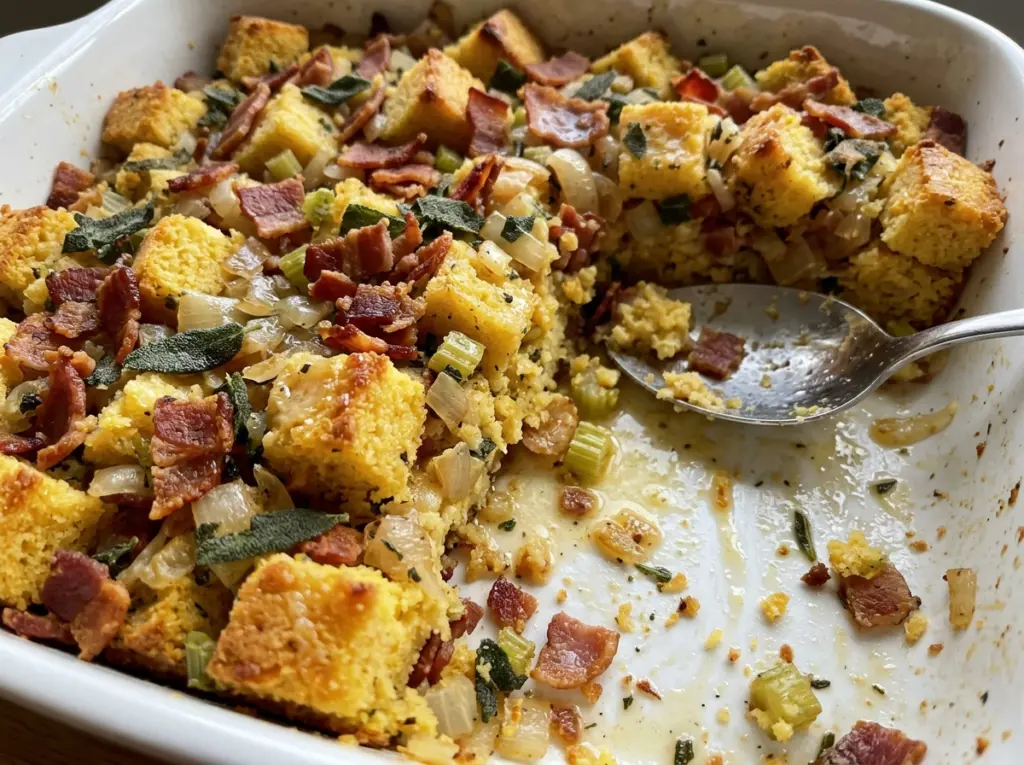
The cornbread cubes come out of the oven dry to the touch, but still pale around the edges. That’s exactly what I want before they meet the broth and eggs. For this cornbread stuffing with bacon and sage, drying the cornbread first helps it take on moisture without collapsing into a soft, heavy layer.
I cook the bacon until crisp, then soften the onion and celery in the same skillet with butter. The dried sage goes in at the end, just long enough to wake up in the warm pan. Once everything is folded together, the stuffing bakes covered before the foil comes off for a golden top. The center stays tender, with little bites of bacon and a savory sage aroma in every scoop.
Kitchen Note
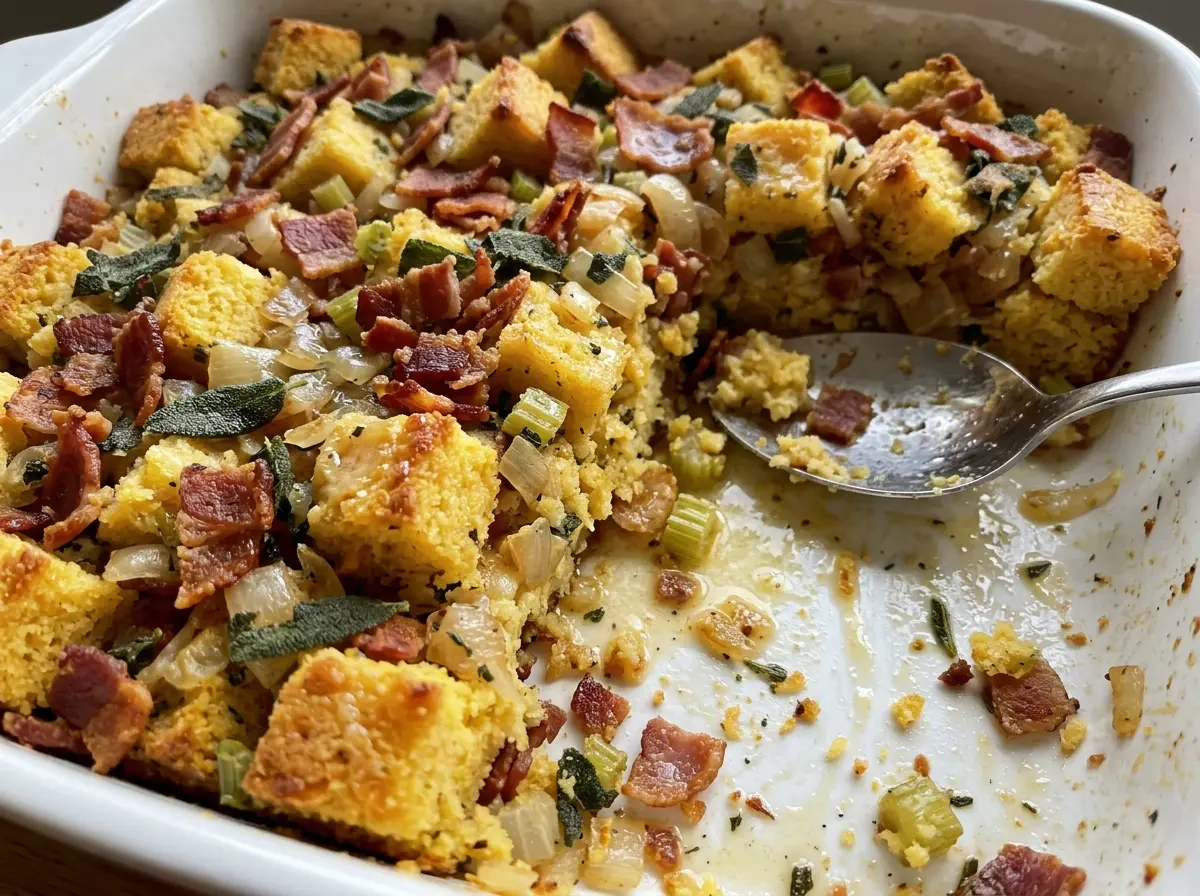
When the dried sage hits the butter-softened onion and celery, let it cook for just 30 seconds. It should smell fragrant, not toasted; then scrape the mixture into the bowl so the buttery seasoning comes along, too.
Save this cornbread stuffing with bacon and sage for its crisp top, tender center, and savory bites of bacon.
Why the Cornbread Needs to Dry Before It Meets the Broth
Prepared cornbread is already baked, so it doesn’t need more cooking before it goes into the stuffing. It does need to lose some moisture. Fresh, soft cubes can soak up the broth unevenly and turn fragile while you fold in the bacon and vegetables. Drying the cubes first gives them a sturdier surface and room to absorb the egg-and-broth mixture without becoming a paste.
Keep the cubes in a single layer on the rimmed baking sheet and turn them once as they dry. They’re ready when they feel dry rather than soft, but they shouldn’t be browned. Browning at this point adds a toasted edge before the casserole has had its covered bake, and the cubes continue cooking once the stuffing is assembled. The goal is dry cornbread that still tastes like cornbread, ready to take on the savory liquid in the baking dish.
What Bacon, Sage, and the Egg-Broth Mix Each Bring
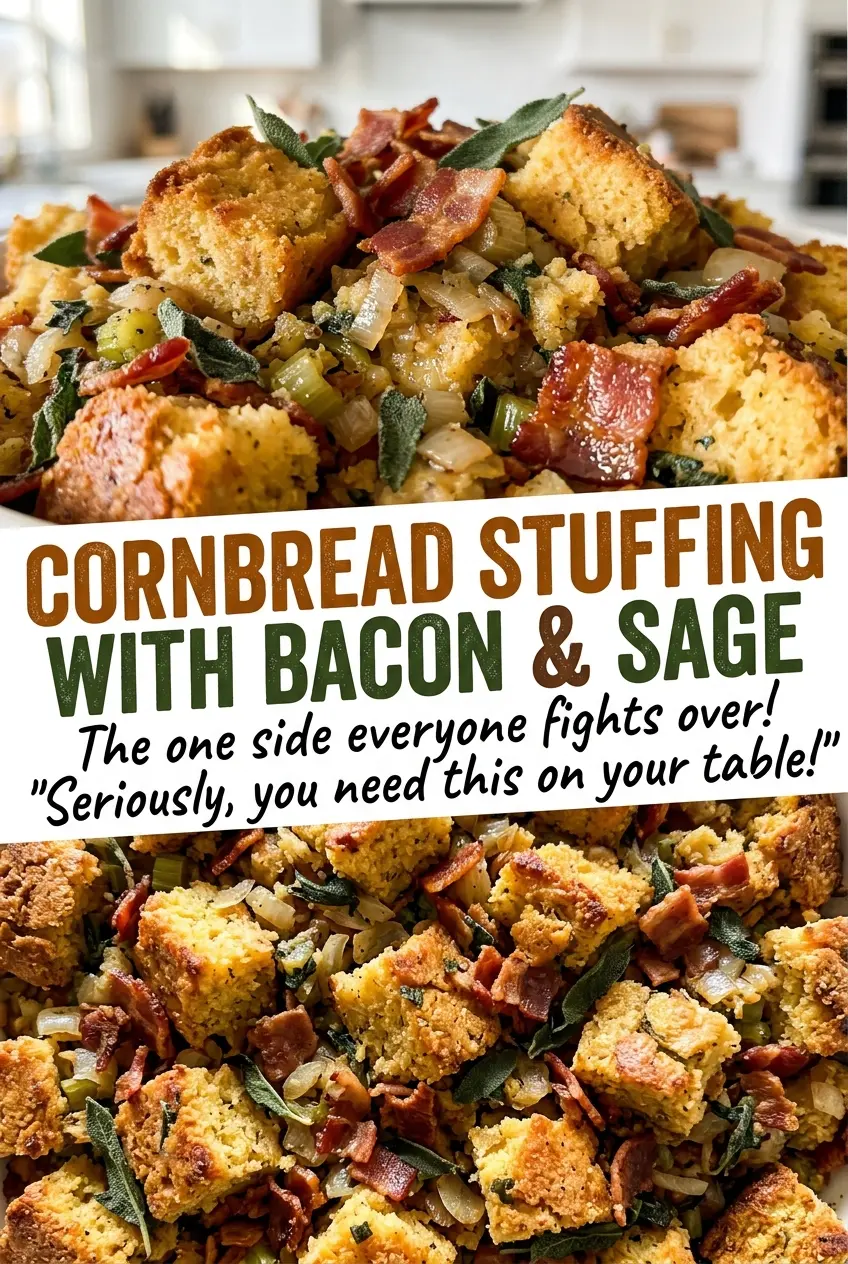
- Prepared cornbread — The cornbread gives the stuffing its structure and lightly sweet corn flavor. Choose a prepared version you enjoy on its own; a sweeter one will make the finished stuffing taste sweeter, while a more savory one keeps the bacon and sage in the foreground. Cutting it into even cubes helps it dry at a similar pace.
- Bacon — Crisp bacon adds smoky, salty bites, and the rendered drippings stay in the skillet when you add the butter and vegetables. Regular bacon works well; the important cue is that the pieces are crisp before you transfer them to the bowl.
- Unsalted butter — Butter carries the softened onion, celery, and sage through the cornbread. Unsalted butter lets the measured kosher salt and the salt already present in the bacon and broth stay in balance.
- Yellow onion and celery — These soften into the savory base and bring moisture as well as flavor. Dice them evenly so the pieces soften together rather than leaving firm bits in the finished stuffing.
- Dried sage — Dried sage gives this stuffing its unmistakable warm, earthy note. Add it after the vegetables soften so it has a short moment in the hot butter without scorching.
- Low-sodium chicken broth — The broth moistens the cubes without overwhelming the salt from the bacon. I stick with low-sodium broth here; a more heavily salted broth can make the finished dish taste saltier than intended.
- Eggs — The eggs help the broth-soaked cornbread set into a scoopable casserole. There isn’t a simple swap that keeps the same texture, so I wouldn’t leave them out or replace them with an untested binder.
Dry the Cornbread First, Then Let the Covered Bake Set the Center
Dry the cubes without browning them
Heat the oven to 300°F and spread the 1-inch cornbread cubes in a single layer on a rimmed baking sheet. Bake for 25 to 35 minutes, turning once, until the cubes feel dry but haven’t browned. If the pieces are crowded or piled up, they won’t dry as evenly. Transfer the cubes to a large bowl when they’re ready.
Cook the bacon until crisp
Set a large skillet over medium heat and cook the bacon pieces for 8 to 10 minutes, stirring occasionally. They should look crisp before you lift them from the pan. Transfer the bacon to the bowl with the cornbread, leaving the rendered fat in the skillet for the vegetables.
Soften the vegetables and wake up the sage
Melt the butter in the skillet, then add the diced onion and celery. Cook for 8 to 10 minutes, until the vegetables have softened rather than browned. Stir in the dried sage and cook for 30 seconds. Scrape the mixture into the bowl, including the buttery bits from the skillet.
Moisten gently and fill the baking dish
Heat the oven to 350°F and grease a 9×13-inch baking dish. In a medium bowl, whisk together the chicken broth, eggs, kosher salt, and black pepper, then pour the mixture over the cornbread, bacon, and vegetables. Fold gently until the cubes are evenly moistened; vigorous stirring can break the cornbread into small pieces. Transfer everything to the prepared dish and cover it tightly with foil.
Uncover for a golden top
Bake the covered dish for 20 minutes, then remove the foil and bake for 20 to 25 minutes more. The top should be golden, and the center should reach 160°F. If the top is browning before the center is ready, keep an eye on it as it finishes rather than pulling the dish before the center reaches temperature. Let the stuffing rest for 10 minutes before serving.
Three Changes That Shift the Flavor Without Losing the Stuffing’s Shape
Use gluten-free prepared cornbread
Choose prepared gluten-free cornbread in place of the regular cornbread, then cut and dry it the same way. Depending on its texture, it may crumble more readily, so fold the broth mixture in gently. The bacon, sage, and soft vegetables still give the stuffing its familiar savory character.
Leave out the bacon for a milder casserole
Omit the bacon if you want the cornbread, onion, celery, and sage to stand out more. The result will be less smoky and rich, and it won’t be vegetarian because the stuffing still uses chicken broth. Keep the rest of the method unchanged.
Skip the sage for a simpler savory flavor
Leave out the dried sage and keep the onion and celery as the main flavor base. This gives you a less earthy, more straightforward bacon-and-cornbread stuffing without changing the baking dish or the covered-then-uncovered bake.
Storage and Reheating
- Refrigerator: Refrigerate leftovers within 2 hours and use them within 3 to 4 days. The top will soften as the stuffing sits.
- Freezer: It freezes well for about 2 to 3 months for best quality. Cool it, portion it into airtight freezer-safe containers, and thaw overnight in the refrigerator.
- Reheating: Cover the stuffing with foil and warm it in a 350°F oven until the center reaches 165°F. Reheating it uncovered can dry the top before the middle is hot.
Questions That Come Up While the Stuffing Bakes
Cornbread Stuffing with Bacon and Sage
Ingredients
Equipment
Method
- Heat the oven to 300°F.
- Spread the cornbread cubes in a single layer on a rimmed baking sheet and bake for 25 to 35 minutes, turning once, until dry but not browned.
- Transfer the cornbread cubes to a large bowl.
- Cook the bacon in a large skillet over medium heat for 8 to 10 minutes, stirring occasionally, until crisp.
- Transfer the bacon to the bowl with the cornbread.
- Melt the butter in the skillet, add the onion and celery, and cook for 8 to 10 minutes until softened.
- Stir in the sage and cook for 30 seconds, then scrape the mixture into the bowl.
- Heat the oven to 350°F and grease a 9x13-inch baking dish.
- Whisk the broth, eggs, salt, and pepper in a medium bowl.
- Pour the broth mixture over the cornbread mixture and fold gently until evenly moistened.
- Transfer the mixture to the prepared baking dish and cover tightly with foil.
- Bake for 20 minutes.
- Uncover and bake for 20 to 25 minutes more, until the top is golden and the center reaches 160°F.
- Let the stuffing rest for 10 minutes before serving.


